William Partlett - Böcker
Visar alla böcker från författaren William Partlett. Handla med fri frakt och snabb leverans.
4 produkter
4 produkter
286 kr
Skickas inom 7-10 vardagar
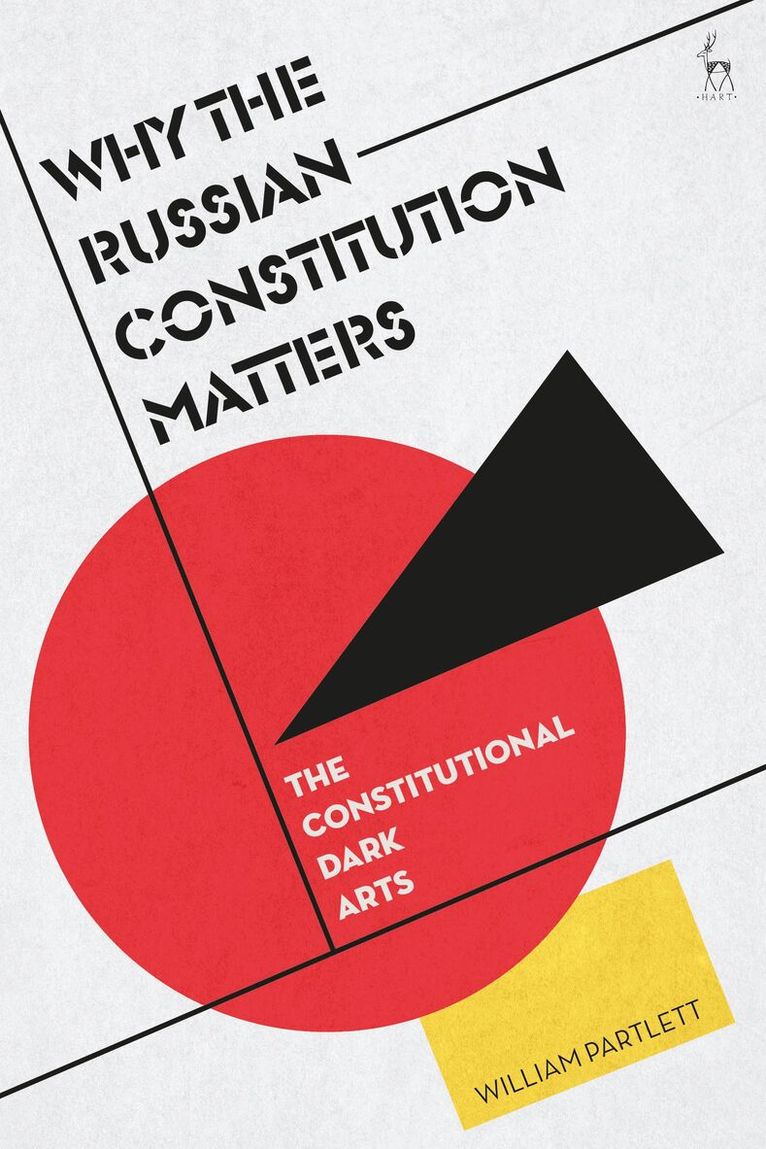
This book challenges the common view that the Russian Constitution is a sham or a reflection of Russia’s authoritarian past.It instead shows that the Russian Constitution was a product of the constitutional ‘dark arts’, an increasingly common constitutional practice that seeks to guarantee liberal democracy and individual rights in a system of highly centralised power. Over time in Russia, the centralisation of power in the president has undermined the constitution’s democratic and rights protections. This Russian experience matters for three reasons. First, it shows that Russian authoritarianism is neither the personal creation of Vladimir Putin nor a natural reflection of Russian history. It is instead the product of a centralised constitutional system. A democratic Russia is possible but requires more than just Putin leaving office - it also requires breaking with Russia’s constitutional commitment to centralisation. Second, it demonstrates the role that the constitutional dark arts play in populist authoritarianism around the world. In these contexts, centralisation allows one office to claim popular legitimacy and dominate politics while (generally falsely) also claiming to respect individual rights and democracy. Third, it reveals that democratic constitutions are more than legal texts enforced in court. They are more fundamentally political texts that create a balanced state with political checks on the centralisation of political power. These checks and balances do not just limit state power and protect rights; they also enable the state to better understand and advance the general well-being of its citizens. This book therefore provides critical guidance to those involved in building democracy in a post-Putin Russia. It is also important to those seeking to better understand the role that constitutions play in shaping both authoritarian and democratic politics.
867 kr
Skickas inom 10-15 vardagar
This book challenges the common view that the Russian Constitution is a sham or a reflection of Russia’s authoritarian past.It instead shows that the Russian Constitution was a product of the constitutional ‘dark arts’, an increasingly common constitutional practice that seeks to guarantee liberal democracy and individual rights in a system of highly centralised power. Over time in Russia, the centralisation of power in the president has undermined the constitution’s democratic and rights protections. This Russian experience matters for three reasons. First, it shows that Russian authoritarianism is neither the personal creation of Vladimir Putin nor a natural reflection of Russian history. It is instead the product of a centralised constitutional system. A democratic Russia is possible but requires more than just Putin leaving office - it also requires breaking with Russia’s constitutional commitment to centralisation. Second, it demonstrates the role that the constitutional dark arts play in populist authoritarianism around the world. In these contexts, centralisation allows one office to claim popular legitimacy and dominate politics while (generally falsely) also claiming to respect individual rights and democracy. Third, it reveals that democratic constitutions are more than legal texts enforced in court. They are more fundamentally political texts that create a balanced state with political checks on the centralisation of political power. These checks and balances do not just limit state power and protect rights; they also enable the state to better understand and advance the general well-being of its citizens. This book therefore provides critical guidance to those involved in building democracy in a post-Putin Russia. It is also important to those seeking to better understand the role that constitutions play in shaping both authoritarian and democratic politics.
140 kr
Skickas inom 7-10 vardagar
Everything you need to know about the Australian constitution – its past, present and future.Far from being an unchangeable, technical legal contract, The People’s Guide to the Australian Constitution illustrates how the Australian Constitution gives people the power to participate in and decide the shape of government and the policies it adopts. Leading legal academics Rosalind Dixon and William Partlett shed light on what Governor General John Kerr didn’t acknowledge about the Constitution when he dismissed the Whitlam Government, the tension between Australia’s Christian settler colonial constitutional identity and the recognition of First Nations peoples, the advantages and risks of constitutional change and much more. At almost 125 years old, Australia’s constitution is one of the oldest in the world, and while this has brought stability, it also enables the people to participate in adapting it to changing times.
Post-Soviet as Post-Colonial
A New Paradigm for Understanding Constitutional Dynamics in the Former Soviet Empire
Inbunden, Engelska, 2022
1 614 kr
Skickas inom 7-10 vardagar
This book takes a new approach to post-socialist constitutional change in Europe and Eurasia. It views these constitutions as the products of the collapse of Europe’s last empire, the Soviet Union. This book therefore seeks to understand these constitutions as more than just post-authoritarian texts, but also as post-colonial ones.This post-colonial paradigm provides a new set of tools for understanding constitutional dynamics in key countries within the European Union as well as the former Soviet republics to the East. In particular, it helps explain democratic backsliding in Central Europe (such as Hungary and Poland), authoritarian resilience in many of the former Soviet republics (including Russia, Belarus, and Kazakhstan) as well as ongoing struggles about national identity in places like Ukraine and Moldova. Partlett and Küpper’s application of the post-colonial paradigm to the former Soviet world contributes to our understanding of post-colonial constitutionalism. This insightful book therefore appeals to the comparative constitutional academic community as well as the broader academic community interested in post-colonialism. It will also be of interest to a general audience interested in better understanding the former socialist bloc countries.