William S. Campbell - Böcker
Visar alla böcker från författaren William S. Campbell. Handla med fri frakt och snabb leverans.
7 produkter
7 produkter
1 084 kr
Skickas inom 5-8 vardagar
This sixth volume of the Romans through History and Culture series consists of 14 contributions by North-American and European medievalists and Pauline scholars who discuss significant readings of Romans through the twelfth and thirteenth centuries to the eve of the Reformation. The commentaries of Abelard, William of St. Thierry, Thomas Aquinas, and Nicolas of Lyra, and the wider influence of Romans as reflected in the letters of Heloise and the works of Dante demonstrate the reception of Romans at this period. Starting with an introduction inviting the reader to into the biblical environment of the Middle Ages and suggesting the varied ways in which Paul was understood in both high clerical culture and among the people; it also offers a summary of the work done by each of the authors. This volume attests the dominant role of scripture in communal life and witnesses to the pervasive influence of Paul's letter to the Romans in the flourishing discussions on Scripture and theology.
696 kr
Skickas inom 5-8 vardagar
In the dominant interpretation of the Antioch incident Paul is viewed as separating from Peter and Jewish Christianity to lead his own independent mission which was eventually to triumph in the creation of a church with a gentile identity. Paul's gentile mission, however, represented only one strand of the Christ movement but has been universalized to signify the whole. The consequence of this view of Paul is that the earliest diversity in which he operated and which he affirmed has been anachronistically diminished almost to the point of obliteration. There is little recognition of the Jewish form of Christianity and that Paul by and large related positively to it as evidenced in Romans 14-15. Here Paul acknowledges Jewish identity as an abiding reality rather than as a temporary and weak form of faith in Christ. This book argues that diversity in Christ was fundamental to Paul and that particularly in his ethical guidance this received recognition. Paul's relation to Judaism is best understood not as a reaction to his former faith but as a transformation resulting from his vision of Christ. In this the past is not obliterated but transformed and thus continuity is maintained so that the identity of Christianity is neither that of a new religion nor of a Jesus cult. In Christ the past is reconfigured and thus the diversity of humanity continues within the church, which can celebrate the richness of differing identities under the Lordship of Christ.
1 564 kr
Skickas inom 5-8 vardagar
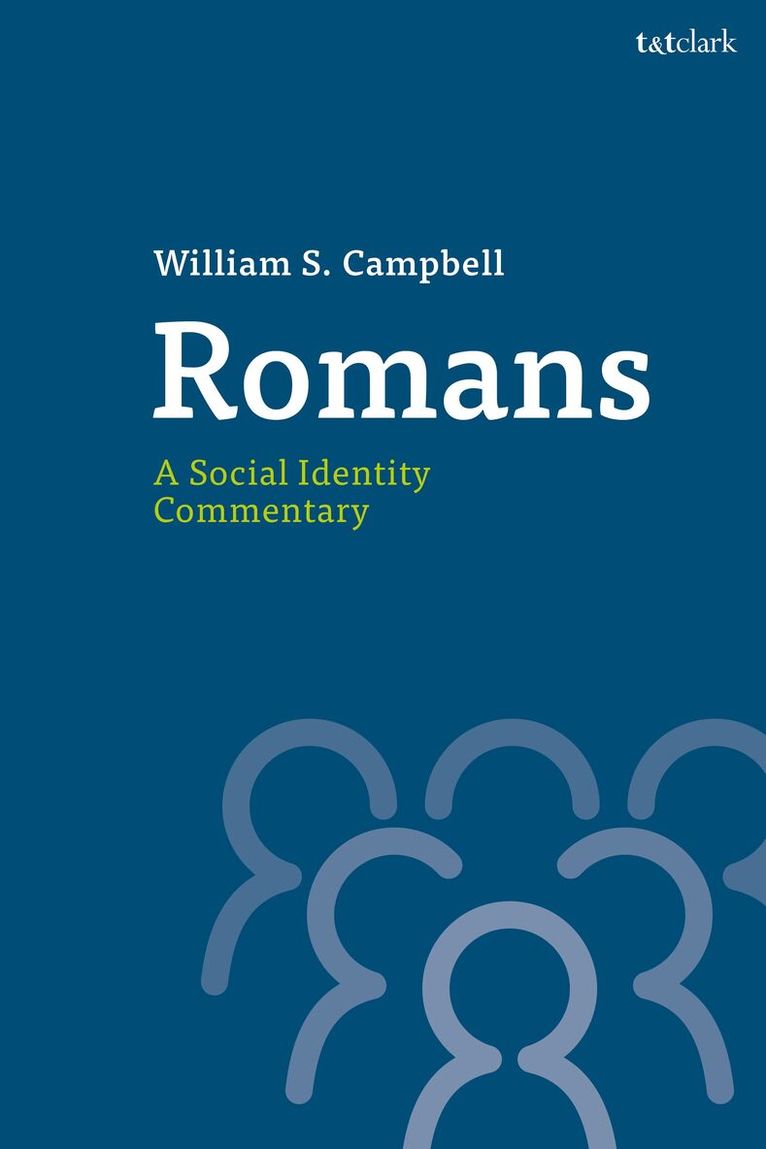
William S. Campbell provides a comprehensive commentary on Paul’s most challenging letter. In conversation with reception history and previous scholarship, he emphasizes the contextuality of Romans as a letter to Rome, using social identity theory combined with historical, literary and theological perspectives to arrive at a coherent reading of the entire letter. Because Paul has never visited Rome and is not the founder of the Christ-movement there, Campbell argues that his guidance and teaching are formulated more cautiously than in his other letters. Yet the long list of people who had previous links with him and his mission to the ‘gentiles’ demonstrates that Paul is well-informed about the situation in Rome and addresses issues that have arisen.With Christ the Messianic Time is beginning, but there was some lack of clarity in Rome about the implications of this for Jews and gentiles. Rather than ethne in Christ replacing Israel, as some in Rome possibly concluded, Campbell stresses that Paul affirms the irrevocable calling of Israel, and that simultaneously the identity of ethne in Christ is also called alongside the people Israel; thus, the integrity of the identity of both is affirmed as indispensable for God’s purpose now revealed in Christ. Campbell fully demonstrates how Paul in Romans achieves this by the social and theological intertwining of the message of the gospel.
572 kr
Skickas inom 5-8 vardagar
William S. Campbell provides a comprehensive commentary on Paul’s most challenging letter. In conversation with reception history and previous scholarship, he emphasizes the contextuality of Romans as a letter to Rome, using social identity theory combined with historical, literary and theological perspectives to arrive at a coherent reading of the entire letter. Because Paul has never visited Rome and is not the founder of the Christ-movement there, Campbell argues that his guidance and teaching are formulated more cautiously than in his other letters. Yet the long list of people who had previous links with him and his mission to the ‘gentiles’ demonstrates that Paul is well-informed about the situation in Rome and addresses issues that have arisen.With Christ the Messianic Time is beginning, but there was some lack of clarity in Rome about the implications of this for Jews and gentiles. Rather than ethne in Christ replacing Israel, as some in Rome possibly concluded, Campbell stresses that Paul affirms the irrevocable calling of Israel, and that simultaneously the identity of ethne in Christ is also called alongside the people Israel; thus, the integrity of the identity of both is affirmed as indispensable for God’s purpose now revealed in Christ. Campbell fully demonstrates how Paul in Romans achieves this by the social and theological intertwining of the message of the gospel.
489 kr
Skickas inom 5-8 vardagar
324 kr
Skickas inom 5-8 vardagar
Nations in the Divine Economy
Paul’s Covenantal Hermeneutics and Participation in Christ
Inbunden, Engelska, 2018
1 572 kr
Skickas inom 10-15 vardagar
Core to Paul's gospel is the relationship between Israel and the Nations in light of the coming of Christ. But historic Christianity, in claiming to be a new Israel, and in not recognising the purpose of God in Christ for Jews and the nations, has ignored its Jewish roots, the scriptures of Israel, and the Jewishness of Jesus and the apostles leaving a lacuna in its own identity, which Campbell argues, can only be overcome by a covenantal understanding of diversity in Christ. The denial of the covenant leads to a negation of God's revelation to Israel, and leaves Christianity with a deficient self-understanding. Although covenant language is not prominent in Paul's letters it remains the basis of his thought in differentiated ways concerning Israel and the nations. The covenant remains God's covenant with Israel. But through the covenant re-ratified in Christ, non-Jews although not included in the covenant, participate through Christ in the Abrahamic promises. Hence participation language is prevalent in Paul's letters since these address non-Jews in Christ as representatives of the nations. Rather than being 'indifferent to difference', Paul's gospel is not anti-ethnic, but is focused on the continuation of difference in Christ. God's purpose is designed to relate to differing peoples, not in their becoming one and the same, but in reciprocal blessing among those who remain different. The corollary of this respect for difference is the call for reconciliation as an essential part of following Christ, a fundamental element in Paul's gospel. God created a diverse world so that his people will find blessing in its rainbow diversity.