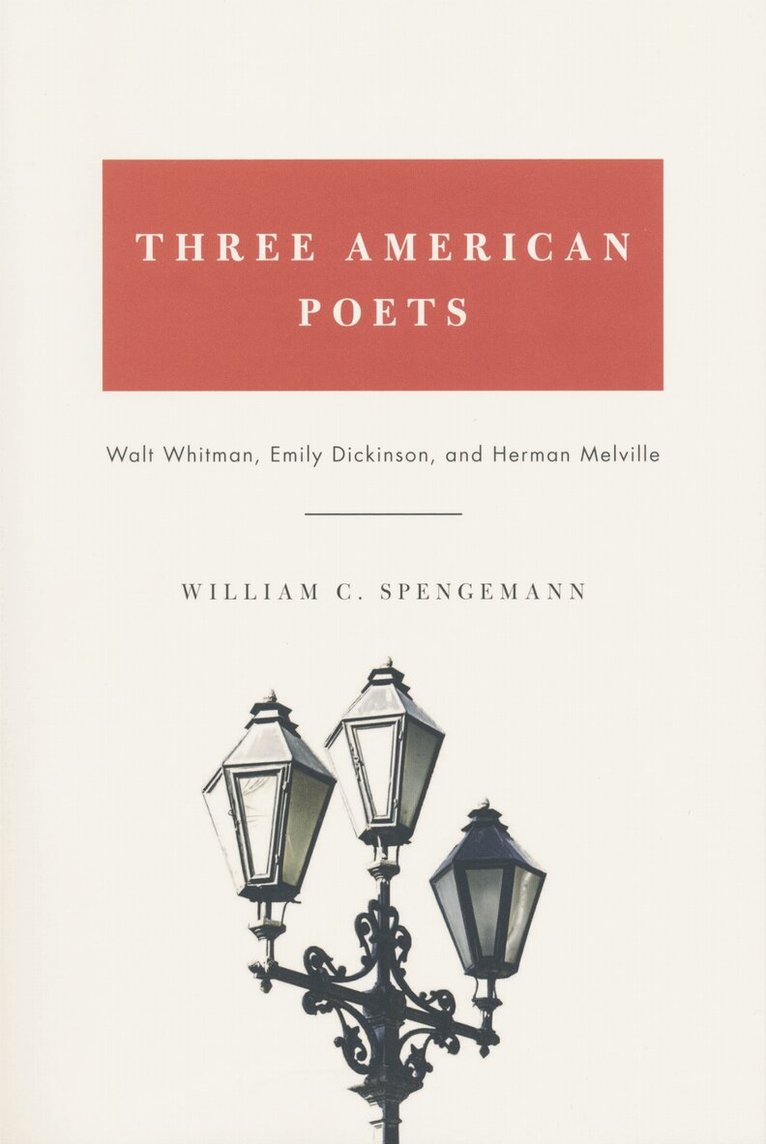
In Three American Poets, William C. Spengemann describes the very different sorts of poetry Whitman, Dickinson, and Melville wrote, their comparable reasons for writing as they did, and the posthumous critical effects of their having done so. By linking these utterly singular poets and their work—verse connected by shared qualities of oddity, complexity, and difficulty—Spengemann illuminates the poets' efforts to create verse equal to the demands of a changing nineteenth century. All three responded to a widespread sense of loss—loss, above all, of Christian understandings of the origins, nature, and purpose of human existence, both individual and collective. All three, too, regarded poetry as the sole means of dealing with that loss and of comprehending not only a changing world but the old world from which the new one had departed, and hence the connections between the vanished, discredited past, the baffling present, and the as yet inscrutable future. Spengemann suggests that the poetic eccentricities of Whitman, Melville, and Dickinson arose directly from their use of poetry as a vehicle of thought; each devised a poetic language either to attempt to recover a lost sense of assurance threatened by the collapse of traditional faith or to discover an altogether new ground of knowledge and being. Spengemann guides us in parsing their respective poetics with masterful readings closely attuned to diction, syntax, meter, and figure. His authoritative and empirical descriptions of the poets' verse and their respective characteristic aesthetics afford us heightened access to the poems and the pleasures peculiar to them, in the process making us better readers of poetry in general.