William Wayne Farris – författare
Visar alla böcker från författaren William Wayne Farris. Handla med fri frakt och snabb leverans.
8 produkter
8 produkter
Del 157 - Harvard East Asian Monographs
Heavenly Warriors
The Evolution of Japan’s Military, 500–1300
Häftad, Engelska, 1996
235 kr
Skickas inom 7-10 vardagar
"In a government, military matters are the essential thing," said Japan's "Heavenly Warrior," the Emperor Temmu, in 684. Heavenly Warriors traces in detail the evolutionary development of weaponry, horsemanship, military organization, and tactics from Japan's early conflicts with Korea up to the full-blown system of the samurai. Enhanced by illustrations and maps, and with a new preface by the author, this book will be indispensable for students of military history and Japanese political history.
Del 24 - Harvard-Yenching Institute Monograph Series
Population, Disease, and Land in Early Japan, 645–900
Häftad, Engelska, 1995
210 kr
Skickas inom 7-10 vardagar
From tax and household registers, law codes, and other primary sources, as well as recent Japanese sources, William Wayne Farris has developed the first systematic, scientific analysis of early Japanese population, including the role of disease in economic development. This work provides a comprehensive study of land clearance, agricultural technology, and rural settlement. The function and nature of ritsuryō institutions are reinterpreted within the revised demographic and economic setting.Farris’s text is illustrated with maps, population pyramids for five localities, and photographs and translations of portions of tax and household registers, which throw further light on the demography and economy of Japan in the seventh, eighth, and ninth centuries.
Sacred Texts and Buried Treasure
Issues on the Historical Archaeology of Ancient Japan
Häftad, Engelska, 1998
406 kr
Skickas inom 10-15 vardagar
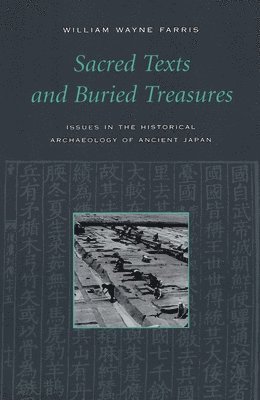
The Japanese have long sought inspiration and legitimacy from the written record of their ancient past. The shaping of bygone eras to contemporary agendas began at least by the early eighth century, when the first court histories, namely the Kojiki and the Nihon shoki, were compiled.Since the late nineteenth century, historians have extensively mined these texts and other written evidence and by the late 1970s had nearly exhausted their meager sources. Fortunately for all those interested in uncovering the origins of Japanese civilization, archaeologists have been hard at work. Today, thanks to this postwar "archaeology boom," Japan historians have never been closer to recreating the lives of prehistoric peasants, ancient princes, and medieval samurai.Sacred Texts and Buried Treasures offers substantial new insights into early Japanese history (A.D. 100-800) through an integrated discussion of historical texts and archaeological artifacts. It contends that the rich archaeological discoveries of the past few decades permit scholars to develop far more satisfactory interpretations of ancient Japan than was possible when they were heavily dependent on written sources.
668 kr
Skickas inom 10-15 vardagar
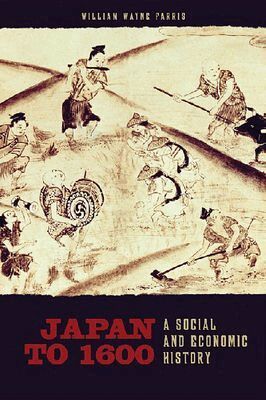
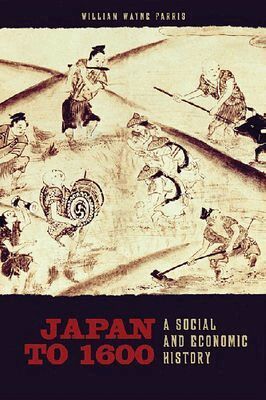
Japan to 1600 traces Japanese historical development from the first evidence of human habitation in the archipelago to the consolidation of political power under the Tokugawa shogunate at the beginning of the seventeenth century. Unlike other introductory texts on early Japanese history, it views its subject from the perspective of developments that impacted all social classes rather than the privileged and powerful few. Economically, William Wayne Farris describes how the residents of the archipelago gradually moved from a forager mode of subsistence to a more predominantly agrarian base, supplemented by sophisticated industries and an advanced commercial economy. He reveals how the transition to farming took place over many centuries as people moved back and forth from settled agriculture to older forager-collector regimes in response to ecological, political, and personal factors. Although the book focuses on continuity and change in social and economic structures and experiences, it by no means ignores the political and cultural. Most chapters begin with an outline of political developments, and cultural phenomena, particularly religious beliefs, are also taken into account. Finally, ""Japan to 1600"" addresses the growing connectedness between residents of the archipelago and the rest of the world.
305 kr
Skickas inom 11-20 vardagar
Japan to 1600 traces Japanese historical development from the first evidence of human habitation in the archipelago to the consolidation of political power under the Tokugawa shogunate at the beginning of the seventeenth century. Unlike other introductory texts on early Japanese history, it views its subject from the perspective of developments that impacted all social classes rather than the privileged and powerful few. Economically, William Wayne Farris describes how the residents of the archipelago gradually moved from a forager mode of subsistence to a more predominantly agrarian base, supplemented by sophisticated industries and an advanced commercial economy. He reveals how the transition to farming took place over many centuries as people moved back and forth from settled agriculture to older forager-collector regimes in response to ecological, political, and personal factors. Although the book focuses on continuity and change in social and economic structures and experiences, it by no means ignores the political and cultural. Most chapters begin with an outline of political developments, and cultural phenomena, particularly religious beliefs, are also taken into account. Finally, ""Japan to 1600"" addresses the growing connectedness between residents of the archipelago and the rest of the world.
876 kr
Skickas inom 7-10 vardagar
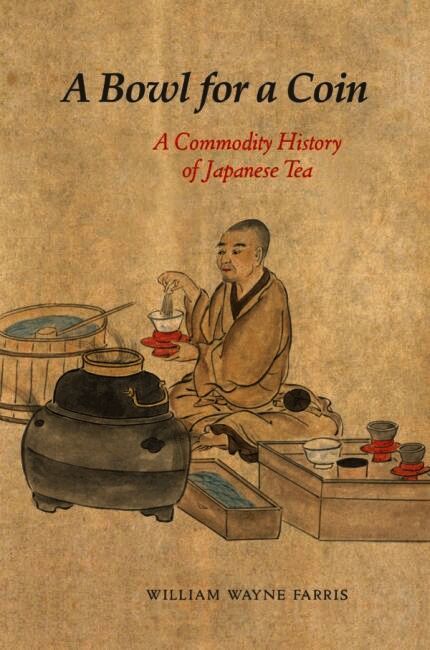
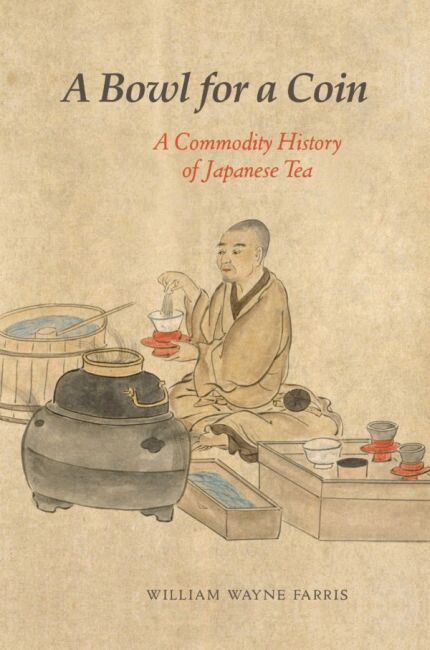
A Bowl for a Coin is the first book in any language to describe and analyze the history of all Japanese teas from the plant’s introduction to the archipelago around 750 to the present day. To understand the triumph of the tea plant in Japan, Wayne Farris begins with its cultivation and goes on to describe the myriad ways in which the herb was processed into a palatable beverage, ultimately resulting in the wide variety of teas we enjoy today. Along the way, he traces in fascinating detail the shift in tea’s status from exotic gift item from China, tied to Heian (794–1185) court ritual and medicinal uses, to tax and commodity for exchange in the 1350s, to its complete nativization in Edo (1603–1868) art and literature and its eventual place on the table of every Japanese household.Farris maintains that the increasing sophistication of Japanese agriculture after 1350 is exemplified by tea farming, which became so advanced that Meiji (1868–1912) entrepreneurs were able to export significant amounts of Japanese tea to Euro-American markets. This in turn provided the much-needed foreign capital necessary to help secure Japan a place among the world’s industrialized nations. Tea also had a hand in initiating Japan’s “industrious revolution”: From 1400, tea was being drunk in larger quantities by commoners as well as elites, and the stimulating, habit-forming beverage made it possible for laborers to apply handicraft skills in a meticulous, efficient, and prolonged manner. In addition to aiding in the protoindustrialization of Japan by 1800, tea had by that time become a central commodity in the formation of a burgeoning consumer society. The demand-pull of tea consumption necessitated even greater production into the postwar period—and this despite challenges posed to the industry by consumers’ growing taste for coffee. A Bowl for a Coin makes a convincing case for how tea—an age-old drink that continues to adapt itself to changing tastes in Japan and the world—can serve as a broad lens through which to view the development of Japanese society over many centuries.
319 kr
Skickas inom 7-10 vardagar
A Bowl for a Coin is the first book in any language to describe and analyze the history of all Japanese teas from the plant's introduction to the archipelago around 750 to the present day. To understand the triumph of the tea plant in Japan, William Wayne Farris begins with its cultivation and goes on to describe the myriad ways in which the herb was processed into a palatable beverage, ultimately resulting in the wide variety of teas we enjoy today. Along the way, he traces in fascinating detail the shift in tea's status from exotic gift item from China, tied to Heian (794-1185) court ritual and medicinal uses, to tax and commodity for exchange in the 1350s, to its complete nativization in Edo (1603-1868) art and literature and its eventual place on the table of every Japanese household.Farris maintains that the increasing sophistication of Japanese agriculture after 1350 is exemplified by tea farming, which became so advanced that Meiji (1868-1912) entrepreneurs were able to export significant amounts of Japanese tea to Euro-American markets. This in turn provided the much-needed foreign capital necessary to help secure Japan a place among the world's industrialized nations. Tea also had a hand in initiating Japan's "industrious revolution": From 1400, tea was being drunk in larger quantities by commoners as well as elites, and the stimulating, habit-forming beverage made it possible for laborers to apply handicraft skills in a meticulous, efficient, and prolonged manner. In addition to aiding in the protoindustrialization of Japan by 1800, tea had by that time become a central commodity in the formation of a burgeoning consumer society. The demand-pull of tea consumption necessitated even greater production into the postwar period-and this despite challenges posed to the industry by consumers' growing taste for coffee. A Bowl for a Coin makes a convincing case for how tea-an age-old drink that continues to adapt itself to changing tastes in Japan and the world-can serve as a broad lens through which to view the development of Japanese society over many centuries.
270 kr
Skickas inom 7-10 vardagar
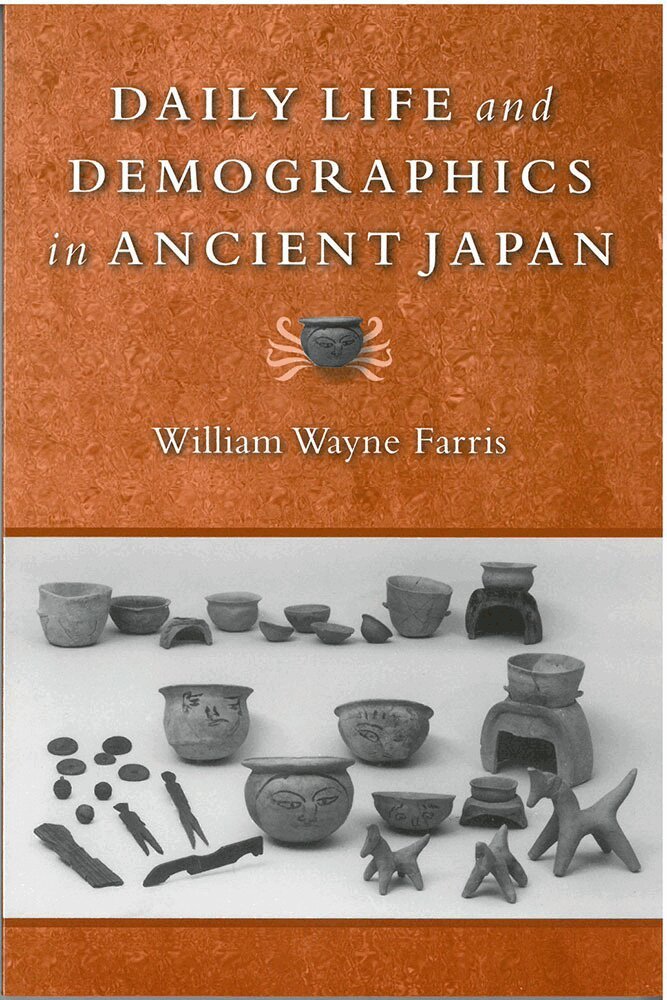
For centuries, scholars have wondered what daily life was like for the common people of Japan, especially for long bygone eras such as the ancient age (700–1150). Using the discipline of historical demography, William Wayne Farris shows that for most of this era, Japan’s overall population hardly grew at all, hovering around six million for almost five hundred years. The reasons for the stable population were complex. Most importantly, Japan was caught up in an East Asian pandemic that killed both aristocrat and commoner in countless numbers every generation. These epidemics of smallpox, measles, mumps, and dysentery decimated the adult population, resulting in wide-ranging social and economic turmoil. Famine recurred about once every three years, leaving large proportions of the populace malnourished or dead. Ecological degradation of central Japan led to an increased incidence of drought and soil erosion. And war led soldiers to murder innocent bystanders in droves. Under these harsh conditions, agriculture suffered from high rates of field abandonment and poor technological development. Both farming and industry shifted increasingly to labor-saving technologies. With workers at a premium, wages rose. Traders shifted from the use of money to barter. Cities disappeared. The family was an amorphous entity, with women holding high status in a labor-short economy. Broken families and an appallingly high rate of infant mortality were also part of kinship patterns. The average family lived in a cold, drafty dwelling susceptible to fire, wore clothing made of scratchy hemp, consumed meals just barely adequate in the best of times, and suffered from a lack of sanitary conditions that increased the likelihood of disease outbreak. While life was harsh for almost all people from 700 to 1150, these experiences represented investments in human capital that would bear fruit during the medieval epoch (1150–1600).