W.M. Roth – författare
Visar alla böcker från författaren W.M. Roth. Handla med fri frakt och snabb leverans.
6 produkter
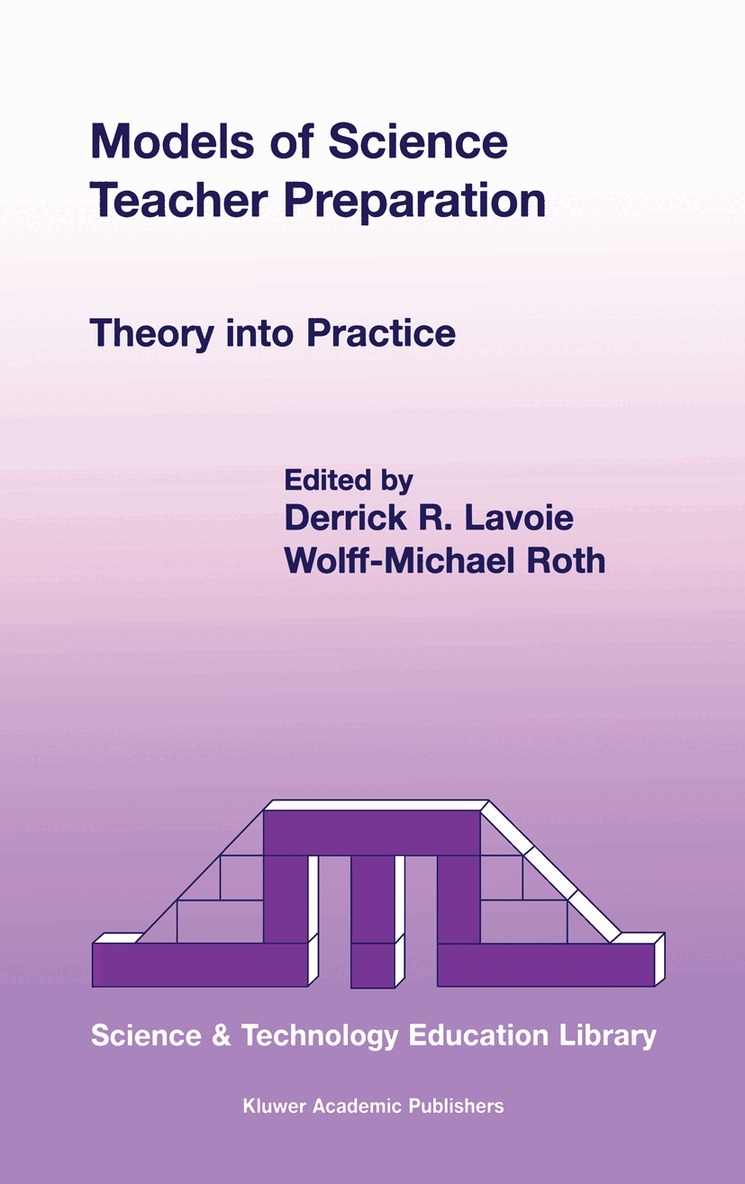
Models of Science Teacher Preparation
Theory into Practice
Av W.M. Roth, D.R. Lavoie
E-bok, 2005
1427 kr
Lägg i varukorg
1 Wolff Michael Roth & Derrick R. Lavoie² 1 2 University of Victoria, Virtual Institute for Learning Resources The current reform in science education requires a substantive change in how science is taught. Implicit in this reform is an equally substantive change in professional devel- ment …
Models of Science Teacher Preparation
Theory into Practice
Av D.R. Lavoie, W.M. Roth
Inbunden, 2001
1098 kr
Lägg i varukorg
1 Wolff Michael Roth & Derrick R. Lavoie² 1 2 University of Victoria, Virtual Institute for Learning Resources The current reform in science education requires a substantive change in how science is taught. Implicit in this reform is an equally substantive change in professional devel- ment …
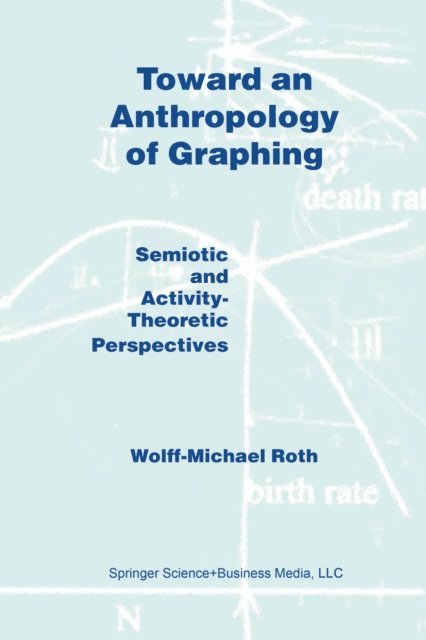
Toward an Anthropology of Graphing
Semiotic and Activity-Theoretic Perspectives
Av W.M. Roth
Inbunden, 2003
1101 kr
Lägg i varukorg
During the summer of 1990, while taking my holidays to teach a university course of physics for elementary teachers, I also tutored one of the tenth-grade students at my school in physics, chemistry, and mathematics. In return for working with him for free, I had requested permission to audiotape …
Toward an Anthropology of Graphing
Semiotic and Activity-Theoretic Perspectives
Av W.M. Roth
Häftad, 2003
1101 kr
Lägg i varukorg
During the summer of 1990, while taking my holidays to teach a university course of physics for elementary teachers, I also tutored one of the tenth-grade students at my school in physics, chemistry, and mathematics. In return for working with him for free, I had requested permission to audiotape …
Models of Science Teacher Preparation
Theory into Practice
Av D.R. Lavoie, W.M. Roth
Häftad, 2010
1098 kr
Lägg i varukorg
1 Wolff Michael Roth & Derrick R. Lavoie² 1 2 University of Victoria, Virtual Institute for Learning Resources The current reform in science education requires a substantive change in how science is taught. Implicit in this reform is an equally substantive change in professional devel- ment …
Toward an Anthropology of Graphing
Semiotic and Activity-Theoretic Perspectives
Av W.M. Roth
E-bok, 2012
1459 kr
Lägg i varukorg
During the summer of 1990, while taking my holidays to teach a university course of physics for elementary teachers, I also tutored one of the tenth-grade students at my school in physics, chemistry, and mathematics. In return for working with him for free, I had requested permission to audiotape …