Xiangming Xu – författare
Visar alla böcker från författaren Xiangming Xu. Handla med fri frakt och snabb leverans.
3 produkter
3 produkter
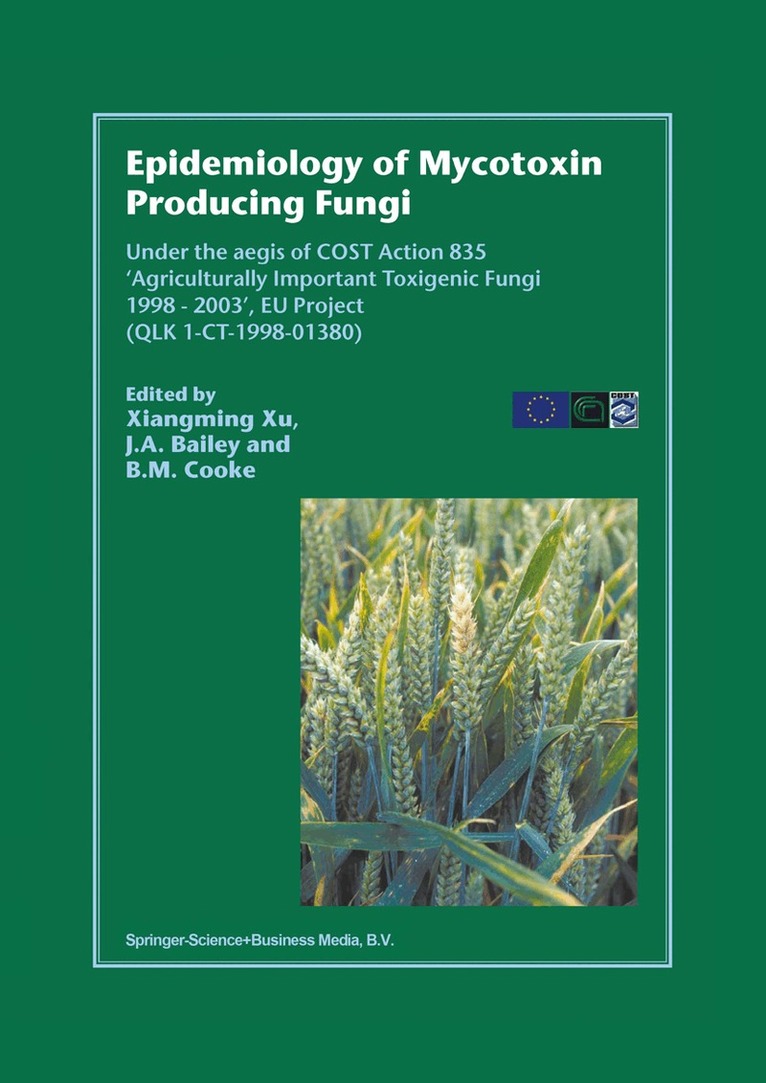
Epidemiology of Mycotoxin Producing Fungi
Under the aegis of COST Action 835 ‘Agriculturally Important Toxigenic Fungi 1998–2003’, EU project (QLK 1-CT-1998–01380)
Inbunden, Engelska, 2003
1 062 kr
Skickas inom 10-15 vardagar
Mycotoxins continue to be a very serious threat to human health and a major concern for those entrusted with regulatingthesafetyoffoodandfoodproducts.Infectionofcerealsandothercrops,notablegrapevine,byFusarium, Aspergillus andPenicillium are a world-wide problem and recent epidemics in Europe, the USA and Canada have focused attention on this problem. A previous Special Issue of the European Journal of Plant Pathology (108 (7) 2003) was concerned with the nature of these toxins and the fungi that can produce them. The aim of this publication is to review the environmental factors that in?uence the success of these fungi as pathogens and as organisms affecting stored products, and to discuss how these factors can also in?uence the amounts of toxin that accumulate. These reviews were originally presented at a Workshop of the EU COST Action 835 entitled 'Agriculturally Important Toxigenic Fungi' (Chairperson Antonio Logrieco, Bari, Italy), held in East Malling, UK at the Horticultural Research International in September 2002.We hope the information provided will stimulate scientists world-wide to assess the risk of toxins accumulating in plants under a range of environmental conditions and that this will provide an insight into how the accumulation of these toxins can be kept to a minimum. XiangmingXu JohnBailey MichaelCooke EuropeanJournalofPlantPathology109: 645-667, 2003. (c) 2003KluwerAcademicPublishers.
Del 50 - Burleigh Dodds Science: Instant Insights
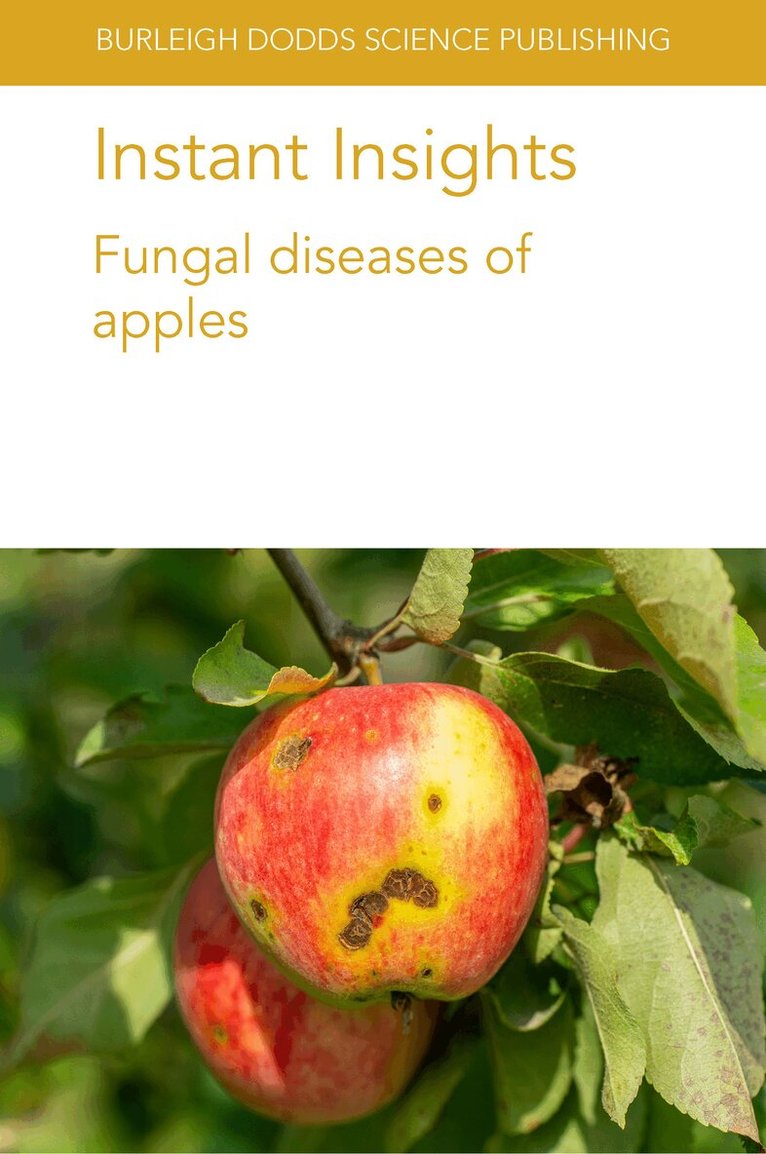
Instant Insights: Fungal Diseases of Apples
Häftad, Engelska, 2022
677 kr
Skickas inom 5-8 vardagar
This collection features four peer-reviewed literature reviews discussing fungal diseases of apples.The first chapter discusses the main pre- and postharvest pathogens affecting apple production. The chapter also reviews recent advances in biological, chemical and cultural forms of disease management to optimise production, maintain fruit quality and enhance sustainability.The second chapter reviews the epidemiology of apple scab. The chapter explores the role of host resistance, as well as techniques to manage apple scab and minimise crop losses, including fungicide application and the use of biocontrol agents.The third chapter reviews preharvest fungal and bacterial diseases as well as viruses of tree fruit. It looks at advances in technology for pathogen detection as well as methods of integrated disease management, including biological and cultural control.The final chapter reviews the development of apple varieties that are resistant to a number of important diseases, including apple scab, powdery mildew, fire blight, nectria canker and Marssonina apple blotch. The chapter also considers the use of DNA-based selection techniques for developing resistance and the mechanisms on which resistance depends.
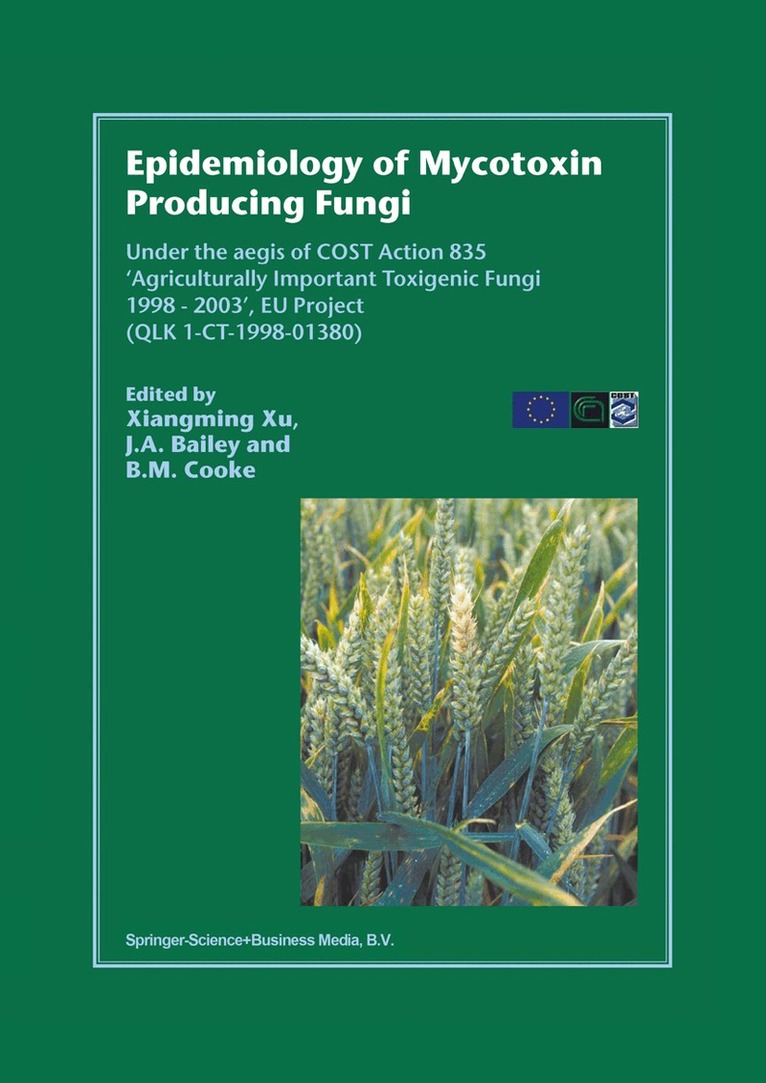
Epidemiology of Mycotoxin Producing Fungi
Under the aegis of COST Action 835 ‘Agriculturally Important Toxigenic Fungi 1998–2003’, EU project (QLK 1-CT-1998–01380)
Häftad, Engelska, 2010
1 062 kr
Skickas inom 10-15 vardagar
Mycotoxins continue to be a very serious threat to human health and a major concern for those entrusted with regulatingthesafetyoffoodandfoodproducts.Infectionofcerealsandothercrops,notablegrapevine,byFusarium, Aspergillus andPenicillium are a world-wide problem and recent epidemics in Europe, the USA and Canada have focused attention on this problem. A previous Special Issue of the European Journal of Plant Pathology (108 (7) 2003) was concerned with the nature of these toxins and the fungi that can produce them. The aim of this publication is to review the environmental factors that in?uence the success of these fungi as pathogens and as organisms affecting stored products, and to discuss how these factors can also in?uence the amounts of toxin that accumulate. These reviews were originally presented at a Workshop of the EU COST Action 835 entitled 'Agriculturally Important Toxigenic Fungi' (Chairperson Antonio Logrieco, Bari, Italy), held in East Malling, UK at the Horticultural Research International in September 2002.We hope the information provided will stimulate scientists world-wide to assess the risk of toxins accumulating in plants under a range of environmental conditions and that this will provide an insight into how the accumulation of these toxins can be kept to a minimum. XiangmingXu JohnBailey MichaelCooke EuropeanJournalofPlantPathology109: 645-667, 2003. (c) 2003KluwerAcademicPublishers.