Xiaojian Zhao – författare
Visar alla böcker från författaren Xiaojian Zhao. Handla med fri frakt och snabb leverans.
9 produkter
Asian American Chronology
Chronologies of the American Mosaic
Inbunden, 2009
1171 kr
Lägg i varukorg
Key moments in Asian American history come alive in this concise and accessible chronology.Understanding the history of Asians in America is key to understanding the development of America itself. Asian American Chronology: Chronologies of the American Mosaic presents the most influential events in …
Asian American Chronology
Chronologies of the American Mosaic
E-bok, 2009
1284 kr
Lägg i varukorg
Key moments in Asian American history come alive in this concise and accessible chronology. Understanding the history of Asians in America is key to understanding the development of America itself. Asian American Chronology: Chronologies of the American Mosaic presents the most influential events …
Remaking Chinese America
Immigration, Family, and Community, 1940-1965
Häftad, 2001
417 kr
Lägg i varukorg
In Remaking Chinese America, Xiaojian Zhao explores the myriad forces that changed and unified Chinese Americans during a key period in American history. Prior to 1940, this immigrant community was predominantly male, but between 1940 and 1965 it was transformed into a family-centered American …
New Chinese America
Class, Economy, and Social Hierarchy
Häftad, 2010
473 kr
Lägg i varukorg
The 1965 Immigration Act altered the lives and outlook of Chinese Americans in fundamental ways. The New Chinese America explores the historical, economic, and social foundations of the Chinese American community, in order to reveal the emergence of a new social hierarchy after 1965. In this …
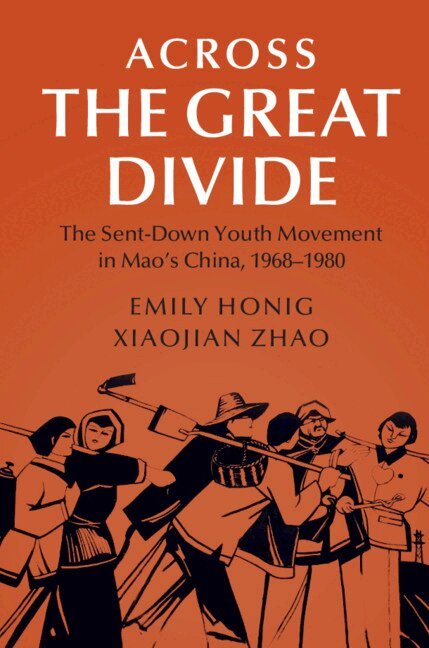
Across the Great Divide
The Sent-down Youth Movement in Mao's China, 1968-1980
Inbunden, 2019
1391 kr
Lägg i varukorg
The sent-down youth movement, a Maoist project that relocated urban youth to remote rural areas for 're-education', is often viewed as a defining feature of China's Cultural Revolution and emblematic of the intense suffering and hardship of the period. Drawing on rich archival research focused on …
Across the Great Divide
The Sent-down Youth Movement in Mao''s China, 1968–1980
E-bok, 2019
427 kr
Lägg i varukorg
The sent-down youth movement, a Maoist project that relocated urban youth to remote rural areas for ''re-education'', is often viewed as a defining feature of China''s Cultural Revolution and emblematic of the intense suffering and hardship of the period. Drawing on rich archival research focused …
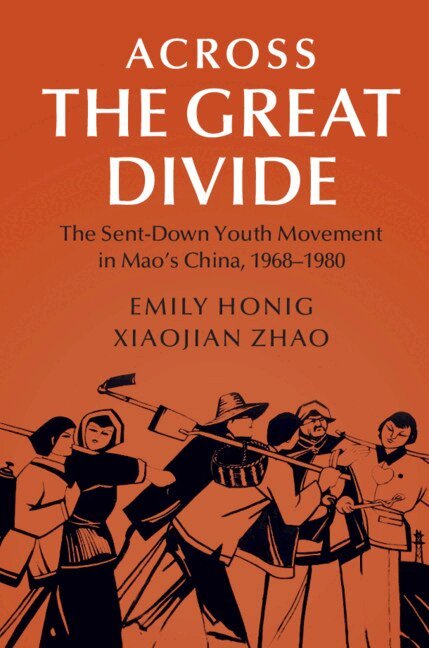
Across the Great Divide
The Sent-down Youth Movement in Mao's China, 1968-1980
Häftad, 2019
362 kr
Lägg i varukorg
The sent-down youth movement, a Maoist project that relocated urban youth to remote rural areas for 're-education', is often viewed as a defining feature of China's Cultural Revolution and emblematic of the intense suffering and hardship of the period. Drawing on rich archival research focused on …
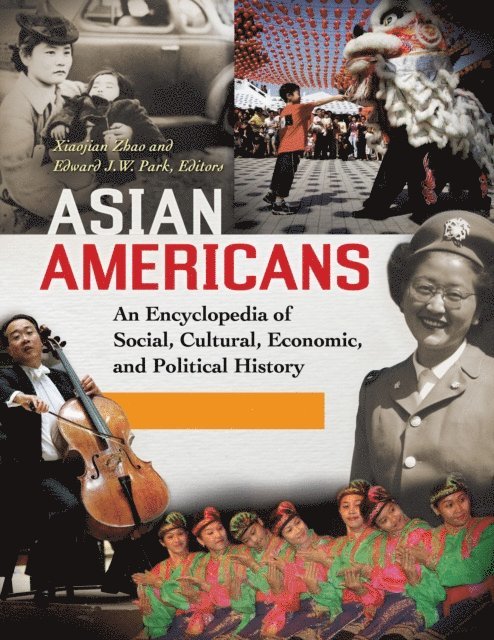
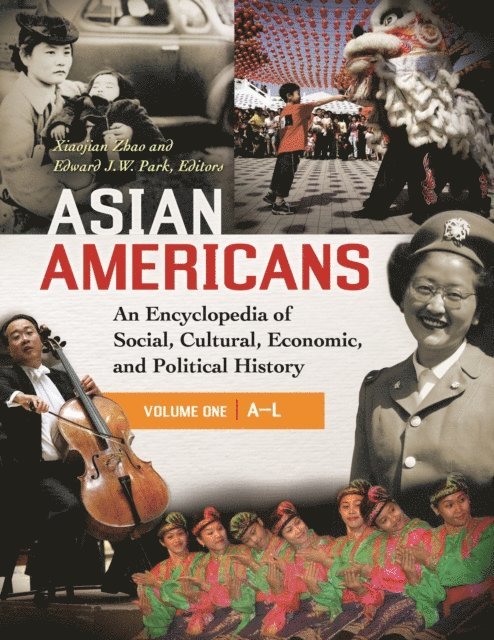
Asian Americans
An Encyclopedia of Social, Cultural, Economic, and Political History [3 Volumes]
Av Xiaojian Zhao, Edward J.W. Park Ph.D.
E-bok, 2013
3576 kr
Lägg i varukorg
This is the most comprehensive and up-to-date reference work on Asian Americans, comprising three volumes that address a broad range of topics on various Asian and Pacific Islander American groups from 1848 to the present day. This three-volume work represents a leading reference resource for Asian …
Asian Americans
An Encyclopedia of Social, Cultural, Economic, and Political History [3 Volumes]
Av Xiaojian Zhao, Edward J.W. Park Ph.D.
E-bok, 2013
3282 kr
Lägg i varukorg
This is the most comprehensive and up-to-date reference work on Asian Americans, comprising three volumes that address a broad range of topics on various Asian and Pacific Islander American groups from 1848 to the present day. This three-volume work represents a leading reference resource for Asian …