Xingcan Chen – författare
Visar alla böcker från författaren Xingcan Chen. Handla med fri frakt och snabb leverans.
3 produkter
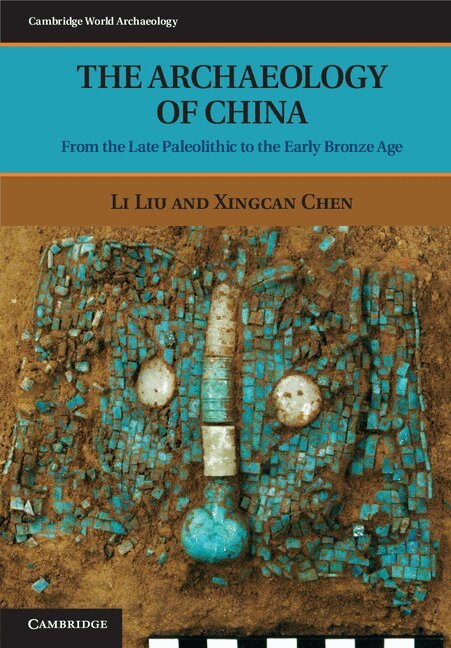
The Archaeology of China
From the Late Paleolithic to the Early Bronze Age
Av Li Liu, Xingcan Chen
Inbunden, 2012
1761 kr
Lägg i varukorg
This book explores the roles of agricultural development and advancing social complexity in the processes of state formation in China. Over a period of about 10,000 years, it follows evolutionary trajectories of society from the last Palaeolithic hunting-gathering groups, through Neolithic farming …
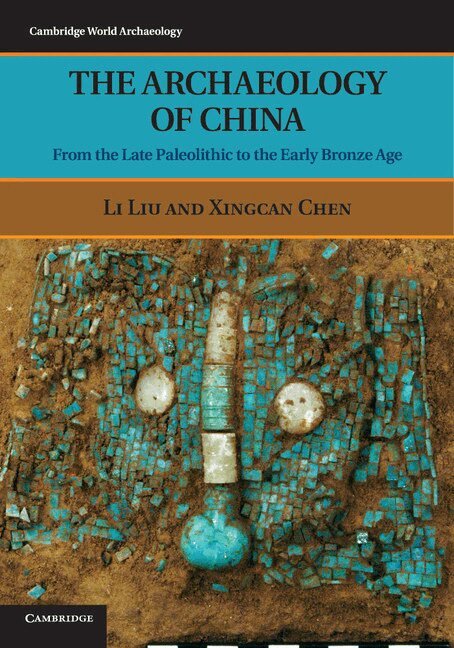
The Archaeology of China
From the Late Paleolithic to the Early Bronze Age
Av Li Liu, Xingcan Chen
Häftad, 2012
653 kr
Lägg i varukorg
This book explores the roles of agricultural development and advancing social complexity in the processes of state formation in China. Over a period of about 10,000 years, it follows evolutionary trajectories of society from the last Palaeolithic hunting-gathering groups, through Neolithic farming …
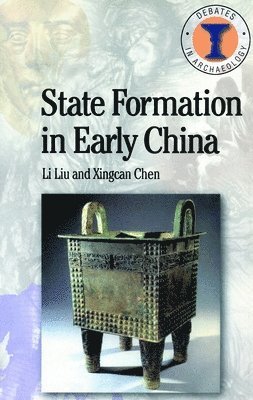
State Formation in Early China
Av Li Liu, Xingcan Chen m. fl.
Häftad, 2003
400 kr
Lägg i varukorg
A study that makes use of an interdisciplinary approach to challenge traditional theories of state formation in China and promote debate on early Chinese history. Analyzing data from archaeology, geology, cultural geography, ethnohistory and ancient texts, the authors show how the procurement of …