Yael Rice – författare
Visar alla böcker från författaren Yael Rice. Handla med fri frakt och snabb leverans.
2 produkter
2 produkter
1 243 kr
Skickas inom 7-10 vardagar
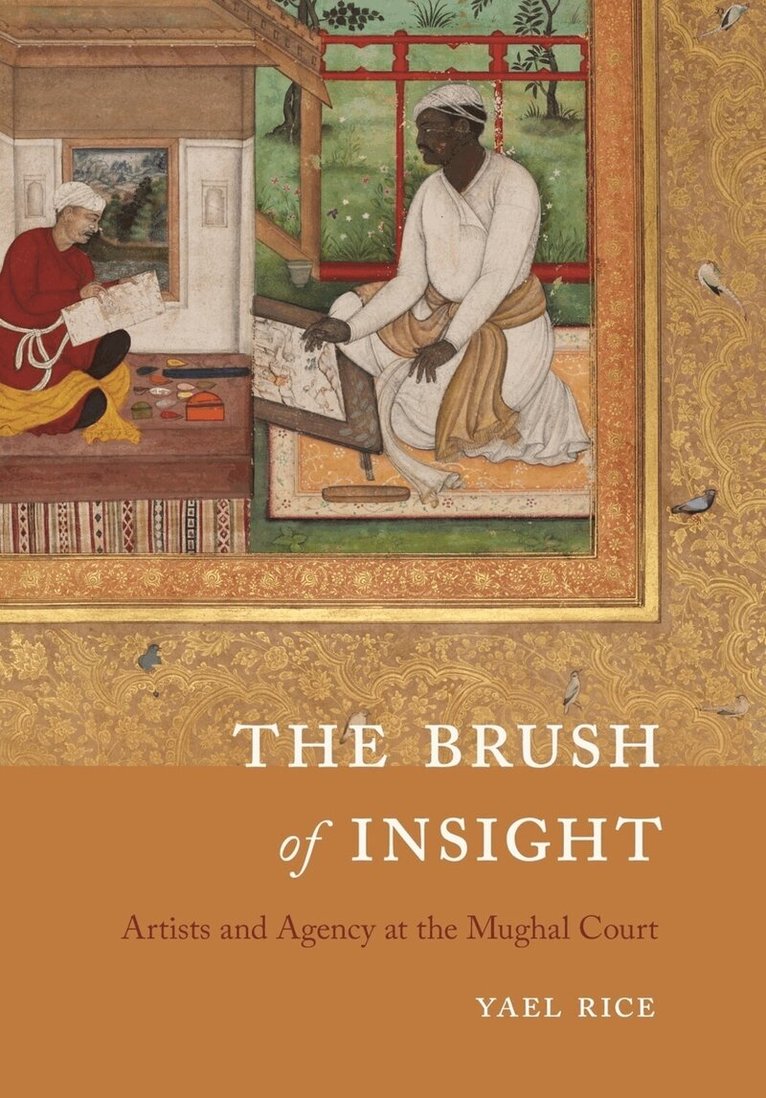
Sheds light on the art and artists that gave material form to Mughal imperial vision Over the course of the sixteenth and early seventeenth centuries, Mughal court painters evolved from illustrators of manuscripts and albums to active mediators of imperial visionary experience, cultivating their patrons’ earthly and spiritual authority. Featuring over 80 color illustrations, The Brush of Insight traces this shift, demonstrating how royal artists created a new visual economy that featured highly naturalistic royal portraits and depictions of the emperors’ dreams. These images, in turn, shaped the perception of the Mughal emperors’ preeminence in all domains—temporal and spiritual—from the reign of Akbar to that of his son and successor, Jahangir. In analyzing a wide range of visual materials including manuscripts, albums, and coins, art historian Yael Rice documents how manuscript painters and paintings challenged the status of writing as the primary medium for the transmission of knowledge and experience. With compelling material and original arguments, The Brush of Insight probes how pictures and illustrated books became central to imperial modes of seeing and being in early modern Mughal South Asia.
410 kr
Tillfälligt slut
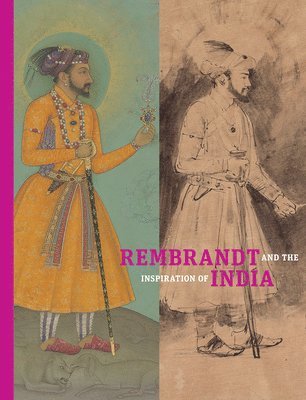
Ahh, the impact of Indian art and culture on a Dutch artist in the late 1650s! Pairing Rembrandt's twenty-three surviving drawings of Shah Jahan, Jahangir, Dara Shikoh, and other Mughal courtiers with Mughal paintings of similar compositions, the book critiques the prevailing notion that Rembrandt "brought life" to the static Mughal art. With essays written by both scholars of both Dutch and Indian art, this volume demonstrates that Rembrandt's contact with Mughal painting inspired him to draw in an entirely new, refined style on Asian paper-an approach that was shaped by the Dutch trade in Asia and prompted by the curiosity of a foreign culture. Seen in this light, Rembrandt's engagement with India enriches our understanding of collecting in seventeenth-century Amsterdam, the Dutch global economy, and Rembrandt's artistic self-fashioning. A close examination of the Mughal imperial workshop provides new insights into how Indian paintings came to Europe as well as how Dutch prints were incorporated into Mughal compositions.