Yanek Mieczkowski – författare
Visar alla böcker från författaren Yanek Mieczkowski. Handla med fri frakt och snabb leverans.
4 produkter
4 produkter
567 kr
Skickas inom 10-15 vardagar
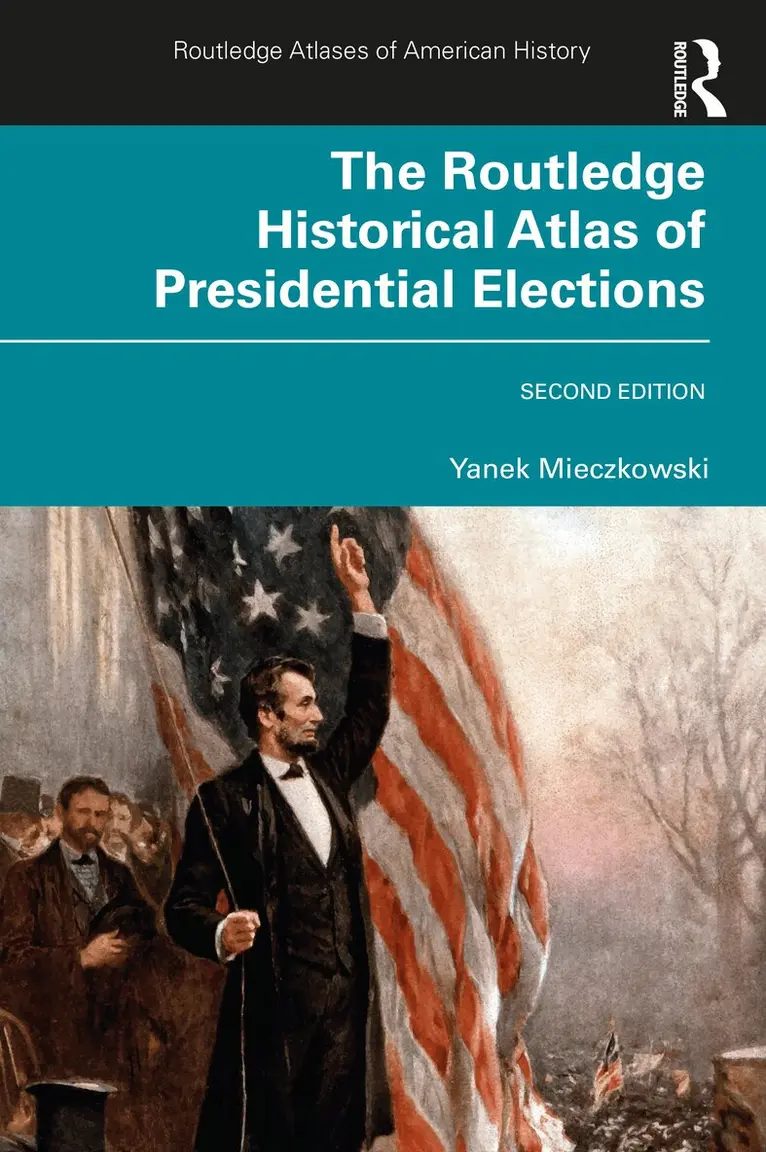
Now in its second edition, The Routledge Historical Atlas of Presidential Elections covers each race for the presidency with brisk, lively narratives up to the election of 2016. Filled with more than 100 full-color maps and illustrations, this updated volume is an indispensable resource for learning about the suspense-filled races to gain America’s highest office. Distinguished presidential historian Yanek Mieczkowski captures intriguing details about candidates, issues, and campaigns, allowing readers to experience the drama of every contest. The colorful maps that put state-by-state results at readers’ fingertips show geographic voting trends during the country’s history. The presidency is America’s greatest political prize, and this book describes how candidates have won it—including changes in electoral strategies and campaign practices over the years. This text offers a treasure trove of historical information, such as: The early tradition of the "mute" candidate The period where just one effective political party existed nationwide One race that witnessed an astounding 80 percent voter turnout A popular-vote victory of 39.9 percent that triggered secession The emergence of the "front-porch" campaign A third-party candidate who got more votes than the incumbent president The impact of radio, television, and the Internet on the election processThis book is essential reading for students of American history and the U.S. presidency.
2 176 kr
Skickas inom 10-15 vardagar
Now in its second edition, The Routledge Historical Atlas of Presidential Elections covers each race for the presidency with brisk, lively narratives up to the election of 2016. Filled with more than 100 full-color maps and illustrations, this updated volume is an indispensable resource for learning about the suspense-filled races to gain America’s highest office. Distinguished presidential historian Yanek Mieczkowski captures intriguing details about candidates, issues, and campaigns, allowing readers to experience the drama of every contest. The colorful maps that put state-by-state results at readers’ fingertips show geographic voting trends during the country’s history. The presidency is America’s greatest political prize, and this book describes how candidates have won it—including changes in electoral strategies and campaign practices over the years. This text offers a treasure trove of historical information, such as: The early tradition of the "mute" candidate The period where just one effective political party existed nationwide One race that witnessed an astounding 80 percent voter turnout A popular-vote victory of 39.9 percent that triggered secession The emergence of the "front-porch" campaign A third-party candidate who got more votes than the incumbent president The impact of radio, television, and the Internet on the election processThis book is essential reading for students of American history and the U.S. presidency.
517 kr
Skickas inom 10-15 vardagar
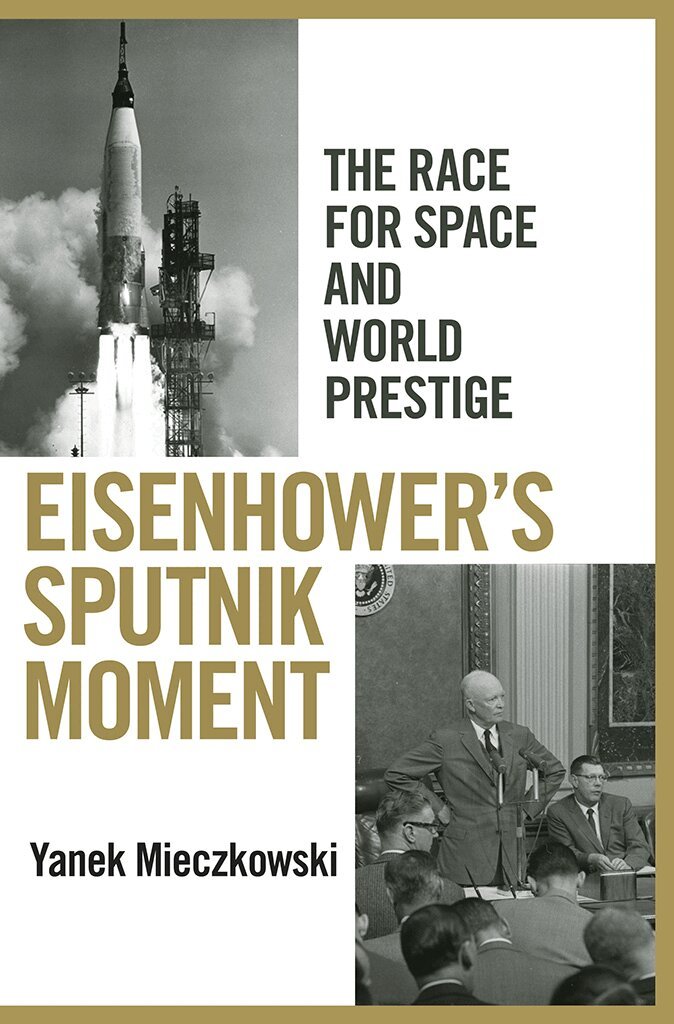
In a critical Cold War moment, Dwight D. Eisenhower's presidency suddenly changed when the Soviet Union launched Sputnik, the world's first satellite. What Ike called "a small ball" became a source of Russian pride and propaganda, and it wounded him politically, as critics charged that he responded sluggishly to the challenge of space exploration. Yet Eisenhower refused to panic after Sputnik—and he did more than just stay calm. He helped to guide the United States into the Space Age, even though Americans have given greater credit to John F. Kennedy for that achievement. In Eisenhower's Sputnik Moment, Yanek Mieczkowski examines the early history of America's space program, reassessing Eisenhower's leadership. He details how Eisenhower approved breakthrough satellites, supported a new civilian space agency, signed a landmark science education law, and fostered improved relations with scientists. These feats made Eisenhower's post-Sputnik years not the flop that critics alleged but a time of remarkable progress, even as he endured the setbacks of recession, medical illness, and a humiliating first U.S. attempt to launch a satellite. Eisenhower's principled stands enabled him to resist intense pressure to boost federal spending, and he instead pursued his priorities—a balanced budget, prosperous economy, and sturdy national defense. Yet Sputnik also altered the world's power dynamics, sweeping Eisenhower in directions that were new—even alien—to him, and he misjudged the importance of space in the Cold War's "prestige race." By contrast, Kennedy capitalized on the issue in the 1960 election, and after taking office he urged a manned mission to the moon, leaving Eisenhower to grumble over the young president's aggressive approach. Offering a fast-paced account of this Cold War episode, Mieczkowski demonstrates that Eisenhower built an impressive record in space and on earth, all the while offering warnings about America's stature and strengths that still hold true today.
Surviving War, Oceans Apart
Two Teenagers in Poland and Japan Destined for Life Together
Häftad, Engelska, 2024
462 kr
Skickas inom 5-8 vardagar
This work takes readers to two countries ravaged by World War II, Poland and Japan, recounting the wartime experiences of teenagers Bogdan and Seiko. Bogdan's family abandoned its home in Bydgoszcz, Poland, and fled to Warsaw, where Bogdan fought for the Polish Home Army in the 1944 Warsaw Uprising. During this brutal conflict, as Poles tried to oust occupying Germans, Bogdan sustained severe injuries, and after the Germans crushed the Uprising, he endured seven POW camps. On the other side of the globe, in Hokkaido, Japan, Seiko's country went to war against the U.S. With school suspended, Seiko worked in a wartime factory. Terror and turmoil haunted Japanese civilian life; Seiko's older sister died during the war, while her older brother trained as a kamikaze pilot.Despite suffering harsh misfortunes, Bogdan and Seiko resolved to rebound once the war ended. Both immigrated to the U.S. to pursue educational opportunities. In bustling postwar New York City, they met, fell in love, and then started a family. Offering a unique transnational perspective on WWII, Bogdan and Seiko's story is one of hope, symbolizing recovery from war's devastation while reminding readers of how immigrants to America have started new lives and pursued their dreams.