Yat Ming Loo - Böcker
Visar alla böcker från författaren Yat Ming Loo. Handla med fri frakt och snabb leverans.
3 produkter
3 produkter
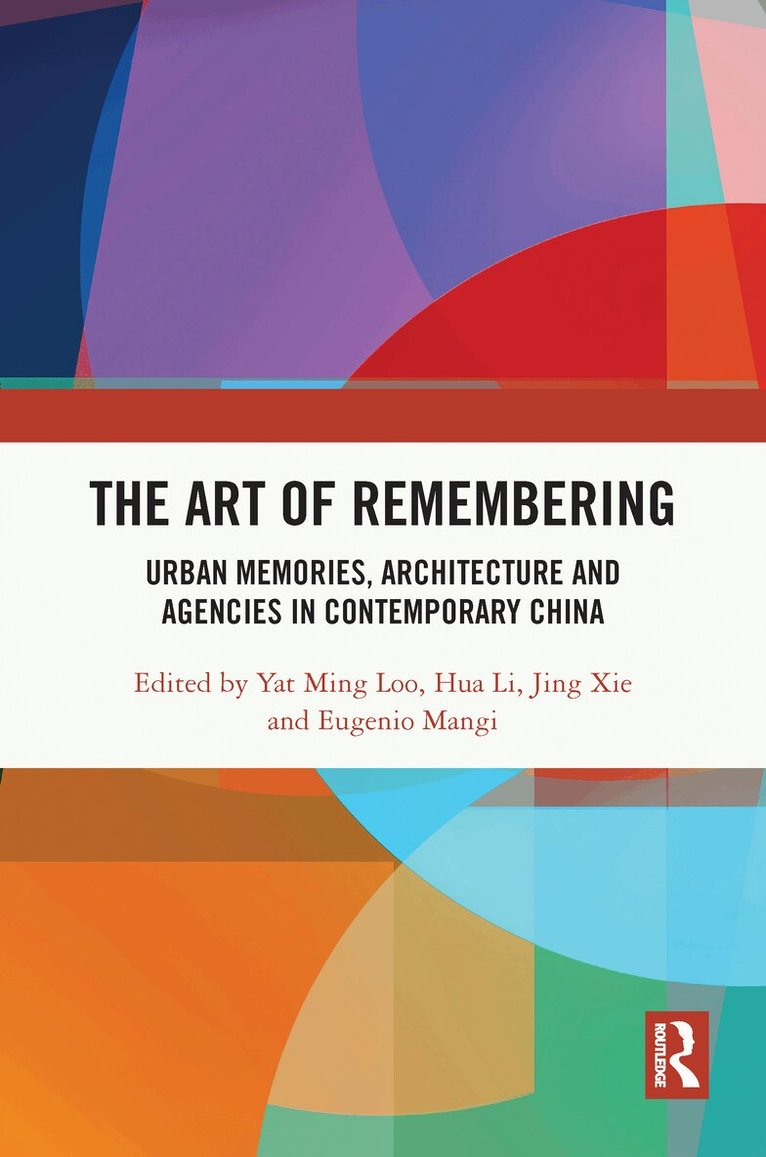
Art of Remembering
Urban Memories, Architecture and Agencies in Contemporary China
Inbunden, Engelska, 2024
2 444 kr
Skickas inom 10-15 vardagar
Focusing on the non-Western context and case studies, this book explores theories of interdisciplinary architectural thinking and the construction of urban memory in Chinese cities, with an emphasis on contemporary architecture and the diversity of agencies.China has undergone one of the fastest urbanisation and urban renewal processes in human history, but discussions of urban memory in China have tended to be practice-oriented and lack theoretical reflection. This book brings together interdisciplinary architectural scholarship to interrogate the production of urban memory and examine experiences in China. The 14 chapters explore different processes, projects, materials, architecture and urban spaces in different Chinese cities by analysing cityscapes such as temples, bridges, conservation projects, architectural design, historical architecture, memorial hall, market street, city images, custom bike, food market and so on. The book deals with different agencies and methods, tangible and intangible, in the construction of memories aimed at promoting hybridised multiple identities, and explores the interplay of different versions of memory, i.e. state, public, regional, local, individual and collective memory.This book will be essential reading for scholars and students of architecture and urbanism, cultural studies and China studies, as well as architects, urban planners and historians interested in these fields.
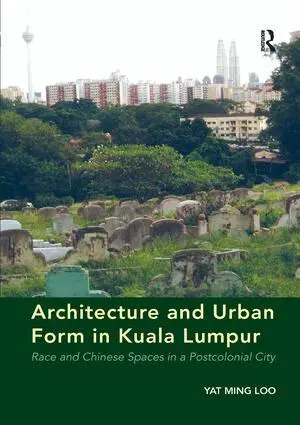
Architecture and Urban Form in Kuala Lumpur
Race and Chinese Spaces in a Postcolonial City
Häftad, Engelska, 2016
780 kr
Skickas inom 10-15 vardagar
Kuala Lumpur, the capital city of Malaysia, is a former colony of the British Empire which today prides itself in being a multicultural society par excellence. However, the Islamisation of the urban landscape, which is at the core of Malaysia’s decolonisation projects, has marginalised the Chinese urban spaces which were once at the heart of Kuala Lumpur. Engaging with complex colonial and postcolonial aspects of the city, from the British colonial era in the 1880s to the modernisation period in the 1990s, this book demonstrates how Kuala Lumpur’s urban landscape is overwritten by a racial agenda through the promotion of Malaysian Architecture, including the world-famous mega-projects of the Petronas Twin Towers and the new administrative capital of Putrajaya. Drawing on a wide range of Chinese community archives, interviews and resources, the book illustrates how Kuala Lumpur’s Chinese spaces have been subjugated. This includes original case studies showing how the Chinese re-appropriated the Kuala Lumpur old city centre of Chinatown and Chinese cemeteries as a way of contesting state’s hegemonic national identity and ideology. This book is arguably the first academic book to examine the relationship of Malaysia’s large Chinese minority with the politics of architecture and urbanism in Kuala Lumpur. It is also one of the few academic books to situate the Chinese diaspora spaces at the centre of the construction of city and nation. By including the spatial contestation of those from the margins and their resistance against the state ideology, this book proposes a recuperative urban and architectural history, seeking to revalidate the marginalised spaces of minority community and re-script them into the narrative of the postcolonial nation-state.
Architecture and Urban Form in Kuala Lumpur
Race and Chinese Spaces in a Postcolonial City
Inbunden, Engelska, 2013
2 220 kr
Skickas inom 10-15 vardagar
Kuala Lumpur, the capital city of Malaysia, is a former colony of the British Empire which today prides itself in being a multicultural society par excellence. However, the Islamisation of the urban landscape, which is at the core of Malaysia’s decolonisation projects, has marginalised the Chinese urban spaces which were once at the heart of Kuala Lumpur. Engaging with complex colonial and postcolonial aspects of the city, from the British colonial era in the 1880s to the modernisation period in the 1990s, this book demonstrates how Kuala Lumpur’s urban landscape is overwritten by a racial agenda through the promotion of Malaysian Architecture, including the world-famous mega-projects of the Petronas Twin Towers and the new administrative capital of Putrajaya. Drawing on a wide range of Chinese community archives, interviews and resources, the book illustrates how Kuala Lumpur’s Chinese spaces have been subjugated. This includes original case studies showing how the Chinese re-appropriated the Kuala Lumpur old city centre of Chinatown and Chinese cemeteries as a way of contesting state’s hegemonic national identity and ideology. This book is arguably the first academic book to examine the relationship of Malaysia’s large Chinese minority with the politics of architecture and urbanism in Kuala Lumpur. It is also one of the few academic books to situate the Chinese diaspora spaces at the centre of the construction of city and nation. By including the spatial contestation of those from the margins and their resistance against the state ideology, this book proposes a recuperative urban and architectural history, seeking to revalidate the marginalised spaces of minority community and re-script them into the narrative of the postcolonial nation-state.