Yingying Chen - Böcker
Visar alla böcker från författaren Yingying Chen. Handla med fri frakt och snabb leverans.
6 produkter
6 produkter
1 073 kr
Skickas inom 10-15 vardagar
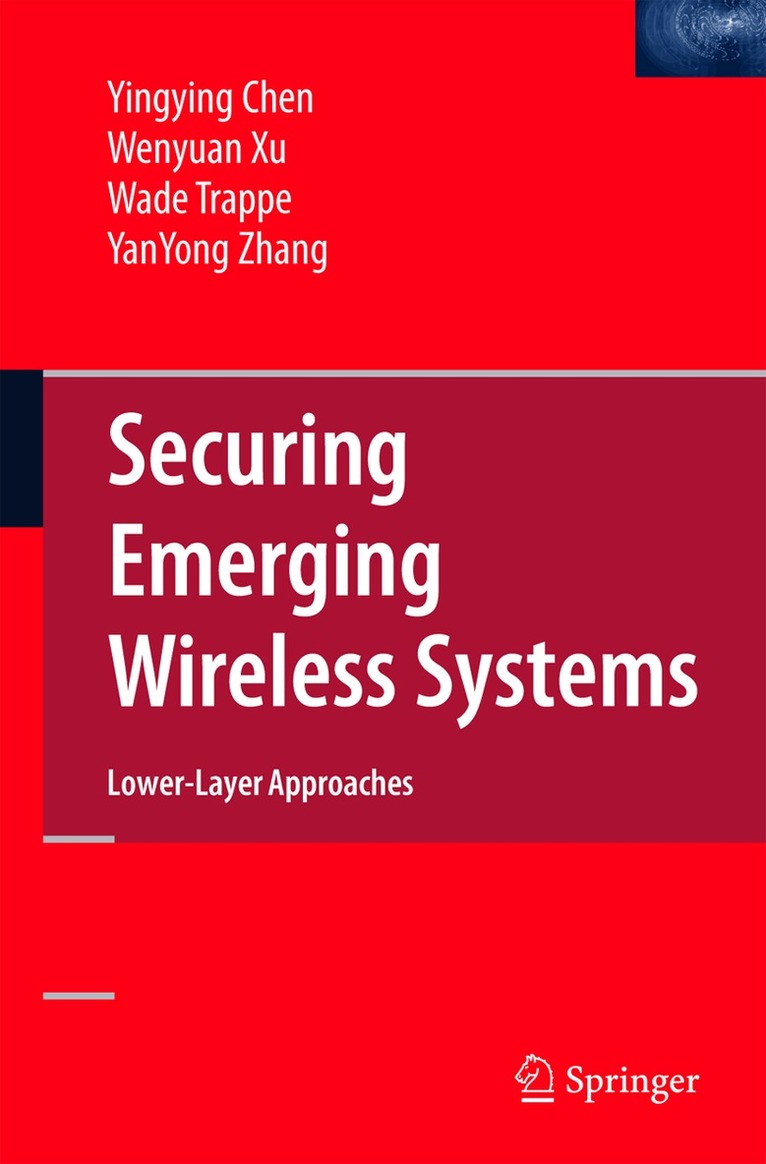
Securing Emerging Wireless Systems: Lower-layer Approaches aims to fill a growing need in the research community for a reference that describes the lower-layer approaches as a foundation towards secure and reliable wireless systems. Whereas most of the references typically address cryptographic attacks by using conventional "network security" approches for securing wireless systems, the proposed book will be differentiated from the rest of the market by its focus on non-cryptographic attacks that cannot easily be addressed by using traditional methods, and further by presenting a collection of defense mechanisms that operate at the lower-layers of the protocol stack and can defend wireless systems before the effects of attacks propagate up to higher-level applications and services.The book will focus on fundamental security problems that involve properties unique to wireless systems, such as the characteristics of radio propagation, or the location of communicating entities, or the properties of the medium access control layer. Specifically, the book provides detection mechanisms and highlights defense strategies that cope with threats to wireless localization infrastructure, attacks on wireless networks that exploit entity identity (i.e. spoofing attacks), jamming and radio interference that can undermine the availability of wireless communications, and privacy threats where an adversary seeks to infer spatial and temporal contextual information surrounding wireless communications. Additionally, the authors explore new paradigms of physical layer security for wireless systems, which can support authentication and confidentiality services by exploiting fading properties unique to wireless communications.
1 073 kr
Skickas inom 10-15 vardagar
Securing Emerging Wireless Systems: Lower-layer Approaches aims to fill a growing need in the research community for a reference that describes the lower-layer approaches as a foundation towards secure and reliable wireless systems. Whereas most of the references typically address cryptographic attacks by using conventional "network security" approches for securing wireless systems, the proposed book will be differentiated from the rest of the market by its focus on non-cryptographic attacks that cannot easily be addressed by using traditional methods, and further by presenting a collection of defense mechanisms that operate at the lower-layers of the protocol stack and can defend wireless systems before the effects of attacks propagate up to higher-level applications and services.The book will focus on fundamental security problems that involve properties unique to wireless systems, such as the characteristics of radio propagation, or the location of communicating entities, or the properties of the medium access control layer. Specifically, the book provides detection mechanisms and highlights defense strategies that cope with threats to wireless localization infrastructure, attacks on wireless networks that exploit entity identity (i.e. spoofing attacks), jamming and radio interference that can undermine the availability of wireless communications, and privacy threats where an adversary seeks to infer spatial and temporal contextual information surrounding wireless communications. Additionally, the authors explore new paradigms of physical layer security for wireless systems, which can support authentication and confidentiality services by exploiting fading properties unique to wireless communications.
Del 107 - Advances in Information Security
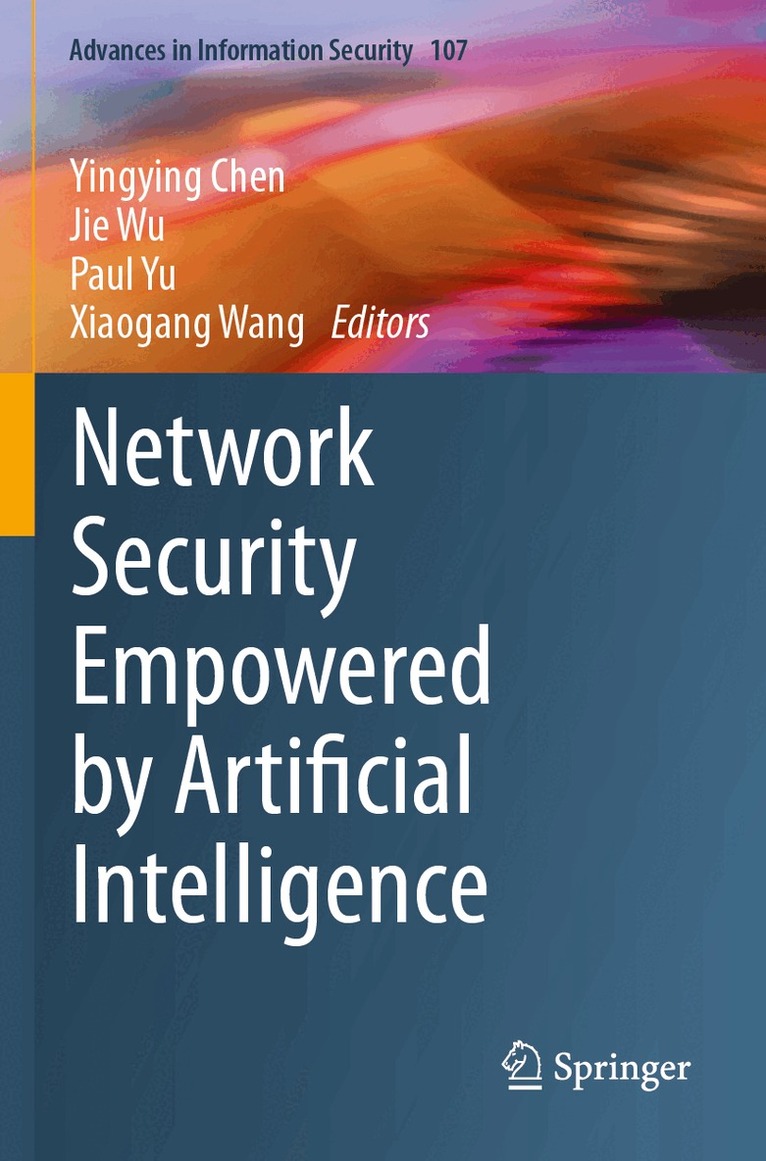
Network Security Empowered by Artificial Intelligence
Inbunden, Engelska, 2024
2 399 kr
Skickas inom 7-10 vardagar
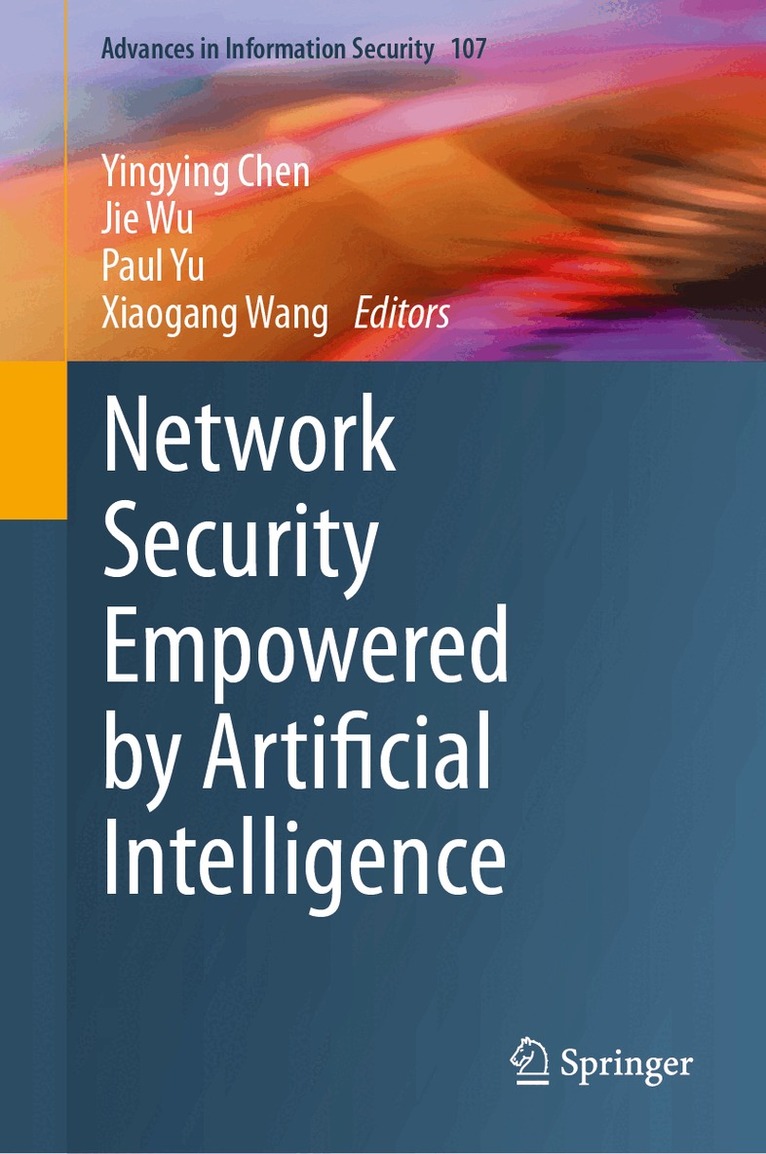
This book introduces cutting-edge methods on security in spectrum management, mobile networks and next-generation wireless networks in the era of artificial intelligence (AI) and machine learning (ML).
Del 107 - Advances in Information Security
Network Security Empowered by Artificial Intelligence
Häftad, Engelska, 2025
2 399 kr
Skickas inom 10-15 vardagar
This book introduces cutting-edge methods on security in spectrum management, mobile networks and next-generation wireless networks in the era of artificial intelligence (AI) and machine learning (ML). This book includes four parts: (a) Architecture Innovations and Security in 5G Networks, (b) Security in Artificial Intelligence-enabled Intrusion Detection Systems. (c) Attack and Defense in Artificial Intelligence-enabled Wireless Systems, (d) Security in Network-enabled Applications. The first part discusses the architectural innovations and security challenges of 5G networks, highlighting novel network structures and strategies to counter vulnerabilities. The second part provides a comprehensive analysis of intrusion detection systems and the pivotal role of AI and machine learning in defense and vulnerability assessment. The third part focuses on wireless systems, where deep learning is explored to enhance wireless communication security. The final part broadens the scope, examining the applications of these emerging technologies in network-enabled fields.The advancement of AI/ML has led to new opportunities for efficient tactical communication and network systems, but also new vulnerabilities. Along this direction, innovative AI-driven solutions, such as game-theoretic frameworks and zero-trust architectures are developed to strengthen defenses against sophisticated cyber threats. Adversarial training methods are adopted to augment this security further. Simultaneously, deep learning techniques are emerging as effective tools for securing wireless communications and improving intrusion detection systems. Additionally, distributed machine learning, exemplified by federated learning, is revolutionizing security model training. Moreover, the integration of AI into network security, especially in cyber-physical systems, demands careful consideration to ensure it aligns with the dynamics of these systems.This book is valuable for academics, researchers, and students in AI/ML, network security, and related fields. It serves as a resource for those in computer networks, AI, ML, and data science, and can be used as a reference or secondary textbook.
556 kr
Skickas inom 10-15 vardagar
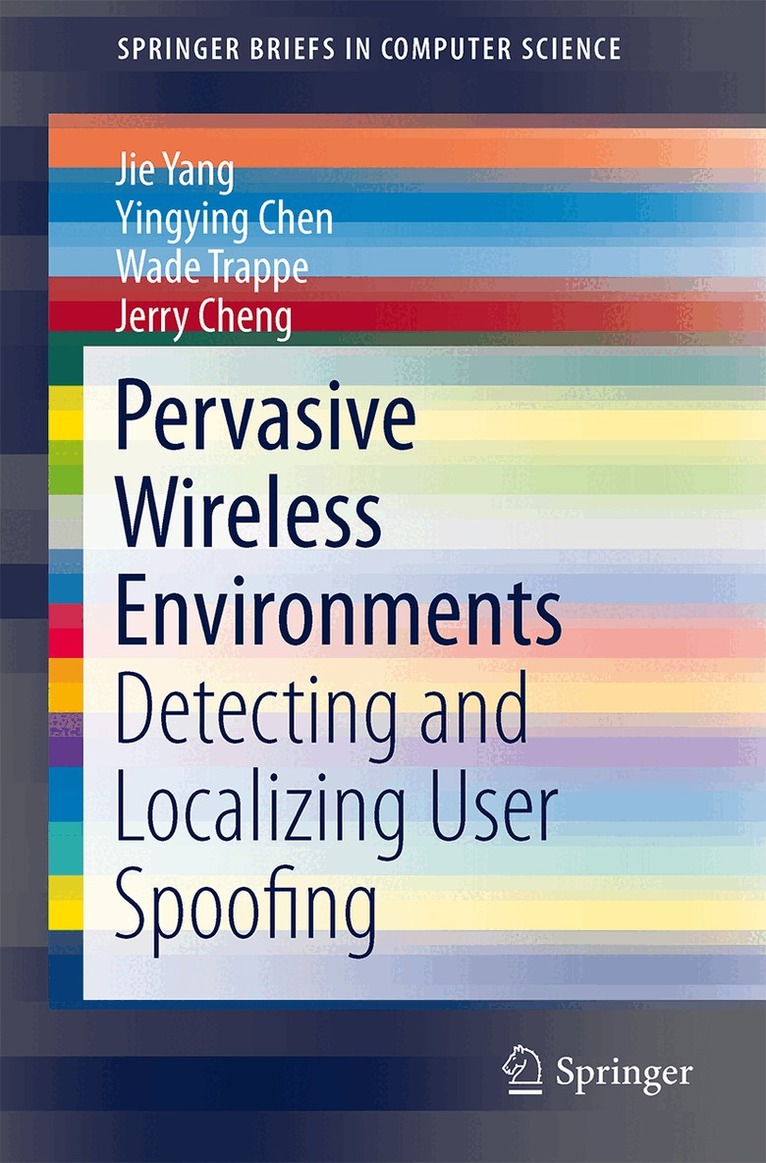
This Springer Brief provides a new approach to prevent user spoofing by using the physical properties associated with wireless transmissions to detect the presence of user spoofing. The most common method, applying cryptographic authentication, requires additional management and computational power that cannot be deployed consistently. The authors present the new approach by offering a summary of the recent research and exploring the benefits and potential challenges of this method. This brief discusses the feasibility of launching user spoofing attacks and their impact on the wireless and sensor networks. Readers are equipped to understand several system models. One attack detection model exploits the spatial correlation of received signal strength (RSS) inherited from wireless devices as a foundation. Through experiments in practical environments, the authors evaluate the performance of the spoofing attack detection model. The brief also introduces the DEMOTE system, which exploits the correlation within the RSS trace based on each device’s identity to detect mobile attackers. A final chapter covers future directions of this field.By presenting complex technical information in a concise format, this brief is a valuable resource for researchers, professionals, and advanced-level students focused on wireless network security.
540 kr
Skickas inom 10-15 vardagar
This SpringerBrief begins by introducing the concept of smartphone sensing and summarizing the main tasks of applying smartphone sensing in vehicles. Chapter 2 describes the vehicle dynamics sensing model that exploits the raw data of motion sensors (i.e., accelerometer and gyroscope) to give the dynamic of vehicles, including stopping, turning, changing lanes, driving on uneven road, etc. Chapter 3 detects the abnormal driving behaviors based on sensing vehicle dynamics. Specifically, this brief proposes a machine learning-based fine-grained abnormal driving behavior detection and identification system, D3, to perform real-time high-accurate abnormal driving behaviors monitoring using the built-in motion sensors in smartphones.As more vehicles taking part in the transportation system in recent years, driving or taking vehicles have become an inseparable part of our daily life. However, increasing vehicles on the roads bring more traffic issues including crashes and congestions, which make it necessary to sense vehicle dynamics and detect driving behaviors for drivers. For example, sensing lane information of vehicles in real time can be assisted with the navigators to avoid unnecessary detours, and acquiring instant vehicle speed is desirable to many important vehicular applications. Moreover, if the driving behaviors of drivers, like inattentive and drunk driver, can be detected and warned in time, a large part of traffic accidents can be prevented. However, for sensing vehicle dynamics and detecting driving behaviors, traditional approaches are grounded on the built-in infrastructure in vehicles such as infrared sensors and radars, or additional hardware like EEG devices and alcohol sensors, which involves high cost. The authors illustrate that smartphone sensing technology, which involves sensors embedded in smartphones (including the accelerometer, gyroscope, speaker, microphone, etc.), can be applied in sensing vehicle dynamics and driving behaviors. Chapter 4 exploits the feasibility to recognize abnormal driving events of drivers at early stage. Specifically, the authors develop an Early Recognition system, ER, which recognize inattentive driving events at an early stage and alert drivers timely leveraging built-in audio devices on smartphones. An overview of the state-of-the-art research is presented in chapter 5. Finally, the conclusions and future directions are provided in Chapter 6.