Yiping Zhao - Böcker
Visar alla böcker från författaren Yiping Zhao. Handla med fri frakt och snabb leverans.
2 produkter
2 produkter
1 320 kr
Skickas inom 7-10 vardagar
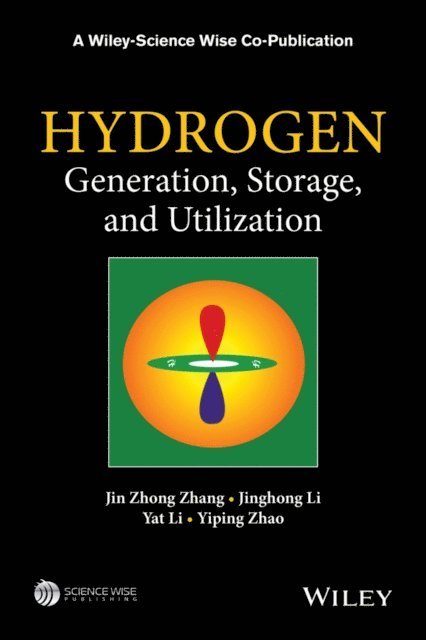
The potential use of hydrogen as a clean and renewable fuel resource has generated significant attention in recent years, especially given the rapidly increasing demand for energy sources and the dwindling availability of fossil fuels. Hydrogen is an “ideal fuel” in several ways. Its only byproduct of consumption is water; it is the most abundant element in the universe; and it is available at low cost. Hydrogen generation is possible via a number of possible chemical processes, to separate the hydrogen from its bond with atoms such as carbon, nitrogen, and oxygen.In this book, the authors provide the scientific foundations for established and innovative methods of hydrogen extraction; outline solutions for its storage; and illustrate its applications in the fields of petroleum, chemical, metallurgical, physics, and manufacturing. Addresses the three fundamental aspects of hydrogen as a fuel resource: generation, storage, and utilizationProvides theoretical basis for the chemical processes required for hydrogen generation, including solar, photoelectrochemical, thermochemical, and fermentation methodsDiscusses storage of hydrogen based on metal hydrides, hydrocarbons, high pressure compression, and cryogenicsExamines the applications of hydrogen utilization in the fields of petroleum, chemical, metallurgical, physics, and manufacturingContains over 90 figures, including 27 color figures
533 kr
Skickas inom 7-10 vardagar
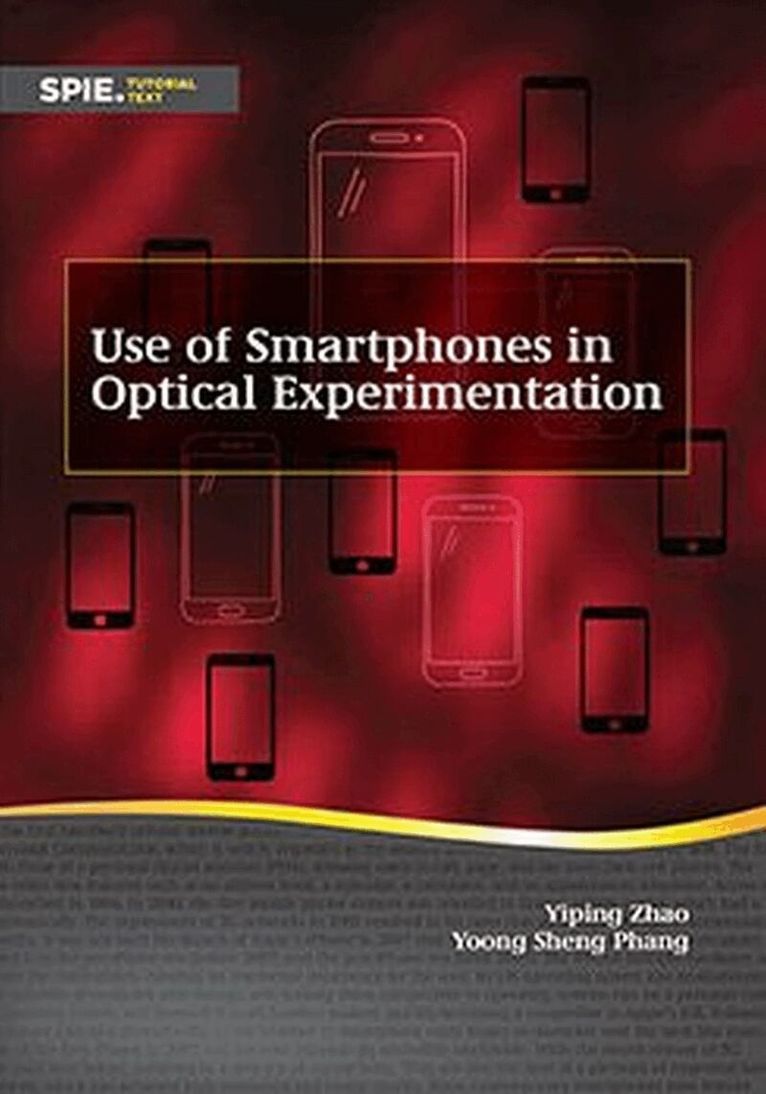
Use of Smartphones in Optical Experimentation shows how smartphone-based optical labs can be designed and realized. The book presents demonstrations of fundamental geometric and physical optical principles, including the law of reflection, the law of refraction, image formation equations, dispersion, Beer's law, polarization, Fresnel's equations, optical rotation, diffraction, interference, and blackbody radiation. Many practical applications—how to design a monochromator and a spectrometer, use the Gaussian beam of a laser, measure the colors of LED lights, and estimate the temperature of an incandescent lamp or the Sun—are also included. The experimental designs provided in this book represent only a hint of the power of leveraging the technological capability of smartphones and other low-cost materials to create a physics lab.