Yumna Siddiqi - Böcker
Visar alla böcker från författaren Yumna Siddiqi. Handla med fri frakt och snabb leverans.
3 produkter
3 produkter
1 185 kr
Skickas inom 3-6 vardagar
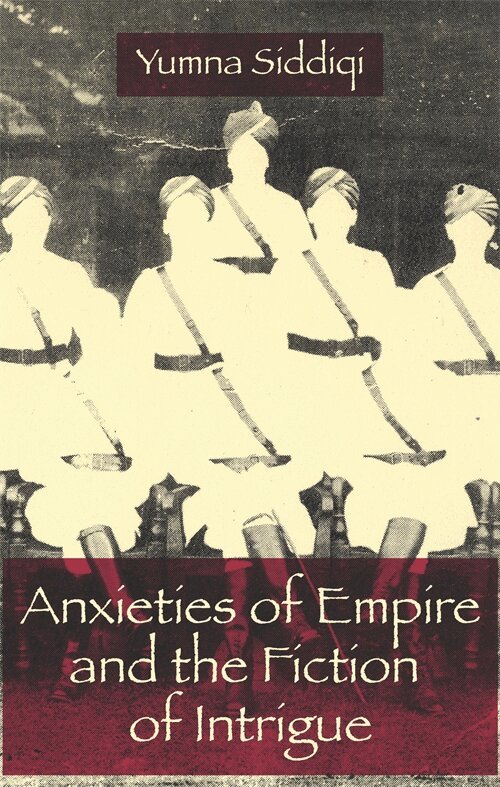
Focusing on late nineteenth- and twentieth-century stories of detection, policing, and espionage by British and South Asian writers, Yumna Siddiqi presents an original and compelling exploration of the cultural anxieties created by imperialism. She suggests that while colonial writers use narratives of intrigue to endorse imperial rule, postcolonial writers turn the generic conventions and topography of the fiction of intrigue on its head, launching a critique of imperial power that makes the repressive and emancipatory impulses of postcolonial modernity visible. Siddiqi devotes the first part of her book to the colonial fiction of Arthur Conan Doyle and John Buchan, in which the British regime's preoccupation with maintaining power found its voice. The rationalization of difference, pronouncedly expressed through the genre's strategies of representation and narrative resolution, helped to reinforce domination and, in some cases, allay fears concerning the loss of colonial power.In the second part, Siddiqi argues that late twentieth-century South Asian writers also underscore the state's insecurities, but unlike British imperial writers, they take a critical view of the state's authoritarian tendencies. Such writers as Amitav Ghosh, Michael Ondaatje, Arundhati Roy, and Salman Rushdie use the conventions of detective and spy fiction in creative ways to explore the coercive actions of the postcolonial state and the power dynamics of a postcolonial New Empire. Drawing on the work of leading theorists of imperialism such as Edward Said, Frantz Fanon, and the Subaltern Studies historians, Siddiqi reveals how British writers express the anxious workings of a will to maintain imperial power in their writing. She also illuminates the ways South Asian writers portray the paradoxes of postcolonial modernity and trace the ruses and uses of reason in a world where the modern marks a horizon not only of hope but also of economic, military, and ecological disaster.
1 218 kr
Skickas inom 7-10 vardagar
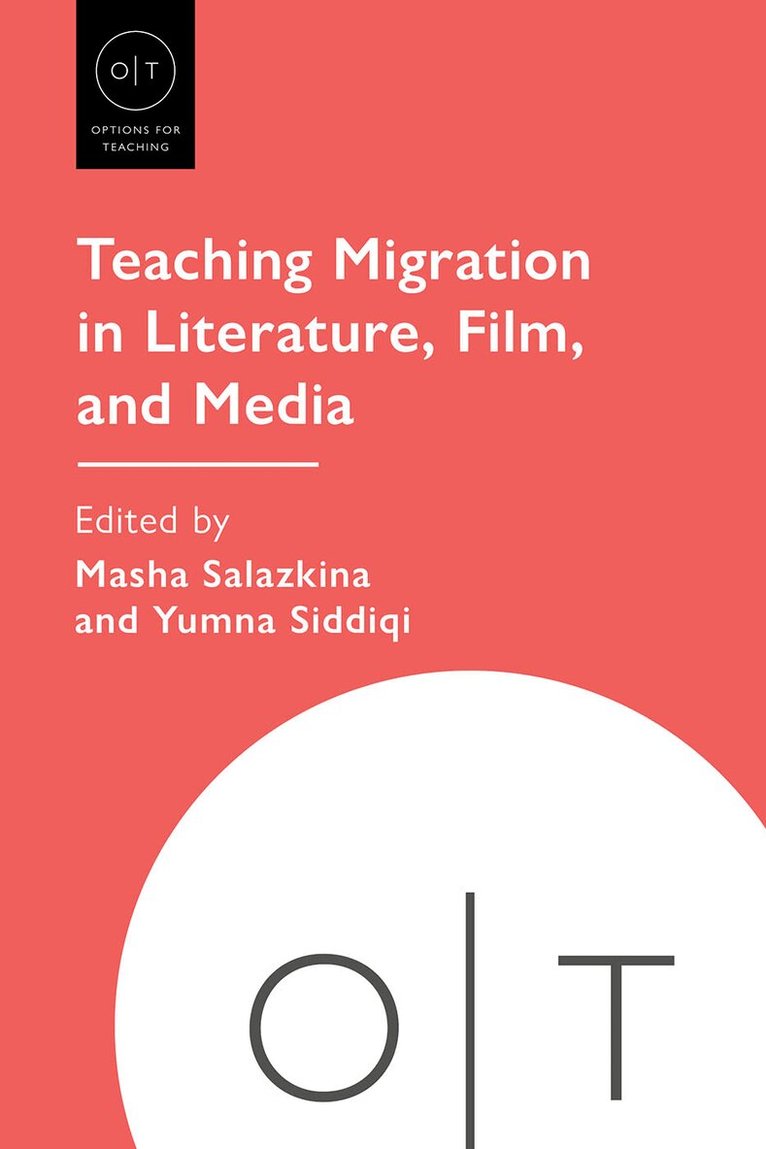
Essays on how to teach one of the most important issues of our timePeople migrate to seek opportunities, to unite with family, and to escape war, persecution, poverty, and environmental disasters. A phenomenon that has real, lived effects on individuals and communities, migration also carries symbolic, ideological significance. Its depiction in literature, film, and other media powerfully shapes worldviews, identities, attitudes toward migrants, and a political landscape that is both local and global. It is imperative, then, to connect the disciplinary and theoretical tools we have for understanding migration and to put them in conversation with students' experiences.Featuring a wide range of classroom approaches, this volume brings together topics that are often taught separately, including tourism, slavery, drug cartels, race, whiteness, settler colonialism, the Arab Spring, assimilation, and disability. Readers are introduced to terminology and legal frameworks and to theories of migration in relation to Black studies, ethnic studies, Asian American studies, Latinx studies, border studies, postcolonial studies, and Indigenous studies.This volume also contains discussion of the following texts, films, and other media: Ai Weiwei, Human Flow; Mati Diop, Atlantiques; Wapikoni Mobile; Nuruddin Farah, Links; Uwem Akpan, Luxurious Hearses; J. M. Coetzee, Life and Times of Michael K; Amitav Ghosh, Gun Island; Orban Wallace, Another News Story; United Nations Convention Relating to the Status of Refugees (the Geneva Convention); Oscar Martínez, The Beast: Riding the Rails and Dodging Narcos on the Migrant Trail; Antonio Ortuño, La Fila India; Marc Silver, Who Is Dayani Crystal?; Javier Zamora, Unaccompanied; Valeria Luiselli, Tell Me How It Ends: An Essay in Forty Questions; Jonas Poher Rasmussen, Flee.
492 kr
Skickas inom 7-10 vardagar
Essays on how to teach one of the most important issues of our timePeople migrate to seek opportunities, to unite with family, and to escape war, persecution, poverty, and environmental disasters. A phenomenon that has real, lived effects on individuals and communities, migration also carries symbolic, ideological significance. Its depiction in literature, film, and other media powerfully shapes worldviews, identities, attitudes toward migrants, and a political landscape that is both local and global. It is imperative, then, to connect the disciplinary and theoretical tools we have for understanding migration and to put them in conversation with students' experiences.Featuring a wide range of classroom approaches, this volume brings together topics that are often taught separately, including tourism, slavery, drug cartels, race, whiteness, settler colonialism, the Arab Spring, assimilation, and disability. Readers are introduced to terminology and legal frameworks and to theories of migration in relation to Black studies, ethnic studies, Asian American studies, Latinx studies, border studies, postcolonial studies, and Indigenous studies.This volume also contains discussion of the following texts, films, and other media: Ai Weiwei, Human Flow; Mati Diop, Atlantiques; Wapikoni Mobile; Nuruddin Farah, Links; Uwem Akpan, Luxurious Hearses; J. M. Coetzee, Life and Times of Michael K; Amitav Ghosh, Gun Island; Orban Wallace, Another News Story; United Nations Convention Relating to the Status of Refugees (the Geneva Convention); Oscar Martínez, The Beast: Riding the Rails and Dodging Narcos on the Migrant Trail; Antonio Ortuño, La Fila India; Marc Silver, Who Is Dayani Crystal?; Javier Zamora, Unaccompanied; Valeria Luiselli, Tell Me How It Ends: An Essay in Forty Questions; Jonas Poher Rasmussen, Flee.