Yung-Hee Kim - Böcker
Visar alla böcker från författaren Yung-Hee Kim. Handla med fri frakt och snabb leverans.
4 produkter
4 produkter
368 kr
Skickas inom 7-10 vardagar
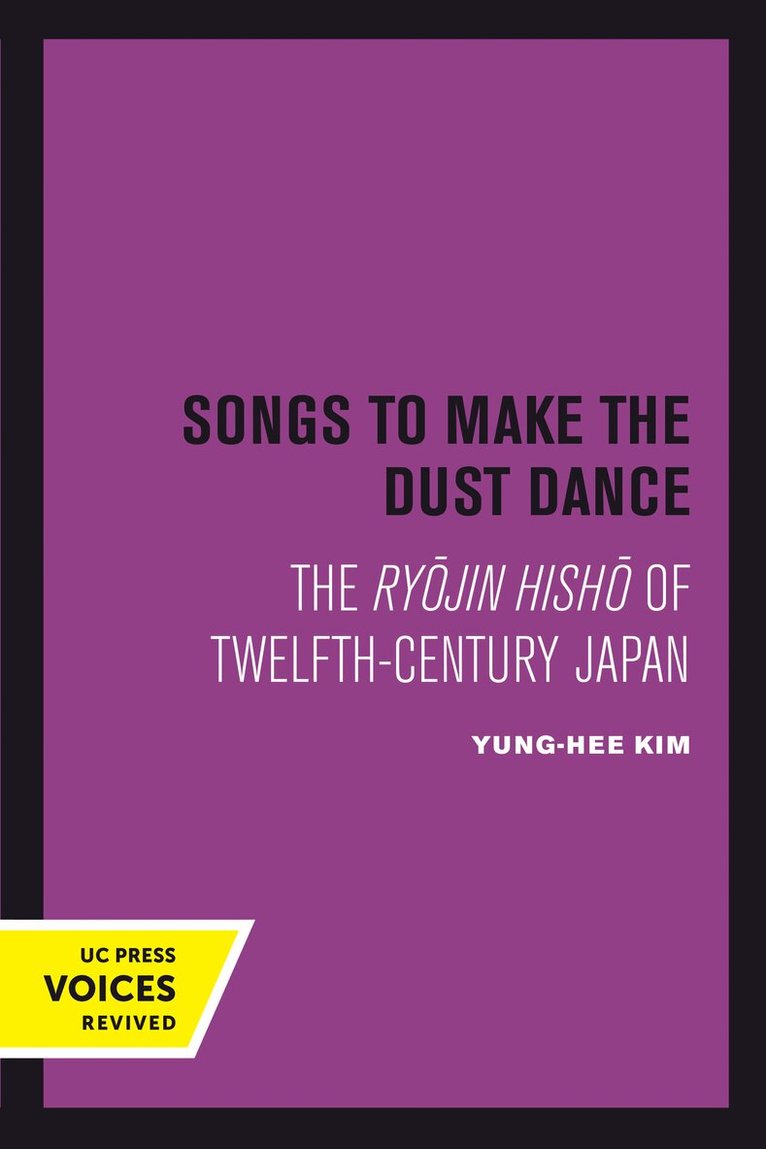
Breaking through the long-established image of Heian Japan (794–1185) as a culture dominated by ritualized aristocratic values, Yung-Hee Kim presents a picture of a country in transition, filled with a wide variety of common people responding to very ordinary situations. The court does not disappear, but rather becomes part of a larger society inhabited by Buddhist nuns and mountain ascetics, farmers and fishermen, beggars and gamblers. In popular songs called imayo, they express their concerns about religion, love, aging, and even current affairs. In 1179 Emperor Go-Shirakawa compiled a collection of this song genre, which had flourished for two centuries. His twenty-volume anthology, Ryojin hisho, circulated until the middle of the fourteenth century, when it disappeared completely. To the astonishment of the scholarly world, two volumes reappeared early in the twentieth century. It is these texts—a small remnant of a powerful popular literature—that Kim makes accessible to English-speaking readers. Ryojin hisho juxtaposes the sacred with the profane, the high with the low, the male with the female, the old with the new. The songs, in translations that faithfully reflect the sounds and images of the originals, make up the core of this book. They are surrounded by a wealth of material on the imayo genre, the women who sang the songs, the role of court patronage, and other aspects of Heian culture. Far from simply surviving as an aesthetic artifact, the anthology comes to life in its own literary and cultural context. This title is part of UC Press's Voices Revived program, which commemorates University of California Press’s mission to seek out and cultivate the brightest minds and give them voice, reach, and impact. Drawing on a backlist dating to 1893, Voices Revived makes high-quality, peer-reviewed scholarship accessible once again using print-on-demand technology. This title was originally published in 1994.
1 690 kr
Skickas inom 3-6 vardagar
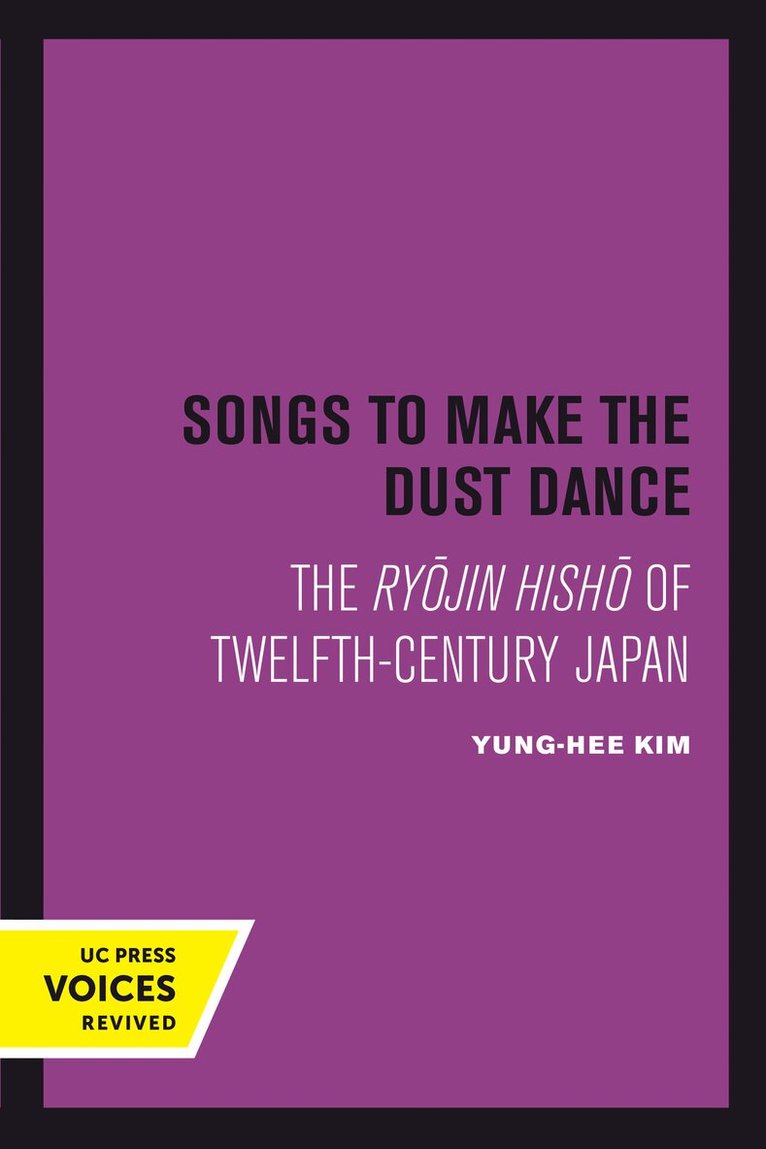
Breaking through the long-established image of Heian Japan (794–1185) as a culture dominated by ritualized aristocratic values, Yung-Hee Kim presents a picture of a country in transition, filled with a wide variety of common people responding to very ordinary situations. The court does not disappear, but rather becomes part of a larger society inhabited by Buddhist nuns and mountain ascetics, farmers and fishermen, beggars and gamblers. In popular songs called imayo, they express their concerns about religion, love, aging, and even current affairs. In 1179 Emperor Go-Shirakawa compiled a collection of this song genre, which had flourished for two centuries. His twenty-volume anthology, Ryojin hisho, circulated until the middle of the fourteenth century, when it disappeared completely. To the astonishment of the scholarly world, two volumes reappeared early in the twentieth century. It is these texts—a small remnant of a powerful popular literature—that Kim makes accessible to English-speaking readers. Ryojin hisho juxtaposes the sacred with the profane, the high with the low, the male with the female, the old with the new. The songs, in translations that faithfully reflect the sounds and images of the originals, make up the core of this book. They are surrounded by a wealth of material on the imayo genre, the women who sang the songs, the role of court patronage, and other aspects of Heian culture. Far from simply surviving as an aesthetic artifact, the anthology comes to life in its own literary and cultural context. This title is part of UC Press's Voices Revived program, which commemorates University of California Press’s mission to seek out and cultivate the brightest minds and give them voice, reach, and impact. Drawing on a backlist dating to 1893, Voices Revived makes high-quality, peer-reviewed scholarship accessible once again using print-on-demand technology. This title was originally published in 1994.
369 kr
Skickas inom 7-10 vardagar
Readings in Modern Korean Literature will provide advanced students (those with at least four years of college-level training in Korean) with materials that will help them understand and appreciate modern Korean literary traditions as well as challenge them to use their Korean-language competence to the fullest extent. It offers the student a wide range of literary writing, including three different genres of poetry, short stories, and essays. Each piece is accompanied by a vocabulary glossary and notes, explanations of socio-cultural details, an introduction to the author, and a translation. The textbook is distinguished by a variety of exercises designed to enhance students' proficiency in referential reading, writing, and comprehension skills. Readings in Modern Korean Literature fills a serious gap in learner-oriented comprehensive texts for students of Korean literature and culture. It will give them the opportunity to explore the most salient themes, forms, and techniques that inform Korean literary texts and give them a sense of the flow of modern Korean literature.
679 kr
Skickas inom 10-15 vardagar
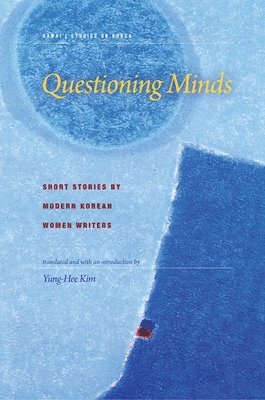
Available for the first time in English, the ten short stories by modern Korean women collected here touch in one way or another on issues related to gender and kinship politics. All of the protagonists are women facing personal crises or defining moments in their lives as gender-marked beings in a Confucian, patriarchal Korean society. Their personal dreams and values have been compromised by gender expectations or their own illusions about female existence. They are compelled to ask themselves 'Who am I?' 'Where am I going?' 'What are my choices?' Each story bears colorful and compelling testimony to the life of the heroine. Some of the stories celebrate the central character's breakaway from the patriarchal order; others expose sexual inequality and highlight the struggle for personal autonomy and dignity. Still others reveal the abrupt awakening to mid-life crises and the seasoned wisdom that comes with accepting the limits of old age. The stories are arranged in chronological order, from the earliest work by Korea's first modern woman writer in 1917 to stories that appeared in 1995 - approximately one from each decade. Most of the writers presented are recognized literary figures, but some are lesser-known voices. The introduction presents a historical overview of traditions of modern Korean women's fiction, situating the selected writers and their stories in the larger context of Korean literature. Each story is accompanied by a biographical note on the author and a brief critical analysis. A selected bibliography is provided for further reading and research.