Zander Brietzke - Böcker
Visar alla böcker från författaren Zander Brietzke. Handla med fri frakt och snabb leverans.
5 produkter
5 produkter
533 kr
Skickas inom 5-8 vardagar
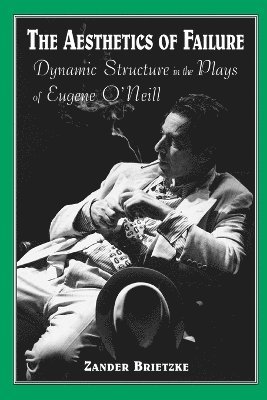
Critic Clive Barnes once called Eugene O'Neill the "world's worst great playwright" and Brooks Atkinson called him "a tragic dramatist with a great knack for old-fashioned melodrama." These descriptions of the man can also be used to describe his work. Despite the fact that O'Neill is the only American playwright to win the Nobel Prize for Literature and his last works are some of America's finest, most of his published works are not good. This work closely examines how O'Neill's failures as a playwright are inspiring and how his disappointments are reflections of his own theory that tragedy requires failure, a theory that is evident in his work. Conflicts in O'Neill's plays are studied at the structural level, with attention paid to genre, language or dialogue, characters, space and time elements, and action. Included is information about O'Neill's life and a chronological listing of all of his 50 plays with basic details such as production history, principal characters, dramatic action, and a brief commentary.
492 kr
Skickas inom 5-8 vardagar
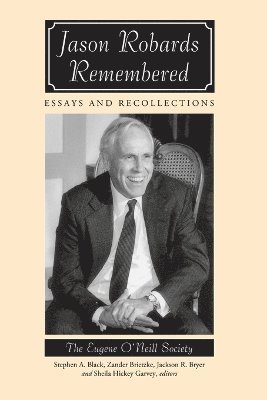
Jason Robards won consecutive Oscars as best supporting actor for the films All the President's Men (1977) and Julia (1978) but he is particularly remembered for having created central roles in the later plays of Eugene O'Neill.This tribute honors Robards in two parts. Part One presents recent interviews of the late actor as well as articles by Arthur and Barbara Gelb which appeared in the New York Times on the occasions of the American premier of Long Day's Journey into Night (1956) and of the successful production of A Moon for the Misbegotten, with Colleen Dewhurst (1974). Sheila Hickey Garvey writes of the 1956 production of Iceman and gives a brief history of Robards' work with the Circle in the Square Theatre, the theatre that began the Off Broadway theatrical movement of the 1950s. Stephen A. Black, Michael Manheim and Edward Shaughnessy write of seeing Robards perform in O'Neill plays. The O'Neill bibliographers Madeline Smith and Richard Eaton analyze the effect Robards' performances have had on subsequent performances and on scholarship about O'Neill's later plays. Zander Brietzke writes about the problem of performing O'Neill in the post-Robards era.Part Two contains more personal recollections of Jason Robards. Several of Robards' theatrical colleagues (Arvin Brown, Zoe Caldwell, Douglas Campbell, Blythe Danner, George Grizzard, the playwright A.R. Gurney, Shirley Knight, Paul Libin, Theodore Mann, Christopher Plummer, Kevin Spacey and Eli Wallach) recall their times with the actor. Wendy Cooper, president of the Eugene O'Neill Foundation, writes of Robards' help to save O'Neill's Bay Area home, Tao House. Lois McDonald and Sally Thomas Pavetti write of Robards' visits to Monte Cristo Cottage, O'Neill's boyhood home in New London, Connecticut. George Beecroft, Richard Allan Davison, and Daniel Larner recall seeing some memorable Robards performances and Margaret and Ralph Ranald recall two meetings with Robards.Also included are particularly fine obituary and memorial notices by Kevin Spacey, Joe Morgenstern, and Charles Saydah, and a tribute by Jason Robards' colleagues at The Roundabout Theatre.
550 kr
Skickas inom 7-10 vardagar
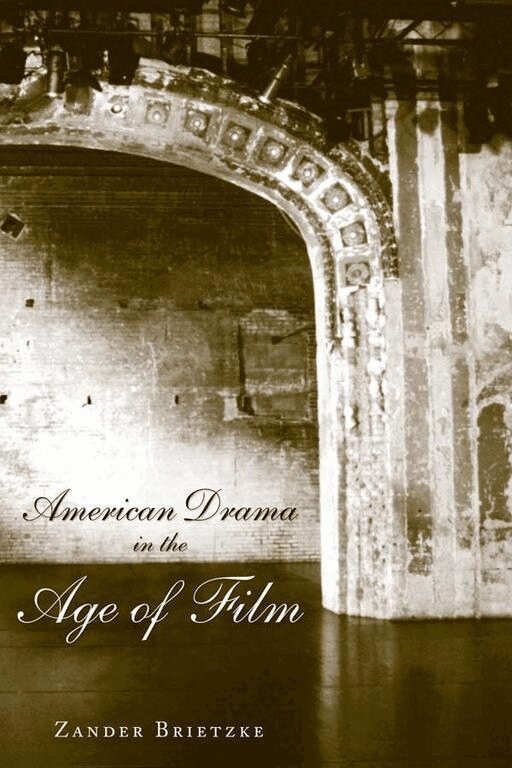
Is theater really dead? Does the theater, as its champions insist, really provide a more intimate experience than film? If so, how have changes in cinematic techniques and technologies altered the relationship between stage and film? What are the inherent limitations of representing three-dimensional spaces in a two-dimensional one, and vice versa? American Drama in the Age of Film examines the strengths and weaknesses of both the dramatic and cinematic arts to confront the standard arguments in the film-versus-theater debate. Using widely known adaptations of ten major plays, Brietzke seeks to highlight the inherent powers of each medium and draw conclusions not just about how they differ, but how they ought to differ as well. He contrasts both stage and film productions of, among other works, David Mamet’s Glengarry Glen Ross, Sam Shepard’s True West, Edward Albee’s Who’s Afraid of Virginia Woolf, Margaret Edson’s Wit, Tony Kushner’s Angels in America, Tennessee Williams’s Cat on a Hot Tin Roof, Arthur Miller’s Death of a Salesman, and August Wilson’s The Piano Lesson. In reading the dual productions of these works, Brietzke finds that cinema has indeed stolen much of theater’s former thunder, by making drama more intimate, and visceral than most live events. But theater is still vital and matters greatly, Brietzke argues, though for reasons that run counter to many of the virtues traditionally attributed to it as an art form, such as intimacy and spontaneity. Brietzke seeks to revitalize perceptions of theater by challenging those common pieties and offering a new critical paradigm, one that champions spectacle and simultaneity as the most, not least, important elements of drama.
658 kr
Skickas inom 5-8 vardagar
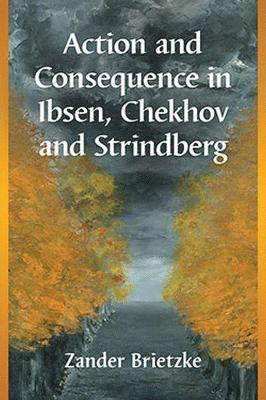
Henrik Ibsen, Anton Chekhov and August Strindberg--innovators of modern drama--created characters whose reckless pursuits of irrational objectives blind them to better options. Ibsen's protagonists in A Doll's House, Hedda Gabler and The Master Builder try to bend the world to conform to their personal visions--with disastrous results. Chekhov's characters refuse to do anything, instead dramatizing their lives as if they were actors in a play (which they are). Rehearsing the intractable squabbles between men and women in The Dance of Death and The Ghost Sonata, Strindberg suggests that only in life beyond death can humanity transcend the brutality of existence. Together, the lives of these characters offer a study of the individual's struggle with modernity.
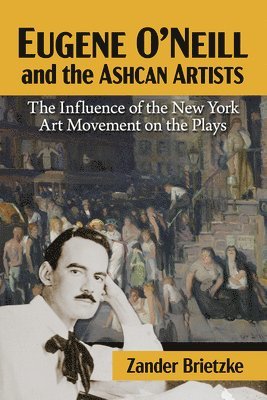
Eugene O'Neill and the Ashcan Artists
The Influence of the New York Art Movement on the Plays
Häftad, Engelska, 2025
631 kr
Tillfälligt slut