Zara Martirosova Torlone - Böcker
Visar alla böcker från författaren Zara Martirosova Torlone. Handla med fri frakt och snabb leverans.
6 produkter
6 produkter
2 321 kr
Skickas inom 5-8 vardagar
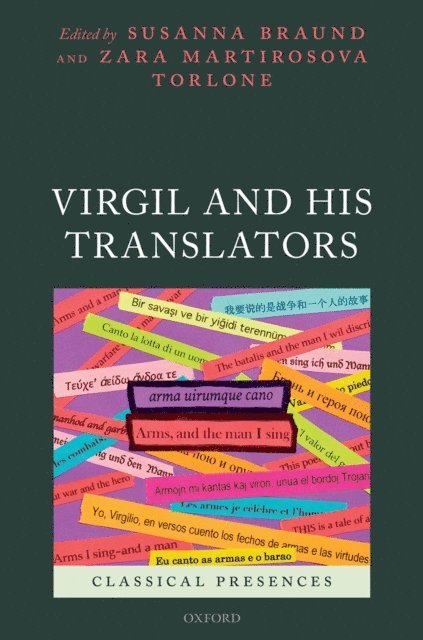
This is the first volume to offer a critical overview of the long and complicated history of translations of Virgil from the early modern period to the present day, transcending traditional studies of single translations or particular national traditions in isolation to offer an insightful comparative perspective. The twenty-nine essays in the collection cover numerous European languages - from English, French, and German, to Greek, Irish, Italian, Norwegian, Slovenian, and Spanish - but also look well beyond Europe to include discussion of Brazilian, Chinese, Esperanto, Russian, and Turkish translations of Virgil. While the opening two contributions lay down a broad theoretical and comparative framework, the majority conduct comparisons within a particular language and combine detailed case studies with in-depth contextualization and theoretical background, showing how the translations discussed are embedded in their own cultures and historical moments. The final two essays are written from the perspective of contemporary translators, closing out the volume with a profound assessment not only of the influence exerted by the major Roman poet on later literature, but also why translation of a canonical author such as Virgil matters, not only as a national and transnational cultural phenomenon, but as a personal engagement with a literature of enduring power and relevance.
2 622 kr
Skickas inom 5-8 vardagar
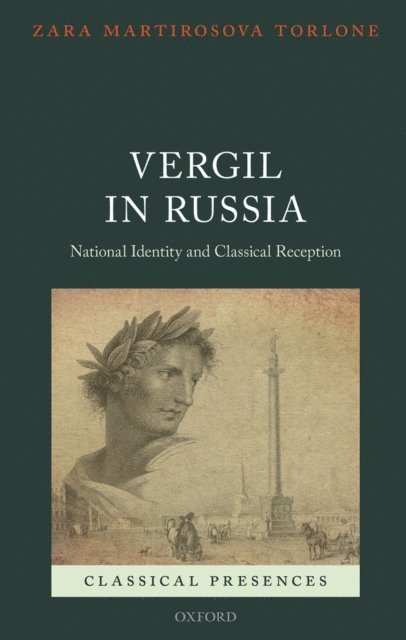
The Russian reception of the greatest Roman poet, Vergil, provided Russian thinkers with a way in which to define Russian-European features. This volume looks to uncover the nature of Russian reception of Vergil, and argues that the best way to analyse his presence in Russian letters is to view it in the context of the formation and development of Russian national and literary identity. Russian reception of Vergil began to play an integral role in the eighteenth century - starting with the reforms of Peter the Great - and continued to be an important point of reference for Russian writers well into the last part of the twentieth century. At the beginning of the twentieth century, it took on a spiritual, almost messianic mission, while towards the end of the millennium the post-modernist Vergil of Joseph Brodsky contemplated the fate of a poet in the world. However, Russian reception of Vergil offers significantly more than mere foreign importation or imitation of the beliefs and attitudes towards Vergil developed in Europe. It provides a gateway to understanding Russian eighteenth- and nineteenth-century thought about national identity and values, and uncovers important sources of later thinking about the character and destiny of Russia. Vergil in Russia reveals that at the centre of Russian reception of Vergil is Russia's challenge to define the character and validity of their own civilization. Vergil's poems, especially the Aeneid, gave Russian men of letters an opportunity to think about and act upon national self-determination in both political and cultural terms.
712 kr
Skickas inom 5-8 vardagar
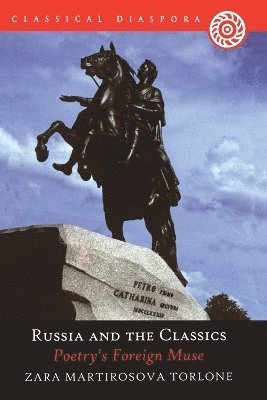
This important study, the first in a new series on "Classical Diaspora", explores the reception of classical antiquity in Russian poetry with a particular focus on the writings of several significant twentieth-century poets: Innokentii Annenskii, Viacheslav Ivanov, Marina Tsvetaeva, Osip Mandelshtam and Joseph Brodsky. These poets' engagement with the classics is analysed within the wider context of Russia's relationship with Greco-Roman heritage as a gateway to European culture. The earlier phase of the development of classical reception in Russian poetry is traced from Antiokh Kantemir and Mikhailo Lomonosov to Alexander Pushkin. Thus the book offers a concise chronology of Russian poetry's self-construction as a legitimate Euopean heir to the legacy of Greece and Rome. The Russian poetic reception of classical literature has its own distinctive features such as a preoccupation with mythological tragedy and with the reception of Ovid's poetry of exile, setting it apart from the traditions and movements associated with Western European classicism.This fascinating study combines historicist scholarship with a sophisticated alertness to recent developments in reception theory, producing a compelling account of a hitherto neglected aspect of the classical tradition.
2 437 kr
Skickas inom 7-10 vardagar
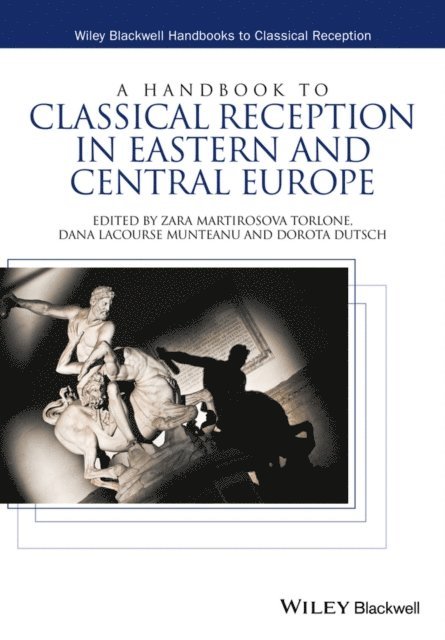
A Handbook to Classical Reception in Eastern and Central Europe is the first comprehensive English]language study of the reception of classical antiquity in Eastern and Central Europe. This groundbreaking work offers detailed case studies of thirteen countries that are fully contextualized historically, locally, and regionally.The first English-language collection of research and scholarship on Greco-Roman heritage in Eastern and Central Europe Written and edited by an international group of seasoned and up-and-coming scholars with vast subject-matter experience and expertise Essays from leading scholars in the field provide broad insight into the reception of the classical world within specific cultural and geographical areas Discusses the reception of many aspects of Greco-Roman heritage, such as prose/philosophy, poetry, material cultureOffers broad and significant insights into the complicated engagement many countries of Eastern and Central Europe have had and continue to have with Greco-Roman antiquity
1 160 kr
Skickas inom 10-15 vardagar
I hate and I love.' The Roman poet Catullus expressed the disorienting experience of being in love in a stark contradiction that has resonated across the centuries. While his description might seem to modern readers natural and spontaneous, it is actually a response planned with great care and artistry. It is that artistry, and the way in which Roman love poetry works, that this book explores. Focusing on Catullus and on the later genre of elegy - so-called for its metre, and a form of poetry practiced by Tibullus, Propertius and Ovid - Denise Eileen McCoskey and Zara Martirosova Torlone discuss the devices used by the major Roman love poets, as well as the literary and historical contexts that helped shape their work. Setting poets and their writings especially against the turbulent backdrop of the Augustan Age (31 BCE-14 CE), the book examines the origins of Latin elegy; highlights the poets' key themes; and traces their reception by later writers and readers.
330 kr
Skickas inom 10-15 vardagar
I hate and I love.' The Roman poet Catullus expressed the disorienting experience of being in love in a stark contradiction that has resonated across the centuries. While his description might seem to modern readers natural and spontaneous, it is actually a response planned with great care and artistry. It is that artistry, and the way in which Roman love poetry works, that this book explores. Focusing on Catullus and on the later genre of elegy - so-called for its metre, and a form of poetry practiced by Tibullus, Propertius and Ovid - Denise Eileen McCoskey and Zara Martirosova Torlone discuss the devices used by the major Roman love poets, as well as the literary and historical contexts that helped shape their work. Setting poets and their writings especially against the turbulent backdrop of the Augustan Age (31 BCE-14 CE), the book examines the origins of Latin elegy; highlights the poets' key themes; and traces their reception by later writers and readers.