Denise Eileen McCoskey - Böcker
Visar alla böcker från författaren Denise Eileen McCoskey. Handla med fri frakt och snabb leverans.
9 produkter
9 produkter
1 064 kr
Skickas inom 7-10 vardagar
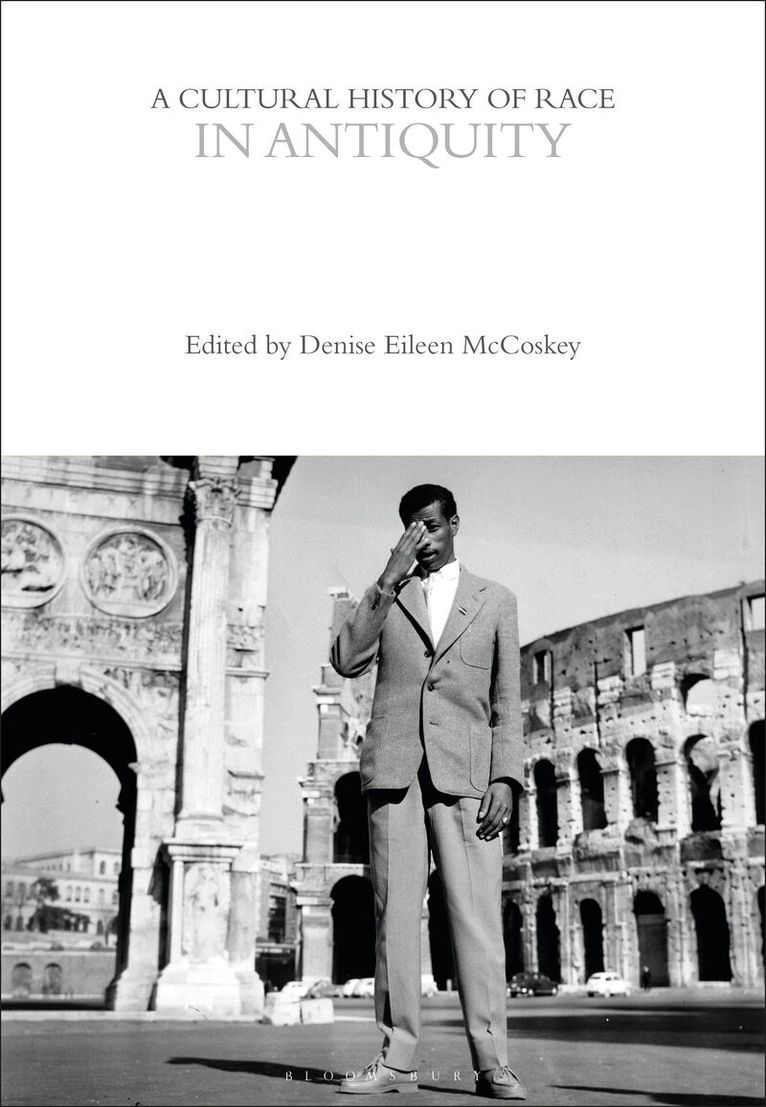
The era generally referred to as antiquity lasted for thousands of years and was characterized by a diverse range of peoples and cultural systems. This volume explores some of the specific ways race was defined and mobilized by different groups—including the Greeks, Romans, Egyptians, Persians, and Ethiopians— as they came into contact with one another during this period. Key to this inquiry is the examination of institutions, such as religion and politics, and forms of knowledge, such as science, that circumscribed the formation of ancient racial identities and helped determine their meanings and consequences. Drawing on a range of ancient evidence—literature, historical writing, documentary evidence, and ancient art and archaeology—this volume highlights both the complexity of ancient racial ideas and the often violent and asymmetrical power structures embedded in ancient racial representations and practices like war and the enslavement of other persons. The study of race in antiquity has long been clouded by modern assumptions, so this volume also seeks to outline a better method for apprehending race on its own terms in the ancient world, including its relationship to other forms of identity, such as ethnicity and gender, while also seeking to identify and debunk some of the racist methods and biases that have been promulgated by classical historians themselves over the last few centuries.
247 kr
Skickas inom 10-15 vardagar
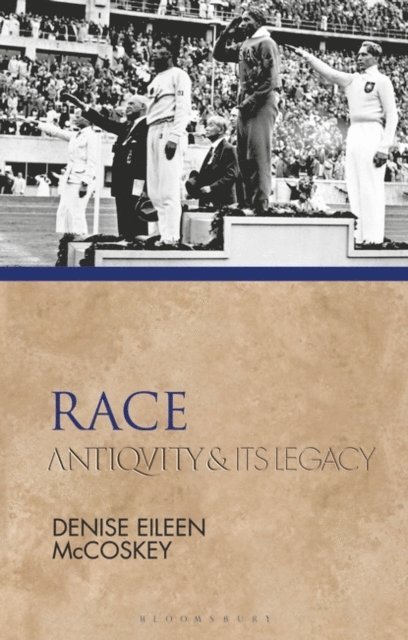
How do different cultures think about race? In the modern era, racial distinctiveness has been assessed primarily in terms of a person's physical appearance. But it was not always so. As Denise McCoskey shows, the ancient Greeks and Romans did not use skin colour as the basis for categorising ethnic disparity. The colour of one's skin lies at the foundation of racial variability today because it was used during the heyday of European exploration and colonialism to construct a hierarchy of civilizations and then justify slavery and other forms of economic exploitation. Assumptions about race thus have to take into account factors other than mere physiognomy. This is particularly true in relation to the classical world. In fifth century Athens, racial theory during the Persian Wars produced the categories 'Greek' and 'Barbarian', and set them in brutal opposition to one another: a process that could be as intense and destructive as 'black and 'white' in our own age. Ideas about race in antiquity were therefore completely distinct but as closely bound to political and historical contexts as those that came later.This provocative book boldly explores the complex matrices of race - and the differing interpretations of ancient and modern - across epic, tragedy and the novel. Ranging from Theocritus to Toni Morrison, and from Tacitus and Pliny to Bernal's seminal study Black Athena, this is a powerful and original new assessment.
350 kr
Skickas inom 7-10 vardagar
The era generally referred to as antiquity lasted for thousands of years and was characterized by a diverse range of peoples and cultural systems. This volume explores some of the specific ways race was defined and mobilized by different groups—including the Greeks, Romans, Egyptians, Persians, and Ethiopians— as they came into contact with one another during this period. Key to this inquiry is the examination of institutions, such as religion and politics, and forms of knowledge, such as science, that circumscribed the formation of ancient racial identities and helped determine their meanings and consequences. Drawing on a range of ancient evidence—literature, historical writing, documentary evidence, and ancient art and archaeology—this volume highlights both the complexity of ancient racial ideas and the often violent and asymmetrical power structures embedded in ancient racial representations and practices like war and the enslavement of other persons. The study of race in antiquity has long been clouded by modern assumptions, so this volume also seeks to outline a better method for apprehending race on its own terms in the ancient world, including its relationship to other forms of identity, such as ethnicity and gender, while also seeking to identify and debunk some of the racist methods and biases that have been promulgated by classical historians themselves over the last few centuries.
1 406 kr
Kommande
The first ever collection of essays to explore the contemporary far right’s fascination with the classical past, Abusing Antiquity? sheds new light on the ways in which ancient Greece and Rome are being used to legitimise present-day political agendas. Bringing together a diverse range of authors and case studies, the volume highlights the ways in which ideas about the classical past have been appropriated to support extremist ideologies, especially in conversations about race, gender, and immigration.The individual chapters within the volume analyse a wide variety of national and political settings, and examine diverse forms of evidence, including memes and online media, literature, music, and modern visual and material culture, cumulatively illuminating the forms and power of such uses of antiquity. The book addresses questions of best practice, methodology and ethics when engaging with extremist material, interrogates the ways in which disciplinary structures within classical studies have at times been complicit in the production and perpetuation of politicised narratives, and considers a range of national and transnational case studies, focusing on the US and Europe. Whilst also elucidating the context behind their seductive appeal, in part by demonstrating the role of such appropriations in earlier eras, the volume in its entirety investigates the ways in which ideas about the past can be weaponised for ideological ends.Ultimately, the volume does not seek to situate classical antiquity as “abused” or “misused” by modern extremist movements in any simplistic way, but rather offers a way to understand how such visions of antiquity have emerged and been propagated, and with what consequences.
Bound by the City
Greek Tragedy, Sexual Difference, and the Formation of the Polis
Inbunden, Engelska, 2009
1 215 kr
Tillfälligt slut
Explores the connections between sexual difference and political structure in ancient Greek tragedy.This collection offers a vibrant exploration of the bonds between sexual difference and political structure in Greek tragedy. In looking at how the acts of violence and tortured kinship relations are depicted in the work of all three major Greek tragic playwrights-Aeschylus, Sophocles, and Euripides-the contributors shed light on the workings and failings of the Greek polis, and explore the means by which sexual difference and the city take shape in relation to each other. The volume complements and expands the efforts of current feminist interpretations of Antigone and the Oresteia by considering the meanings of tragedy for ancient Athenian audiences while also unveiling the reverberations of Greek tragedy's formulations and dilemmas in modern political life and for contemporary political philosophy.
Bound by the City
Greek Tragedy, Sexual Difference, and the Formation of the Polis
Häftad, Engelska, 2010
463 kr
Tillfälligt slut
Explores the connections between sexual difference and political structure in ancient Greek tragedy.This collection offers a vibrant exploration of the bonds between sexual difference and political structure in Greek tragedy. In looking at how the acts of violence and tortured kinship relations are depicted in the work of all three major Greek tragic playwrights-Aeschylus, Sophocles, and Euripides-the contributors shed light on the workings and failings of the Greek polis, and explore the means by which sexual difference and the city take shape in relation to each other. The volume complements and expands the efforts of current feminist interpretations of Antigone and the Oresteia by considering the meanings of tragedy for ancient Athenian audiences while also unveiling the reverberations of Greek tragedy's formulations and dilemmas in modern political life and for contemporary political philosophy.
1 160 kr
Skickas inom 10-15 vardagar
I hate and I love.' The Roman poet Catullus expressed the disorienting experience of being in love in a stark contradiction that has resonated across the centuries. While his description might seem to modern readers natural and spontaneous, it is actually a response planned with great care and artistry. It is that artistry, and the way in which Roman love poetry works, that this book explores. Focusing on Catullus and on the later genre of elegy - so-called for its metre, and a form of poetry practiced by Tibullus, Propertius and Ovid - Denise Eileen McCoskey and Zara Martirosova Torlone discuss the devices used by the major Roman love poets, as well as the literary and historical contexts that helped shape their work. Setting poets and their writings especially against the turbulent backdrop of the Augustan Age (31 BCE-14 CE), the book examines the origins of Latin elegy; highlights the poets' key themes; and traces their reception by later writers and readers.
330 kr
Skickas inom 10-15 vardagar
I hate and I love.' The Roman poet Catullus expressed the disorienting experience of being in love in a stark contradiction that has resonated across the centuries. While his description might seem to modern readers natural and spontaneous, it is actually a response planned with great care and artistry. It is that artistry, and the way in which Roman love poetry works, that this book explores. Focusing on Catullus and on the later genre of elegy - so-called for its metre, and a form of poetry practiced by Tibullus, Propertius and Ovid - Denise Eileen McCoskey and Zara Martirosova Torlone discuss the devices used by the major Roman love poets, as well as the literary and historical contexts that helped shape their work. Setting poets and their writings especially against the turbulent backdrop of the Augustan Age (31 BCE-14 CE), the book examines the origins of Latin elegy; highlights the poets' key themes; and traces their reception by later writers and readers.
1 343 kr
Skickas inom 10-15 vardagar
How do different cultures think about race? In the modern era, racial distinctiveness has been assessed primarily in terms of a person's physical appearance. But it was not always so. As Denise McCoskey shows, the ancient Greeks and Romans did not use skin colour as the basis for categorising ethnic disparity. The colour of one's skin lies at the foundation of racial variability today because it was used during the heyday of European exploration and colonialism to construct a hierarchy of civilizations and then justify slavery and other forms of economic exploitation. Assumptions about race thus have to take into account factors other than mere physiognomy. This is particularly true in relation to the classical world. In fifth century Athens, racial theory during the Persian Wars produced the categories 'Greek' and 'Barbarian', and set them in brutal opposition to one another: a process that could be as intense and destructive as 'black and 'white' in our own age. Ideas about race in antiquity were therefore completely distinct but as closely bound to political and historical contexts as those that came later.This provocative book boldly explores the complex matrices of race - and the differing interpretations of ancient and modern - across epic, tragedy and the novel. Ranging from Theocritus to Toni Morrison, and from Tacitus and Pliny to Bernal's seminal study Black Athena, this is a powerful and original new assessment.