Zev J Eigen – författare
Visar alla böcker från författaren Zev J Eigen. Handla med fri frakt och snabb leverans.
7 produkter
7 produkter
Häftad, Engelska, 2018
2 619 kr
Skickas inom 5-8 vardagar
The legal profession, like so many other fields, has continued to reel from the deep-reaching and significant impact of the 2008 financial crisis. In the years following the crash, a general downward turn in the demand for legal services compelled firms to tighten their belts, make tough decisions, and come up with innovative strategies in order to survive. One of these was an increased focus on profitability and different means of managing and improving it, a relatively new development for the legal industry. However, in recent years there have been small but positive signs of improvement, manifested in a gradual pick-up in client engagement, as global economies continue to slowly but steadily recover from the crash. It is definitely a better time to be a lawyer, as latent demand begins to manifest in parallel with growing client confidence in a stabilizing market, fast-paced disruptive technological innovations, and significant changes in laws and regulations. However, this does not mean that firms can afford to be complacent. The legal landscape continues to be in flux, and improvement is slow. Increased revenue and client demand does not come to firms that do not proactively seek it, nor is it achieved by those who are not applying innovative and cutting-edge techniques and strategies to the management of their firm. Of course, delivering the best service to clients should always be a top priority; however, there should also be an emphasis on running the firm like a business, which includes intensive scrutiny of expenditure and coming up with new and inventive ways to generate profit. Managing and growing a firm's profitability should not just be an exercise for difficult economic periods, but instead must be a priority at all times. Rather than being perceived as an irksome bolt-on, it is necessary to see it as a great opportunity in these times of increased business. Existing and persistent cultural norms amongst lawyers, however, means that the reform of current business practices does not always come naturally. Nor is it necessarily easy to find the right practical advice that can carry a firm through the transition. Emerging Approaches to Law Firm Profitability aims to be the ideal tool to assist with implementation, providing essential guidance for those seeking new means of maximizing their firm's capacity. Featuring advice and reflections from a wide variety of contributors, ranging from business and finance professionals to thought leaders and consultants, this book offers in-depth, intensive insight into the challenges generated by today's dynamic and hypercompetitive legal landscape. Most importantly, Emerging Approaches to Law Firm Profitability moves past the identification of these obstacles and supplies original, innovative ways of tackling them. Expert guidance is complemented by compelling case studies and effective real-world examples, supplying principles that can be applied to firms of any size or capacity.
E-bok
Engelska, 20212 443 kr
Läs direkt efter köp
The legal profession, like so many other fields, has continued to reel from the deep-reaching and significant impact of the 2008 financial crisis. In the years following the crash, a general downward turn in the demand for legal services compelled firms to tighten their belts, make tough decisions, and come up with innovative strategies in order to survive. One of these was an increased focus on profitability and different means of managing and improving it, a relatively new development for the legal industry. However, in recent years there have been small but positive signs of improvement, manifested in a gradual pick-up in client engagement, as global economies continue to slowly but steadily recover from the crash. It is definitely a better time to be a lawyer, as latent demand begins to manifest in parallel with growing client confidence in a stabilizing market, fast-paced disruptive technological innovations, and significant changes in laws and regulations. However, this does not mean that firms can afford to be complacent. The legal landscape continues to be in flux, and improvement is slow. Increased revenue and client demand does not come to firms that do not proactively seek it, nor is it achieved by those who are not applying innovative and cutting-edge techniques and strategies to the management of their firm. Of course, delivering the best service to clients should always be a top priority; however, there should also be an emphasis on running the firm like a business, which includes intensive scrutiny of expenditure and coming up with new and inventive ways to generate profit. Managing and growing a firm''s profitability should not just be an exercise for difficult economic periods, but instead must be a priority at all times. Rather than being perceived as an irksome bolt-on, it is necessary to see it as a great opportunity in these times of increased business. Existing and persistent cultural norms amongst lawyers, however, means that the reform of current business practices does not always come naturally. Nor is it necessarily easy to find the right practical advice that can carry a firm through the transition. Emerging Approaches to Law Firm Profitability aims to be the ideal tool to assist with implementation, providing essential guidance for those seeking new means of maximizing their firm''s capacity. Featuring advice and reflections from a wide variety of contributors, ranging from business and finance professionals to thought leaders and consultants, this book offers in-depth, intensive insight into the challenges generated by today''s dynamic and hypercompetitive legal landscape. Most importantly, Emerging Approaches to Law Firm Profitability moves past the identification of these obstacles and supplies original, innovative ways of tackling them. Expert guidance is complemented by compelling case studies and effective real-world examples, supplying principles that can be applied to firms of any size or capacity.
E-bok
PDF, Engelska, 20212 357 kr
Läs direkt efter köp
The legal profession, like so many other fields, has continued to reel from the deep-reaching and significant impact of the 2008 financial crisis. In the years following the crash, a general downward turn in the demand for legal services compelled firms to tighten their belts, make tough decisions, and come up with innovative strategies in order to survive. One of these was an increased focus on profitability and different means of managing and improving it, a relatively new development for the legal industry. However, in recent years there have been small but positive signs of improvement, manifested in a gradual pick-up in client engagement, as global economies continue to slowly but steadily recover from the crash. It is definitely a better time to be a lawyer, as latent demand begins to manifest in parallel with growing client confidence in a stabilizing market, fast-paced disruptive technological innovations, and significant changes in laws and regulations. However, this does not mean that firms can afford to be complacent. The legal landscape continues to be in flux, and improvement is slow. Increased revenue and client demand does not come to firms that do not proactively seek it, nor is it achieved by those who are not applying innovative and cutting-edge techniques and strategies to the management of their firm. Of course, delivering the best service to clients should always be a top priority; however, there should also be an emphasis on running the firm like a business, which includes intensive scrutiny of expenditure and coming up with new and inventive ways to generate profit. Managing and growing a firm''s profitability should not just be an exercise for difficult economic periods, but instead must be a priority at all times. Rather than being perceived as an irksome bolt-on, it is necessary to see it as a great opportunity in these times of increased business. Existing and persistent cultural norms amongst lawyers, however, means that the reform of current business practices does not always come naturally. Nor is it necessarily easy to find the right practical advice that can carry a firm through the transition. Emerging Approaches to Law Firm Profitability aims to be the ideal tool to assist with implementation, providing essential guidance for those seeking new means of maximizing their firm''s capacity. Featuring advice and reflections from a wide variety of contributors, ranging from business and finance professionals to thought leaders and consultants, this book offers in-depth, intensive insight into the challenges generated by today''s dynamic and hypercompetitive legal landscape. Most importantly, Emerging Approaches to Law Firm Profitability moves past the identification of these obstacles and supplies original, innovative ways of tackling them. Expert guidance is complemented by compelling case studies and effective real-world examples, supplying principles that can be applied to firms of any size or capacity.
E-bok
Engelska, 20211 092 kr
Läs direkt efter köp
The Lawyer''s Guide to the Future of Practice Management provides law firm leaders with expert opinion on the very latest guidance and market knowledge on what today''s legal marketplace might look like tomorrow, organized into four crucial areas of practice management - technology, people and culture, finance and strategy - before taking a horizon-scan of the future, and what law firms need to be aware of in the coming months and years.
E-bok
PDF, Engelska, 20211 054 kr
Läs direkt efter köp
The Lawyer''s Guide to the Future of Practice Management provides law firm leaders with expert opinion on the very latest guidance and market knowledge on what today''s legal marketplace might look like tomorrow, organized into four crucial areas of practice management - technology, people and culture, finance and strategy - before taking a horizon-scan of the future, and what law firms need to be aware of in the coming months and years.
E-bok
Engelska, 20112 340 kr
Läs direkt efter köp
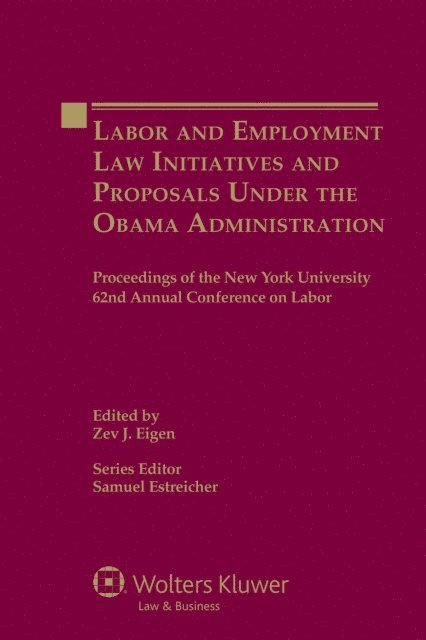
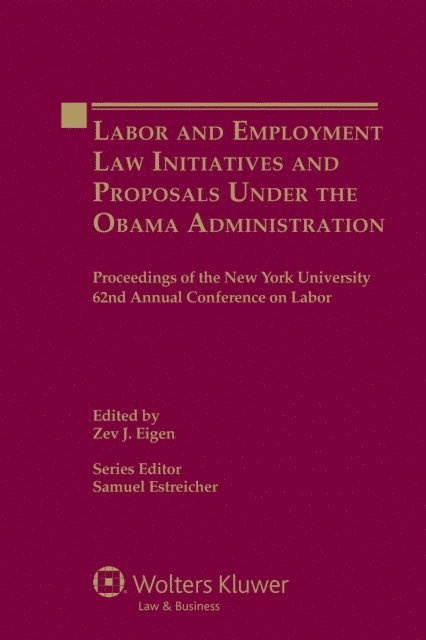
Barack Obama’s famous “Blueprint for Change,” part and parcel of the campaign that culminated in his historic election as U.S. president in November 2008, openly announced his support for the Employee Free Choice Act (H.R. 1409) suggesting that major change was imminent in U.S. labor and employment law. Although promised legislative change has yet to materialize, there appears to be a growing consensus that the current system for addressing employment disputes in union-represented and non-union workplaces deserves renewed attention and needs significant restructuring. Thus, the issues taken up by this prominent U.S. conference remain relevant to policy debates which will likely continue to rage in the United States for years to come. Based on papers delivered at the 2009 conference of the New York University School of Law’s Center on Labor and Employment Law – the 62nd in this venerable and highly influential series – the book presents articles updated by the authors to reflect more recent developments, as well as new papers to ensure a comprehensive and current analysis of both what has actually changed and which trends seem to be gaining momentum. Twenty-two outstanding scholars and practitioners in U.S. labor law and practice pay special attention to such issues as the following: mandatory arbitration of employment disputes in non-union sector; call for improved administration of the National Labor Relations Act in expediting elections and reinstating discriminatees; more privatized forms of dispute resolution such as arbitration and mediation; card-check and neutrality agreements bypassing government processes; proposed reform of the Age Discrimination in Employment Act; evaluating market-based defenses to pay equity claims; EEOC initiatives in public enforcement of equality law; and challenges to labor relations in state and local governments.
E-bok
PDF, Engelska, 20112 340 kr
Läs direkt efter köp
Barack Obama’s famous “Blueprint for Change,” part and parcel of the campaign that culminated in his historic election as U.S. president in November 2008, openly announced his support for the Employee Free Choice Act (H.R. 1409) suggesting that major change was imminent in U.S. labor and employment law. Although promised legislative change has yet to materialize, there appears to be a growing consensus that the current system for addressing employment disputes in union-represented and non-union workplaces deserves renewed attention and needs significant restructuring. Thus, the issues taken up by this prominent U.S. conference remain relevant to policy debates which will likely continue to rage in the United States for years to come. Based on papers delivered at the 2009 conference of the New York University School of Law’s Center on Labor and Employment Law – the 62nd in this venerable and highly influential series – the book presents articles updated by the authors to reflect more recent developments, as well as new papers to ensure a comprehensive and current analysis of both what has actually changed and which trends seem to be gaining momentum. Twenty-two outstanding scholars and practitioners in U.S. labor law and practice pay special attention to such issues as the following: ; mandatory arbitration of employment disputes in non-union sector; call for improved administration of the National Labor Relations Act in expediting elections and reinstating discriminatees; more privatized forms of dispute resolution such as arbitration and mediation; card-check and neutrality agreements bypassing government processes; proposed reform of the Age Discrimination in Employment Act; evaluating market-based defenses to pay equity claims; EEOC initiatives in public enforcement of equality law; and challenges to labor relations in state and local governments. As always, this important annual publication offers definitive current scholarship in its theme area of labor and employment law. As such, it will be of inestimable value to practitioners, government officials, academics, and others interested in developments in U.S. employment and labor relations law and practice.