Zhenjiang Hu – författare
Visar alla böcker från författaren Zhenjiang Hu. Handla med fri frakt och snabb leverans.
11 produkter
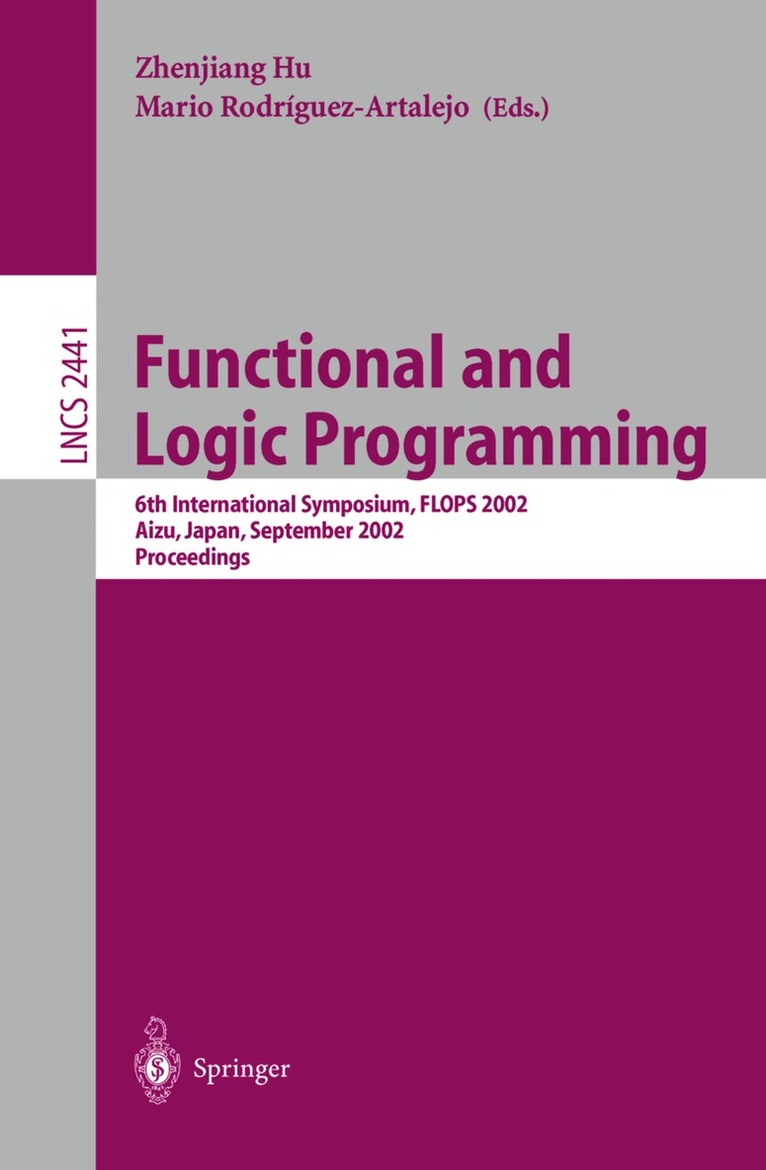
Functional and Logic Programming
6th International Symposium, FLOPS 2002, Aizu, Japan, September 15-17, 2002. Proceedings
Av Zhenjiang Hu, Mario Rodriquez-Artalejo
Häftad, 2002
567 kr
Lägg i varukorg
This volume contains the proceedings of the Sixth Fuji International Sym- sium on Functional and Logic Programming (FLOPS 2002), held in Aizu, Japan, September 15-17, 2002, hosted by the University of Aizu, and colocated with the First Asian Symposium on Partial Evaluation Semantics-Based Program …
Functional and Logic Programming
6th International Symposium, FLOPS 2002, Aizu, Japan, September 15-17, 2002. Proceedings
Av Mario Rodriquez-Artalejo, Zhenjiang Hu
E-bok, 2003
734 kr
Lägg i varukorg
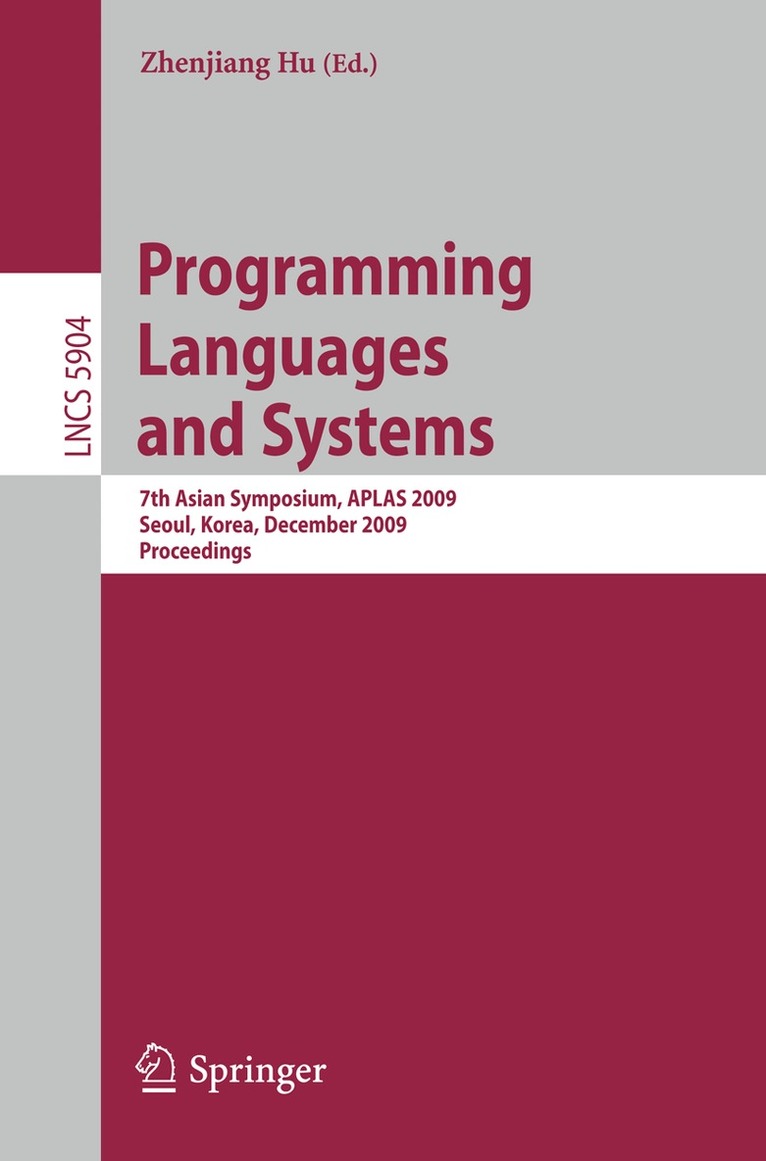
Programming Languages and Systems
7th Asian Symposium, APLAS 2009, Seoul, Korea, December 14-16, 2009, Proceedings
Av Zhenjiang Hu
Häftad, 2009
567 kr
Lägg i varukorg
This book constitutes the refereed proceedings of the 7th Asian Symposium on Programming Languages and Systems, APLAS 2009, held in Seoul, Korea, in December 2009. The 21 papers presented in this volume together with 3 invited talks were carefully reviewed and selected from 56 submissions. The …
Programming Languages and Systems
7th Asian Symposium, APLAS 2009, Seoul, Korea, December 14-16, 2009, Proceedings
Av Zhenjiang Hu
E-bok, 2009
755 kr
Lägg i varukorg
This book constitutes the refereed proceedings of the 7th Asian Symposium on Programming Languages and Systems, APLAS 2009, held in Seoul, Korea, in December 2009. The 21 papers presented in this volume together with 3 invited talks were carefully reviewed and selected from 56 submissions. The …
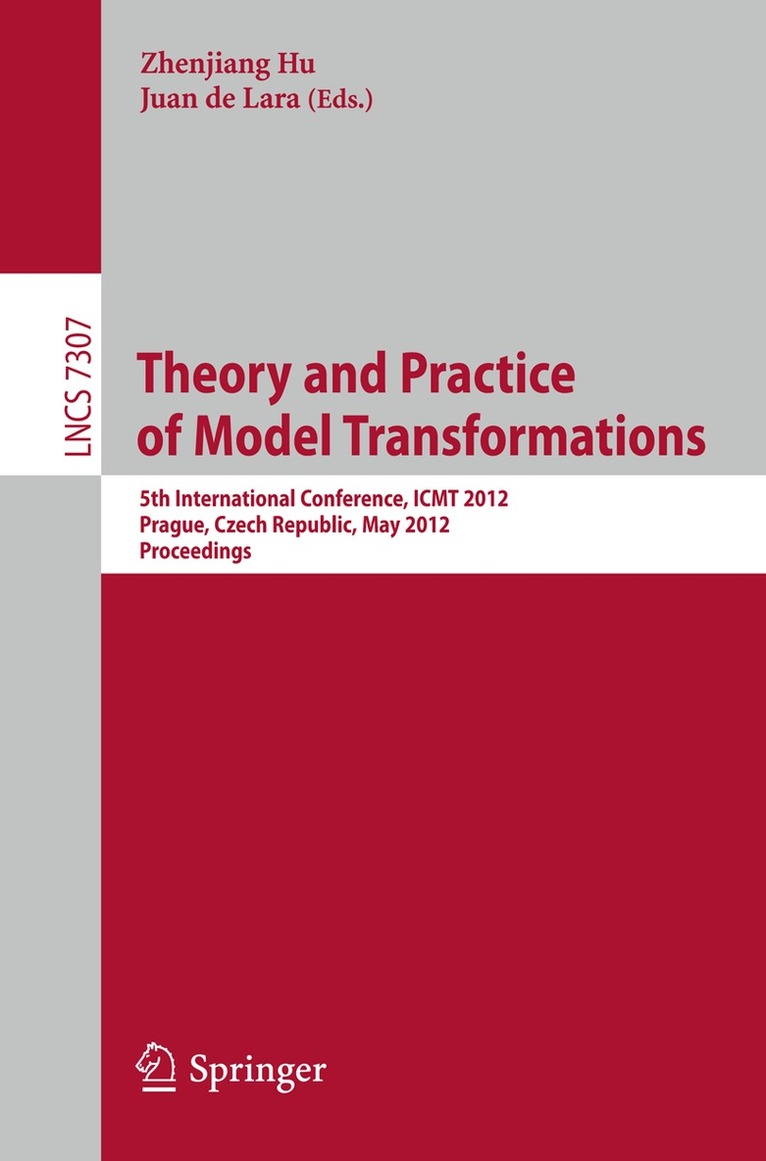
Theory and Practice of Model Transformations
5th International Conference, ICMT 2012, Prague, Czech Republic, May 28-29, 2012. Proceedings
Häftad, 2012
567 kr
Lägg i varukorg
This book constitutes the refereed proceedings of the 5th International Conference, ICMT 2012, held in Prague, Czech Republic, in May 2012, co-located with TOOLS 2012 Federated Conferences. The 18 full papers presented together with one invited paper were carefully revised and selected from …
Theory and Practice of Model Transformations
5th International Conference, ICMT 2012, Prague, Czech Republic, May 28-29, 2012. Proceedings
E-bok, 2012
739 kr
Lägg i varukorg
This book constitutes the refereed proceedings of the 5th International Conference, ICMT 2012, held in Prague, Czech Republic, in May 2012, co-located with TOOLS 2012 Federated Conferences. The 18 full papers presented together with one invited paper were carefully revised and selected from …
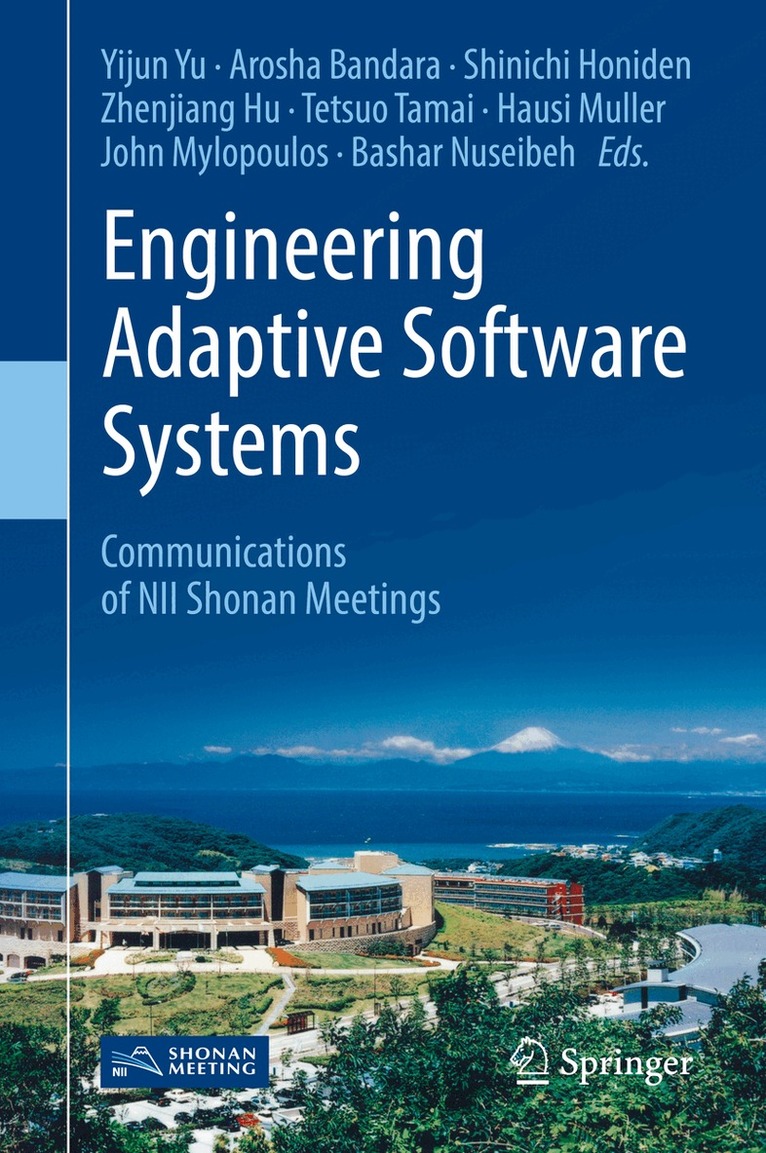
Engineering Adaptive Software Systems
Communications of NII Shonan Meetings
Av Yijun Yu, Arosha Bandara m. fl.
Inbunden, 2019
1126 kr
Lägg i varukorg
This book discusses the problems and challenges in the interdisciplinary research field of self-adaptive software systems. Modern society is increasingly filled with software-intensive systems, which are required to operate in more and more dynamic and uncertain environments. These systems must …
Engineering Adaptive Software Systems
Communications of NII Shonan Meetings
Av Bashar Nuseibeh, John Mylopoulos m. fl.
E-bok, 2019
1455 kr
Lägg i varukorg
This book discusses the problems and challenges in the interdisciplinary research field of self-adaptive software systems. Modern society is increasingly filled with software-intensive systems, which are required to operate in more and more dynamic and uncertain environments. These systems must …
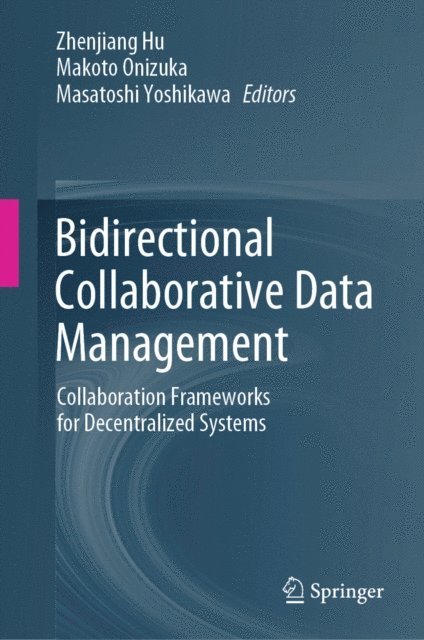
Bidirectional Collaborative Data Management
Collaboration Frameworks for Decentralized Systems
Av Zhenjiang Hu, Makoto Onizuka m. fl.
Inbunden, 2024
1798 kr
Lägg i varukorg
This book summarizes the results of solving the two issues from a 5-year national project in Japan, called Bidirectional Information Systems for Collaborative, Updatable, Interoperable, and Trusted Sharing (BISCUITS) since 2017, with researchers from the National Institute of Informatics, Osaka …
Bidirectional Collaborative Data Management
Collaboration Frameworks for Decentralized Systems
Av Masatoshi Yoshikawa, Makoto Onizuka m. fl.
E-bok, 2024
2291 kr
Lägg i varukorg
This book summarizes the results of solving the two issues from a 5-year national project in Japan, called Bidirectional Information Systems for Collaborative, Updatable, Interoperable, and Trusted Sharing (BISCUITS) since 2017, with researchers from the National Institute of Informatics, Osaka …
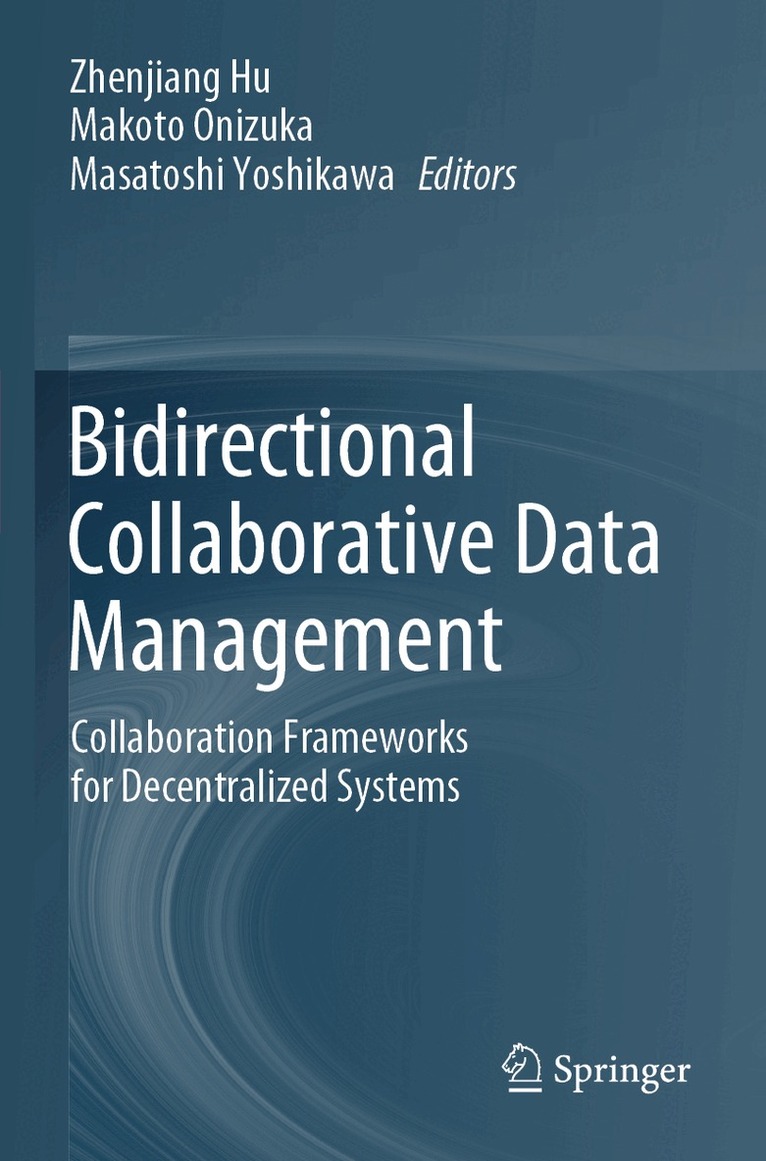
Bidirectional Collaborative Data Management
Collaboration Frameworks for Decentralized Systems
Av Zhenjiang Hu, Makoto Onizuka m. fl.
Häftad, 2025
1798 kr
Lägg i varukorg
This book summarizes the results of solving the two issues from a 5-year national project in Japan, called Bidirectional Information Systems for Collaborative, Updatable, Interoperable, and Trusted Sharing (BISCUITS) since 2017, with researchers from the National Institute of Informatics, Osaka …