Zoë B. Corwin - Böcker
Visar alla böcker från författaren Zoë B. Corwin. Handla med fri frakt och snabb leverans.
5 produkter
5 produkter
1 027 kr
Tillfälligt slut
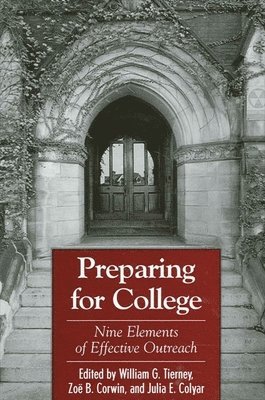
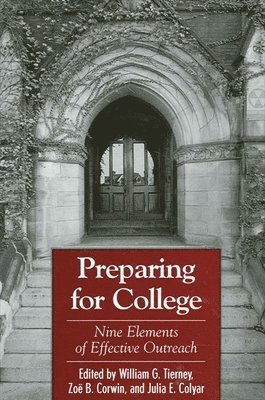
Analyzes and defines the parameters of effective college outreach programs.The remarkable diversity in college preparation programs raises a compelling question: With a finite amount of time and resources, which activities are most likely to improve educational achievement for underrepresented youth in the United States? This book defines and analyzes the parameters of effective college outreach programs. Instead of looking at college preparation writ large, contributors focus on various program components, examining how elements such as academic preparation, culture, family, and mentoring operate within the context of preparation programs and how each contributes-or does not contribute-to program success. By engaging with individual program elements, the contributors provide a means for studying, evaluating, and improving them.
372 kr
Tillfälligt slut
Analyzes and defines the parameters of effective college outreach programs.The remarkable diversity in college preparation programs raises a compelling question: With a finite amount of time and resources, which activities are most likely to improve educational achievement for underrepresented youth in the United States? This book defines and analyzes the parameters of effective college outreach programs. Instead of looking at college preparation writ large, contributors focus on various program components, examining how elements such as academic preparation, culture, family, and mentoring operate within the context of preparation programs and how each contributes-or does not contribute-to program success. By engaging with individual program elements, the contributors provide a means for studying, evaluating, and improving them.
494 kr
Skickas
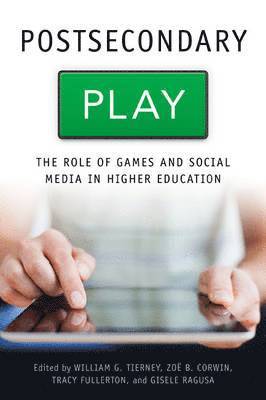
The college application process-which entails multiple forms, essays, test scores, and deadlines-can be intimidating. For students without substantial school and family support, the complexity of this process can become a barrier to access. William G. Tierney, Tracy Fullerton, and their teams at the University of Southern California approach this challenge innovatively. Using the tools of online games and social media, they have developed ways to make applying for college much less intimidating. While the vast majority of college students use social media and gaming in their everyday lives, colleges and universities have been slow to recognize and harness the power of either. Postsecondary Play explores the significance of games and social media in higher education, and particularly how they can be used to attract, retain, educate, and socialize students. Tierney, a past president of the American Educational Research Association, has gathered some of the best research on the emerging role of games and social media in the classroom and how these tools can boost student confidence and increase college access.Scholars writing from a wide variety of disciplines-college access, social media, game studies, and learning sciences-provide concrete examples to illustrate the new and complex ways in which students learn in response to social media and games. Tierney and the contributors find that, although games can be powerful tools for encouraging underserved students, quality game design and mastering the concept of play-the ability to develop skills while engaging in the game-are essential in the effective use of serious games in teaching and learning. Summarizing a decade of research in game design and learning, Postsecondary Play will appeal to higher education scholars and students of learning, online gaming, education, and the media.
348 kr
Skickas inom 7-10 vardagar
The college application process-which entails multiple forms, essays, test scores, and deadlines-can be intimidating. For students without substantial school and family support, the complexity of this process can become a barrier to access. William G. Tierney, Tracy Fullerton, and their teams at the University of Southern California approach this challenge innovatively. Using the tools of online games and social media, they have developed ways to make applying for college much less intimidating. While the vast majority of college students use social media and gaming in their everyday lives, colleges and universities have been slow to recognize and harness the power of either. Postsecondary Play explores the significance of games and social media in higher education, and particularly how they can be used to attract, retain, educate, and socialize students. Tierney, a past president of the American Educational Research Association, has gathered some of the best research on the emerging role of games and social media in the classroom and how these tools can boost student confidence and increase college access.Scholars writing from a wide variety of disciplines-college access, social media, game studies, and learning sciences-provide concrete examples to illustrate the new and complex ways in which students learn in response to social media and games. Tierney and the contributors find that, although games can be powerful tools for encouraging underserved students, quality game design and mastering the concept of play-the ability to develop skills while engaging in the game-are essential in the effective use of serious games in teaching and learning. Summarizing a decade of research in game design and learning, Postsecondary Play will appeal to higher education scholars and students of learning, online gaming, education, and the media.
337 kr
Skickas
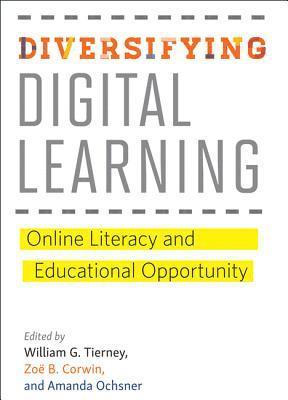
How does the digital divide affect the teaching and learning of historically underrepresented students?Many schools and programs in low-income neighborhoods lack access to the technological resources, including equipment and Internet service, that those in middle- and upper-income neighborhoods have at their fingertips. This inequity creates a persistent digital divide—not a simple divide in access to technology per se, but a divide in both formal and informal digital literacy that further marginalizes youths from low-income, minoritized, and first-generation communities.Diversifying Digital Learning outlines the pervasive problems that exist with ensuring digital equity and identifies successful strategies to tackle the issue. Bringing together top scholars to discuss how digital equity in education might become a key goal in American education, this book is structured to provide a framework for understanding how historically underrepresented students most effectively engage with technology—and how institutions may help or hinder students’ ability to develop and capitalize on digital literacies.This book will appeal to readers who are well versed in the diverse uses of social media and technologies, as well as less technologically savvy educators and policy analysts in educational organizations such as schools, afterschool programs, colleges, and universities. Addressing the intersection of digital media, race/ethnicity, and socioeconomic class in a frank manner, the lessons within this compelling work will help educators enable students in grades K–12, as well as in postsecondary institutions, to participate in a rapidly changing world framed by shifting new media technologies.Contributors: Young Whan Choi, Zoë B. Corwin, Christina Evans, Julie Flapan, Joanna Goode, Erica Hodgin, Joseph Kahne, Suneal Kolluri, Lynette Kvasny, David J. Leonard, Jane Margolis, Crystle Martin, Safiya Umoja Noble, Amanda Ochsner, Fay Cobb Payton, Antar A. Tichavakunda, William G. Tierney, S. Craig Watkins