Andrey Evgenevich Negin – illustratör
Upptäck titlar med illustrationer av Andrey Evgenevich Negin.
2 produkter
2 produkter
175 kr
Skickas inom 10-15 vardagar
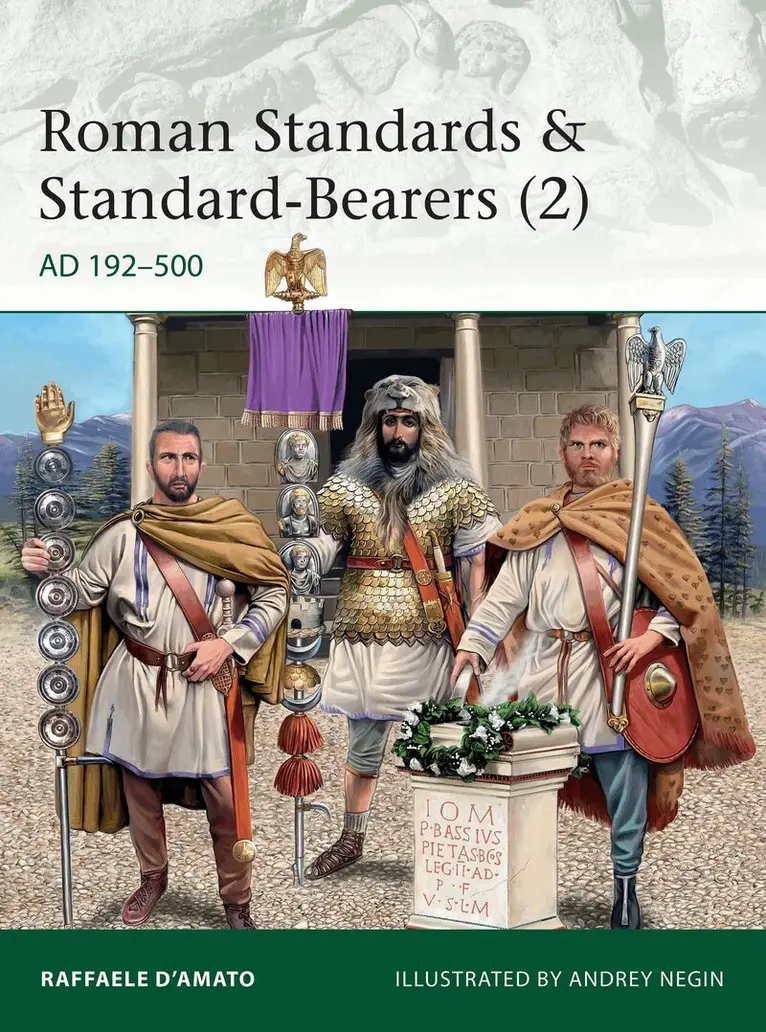
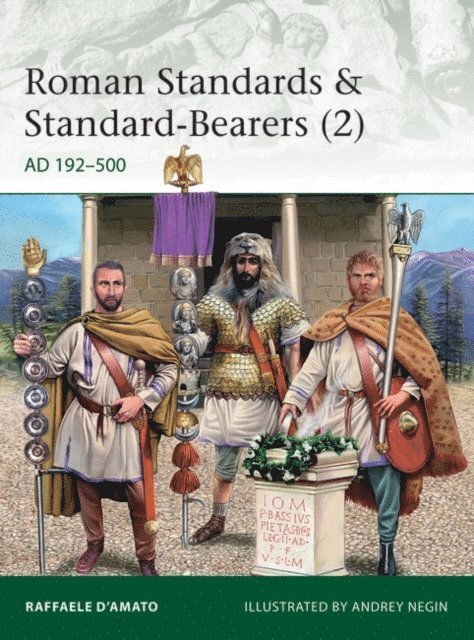
The Late Roman Empire was a period of significant change in the designs of standards and in the costumes of standard-bearers.During the middle decades of the chaotic 3rd century, evidence confirms the continued use of the old legionary eagle and the signa of the old cohorts and centuries, alongside flags and Imperial images. The two major trends over the later generations were the adoption of Christian symbols on standards (e.g. Constantine the Great's Chi-Rho), and the proliferation of different types of flags. This had begun in the late 2nd century with the adoption of the 'barbarian' dragon standard, the windsock-shaped draco, which continued to be displayed alongside various other flags in the Greek-speaking Eastern Empire, whose influence increased greatly. Meanwhile, the growing employment of foreign units was such that by the 5th century we have evidence of the use of Hunnic symbolism among a Roman general's suite of standards. The costumes of standard-bearers also evolved as 'Persian' styles spread from Constantinople.This book explores all these changes in depth, charting the development of various costumes and designs and the waxing and waning influence of various cultures and religious considerations. The text is supported by specially commissioned illustrations and artist’s reconstructions of the standards and their bearers.
174 kr
Skickas
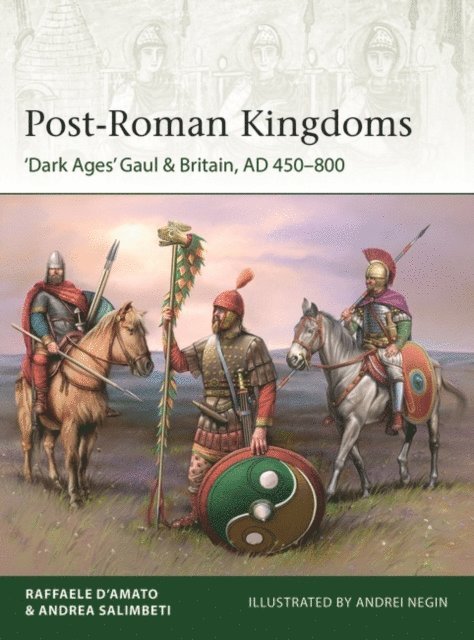
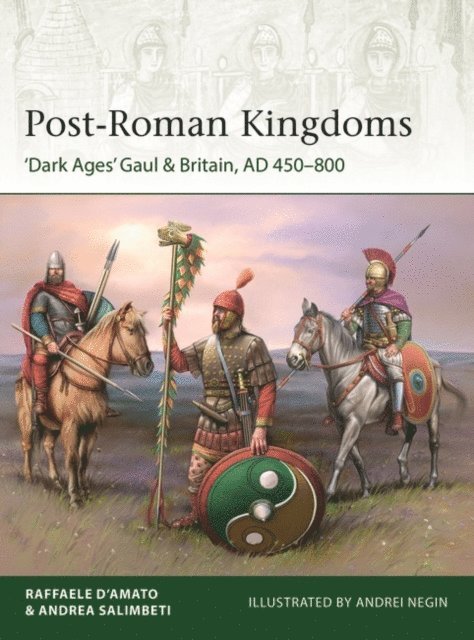
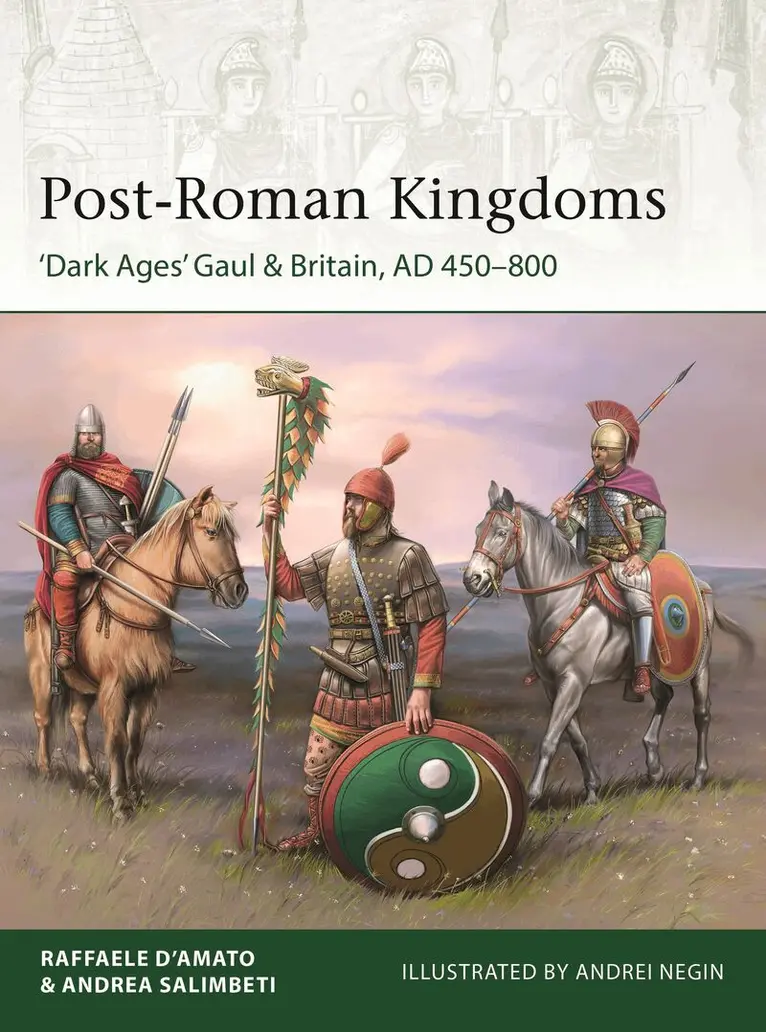
Meticulously researched, this book examines the evidence for the post-Roman military forces of France and Britain during the 'Dark Ages', reconstructing their way of life and the battles they fought in compelling detail.The collapse of the former Western Roman Empire during the so called 'Dark Ages' c. AD 410 was gradual and piecemeal. Out of this vacuum arose regional tribes and leaders determined to take back kingdoms that were theirs and oust any Roman presence for good. However, the Roman guard was tenacious and survived in small pockets that emerged in both Gaul and Britain. These areas of Romano-Celtic resistance held out against the Saxons until at least the mid 6th century in Britain and against the Visigoths and the Merovingian Franks until the late 8th century in France.Drawing on archaeological finds, contemporary sculpture and manuscript illuminations, Dr Raffaele D’Amato presents contemporary evidence for 5th to 9th-century Gallic and British 'Dark Age' armies and reconstructs their way of life and the battles they fought. The text, accompanied by photographs and colour illustrations, paints an intricate picture of how these disparate groups of Roman soldiers survived and adapted on the fringes of the Roman Empire.