Övrigt, Engelska, 2026
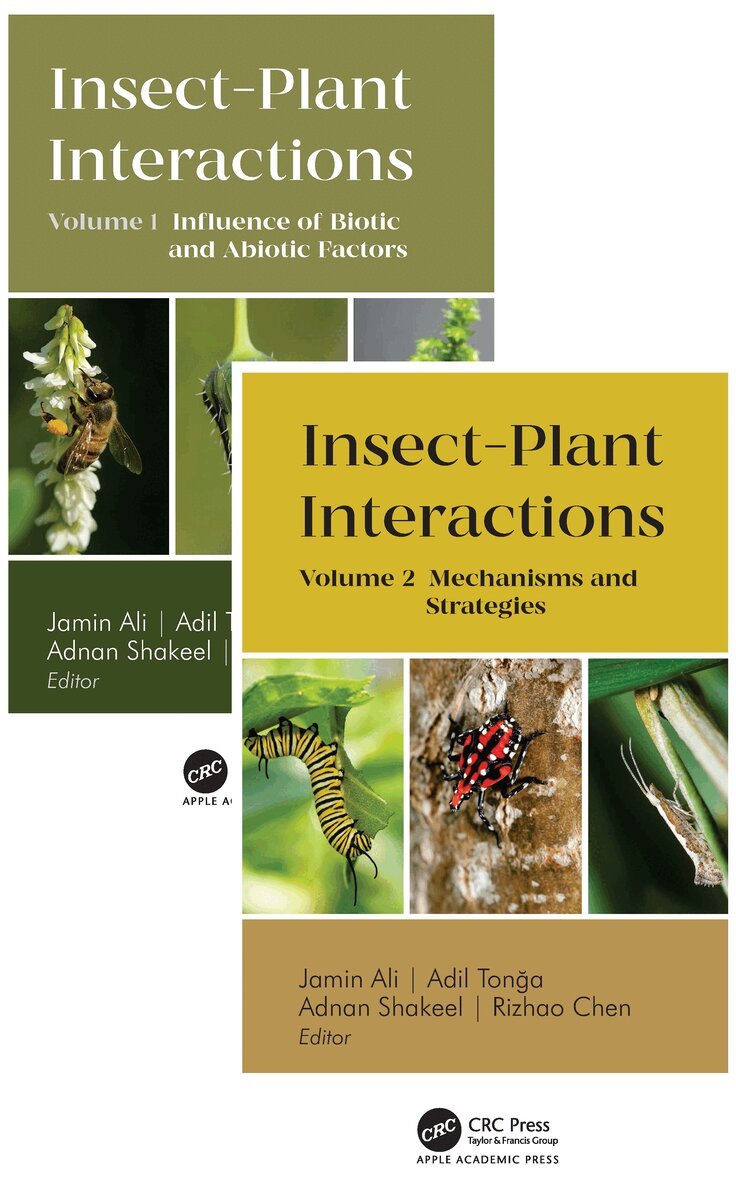
Insect-Plant Interactions
Av Jamin Ali, Adil Tonga, Adnan Shakeel, Nasheeman Ashraf, Rizhao Chen
5521 kr
Skickas inom 10-15 vardagar
Beskrivning
Plants and insects have engaged in a long evolutionary battle, leading to the development of sophisticated defense mechanisms and counter-adaptations. The intricate interplay between these two groups shapes ecosystems, agricultural productivity, and pest management strategies. In recent years, advancements in molecular biology, chemical ecology, and genomics have unveiled the underlying mechanisms governing insect-plant interactions, offering novel insights for sustainable agriculture and pest control. This new two-volume set, Insect-Plant Interactions, explores the diverse defense strategies plants employ to deter herbivorous insects, from structural adaptations to chemical defenses and molecular signaling pathways. By compiling cutting-edge research and comprehensive reviews, this volume provides a holistic understanding of plant-insect dynamics and their implications for ecology and agriculture.Volume 1: Influence of Biotic and Abiotic Factors offers an in-depth exploration of the complex insect-plant interactions by integrating perspectives from ecology, entomology, plant physiology, and agroecosystem management. It brings together cutting-edge research and comprehensive reviews to highlight both well-established concepts and emerging trends in insect-plant dynamics.The book begins by examining mutualistic relationships, shedding light on how insects and plants collaborate for mutual benefit. It then transitions to the darker side of these interactions, addressing insect-mediated plant pathogen transmission and the complex web of interactions among sucking pests, herbivores, and natural enemies. The functional ecology of insectivorous foraging in agroecosystems further emphasizes the role of predators in maintaining ecological balance. A major focus of the book is the evolutionary arms race between plants and insects, including the biochemical and structural defense mechanisms plants employ to deter herbivores. Induced plant defenses and their applications in pest management are explored in detail, bridging laboratory discoveries with practical field applications. The role of nematodes in insect-plant interactions presents an often-overlooked yet crucial component of below-ground ecological dynamics. Expanding the scope beyond traditional agricultural systems, this book delves into insect-plant interactions in urban environments, illustrating how urban stressors influence ecological relationships. Climate change and environmental shifts are examined as well, offering insights into how plant-insect cascades may be altered and the broader implications for food security. Novel approaches to pest management are discussed, with a particular emphasis on the use of endophytes and their volatile organic compounds, as well as biocontrol agents for sustainable plant protection. Finally, the book explores below-ground battles between insects and plants, unraveling the hidden dynamics of root herbivory and subterranean defense mechanisms.Volume 2: Mechanisms and Strategies begins with an exploration of structural plant defenses, highlighting the physical barriers plants develop against herbivores. The chemistry of secondary metabolites is discussed, detailing their role in plant protection. Jasmonate-mediated plant responses to sap-sucking herbivores and molecular signaling cascades are discussed, providing insight into the intricate biochemical communication plants use to counter herbivore attacks. The management challenges of Plutella xylostella in Brassica crops further illustrate the complexities of plant-insect interactions in agricultural systems. Chapters examine cutting-edge genetic approaches to insect resistance, focusing on the role of plant genomes and the promise of RNA interference (RNAi) as a pest management strategy. The final chapters explore chemical and microbial contributions to plant-insect interactions, detailing the diverse chemical defenses that plants deploy against herbivorous insects and revisiting jasmonates as key regulators of plant-pest interactions. The book concludes with an examination of the role of microbes in influencing plant-feeding insects, bridging microbiology and entomology in understanding plant defense strategies.By synthesizing diverse perspectives and recent advancements, these two volumes serve as an invaluable resource for researchers, students, and professionals in entomology, plant sciences, and agricultural ecology.
Produktinformation
- Utgivningsdatum: 2026-06-08
- Mått: 152 x 229 x undefined mm
- Vikt: 1 670 g
- Format: Övrigt
- Språk: Engelska
- Antal sidor: 815
- Förlag: Apple Academic Press Inc.
- ISBN: 9781779644268
Utforska kategorier
Betyg & recensioner
0 recensioner
Inga recensioner tillgängliga.