Jamin Ali - Böcker
Visar alla böcker från författaren Jamin Ali. Handla med fri frakt och snabb leverans.
5 produkter
5 produkter
1 425 kr
Skickas inom 10-15 vardagar
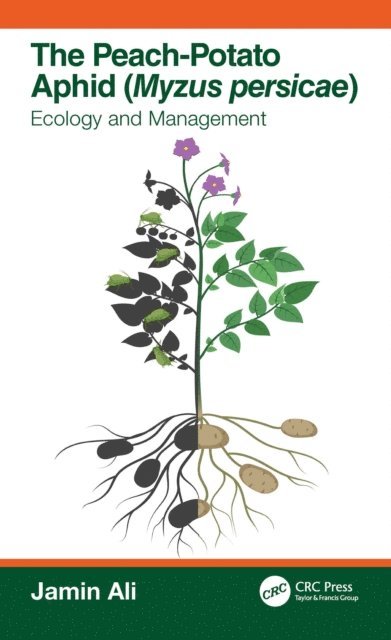
Considered as economically significant pests with worldwide distribution, aphids feed on hundreds of cultivated and ornamental plants and cause considerable economic loss on a global scale.The peach-potato aphid, Myzus persicae, is one of the most severe model aphid pests and successfully colonizes hundreds of plant species from 40 different families. It is a complex aphid pest known for its high reproductive rate, biotype formation, suppression of plant defenses, and wide range of host plants. This book covers ecological aspects - including life cycle, damage, and host range - which make aphids an economically important pest. A wide range of topics are covered, including ecological aspects of M. persicae; challenges with management approaches; damage; suppression of plant defenses; evolution; the mechanism of resistance against major classes of insecticides; the potential of biological control and natural plant-derived compounds (plant defense elicitors) as an alternative to the use of synthetic chemical insecticides to control M. persicae; and integrated pest management for M. persicae. As the peach-potato aphid is a model aphid pest, studying it helps to develop control strategies against the entire group of aphids.Written for professionals, as well as students, teachers, and researchers in the fields of entomology, ecology, and bioscience, this book is an enriching new addition to its field.
561 kr
Skickas inom 10-15 vardagar
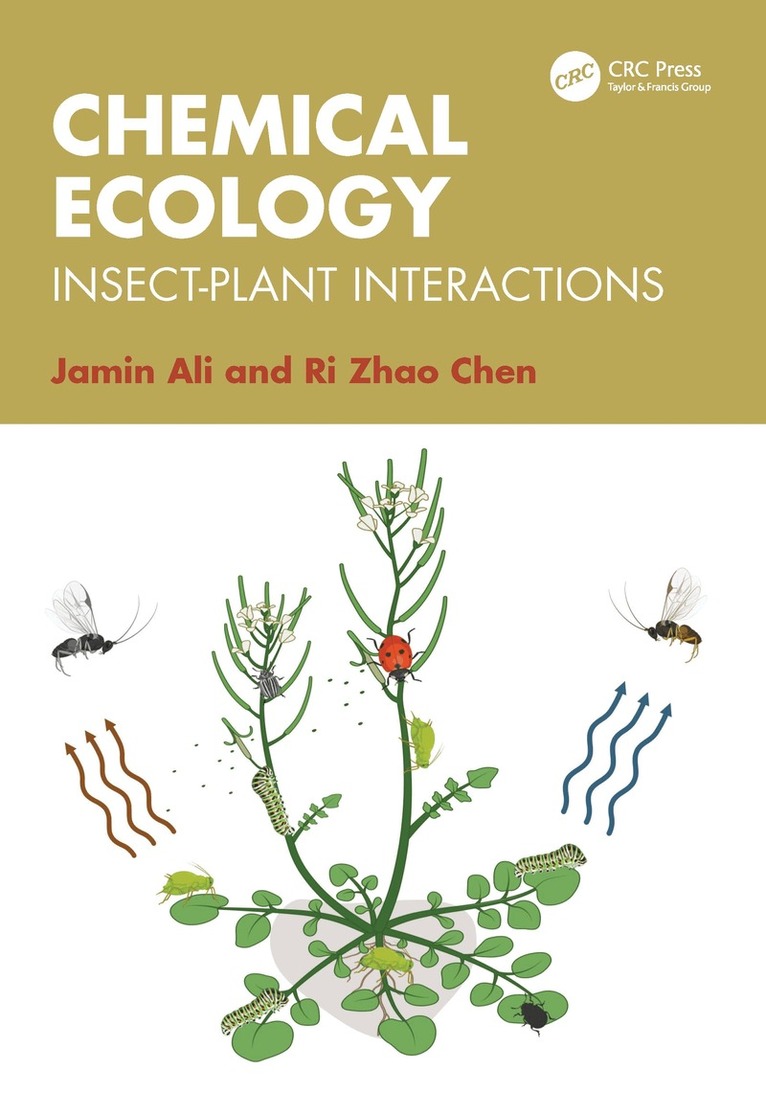
A CHOICE Recommended title 2025This textbook provides a comprehensive overview of the principles, methods and applications of chemical ecology, covering such topics as chemical signalling, predator–prey interactions, host plant selection and chemical defence. The book takes the reader through the historical development of the discipline to current state-of-the-art research, delving into recent findings on the role of chemical ecology in conservation and management and exploring how the field may contribute to future innovations in ecological science. A chapter is dedicated to the techniques that have been used in chemical ecology and some success stories.Chemical Ecology: Insect-Plant Interactions is an important resource for advanced undergraduates and postgraduate researchers as well as practitioners in this interdisciplinary field. The book’s layout aligns with the curriculum of chemical-ecology-related disciplines, progressing from basic fundamental principles to a more advanced level. Those studying and researching in ecology, entomology, plant biology and biochemistry will find it invaluable as well as those practising in areas such as agriculture, forestry and pest management.
1 359 kr
Skickas inom 10-15 vardagar
A CHOICE Recommended title 2025This textbook provides a comprehensive overview of the principles, methods and applications of chemical ecology, covering such topics as chemical signalling, predator–prey interactions, host plant selection and chemical defence. The book takes the reader through the historical development of the discipline to current state-of-the-art research, delving into recent findings on the role of chemical ecology in conservation and management and exploring how the field may contribute to future innovations in ecological science. A chapter is dedicated to the techniques that have been used in chemical ecology and some success stories.Chemical Ecology: Insect-Plant Interactions is an important resource for advanced undergraduates and postgraduate researchers as well as practitioners in this interdisciplinary field. The book’s layout aligns with the curriculum of chemical-ecology-related disciplines, progressing from basic fundamental principles to a more advanced level. Those studying and researching in ecology, entomology, plant biology and biochemistry will find it invaluable as well as those practising in areas such as agriculture, forestry and pest management.
2 185 kr
Kommande
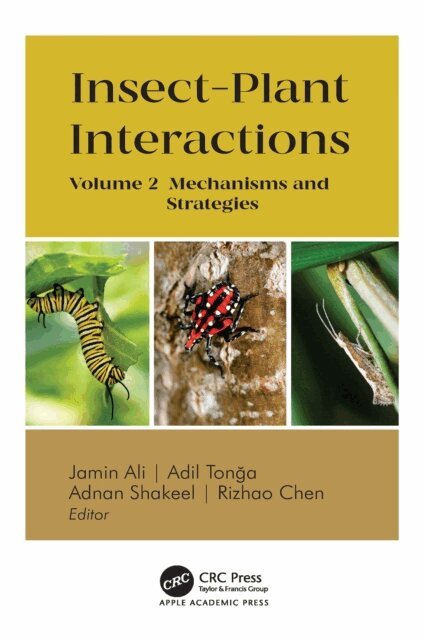
Plants and insects have engaged in a long evolutionary battle, leading to the development of sophisticated defense mechanisms and counter-adaptations. The intricate interplay between these two groups shapes ecosystems, agricultural productivity, and pest management strategies. In recent years, advances in molecular biology, chemical ecology, and genomics have unveiled the underlying mechanisms governing insect-plant interactions, offering novel insights for sustainable agriculture and pest control. By compiling cutting-edge research and comprehensive reviews, these two volumes provide a holistic understanding of plant-insect dynamics and their implications for ecology and agriculture.Volume 1 offers an in-depth exploration of the complex insect-plant interactions by integrating perspectives from ecology, entomology, plant physiology, and agroecosystem management. It brings together cuttingedge research and comprehensive reviews to highlight both well-established concepts and emerging trends in insect-plant dynamics.Volume 2 explores the diverse defense strategies plants employ to deter herbivorous insects, from structural adaptations to chemical defenses and molecular signaling pathways.
1 777 kr
Kommande
Plants and insects have engaged in a long evolutionary battle, leading to the development of sophisticated defense mechanisms and counter-adaptations. The intricate interplay between these two groups shapes ecosystems, agricultural productivity, and pest management strategies. In recent years, advances in molecular biology, chemical ecology, and genomics have unveiled the underlying mechanisms governing insect-plant interactions, offering novel insights for sustainable agriculture and pest control. By compiling cutting-edge research and comprehensive reviews, these two volumes provide a holistic understanding of plant-insect dynamics and their implications for ecology and agriculture.Volume 1 offers an in-depth exploration of the complex insect-plant interactions by integrating perspectives from ecology, entomology, plant physiology, and agroecosystem management. It brings together cuttingedge research and comprehensive reviews to highlight both well-established concepts and emerging trends in insect-plant dynamics.Volume 2 explores the diverse defense strategies plants employ to deter herbivorous insects, from structural adaptations to chemical defenses and molecular signaling pathways.