Advances in Olericulture – serie
Visar alla böcker i serien Advances in Olericulture. Handla med fri frakt och snabb leverans.
9 produkter
9 produkter
Inbunden, Engelska, 2021
1 079 kr
Skickas inom 10-15 vardagar
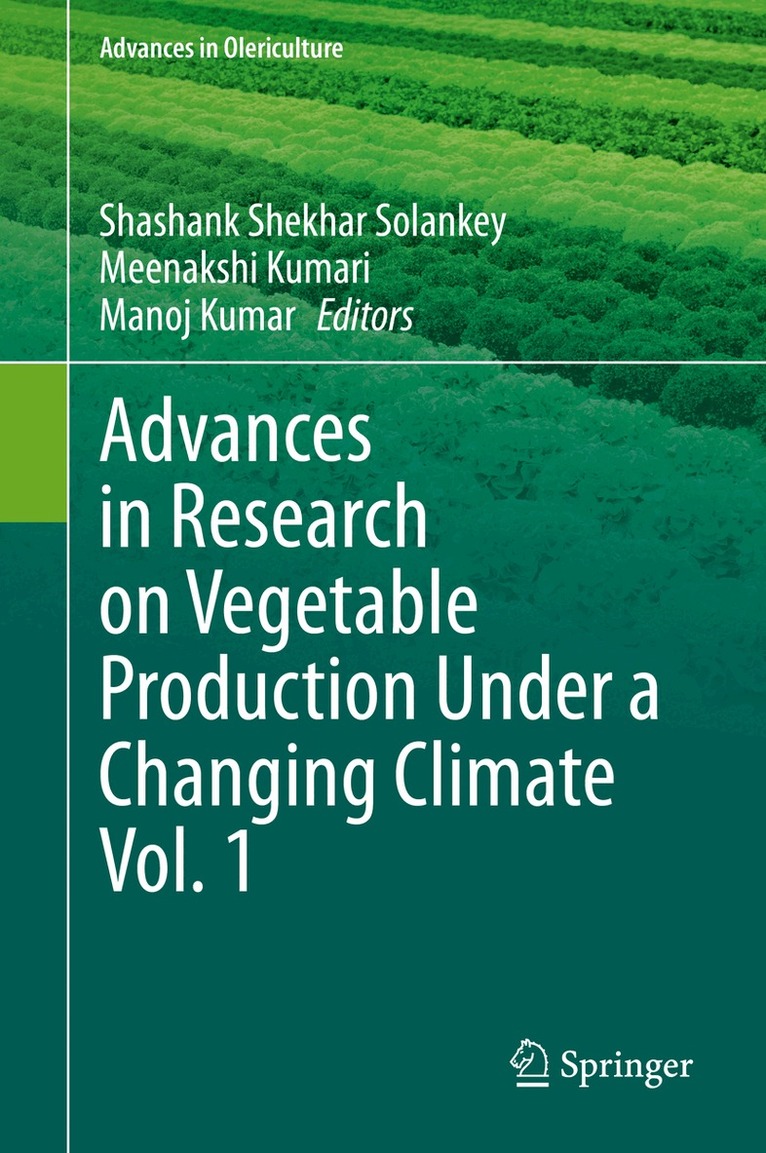
A considerable change in climate at a global level will impact the vegetable cultivation and agriculture as a whole; subsequently affecting the world's food supply. Climate change per se is not necessarily harmful; the problems arise from extreme events that are difficult to predict (erratic rainfall patterns and unpredictable high and low temperatures), and consequently reduce crop productivity. Vegetables are in general more succulent (have 90% water) and are more sensitive to climatic vagaries. Sudden changes in temperature coupled with irregular precipitation at any phase of crop growth can affect the normal growth, flowering, pollination, fruit setting, fruit development and fruit ripening can decrease the yield. The irregular precipitation can also affect the soil salinity and is a major challenge in many vegetable growing areas. To mitigate the harmful impact of climatic change there is a urgent need to develop adequate adaptation strategies for adverse effect of climate change and the preference should be given on development of heat, cold, drought, flood and salinity stress tolerant genotypes along with climate proofing through conventional and non-conventional breeding techniques. Available evidence shows that there is a high probability of increase in the frequency and intensity of climate related natural hazards due to climate change and hence increases the potential threat due to climate change related natural disasters in the world. This book (Volume- I) will be basically useful for the researchers and postgraduate students with current challenges and mitigation strategies for increasing vegetable production under a changing climate.
Häftad, Engelska, 2022
1 079 kr
Skickas inom 10-15 vardagar
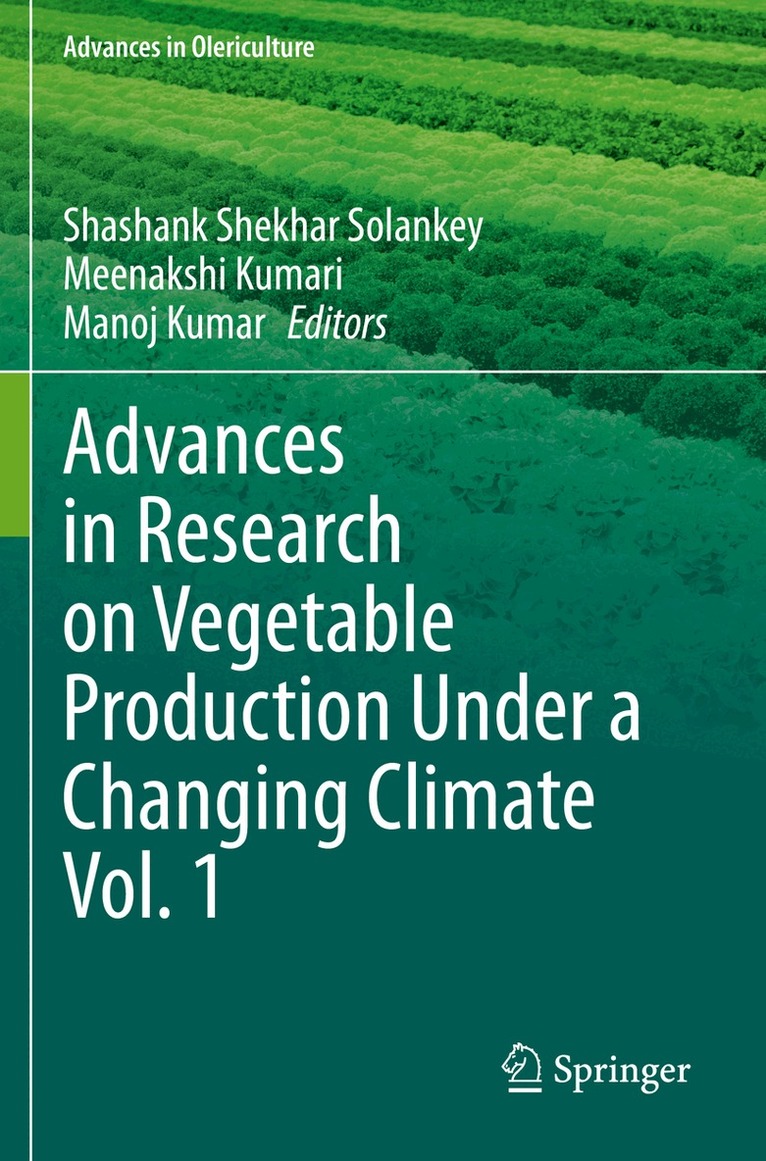
A considerable change in climate at a global level will impact the vegetable cultivation and agriculture as a whole; subsequently affecting the world's food supply. Climate change per se is not necessarily harmful; the problems arise from extreme events that are difficult to predict (erratic rainfall patterns and unpredictable high and low temperatures), and consequently reduce crop productivity. Vegetables are in general more succulent (have 90% water) and are more sensitive to climatic vagaries. Sudden changes in temperature coupled with irregular precipitation at any phase of crop growth can affect the normal growth, flowering, pollination, fruit setting, fruit development and fruit ripening can decrease the yield. The irregular precipitation can also affect the soil salinity and is a major challenge in many vegetable growing areas. To mitigate the harmful impact of climatic change there is a urgent need to develop adequate adaptation strategies for adverse effect of climate change and the preference should be given on development of heat, cold, drought, flood and salinity stress tolerant genotypes along with climate proofing through conventional and non-conventional breeding techniques. Available evidence shows that there is a high probability of increase in the frequency and intensity of climate related natural hazards due to climate change and hence increases the potential threat due to climate change related natural disasters in the world. This book (Volume- I) will be basically useful for the researchers and postgraduate students with current challenges and mitigation strategies for increasing vegetable production under a changing climate.
Inbunden, Engelska, 2023
1 830 kr
Skickas inom 10-15 vardagar
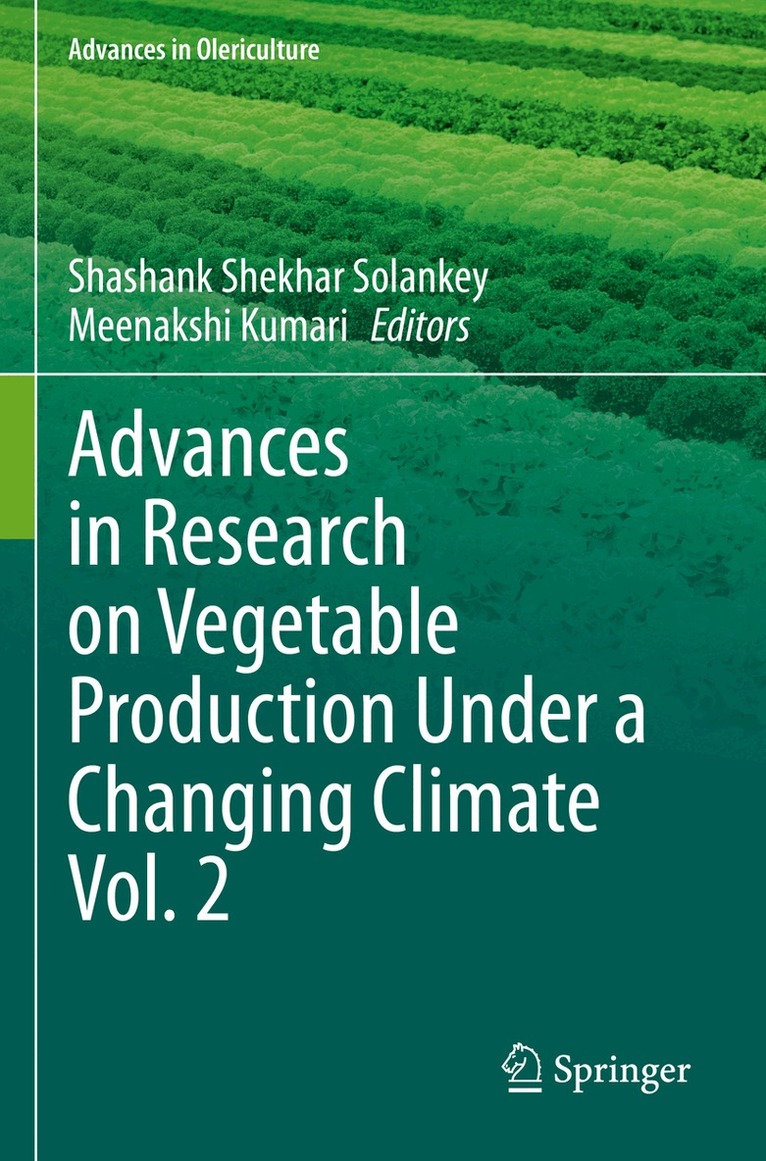
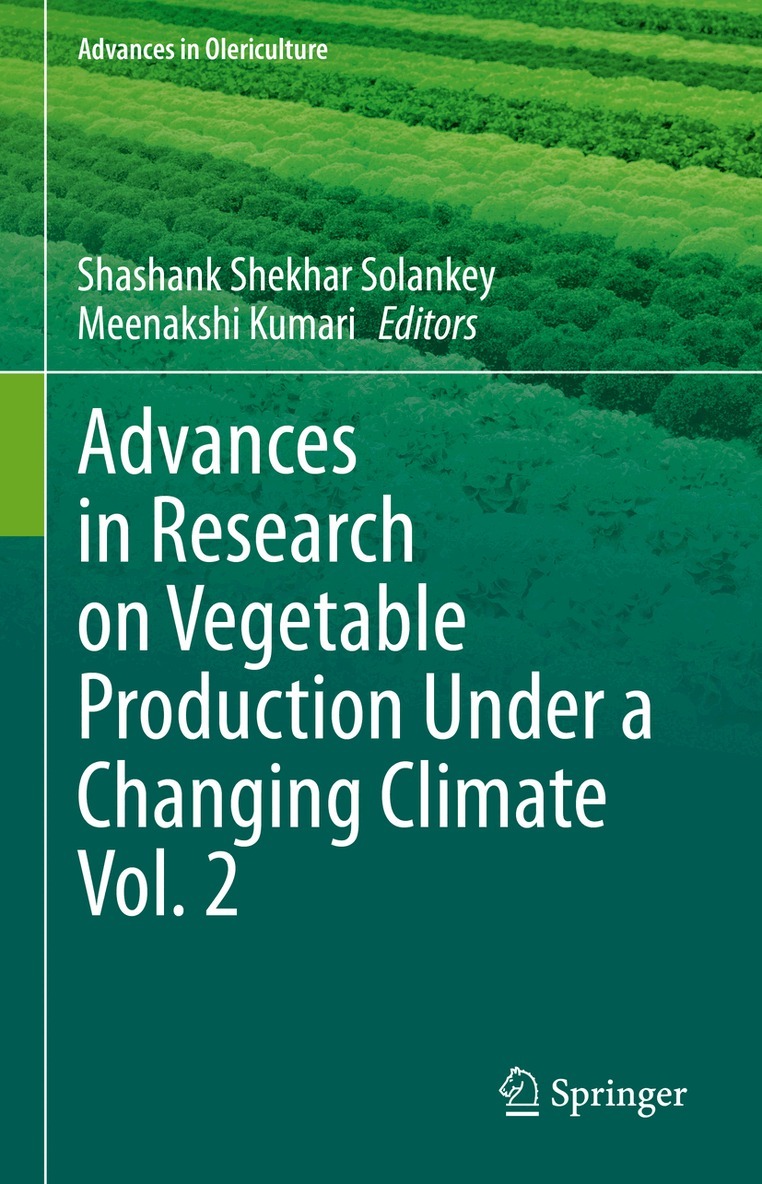
This second volume on the topic will be extremely useful for the researchers and postgraduate students working on vegetable crops with a special focus on climate change.Today, the entire world is suffering from global warming and its consequent, climate change. This has emerged as the most prominent global environmental issue and there is an urgent need to mitigate its impact on agriculture. Over the past 20 years South Asia has had a robust economic growth, yet it is home to more than one fourth of the world’s hunger and 40% of the world’s malnourished children and women. Persistent climatic variability, which results in frequent drought and flood, is among the major reasons for this phenomenon. Vegetables are in general more succulent (have 90% water) and more sensitive to climatic vagaries and sudden changes in temperature, as well as irregular precipitation at any phase of crop growing, can affect the normal growth, flowering, pollination, fruit setting, fruit development and fruit ripening which eventually decreases the yield. The irregular precipitation also causes the soil salinity and is a major challenge in many vegetable growing areas. To mitigate the harmful impact of climatic change there is an urgent need to develop adequate adaptation strategies for adverse effect of climate change and preference should be given to the development of heat, cold, drought, flood and salinity stress tolerant genotypes along with climate proofing through conventional and non-conventional breeding techniques, as well as exploiting the beneficial effects of CO2 enhancement on crop growth and yield. Available evidence shows that there is high probability of increase in the frequency and intensity of climate related natural hazards due to climate change and hence increase the potential threat due to climate change related natural disasters in the world. At present protected cultivation and grafted seedlings are also popularizing among vegetable growers because of the huge scope as well as, molecular breeding, emerging insect-pests & diseases and postharvest quality of vegetables under this climate change scenario. Moreover, underexploited vegetables, perennial vegetable and tuber crops have a more tolerant ability to climate vagaries compare to major vegetables which are also discussed in this book.
Häftad, Engelska, 2024
1 830 kr
Skickas inom 10-15 vardagar
This second volume on the topic will be extremely useful for the researchers and postgraduate students working on vegetable crops with a special focus on climate change.Today, the entire world is suffering from global warming and its consequent, climate change. This has emerged as the most prominent global environmental issue and there is an urgent need to mitigate its impact on agriculture. Over the past 20 years South Asia has had a robust economic growth, yet it is home to more than one fourth of the world’s hunger and 40% of the world’s malnourished children and women. Persistent climatic variability, which results in frequent drought and flood, is among the major reasons for this phenomenon. Vegetables are in general more succulent (have 90% water) and more sensitive to climatic vagaries and sudden changes in temperature, as well as irregular precipitation at any phase of crop growing, can affect the normal growth, flowering, pollination, fruit setting, fruit development and fruit ripening which eventually decreases the yield. The irregular precipitation also causes the soil salinity and is a major challenge in many vegetable growing areas. To mitigate the harmful impact of climatic change there is an urgent need to develop adequate adaptation strategies for adverse effect of climate change and preference should be given to the development of heat, cold, drought, flood and salinity stress tolerant genotypes along with climate proofing through conventional and non-conventional breeding techniques, as well as exploiting the beneficial effects of CO2 enhancement on crop growth and yield. Available evidence shows that there is high probability of increase in the frequency and intensity of climate related natural hazards due to climate change and hence increase the potential threat due to climate change related natural disasters in the world. At present protected cultivation and grafted seedlings are also popularizing among vegetable growers because of the huge scope as well as, molecular breeding, emerging insect-pests & diseases and postharvest quality of vegetables under this climate change scenario. Moreover, underexploited vegetables, perennial vegetable and tuber crops have a more tolerant ability to climate vagaries compare to major vegetables which are also discussed in this book.
Inbunden, Engelska, 2025
2 366 kr
Skickas inom 10-15 vardagar
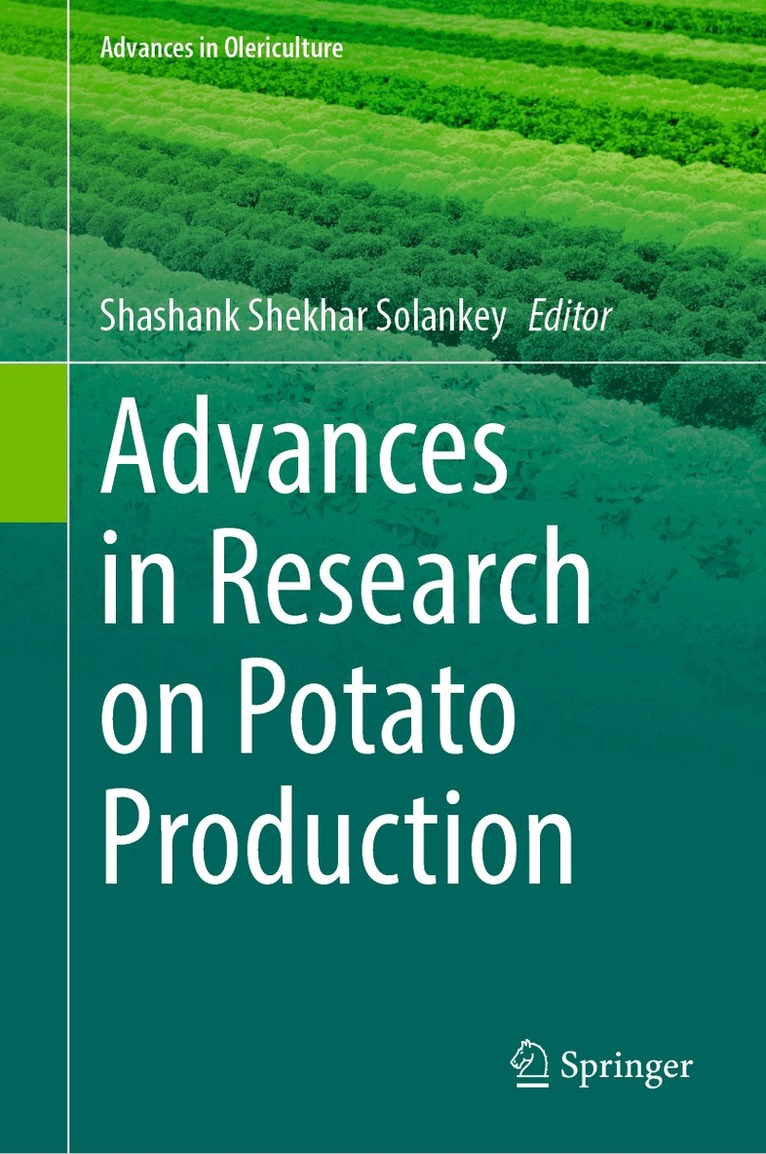
Potato (Solanum tuberosum L.) is the world’s third-most important food crop and the fourth-most important food crop in India. Potatoes are nutritionally rich, fat free, gluten free and high in dietary fibre. They are also a good source of vitamin C, vitamin B6, phenols, iron, potassium, phosphorus, magnesium and protein as compared to cereals. They are more energy-packed than any other popular vegetables and have the ability to combat hidden hunger, which is a major global health issue. The potato is also considered the ‘king of vegetables’ due to its versatile uses and is an important staple food worldwide According to the FAOSTAT database (2023), global potato production in 2022 was 375 million tonnes, with the top producers being China (95.5 million tonnes) and India (56 million tonnes). The United Nations declared 2008 the International Year of the Potato (IYP) to increase awareness of the relationship that exists between poverty, food security, malnutrition and the potential contribution of the potato in defeating hunger. Moreover, this magical crop can generate a higher yield compared to the other crops; hence, it is one of the most notable crops to eliminate hunger and poverty. Therefore, sustainable potato production is important for food security and social welfare in future climate change scenarios.It is important to inform that potatoes have a shallow root system and are highly sensitive to environmental conditions and climate change. It is projected that potato yield may decrease up to 32 per cent by 2050 due to increasing temperatures and drought conditions. Thus, future potato breeding programmes should focus on enhancing abiotic and biotic stress tolerance through the utilization of the natural germplasm conserved in different gene banks along with climate friendly agronomical practices. Moreover, potato breeding should benefit from the effectiveness and ease of molecular techniques such as marker assisted selection, genome wide association studies, functional genomics and transgenics. The development of new potato varieties can also be achieved via genetic engineering and genome editing. Disease free potato seed production requires the integration of tissue culture methods, followed by the production of mini-tubers under an aeroponic system. As it is a staple food for millions and demand for potatoes will increase in the future, which makes this crop suitable for future research. Hence, the present book is formulated for professionals, researchers and post-graduate students who is working with advanced production, breeding and post-harvest technologies on potato crop specially in Indian perspective.
Häftad, Engelska, 2026
1 723 kr
Skickas inom 10-15 vardagar
Potato (Solanum tuberosum L.) is the world’s third-most important food crop and the fourth-most important food crop in India. Potatoes are nutritionally rich, fat free, gluten free and high in dietary fibre. They are also a good source of vitamin C, vitamin B6, phenols, iron, potassium, phosphorus, magnesium and protein as compared to cereals. They are more energy-packed than any other popular vegetables and have the ability to combat hidden hunger, which is a major global health issue. The potato is also considered the ‘king of vegetables’ due to its versatile uses and is an important staple food worldwide According to the FAOSTAT database (2023), global potato production in 2022 was 375 million tonnes, with the top producers being China (95.5 million tonnes) and India (56 million tonnes). The United Nations declared 2008 the International Year of the Potato (IYP) to increase awareness of the relationship that exists between poverty, food security, malnutrition and the potential contribution of the potato in defeating hunger. Moreover, this magical crop can generate a higher yield compared to the other crops; hence, it is one of the most notable crops to eliminate hunger and poverty. Therefore, sustainable potato production is important for food security and social welfare in future climate change scenarios.It is important to inform that potatoes have a shallow root system and are highly sensitive to environmental conditions and climate change. It is projected that potato yield may decrease up to 32 per cent by 2050 due to increasing temperatures and drought conditions. Thus, future potato breeding programmes should focus on enhancing abiotic and biotic stress tolerance through the utilization of the natural germplasm conserved in different gene banks along with climate friendly agronomical practices. Moreover, potato breeding should benefit from the effectiveness and ease of molecular techniques such as marker assisted selection, genome wide association studies, functional genomics and transgenics. The development of new potato varieties can also be achieved via genetic engineering and genome editing. Disease free potato seed production requires the integration of tissue culture methods, followed by the production of mini-tubers under an aeroponic system. As it is a staple food for millions and demand for potatoes will increase in the future, which makes this crop suitable for future research. Hence, the present book is formulated for professionals, researchers and post-graduate students who is working with advanced production, breeding and post-harvest technologies on potato crop specially in Indian perspective.
Inbunden, Engelska, 2026
1 937 kr
Skickas inom 10-15 vardagar
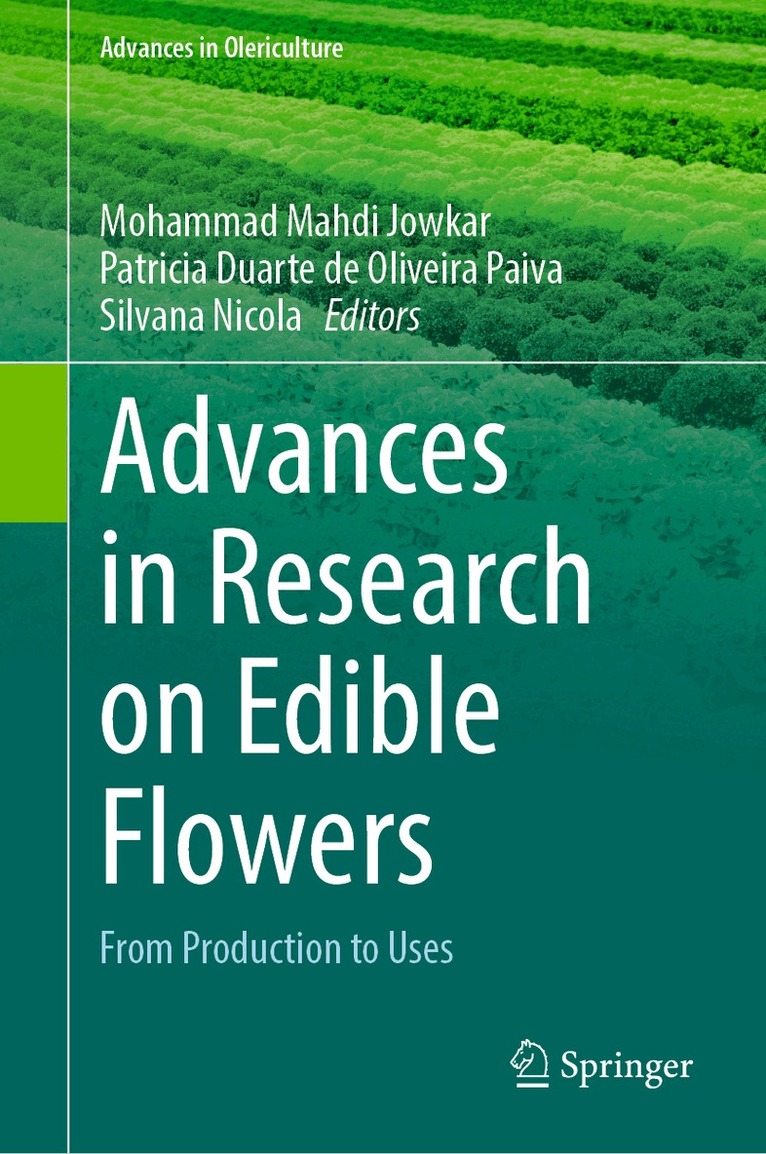
Flowers play an important role in human life. Due to their high nutritional and chemoprotective values, the consumption of edible flowers is gaining popularity as a food source and garnish. Consequently, the market for edible flowers is flourishing, and research in this area is expanding. This book provides comprehensive information on various aspects of edible flower production and application. It covers topics such as biodiversity, nutraceutical values, cultivation techniques (including soilless and precise production), post-harvest processes and quality assurance. The book delves into research on both traditional and innovative techniques in the supply chains of edible flower beverages, food, spices, and flavourings. Finally, the authors explore the application of edible flowers as garnishes in pastries and candies. This book is an precious resource for anyone interested in the burgeoning field of edible flowers.
Inbunden, Engelska, 2017
1 830 kr
Skickas inom 10-15 vardagar
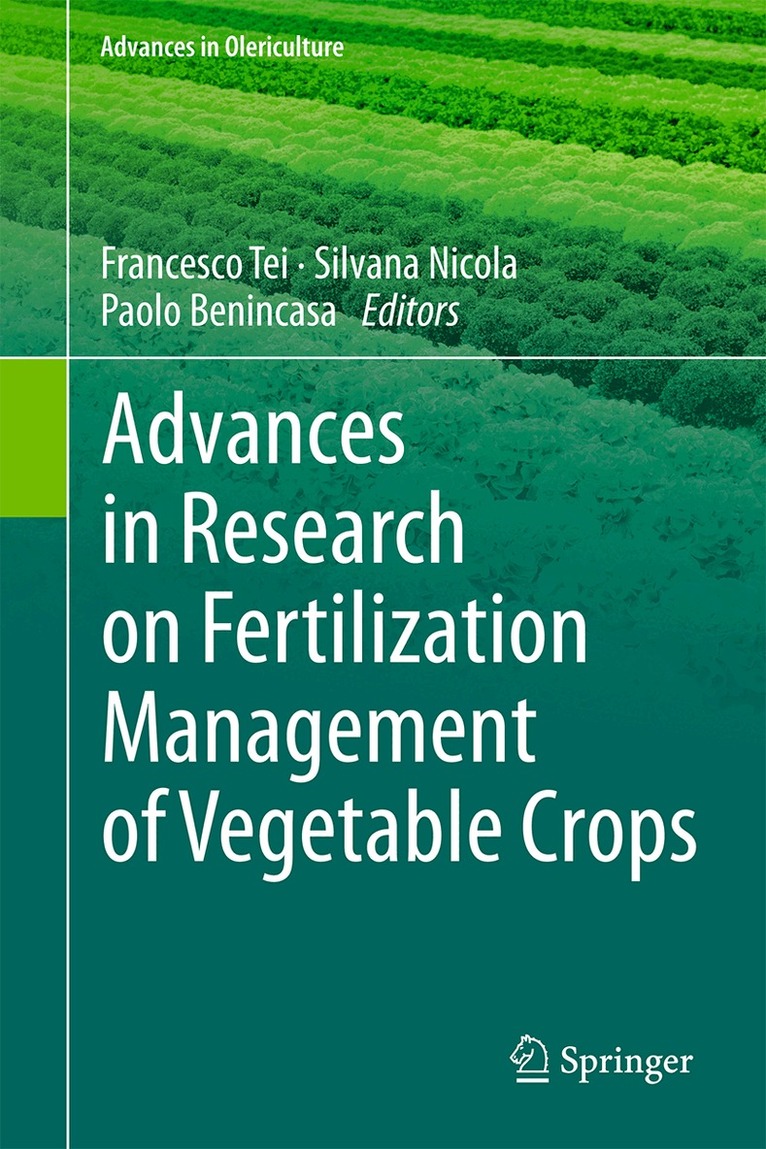
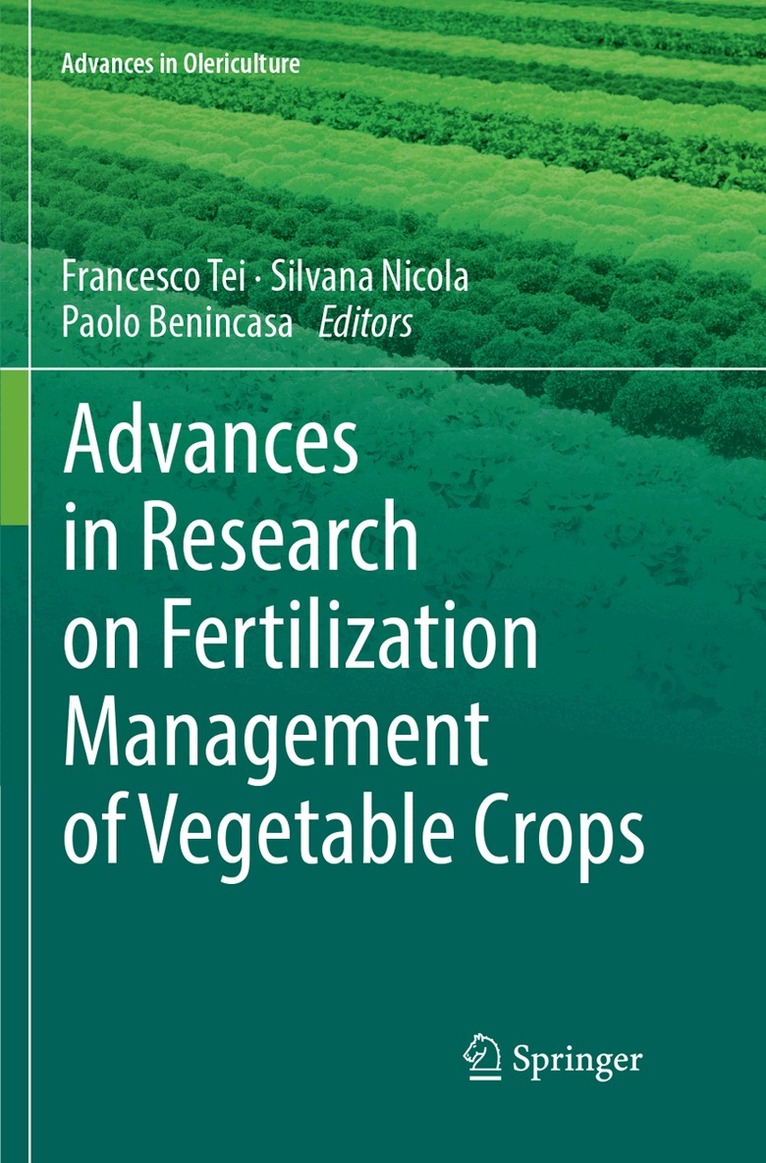
This book is a review of the recent literature on the key scientific and technical subjects of fertilization management in vegetable crops. In the last decades, research on fertilization management in vegetables was aimed at producing economical yields with reduced fertilizer inputs by the development and implementation of cropping systems, nutrient management approaches and crop varieties. Examples of the interventions in cropping systems included adequate crop rotations, inter-cropping, double cropping, and other strategies for a better soil organic matter management; nutrient management approaches included modelling, Decision Support Systems, crop nutritional status testing and precision agriculture technologies; amelioration of crop varieties has been directed toward higher nutrient/fertilizer use efficiency.
Häftad, Engelska, 2018
1 294 kr
Skickas inom 10-15 vardagar
This book is a review of the recent literature on the key scientific and technical subjects of fertilization management in vegetable crops. In the last decades, research on fertilization management in vegetables was aimed at producing economical yields with reduced fertilizer inputs by the development and implementation of cropping systems, nutrient management approaches and crop varieties. Examples of the interventions in cropping systems included adequate crop rotations, inter-cropping, double cropping, and other strategies for a better soil organic matter management; nutrient management approaches included modelling, Decision Support Systems, crop nutritional status testing and precision agriculture technologies; amelioration of crop varieties has been directed toward higher nutrient/fertilizer use efficiency.