Shashank Shekhar Solankey – författare
2 255 kr
Läs direkt efter köp
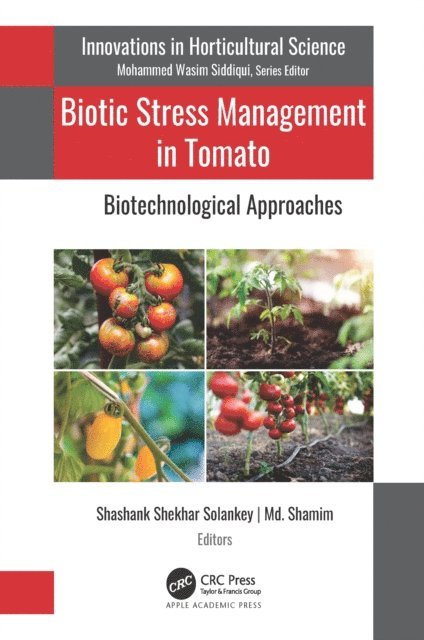
This valuable volume highlights biotechnological tools and their utilization for biotic stress management in the tomato plant, one of the world’s most important vegetable crops consumed by us in our daily diet and which is vulnerable to over 200 diseases as well as the impact of global climate change.
The chapters cover the major diseases of tomato along with practical biotic stress management strategies through biotechnological and molecular approaches. The focus is on molecular tools that can be used to prevent or mitigate damage from such diseases as bacterial wilt, bacterial canker, damping off seedlings, late blight, early blight, fusarium wilt, septorial leaf spot, cercospora leaf spot, verticilium wilt, tomato leaf curl virus, tobacco mosaic virus, tomato spotted wilt virus, root knot nematode, fruit borer, and sucking pests. Gene stacking/pyramiding and postharvest management strategies are also systematically discussed.
This book provides an up-to-date and comprehensive review that will be a greatly useful resource, containing basic facts and information on the new and recent discoveries for biotic stresses management of tomatoes.
2 255 kr
Läs direkt efter köp
This valuable volume highlights biotechnological tools and their utilization for biotic stress management in the tomato plant, one of the world’s most important vegetable crops consumed by us in our daily diet and which is vulnerable to over 200 diseases as well as the impact of global climate change.
The chapters cover the major diseases of tomato along with practical biotic stress management strategies through biotechnological and molecular approaches. The focus is on molecular tools that can be used to prevent or mitigate damage from such diseases as bacterial wilt, bacterial canker, damping off seedlings, late blight, early blight, fusarium wilt, septorial leaf spot, cercospora leaf spot, verticilium wilt, tomato leaf curl virus, tobacco mosaic virus, tomato spotted wilt virus, root knot nematode, fruit borer, and sucking pests. Gene stacking/pyramiding and postharvest management strategies are also systematically discussed.
This book provides an up-to-date and comprehensive review that will be a greatly useful resource, containing basic facts and information on the new and recent discoveries for biotic stresses management of tomatoes.
1 958 kr
Skickas inom 10-15 vardagar
1 172 kr
Skickas inom 10-15 vardagar
1 604 kr
Skickas inom 5-8 vardagar
1 091 kr
Skickas inom 10-15 vardagar
1 367 kr
Läs direkt efter köp
1 091 kr
Skickas inom 10-15 vardagar
1 851 kr
Skickas inom 10-15 vardagar
2 303 kr
Läs direkt efter köp
This second volume on the topic will be extremely useful for the researchers and postgraduate students working on vegetable crops with a special focus on climate change.
Today, the entire world is suffering from global warming and its consequent, climate change. This has emerged as the most prominent global environmental issue and there is an urgent need to mitigate its impact on agriculture. Over the past 20 years South Asia has had a robust economic growth, yet it is home to more than one fourth of the world’s hunger and 40% of the world’s malnourished children and women. Persistent climatic variability, which results in frequent drought and flood, is among the major reasons for this phenomenon. Vegetables are in general more succulent (have 90% water) and more sensitive to climatic vagaries and sudden changes in temperature, as well as irregular precipitation at any phase of crop growing, can affect the normal growth, flowering, pollination, fruit setting, fruit development and fruit ripening which eventually decreases the yield. The irregular precipitation also causes the soil salinity and is a major challenge in many vegetable growing areas. To mitigate the harmful impact of climatic change there is an urgent need to develop adequate adaptation strategies for adverse effect of climate change and preference should be given to the development of heat, cold, drought, flood and salinity stress tolerant genotypes along with climate proofing through conventional and non-conventional breeding techniques, as well as exploiting the beneficial effects of CO2 enhancement on crop growth and yield. Available evidence shows that there is high probability of increase in the frequency and intensity of climate related natural hazards due to climate change and hence increase the potential threat due to climate change related natural disasters in the world. At present protected cultivation and grafted seedlings are also popularizing among vegetable growers because of the huge scope as well as, molecular breeding, emerging insect-pests & diseases and postharvest quality of vegetables under this climate change scenario. Moreover, underexploited vegetables, perennial vegetable and tuber crops have a more tolerant ability to climate vagaries compare to major vegetables which are also discussed in this book.
625 kr
Skickas inom 5-8 vardagar
1 851 kr
Skickas inom 10-15 vardagar
2 393 kr
Skickas inom 10-15 vardagar
3 046 kr
Läs direkt efter köp
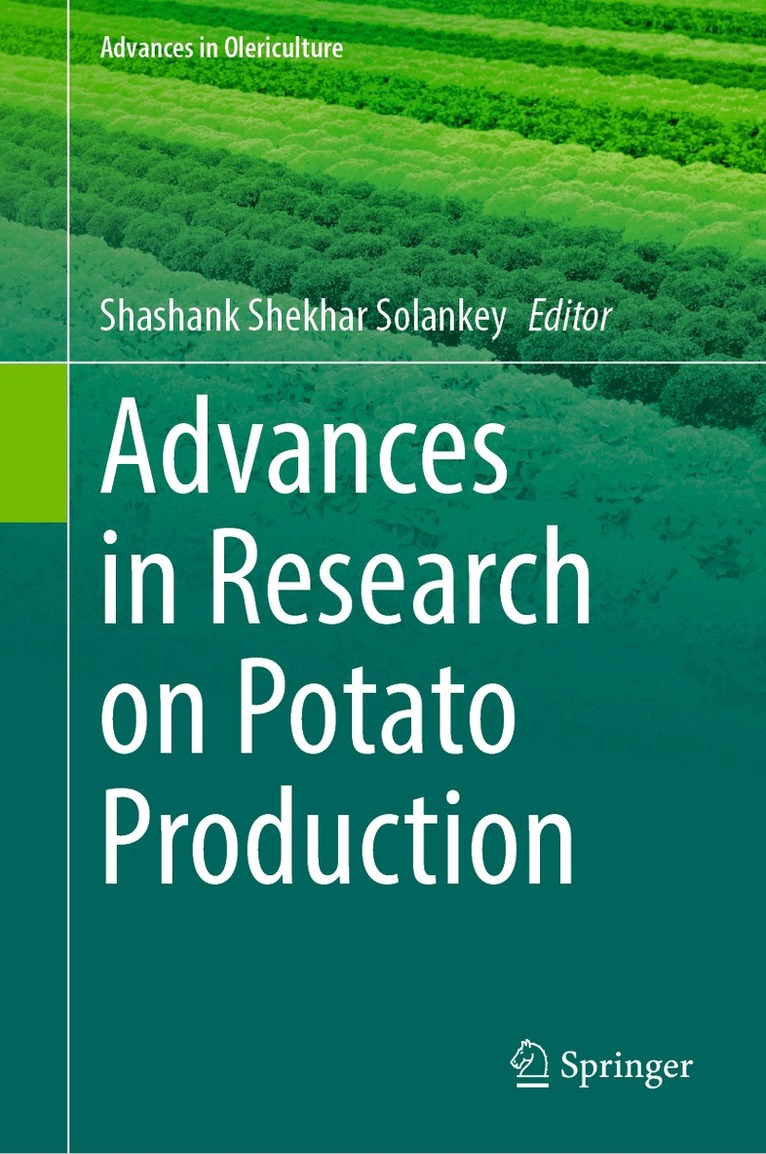
Potato (Solanum tuberosum L.) is the world’s third-most important food crop and the fourth-most important food crop in India. Potatoes are nutritionally rich, fat free, gluten free and high in dietary fibre. They are also a good source of vitamin C, vitamin B6, phenols, iron, potassium, phosphorus, magnesium and protein as compared to cereals. They are more energy-packed than any other popular vegetables and have the ability to combat hidden hunger, which is a major global health issue. The potato is also considered the ‘king of vegetables’ due to its versatile uses and is an important staple food worldwide According to the FAOSTAT database (2023), global potato production in 2022 was 375 million tonnes, with the top producers being China (95.5 million tonnes) and India (56 million tonnes). The United Nations declared 2008 the International Year of the Potato (IYP) to increase awareness of the relationship that exists between poverty, food security, malnutrition and the potential contribution of the potato in defeating hunger. Moreover, this magical crop can generate a higher yield compared to the other crops; hence, it is one of the most notable crops to eliminate hunger and poverty. Therefore, sustainable potato production is important for food security and social welfare in future climate change scenarios.
It is important to inform that potatoes have a shallow root system and are highly sensitive to environmental conditions and climate change. It is projected that potato yield may decrease up to 32 per cent by 2050 due to increasing temperatures and drought conditions. Thus, future potato breeding programmes should focus on enhancing abiotic and biotic stress tolerance through the utilization of the natural germplasm conserved in different gene banks along with climate friendly agronomical practices. Moreover, potato breeding should benefit from the effectiveness and ease of molecular techniques such as marker assisted selection, genome wide association studies, functional genomics and transgenics. The development of new potato varieties can also be achieved via genetic engineering and genome editing. Disease free potato seed production requires the integration of tissue culture methods, followed by the production of mini-tubers under an aeroponic system. As it is a staple food for millions and demand for potatoes will increase in the future, which makes this crop suitable for future research. Hence, the present book is formulated for professionals, researchers and post-graduate students who is working with advanced production, breeding and post-harvest technologies on potato crop specially in Indian perspective.
1 742 kr
Skickas inom 10-15 vardagar
2 403 kr
Skickas inom 5-8 vardagar