Md. Shamim - Böcker
Visar alla böcker från författaren Md. Shamim. Handla med fri frakt och snabb leverans.
10 produkter
10 produkter
1 627 kr
Skickas inom 10-15 vardagar
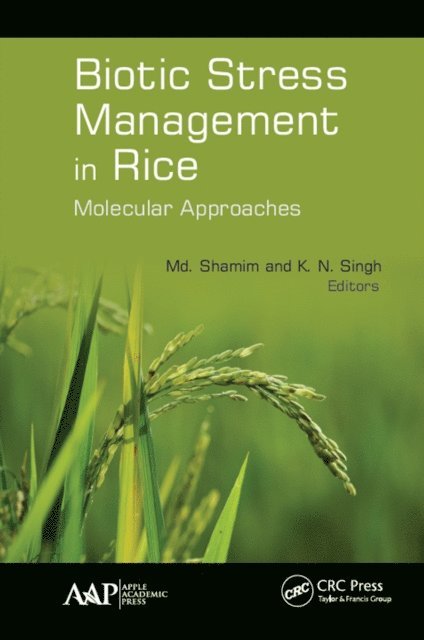
This book, Biotic Stress Management in Rice: Molecular Approaches, addresses biotic stress of rice and its management through molecular approaches. It focuses on the biotechnological aspects of rice with the aim of reducing the fungicide and insecticides and ultimately ensuring safety of rice as a food as well as the environment. Rice is an important crop in much of the Asia-Pacific region, and there are a number of threats to rice production, including fungal, viral, and bacterial diseases and insect pests, both in temperate and tropical countries, which can cause the significant economic loss. Remarkable efforts are being made by scientists and breeders to raise rice productivity and safety by modifying and manipulating rice plants to survive under different types of stresses. The book provides an understanding of the genetic basis of resistance and susceptibility and goes on to present studies directed to understand the host-plant interaction in rice that have given rise to specialized breeding programs for resistance to diseases and insect-pests. In addition to these advancements in molecular breeding, marker-assisted selection and transgenic approaches open new ways to increase resistance in rice for better production under several biotic stresses. This book covers the most recent advancements and research strategies of molecular breeding, transgenic approaches, and other tools for effective biotic stress management in rice.This book should find a prominent place on the shelves of new plant breeders, biotechnologists, plant pathologists and entomologists working in academic and commercial rice research programs, and in the libraries of research establishments.
1 767 kr
Skickas inom 7-10 vardagar
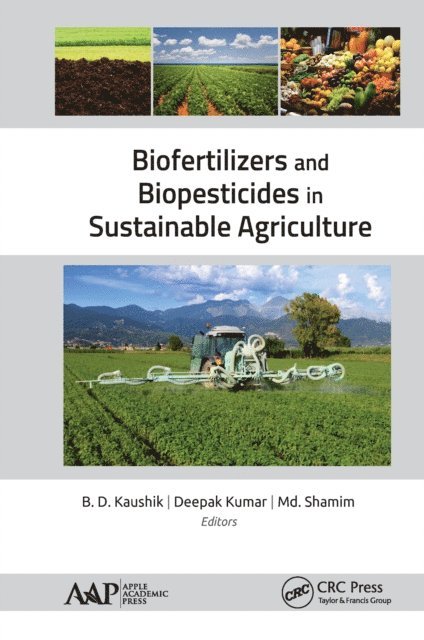
This new volume, Biofertilizers and Biopesticides in Sustainable Agriculture, presents strategies for the management of soil and crop diseases. Microbes have attracted worldwide attention due to their role in disease management and remediation of polluted soils. Taking a sustainable approach, this book explores the means of integrating various microbial management approaches to achieve the desired levels of crop yield under both conventional soils and neglected soils through the use of biopesticides and other botanicals as well as biomolecules. This book also presents a broad and updated view of molecular nitrogen fixation and phosphate-solubilizing and sulfur-transforming microbes for nutrition of crops in relation to the role of metal tolerant microbes in providing protection to plants grown in metal-contaminated soils. The preparation and application of biofertilizers, utilization of household waste materials, and use of genetically modified microorganisms (GMOs) in plant growth and development are also well discussed in the volume.
1 884 kr
Skickas inom 10-15 vardagar
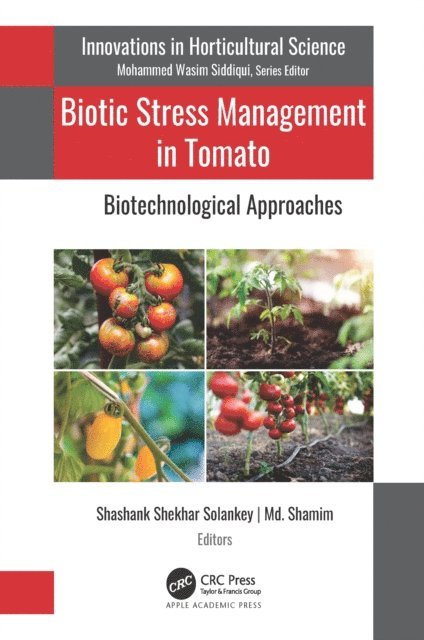
This valuable volume highlights biotechnological tools and their utilization for biotic stress management in the tomato plant, one of the world’s most important vegetable crops consumed by us in our daily diet and which is vulnerable to over 200 diseases as well as the impact of global climate change.The chapters cover the major diseases of tomato along with practical biotic stress management strategies through biotechnological and molecular approaches. The focus is on molecular tools that can be used to prevent or mitigate damage from such diseases as bacterial wilt, bacterial canker, damping off seedlings, late blight, early blight, fusarium wilt, septorial leaf spot, cercospora leaf spot, verticilium wilt, tomato leaf curl virus, tobacco mosaic virus, tomato spotted wilt virus, root knot nematode, fruit borer, and sucking pests. Gene stacking/pyramiding and postharvest management strategies are also systematically discussed.This book provides an up-to-date and comprehensive review that will be a greatly useful resource, containing basic facts and information on the new and recent discoveries for biotic stresses management of tomatoes.
1 127 kr
Skickas inom 10-15 vardagar
This new volume, Biofertilizers and Biopesticides in Sustainable Agriculture, presents strategies for the management of soil and crop diseases. Microbes have attracted worldwide attention due to their role in disease management and remediation of polluted soils. Taking a sustainable approach, this book explores the means of integrating various microbial management approaches to achieve the desired levels of crop yield under both conventional soils and neglected soils through the use of biopesticides and other botanicals as well as biomolecules. This book also presents a broad and updated view of molecular nitrogen fixation and phosphate-solubilizing and sulfur-transforming microbes for nutrition of crops in relation to the role of metal tolerant microbes in providing protection to plants grown in metal-contaminated soils. The preparation and application of biofertilizers, utilization of household waste materials, and use of genetically modified microorganisms (GMOs) in plant growth and development are also well discussed in the volume.
1 127 kr
Skickas inom 10-15 vardagar
This book, Biotic Stress Management in Rice: Molecular Approaches, addresses biotic stress of rice and its management through molecular approaches. It focuses on the biotechnological aspects of rice with the aim of reducing the fungicide and insecticides and ultimately ensuring safety of rice as a food as well as the environment. Rice is an important crop in much of the Asia-Pacific region, and there are a number of threats to rice production, including fungal, viral, and bacterial diseases and insect pests, both in temperate and tropical countries, which can cause the significant economic loss. Remarkable efforts are being made by scientists and breeders to raise rice productivity and safety by modifying and manipulating rice plants to survive under different types of stresses. The book provides an understanding of the genetic basis of resistance and susceptibility and goes on to present studies directed to understand the host-plant interaction in rice that have given rise to specialized breeding programs for resistance to diseases and insect-pests. In addition to these advancements in molecular breeding, marker-assisted selection and transgenic approaches open new ways to increase resistance in rice for better production under several biotic stresses. This book covers the most recent advancements and research strategies of molecular breeding, transgenic approaches, and other tools for effective biotic stress management in rice.This book should find a prominent place on the shelves of new plant breeders, biotechnologists, plant pathologists and entomologists working in academic and commercial rice research programs, and in the libraries of research establishments.
1 127 kr
Skickas inom 10-15 vardagar
This valuable volume highlights biotechnological tools and their utilization for biotic stress management in the tomato plant, one of the world’s most important vegetable crops consumed by us in our daily diet and which is vulnerable to over 200 diseases as well as the impact of global climate change.The chapters cover the major diseases of tomato along with practical biotic stress management strategies through biotechnological and molecular approaches. The focus is on molecular tools that can be used to prevent or mitigate damage from such diseases as bacterial wilt, bacterial canker, damping off seedlings, late blight, early blight, fusarium wilt, septorial leaf spot, cercospora leaf spot, verticilium wilt, tomato leaf curl virus, tobacco mosaic virus, tomato spotted wilt virus, root knot nematode, fruit borer, and sucking pests. Gene stacking/pyramiding and postharvest management strategies are also systematically discussed.This book provides an up-to-date and comprehensive review that will be a greatly useful resource, containing basic facts and information on the new and recent discoveries for biotic stresses management of tomatoes.
1 884 kr
Skickas inom 10-15 vardagar
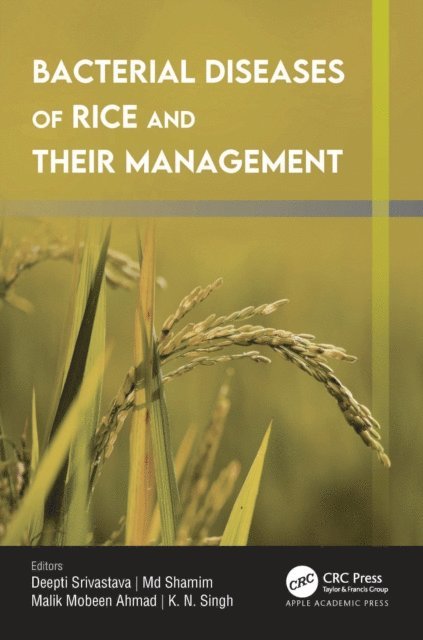
Rice is a major staple food and a source of nutrition for over 3.5 billion people worldwide. It is, however, susceptible to a number of bacterial diseases that decrease its yield and quality. This book covers the bacterial diseases of rice and their management, focusing on sustainable management methods that involve biological control, conventional breeding, and molecular methods. It covers the biology of rice bacterial blight pathogens, virulence determinants, and host defense factors of bacterial blight pathogen-rice interactions. Different resistance rice cultivars, their resistance loci, and quantitative trait loci mapping in the important rice cultivars are also discussed. The book presents biological studies of the major rice bacterial diseases (rice bacterial brown stripe disease, bacterial leaf streak disease, rice bacterial panicle blight disease, rice bacterial foot rot, sheath brown rot disease) and presents comparative analyses of conventional breeding, and molecular management approaches, along with examples.
1 992 kr
Skickas inom 10-15 vardagar
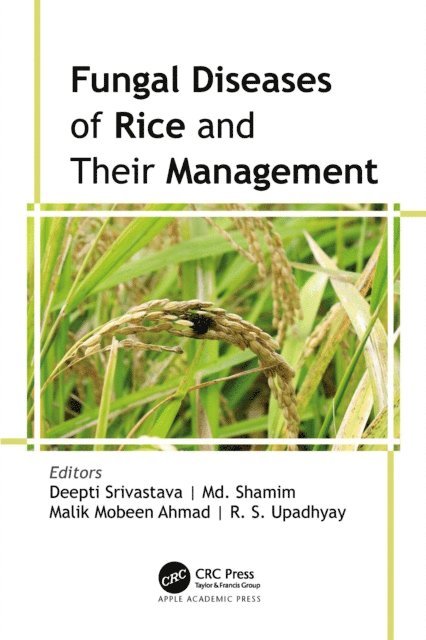
Rice is a widely consumed crop around the world that has tremendous importance and is cultivated almost everywhere except Antarctica. However, various biotic and abiotic stresses have a negative effect on rice cultivation, seriously reducing its yield. This volume examines the bacterial and fungal pathogens that cause rice diseases and explores how to manage these diseases. It covers the economic and environmental impact of rice fungal diseases on global food security and proceeds to delve into diagnostic methods for rice fungal pathogen detection and discusses current strategic and applied biotechnological methods for the effective management of rice fungal diseases.
1 857 kr
Skickas
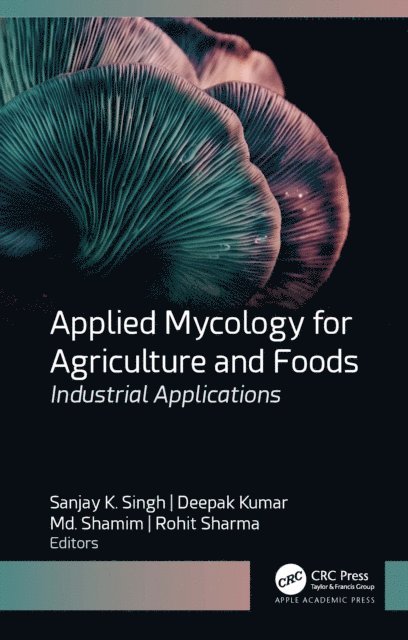
Taking a multidisciplinary approach, this book focuses on recent milestones in basic and applied mycology, focusing on many and diverse applications in the agricultural, food, and biofuel sectors.Applied Mycology for Agriculture and Foods: Industrial Applications provides an informative update of the current biological status of fungi and advances in conventional and modern molecular tools in identification, taxonomy of fungi, and applications of different taxonomic groups of fungi in various sectors, such as agriculture, food development, postharvesting, biological control of crop diseases, biofertilizers, bioremediation, pigments, pharmaceuticals, enzymes, biofuel production, etc.The volume addresses fungal biodiversity conservation, the emerging field of fungal metagenomics, the role of fungi in eco-safety and warfare, and the bioprospecting of fungi for hydrocarbons for biofuel production. Several chapters discuss using fungi in agricultural management, such as for the biocontrol of plant diseases, using entomopathogenic fungi as a pesticide, using nematophagous fungi for controlling nematodes that eat crops, using fungi in the development of biofertilizers, and more. The role of fungi in post-harvest diseases management in horticultural crops is looked at as well.Key features:Provides up-to-date information and advances in biological status and classification of fungiDiscusses the comprehensive role of fungi in various sectors, in food and agriculture, in biofuel production, in the production of production of antibiotics or antimicrobial agents, etc.Presents the recent systemic taxonomic classifications, developments, applications in molecular mycology and conservation strategies for mycofloraAiming to bridge the knowledge gap between basic and applied aspects of mycology, this volume provides a wealth of information that will be valuable for researchers, industrial scientists, faculty and students in mycology and plant pathology as well as in botany, microbiology, food microbiology, pharmaceutical development, biotechnology and biofuel production, and other professional disciplines.
3 090 kr
Skickas inom 7-10 vardagar
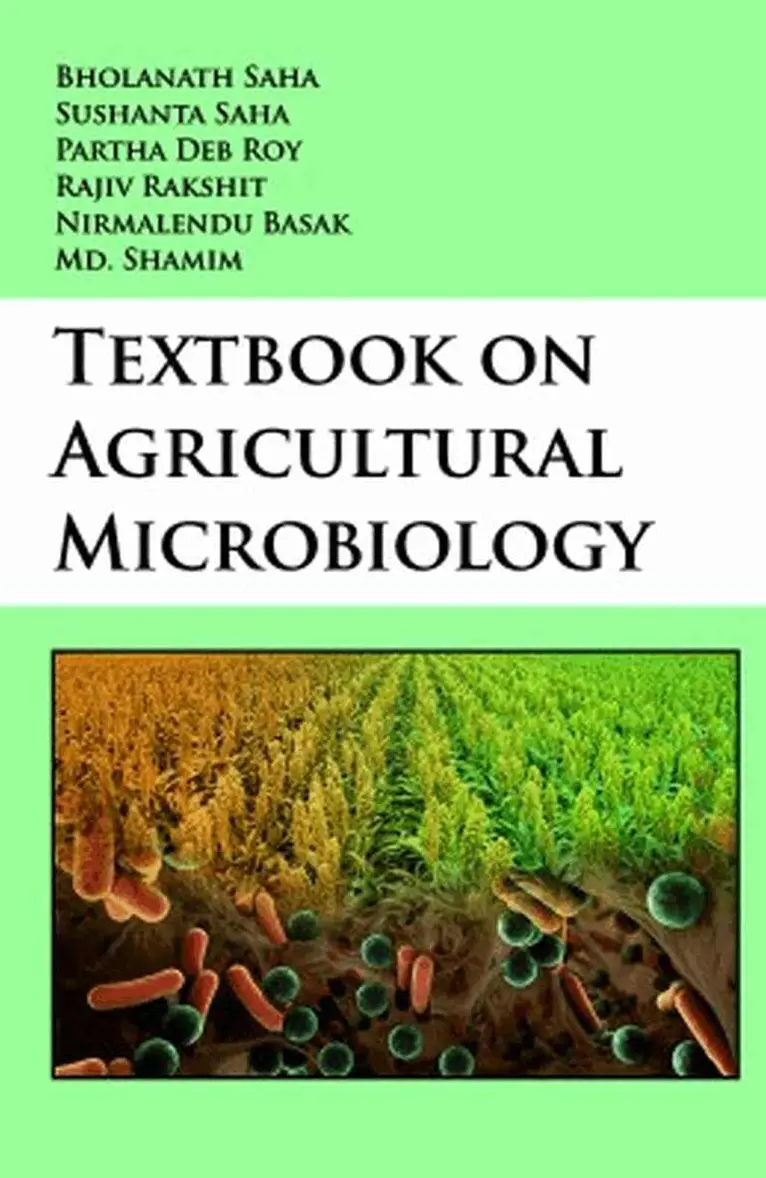
This book, designed for students pursuing a degree in agriculture, presents a comprehensive overview of agricultural microbiology, encompassing the fields of bacteriology, plant pathology, soil microbiology, and food microbiology. The authors have ensured that the contents of the textbook are accessible and simple to comprehend, making it an ideal resource for students seeking to acquire a solid foundation in the subject.