American Political Challenges - Böcker
Visar alla böcker i serien American Political Challenges. Handla med fri frakt och snabb leverans.
7 produkter
7 produkter
588 kr
Skickas inom 5-8 vardagar
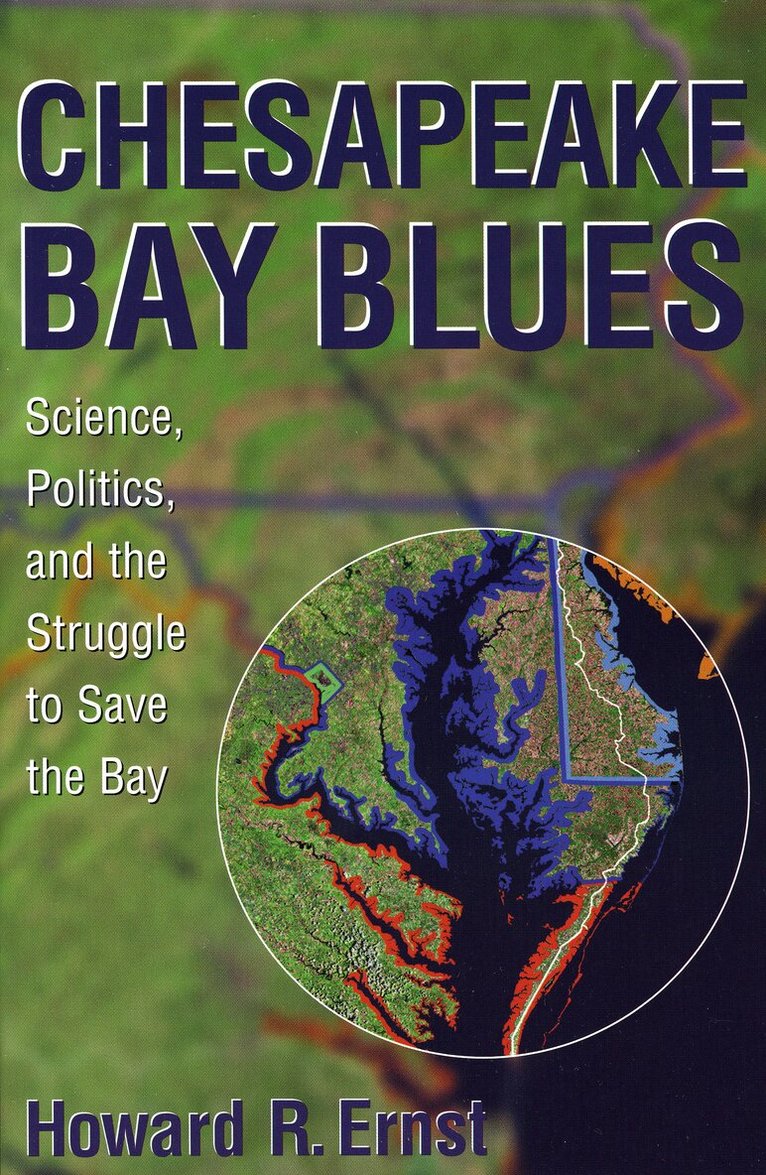
The Chesapeake Bay restoration effort has been touted as the nation's premier environmental restoration program. Yet the Bay and the living systems it supports remain in dismally poor condition, with fisheries in decline and drinking water in danger. This book addresses the Chesapeake Bay as a political problem and reveals how the political process has worked against the interests of science, the public, and environmental advocates all at once. Author Howard Ernst shows that the forces driving environmental degradation are sown deeply into the political soul of America, posing menacing challenges to those fighting to restore large ecosystems like the Chesapeake Bay. The book serves as a political roadmap for the future, suggesting how a different course of policy action is needed to 'Save the Bay.'
355 kr
Skickas inom 5-8 vardagar
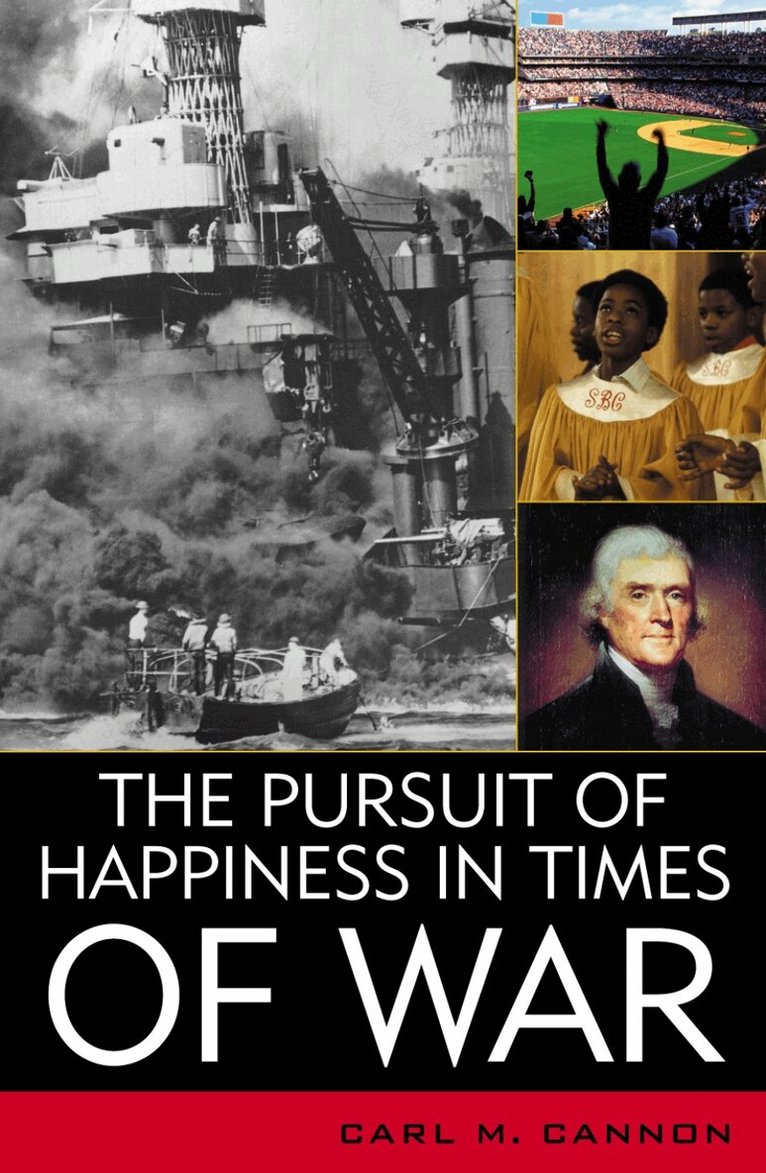
The Founders wrote in 1776 that "life, liberty, and the pursuit of happiness" are unalienable American rights. In The Pursuit of Happiness in Times of War, Carl M. Cannon shows how this single phrase is one of almost unbelievable historical power. It was this rich rhetorical vein that New York Mayor Rudolph Giuliani and President George W. Bush tapped into after 9/11 when they urged Americans to go to ballgames, to shop, to do things that made them happy even in the face of unrivaled horror. From the Revolutionary War to the current War on Terrorism, Americans have lived out this creed. They have been helped in this effort by their elected leaders, who in times of war inevitably hark back to Jefferson's soaring language. If the former Gotham mayor and the current president had perfect pitch in the days after September 11, so too have American presidents and other leaders throughout our nation's history. In this book, Mr. Cannon—a Pulitzer Prize-winning journalist—traces the roots of Jefferson's powerful phrase and explores how it has been embraced by wartime presidents for two centuries. Mr. Cannon draws on original research at presidential libraries and interviews with Gerald R. Ford, Jimmy Carter, George H. W. Bush, and Bill Clinton, among others. He discussed with the presidents exactly what the phrase means to them. Mr. Cannon charts how Americans' understanding of the pursuit of happiness has changed through the years as the nation itself has changed.In the end, America's political leaders have all come to the same conclusion as its spiritual leaders: True happiness—either for a nation or an individual—does not come from conquest or fortune or even from the attainment of freedom itself. It comes in the pursuit of happiness for the benefit of others. This may be one truth that contemporary liberals and conservatives can agree on. John McCain and Jimmy Carter both envision happiness as a sacrifice to a higher calling, embodied in everything from McCain's time as a prisoner of war to the N
1 276 kr
Skickas inom 10-15 vardagar
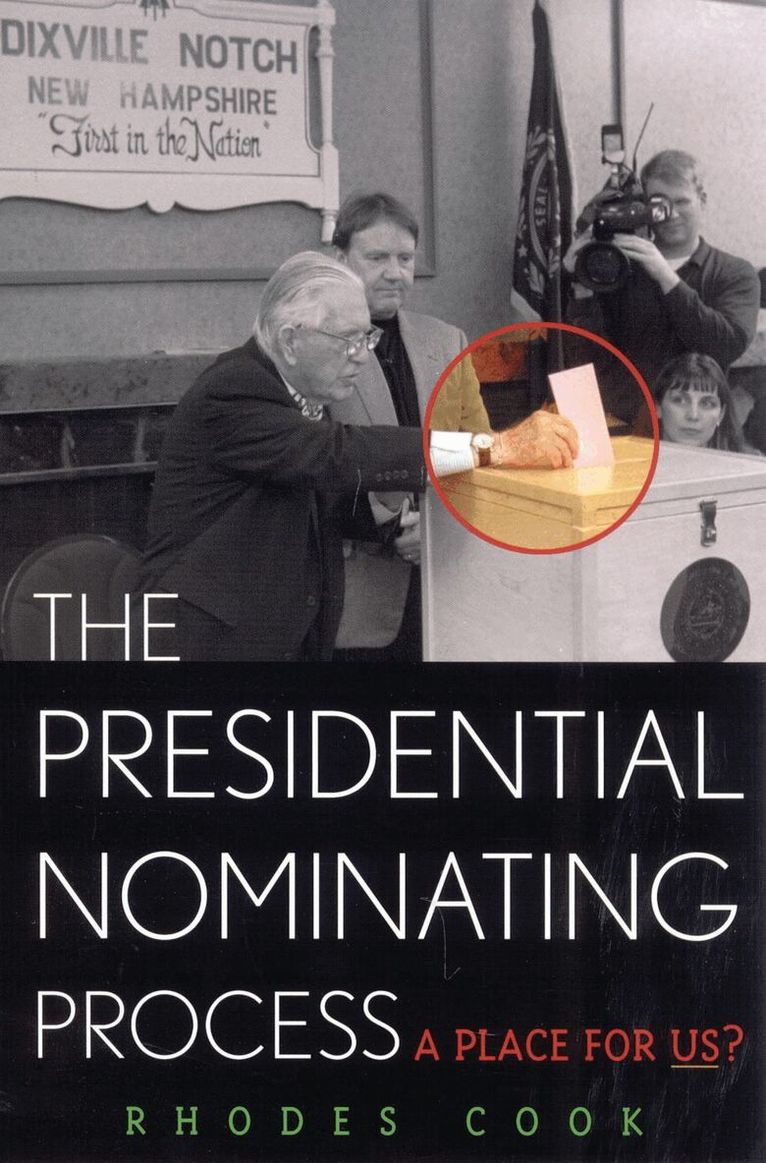
The sprawling nominating process is the critical first step every four years in the election of the president. It is where the field of contenders is narrowed from a plethora of aspirants to the two finalists that carry the banners of the Democratic and Republican parties into the fall campaign.In a democracy such as ours, the voters should be major players in this process. Yet while 100 million or more Americans regularly participate in the election of the president, rarely does more than a third that number vote in the presidential primaries and caucuses that nominate the candidates. And only a small percentage of these voters have a truly meaningful voice - the fortunate few in Iowa, New Hampshire and a handful of other early voting states that for all practical purposes decide for the rest of the nation who the nominees will be.The thrust of this book is to discuss how we as a nation got to this point, how the nominating process currently works, how that compares to other countries, and how our process might be changed to give a more meaningful voice to a much larger number of voters.
518 kr
Skickas inom 7-10 vardagar
The sprawling nominating process is the critical first step every four years in the election of the president. It is where the field of contenders is narrowed from a plethora of aspirants to the two finalists that carry the banners of the Democratic and Republican parties into the fall campaign.In a democracy such as ours, the voters should be major players in this process. Yet while 100 million or more Americans regularly participate in the election of the president, rarely does more than a third that number vote in the presidential primaries and caucuses that nominate the candidates. And only a small percentage of these voters have a truly meaningful voice - the fortunate few in Iowa, New Hampshire and a handful of other early voting states that for all practical purposes decide for the rest of the nation who the nominees will be.The thrust of this book is to discuss how we as a nation got to this point, how the nominating process currently works, how that compares to other countries, and how our process might be changed to give a more meaningful voice to a much larger number of voters.
171 kr
Skickas inom 11-20 vardagar
Politicians and the media are natural enemies, but in recent times, the relationship has exploded into all-out war. Think about bimbo eruptions, DUI arrests, cocaine parties, National Guard service records, Swift Boat veterans. Think about two generations of Bush presidents up against Dan Rather. Think about who lost.Craig Crawford has seen it all up close and personal, and he is disturbed by what he sees. When politicians turn the public against the media, everyone loses—especially unbiased and courageous news reporting. When veteran White House correspondent Helen Thomas is banished from her front-row post, as she has been in the current administration—the American public is denied the chance to consider her pointed questions, even if they go unanswered. Worse, when traditional reporters and media are displaced, the pundits and alternative media take over. Rush Limbaugh, The O'Reilly Factor, Comedy Central's Jon Stewart, and the bloggers have their place in American politics, and the 2004 elections showed the incredible power of the Internet. These media, however, are a different breed, as Crawford points out—they serve a purpose, but at a cost. They become "opinion merchants," bartering outrageous assertions for audience appeal with little attention to the truth. These days, the truth is hard to find. If the press is not believed—or believable—because politicians have turned the public against it, then the press is not free, but under the thumbs of politicians. Without a free press, there is no democracy. That, says Crawford, is where we find ourselves today. If you don't like the news, attack the messenger, and it will go away. Going, going, gone.
Freedom is Not Enough
Black Voters, Black Candidates, and American Presidential Politics
Häftad, Engelska, 2007
325 kr
Skickas inom 5-8 vardagar
Black voters can make or break a presidential election—look at the close electoral results in 2000 and the difference the disenfranchised Black vote in Florida alone might have made. Black candidates can influence a presidential election—look at the effect that Jesse Jackson had on the Democratic party, the platform, and the electorate in 1984 and 1988, and the contributions to the Democratic debates that Carol Moseley Braun and Al Sharpton made in 2004. American presidential politics can't get along without the Black vote—witness the controversy over candidates' appearing (or not) at the NAACP convention, or the extent to which candidates court (or not) the Black vote in a variety of venues. It all goes back to the Voting Rights Act of 1965 which formally gave African Americans the right to vote, even if after all these years that right is continuously contested. In Freedom Is Not Enough (a quote from Lyndon Johnson's 1965 commencement address to Howard University just before he signed the Voting Rights Act), Ronald W. Walters traces the history of the Black vote since 1965, celebrates its fortieth anniversary in 2005, and shows why passing a law is not the same as ensuring its enforcement, legitimacy, and opportunity.
213 kr
Skickas inom 10-15 vardagar
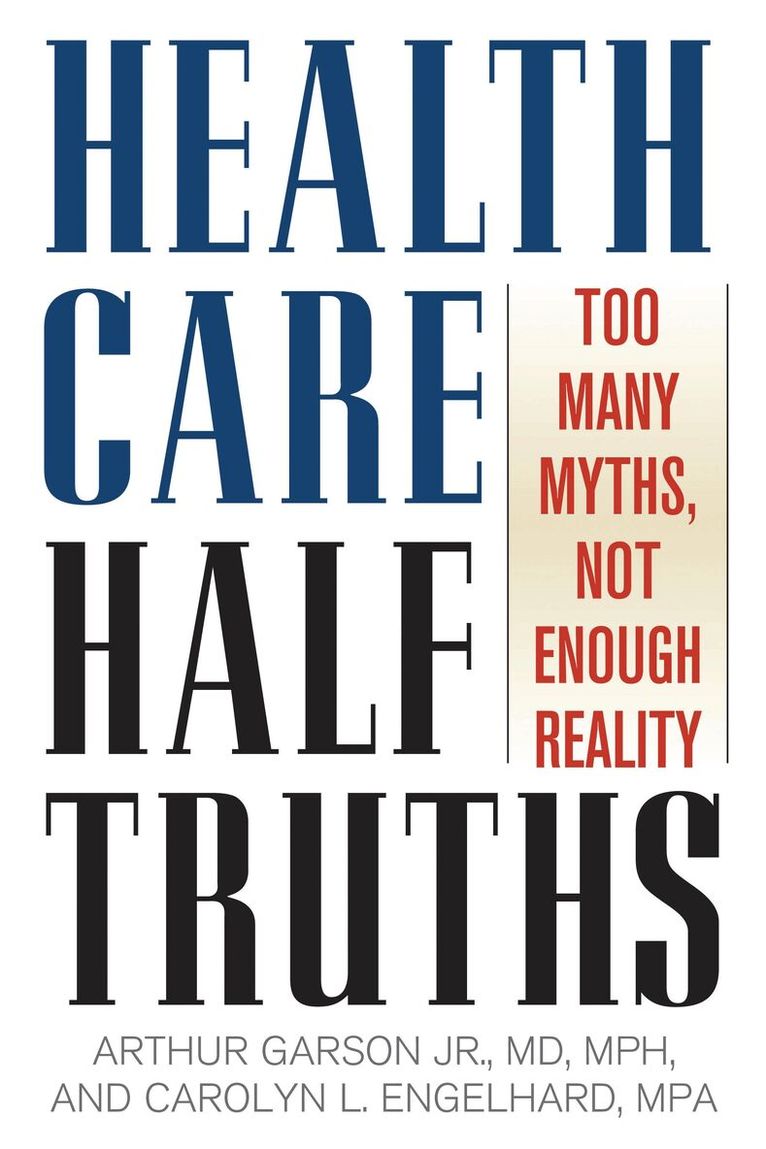
Are you tired of hearing that the American health care 'system' is broken? Well, it is. You can't understand your bill—or pay it; you wait an hour before seeing the doctor for ten minutes; and that was your child who was just laid off, and whose family has no health insurance. Health Care Half-Truths shows the ways in which American health care is tarnished and ways in which it shines, explaining that if we are going to make our health care system work for us we must begin with a common set of information. Unfortunately, our current information comes from sound bites that on their surface seem perfectly reasonable, but on closer examination are wrong. Health Care Half-Truths untangles the misinformation, misperceptions, and confusion that have confounded the American public and our elected officials. Dr. Arthur Garson identifies twenty myths about the U.S. health care system and uses his extensive knowledge and keen insights to blow them apart.