Oxford Series in Neuroscience, Law, and Philosophy – serie
Visar alla böcker i serien Oxford Series in Neuroscience, Law, and Philosophy. Handla med fri frakt och snabb leverans.
10 produkter
10 produkter
Inbunden, Engelska, 2016
1 418 kr
Skickas inom 3-6 vardagar
Neuroscientists are mining nucleic acids, blood, saliva, and brain images in hopes of uncovering biomarkers that could help estimate risk of brain disorders like psychosis and dementia; though the science of bioprediction is young, its prospects are unearthing controversy about how bioprediction should enter hospitals, courtrooms, or state houses. While medicine, law, and policy have established protocols for how presence of disorders should change what we owe each other or who we blame, they have no stock answers for the probabilities that bioprediction offers. The Neuroethics of Biomarkers observes, however, that for many disorders, what we really care about is not their presence per se, but certain risks that they carry. The current reliance of moral and legal structures on a categorical concept of disorder (sick verses well), therefore, obscures difficult questions about what types and magnitudes of probabilities matter. Baum argues that progress in the neuroethics of biomarkers requires the rejection of the binary concept of disorder in favor of a probabilistic one based on biological variation with risk of harm, which Baum names a "Probability Dysfunction. " This risk-reorientation clarifies practical ethical issues surrounding the definition of mental disorder in the DSM-5 and the nosology of conditions defined by risk of psychosis and dementia. Baum also challenges the principle that the acceptability of bioprediction should depend primarily on whether it is medically useful by arguing that biomarkers can also be morally useful through enabling moral agency, better assessment of legal responsibility, and fairer distributive justice. The Neuroethics of Biomarkers should be of interest to those within neuroethics, medical ethics, and the philosophy of psychiatry.
Inbunden, Engelska, 2016
1 297 kr
Skickas inom 5-8 vardagar
Modern medicine enables us to keep many people alive after they have suffered severe brain damage and show no reliable outward signs of consciousness. Many such patients are misdiagnosed as being in a permanent vegetative state when they are actually in a minimally conscious state. This mistake has far-reaching implications for treatment and prognosis. To alleviate this problem, neuroscientists have recently developed new brain-scanning methods for detecting consciousness in some of these patients and even for asking them questions, including "Do you want to stay alive?" These new technological abilities raise many questions about what exactly these methods reveal (Is it really consciousness?), how reliable they are (Do they fail to detect consciousness in some patients who are conscious?), what are these patients' lives like (Do they feel pain?), what we should do for and to these patients (Should we let them die?), who should decide (Are these patients competent to decide for themselves?), and which policies should governments and hospitals enact (Which kinds of treatment should be made available?). All of these questions and more are addressed in this collection of original papers. The prominent contributors provide background information, survey the issues and positions, and take controversial stands from a wide variety of perspectives, including neuroscience and neurology, law and policy, and philosophy and ethics. This collection should interest not only academics but anyone who might suffer brain damage, which includes us all.
Inbunden, Engelska, 2020
788 kr
Skickas inom 5-8 vardagar
This volume makes a contribution to the field of neurolaw by investigating issues raised by the development, use, and regulation of neurointerventions. The broad range of topics covered in these chapters reflects neurolaw's growing social import, and its rapid expansion as an academic field of inquiry. Some authors investigate the criminal justice system's use of neurointerventions to make accused defendants fit for trial, to help reform convicted offenders, or to make condemned inmates sane enough for execution, while others interrogate the use, regulation, and social impact of cognitive enhancement medications and devices. Issues raised by neurointervention-based gay conversion "therapy", efficacy and safety of specific neurointervention methods, legitimacy of their use and regulation, and their implications for authenticity, identity, and responsibility are among the other topics investigated. Dwelling on neurointerventions also highlights tacit assumptions about human nature that have important implications for jurisprudence. For all we know, at present such things as people's capacity to feel pain, their sexuality, and the dictates of their conscience, are unalterable. But neurointerventions could hypothetically turn such constants into variables. The increasing malleability of human nature means that analytic jurisprudential claims (true in virtue of meanings of jurisprudential concepts) must be distinguished from synthetic jurisprudential claims (contingent on what humans are actually like). Looking at the law through the lens of neurointerventions thus also highlights the growing need for a new distinction — between analytic jurisprudence and synthetic jurisprudence — to tackle issues that increasingly malleable humans will face when they encounter novel opportunities and challenges.
Inbunden, Engelska, 2013
1 406 kr
Skickas inom 5-8 vardagar
Scholars are struggling to come to grips with the picture of human agency being pieced together by researchers in the biosciences. This volume aims at providing philosophers, neuroscientists, psychologists, and legal theorists with an opportunity to examine the cluster of related issues that will need to be addressed in light of these developments. Each of the twelve essays collected here sheds light on an issue essential to the future of punishment and retribution. In addition to exploring the sorts of issues traditionally discussed when it comes to free will and punishment, the volume also contains several chapters on the relevance (or lack thereof) of advances in the biosciences to our conceptions of agency and responsibility. While some contributors defend the philosophical status quo, others advocate no less than a total revaluation of our fundamental beliefs about moral and legal responsibility. This volume exposes the reader to cutting-edge research on the thorny relationship between traditional theories of agency and responsibility and recent and future scientific advances pertaining to these topics. It also provides an introduction to some of the long-standing debates in action theory and the philosophy of law, which concern the justification of punishment more generally.
Inbunden, Engelska, 2013
1 961 kr
Skickas inom 5-8 vardagar
Psychopaths constitute less than 1% of the general population but over 20% of prison populations. They commit a disproportionate amount of crime and violence in society. Given that the economic burden of crime in the United States is estimated to be over $2.3 trillion per year, psychopaths likely constitute one of the most expensive mental health conditions known today. This volume chronicles the latest science of psychopathy and the various ways the condition intersects with the criminal justice system. From the modern techniques to assess the symptoms, to its utility in predicting violent recidivism, to the latest neuroscience youth and adults, and the most promising avenues for treatment, this volume captures the modern science of the condition and discusses ethical and legal issues surrounding psychopaths.
Inbunden, Engelska, 2013
1 299 kr
Skickas inom 7-10 vardagar
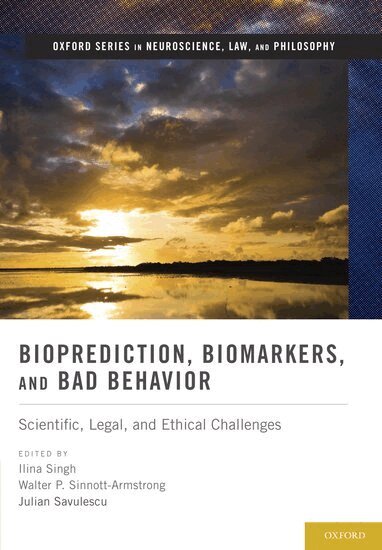
Many decisions in the legal system and elsewhere depend on predictions of bad behaviors, including crimes and mental illnesses. Some scientists have suggested recently that these predictions can become more accurate and useful if they are based in part on biological information, such as brain structure and function, genes, and hormones. The prospect of such bioprediction, however, raises serious concerns about errors and injustice. Can biological information significantly increase the accuracy of predictions of bad behavior? Will innocent or harmless people be mistakenly treated as if they were guilty or dangerous? Is it fair to keep people in prisons or mental institutions longer because of their biology? Will these new instruments of bioprediction be abused in practice within current institutions? Is bioprediction worth the cost? Do we want our government to use biology in this way? All of these scientific, legal, and ethical questions are discussed in this volume. The contributors are prominent neuroscientists, psychologists, sociologists, philosophers, ethicists, and legal scholars. This volume will interest everyone with hopes that bioprediction will solve problems or fears that bioprediction will be applied unjustly.
Inbunden, Engelska, 2013
1 411 kr
Skickas inom 7-10 vardagar
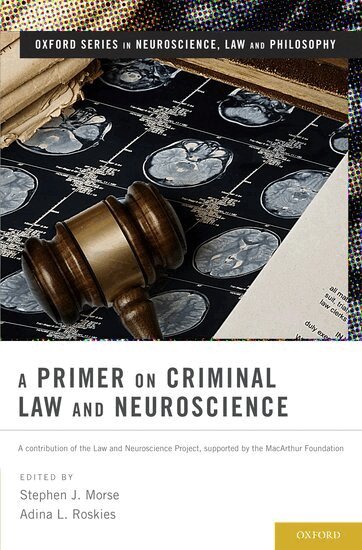
This handbook, the result of a three-year multidisciplinary initiative supported by the John D. and Catherine T. MacArthur foundation, brings lawyers, neuroscientists, and philosophers together to explore the appropriate relationary between neuroscience and law and to engage in empiricalted investigation to demonstate the specific relevance of one to the other.
Inbunden, Engelska, 2014
1 116 kr
Skickas inom 7-10 vardagar
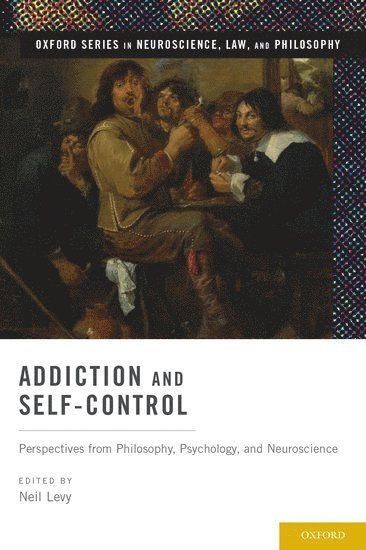
This book brings together a set of papers, many which grow out of presentations at a conference in Oxford in 2009 on addiction and self-control, by a set of thinkers who are united in believing that understanding agency and failures of agency requires engagement with the best science. The papers it collects attempts to illuminate the mechanisms involved in addiction and thereby to understand to what degree and in what ways actions driven by addiction are controlled by the agent, express his or her will or values, and the extent to which addicts are responsible for what they do. Some of the papers focus on the neuropsychological mechanisms involved, especially on the role of the midbrain dopamine system. Others focus on features of the behavior and the extent to which we can infer psychological mechanisms from behavior. The authors debate the best interpretation of the scientific evidence and how the scientific evidence bears upon, or can only be understand in the light of, philosophical theorizing about agency, control and responsibility.
Inbunden, Engelska, 2012
1 595 kr
Skickas inom 5-8 vardagar
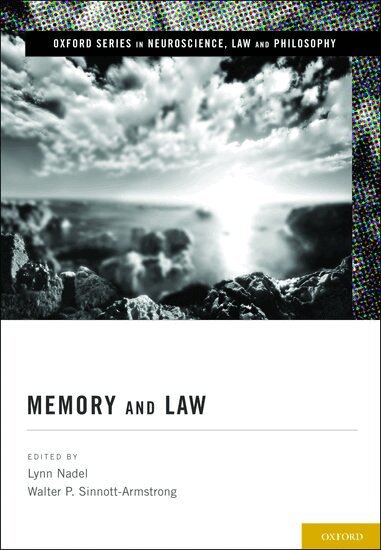
The legal system depends upon memory function in a number of critical ways, including the memories of victims, the memories of individuals who witness crimes or other critical events, the memories of investigators, lawyers, and judges engaged in the legal process, and the memories of jurors. How well memory works, how accurate it is, how it is affected by various aspects of the criminal justice system -- these are all important questions. But there are others as well: Can we tell when someone is reporting an accurate memory? Can we distinguish a true memory from a false one? Can memories be selectively enhanced, or erased? Are memories altered by emotion, by stress, by drugs? These questions and more are addressed by Memory and Law, which aims to present the current state of knowledge among cognitive and neural scientists about memory as applied to the law.
Inbunden, Engelska, 2013
1 011 kr
Skickas inom 5-8 vardagar
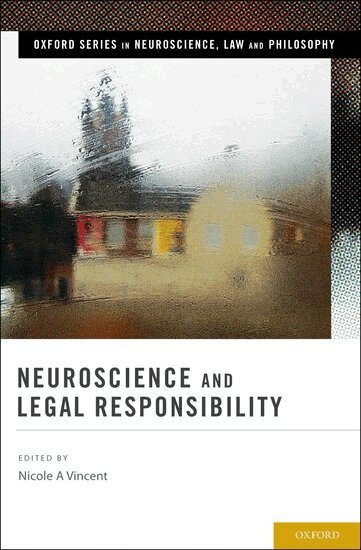
How should neuroscience, psychology and behavioral genetics impact legal responsibility practices?Recent findings from these fields are sometimes claimed to threaten the moral foundations of legal responsibility practices by revealing that determinism, or something like it, is true. On this account legal responsibility practices should be abolished because there is no room for such outmoded fictions as responsibility in an enlightened and scientifically-informed approach to the regulation of society.However, the chapters in this volume reject this claim and its related agenda of radical legal reform. Embracing instead a broadly compatibilist approach - one according to which responsibility hinges on psychological features of agents not on metaphysical features of the universe - this volume's authors demonstrate that the behavioral and mind sciences may impact legal responsibility practices in a range of different ways, for instance: by providing fresh insight into the nature of normal and pathological human agency, by offering updated medical and legal criteria for forensic practitioners as well as powerful new diagnostic and intervention tools and techniques with which to appraise and to alter minds, and by raising novel regulatory challenges.Science and law have been locked in a philosophical dialogue on the nature of human agency ever since the 13th century when a mental element was added to the criteria for legal responsibility. The rich story told by the 14 essays in this volume testifies that far from ending this philosophical dialogue, neuroscience, psychology and behavioral genetics have the potential to further enrich and extend this dialogue.