Antarctic Research Series - Böcker
Visar alla böcker i serien Antarctic Research Series. Handla med fri frakt och snabb leverans.
3 produkter
3 produkter
Del 76 - Antarctic Research Series
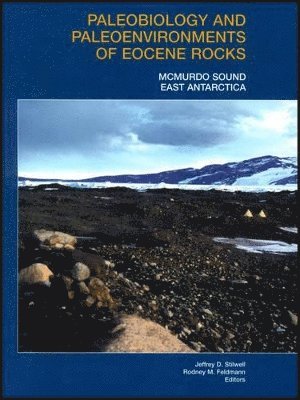
Paleobiology and Paleoenvironments of Eocene Rocks
McMurdo Sound, East Antarctica
Inbunden, Engelska, 2000
844 kr
Tillfälligt slut
Published by the American Geophysical Union as part of the Antarctic Research Series, Volume 76.Michael K. Brett-Surman, George Washington University, observed that, "being a paleontologist is like being a coroner except all the witnesses are dead and all the evidence has been left out in the rain for 65 million years." In the study of paleontology in Antarctica it could also be added that, if not left out in the rain, most of the evidence remains buried beneath several thousand feet of ice. Elucidating the geologic history of the Antarctic continent will always be plagued with this problem. Nonetheless, numerous clever means have been used to extract as much information as is possible, and as presented in this volume. In this light, one of the most intriguing time intervals in Antarctic history is the Eocene Epoch. During this time, the climatic conditions deteriorated rapidly from the so-called "Greenhouse" conditions that dominated Earth's conditions from mid-Mesozoic time through the early Cenozoic to the "Icehouse" conditions that have dominated the climate since that time. Unfortunately, the record of Eocene rocks on the continent is sparse. On the Antarctic Peninsula, specifically on Seymour Island, a robust record of Eocene rocks and fossils has provided virtually all the information we possess about this time interval. Thus the discovery and description of Eocene erratic boulders in morainal deposits in the McMurdo Sound region provides only the second site on the entire continent where we can study the paleontology of this time interval. In all likelihood, the description of erratics containing fossils from any other place in the world would warrant little study and would attract even less attention. However, when most of the vast area of Antarctica lies beneath ice and when clues to the nature of the crust of that part of the continent can be extracted only from study of erratics, the discovery carries with it some excitement.
904 kr
Tillfälligt slut
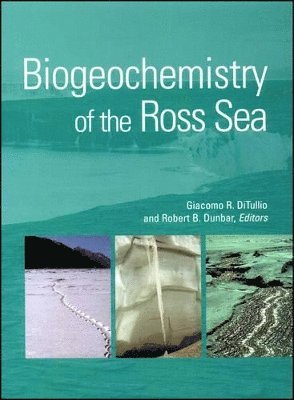
Published by the American Geophysical Union as part of the Antarctic Research Series, Volume 78.The seas surrounding Antarctica are the least-studied on Earth, yet they figure prominently in both the global climate system and the biogeochemical cycling of such key elements as C, N, Si, and P. The Southern Ocean affects climate directly through the sinking of surface waters via cooling and changes in salt content. Such water near Antarctica moves slowly northward through all major ocean basins. In doing so, it retains a long-lived signature of the physical and biological processes that occurred in Antarctic surface waters lasting many hundreds of years through all phases: sinking, northward flow, and mixing or upwelling into the sunlit ocean thousands of kilometers away. By this process, CO2 that dissolves into the Antarctic seas may be stored in the deep ocean for centuries. In fact, the Southern Ocean is one of the most important regions on Earth for the uptake and subsurface transport of fossil fuel CO2.
Del 79 - Antarctic Research Series
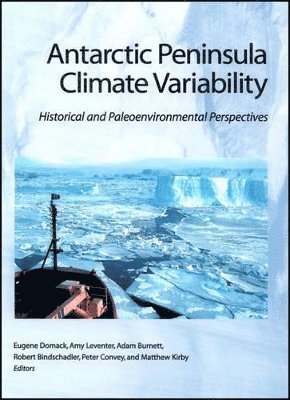
Antarctic Peninsula Climate Variability
Historical and Paleoenvironmental Perspectives
Inbunden, Engelska, 2003
844 kr
Tillfälligt slut
Published by the American Geophysical Union as part of the Antarctic Research Series, Volume 79.The Antarctic Peninsula region represents our best natural laboratory to investigate how earth's major climate systems interact and how such systems respond to rapid regional warming. The scale of environmental changes now taking place across the region is large and their pace rapid but the subsystems involved are still small enough to observe and accurately document cause and affect mechanisms. For example, clarification of ice shelf stability via the Larsen Ice Shelf is vital to understanding the entire Antarctic Ice Sheet, its climate evolution, and its response to and control of sea level. By encompassing the broadest range of interdisciplinary studies, this volume provides the global change research and educational communities a framework in which to advance our knowledge of the causes behind regional warming, the dramatic glacial and ecological responses, and the potential uniqueness of the event within the region's paleoclimate record. The volume also serves as a vital resource for public policy and governmental funding agencies as well as a means to educate the large number of ecotourists that visit the region each austral summer.