Biblical Refigurations - Böcker
Visar alla böcker i serien Biblical Refigurations. Handla med fri frakt och snabb leverans.
14 produkter
14 produkter
1 186 kr
Skickas inom 7-10 vardagar
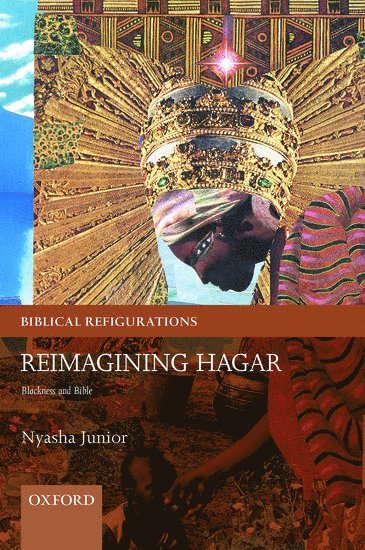
Reimagining Hagar illustrates that while interpretations of Hagar as Black are not frequent within the entire history of her interpretation, such interpretations are part of strategies to emphasize elements of Hagar's story in order to associate or disassociate her from particular groups. It considers how interpreters engage markers of difference, including gender, ethnicity, status and their intersections in their portrayals of Hagar. Nyasha Junior offers a reception history that examines interpretations of Hagar with a focus on interpretations of Hagar as a Black woman. Reception history within biblical studies considers the use, impact, and influence of biblical texts and looks at a necessarily small number of points within the long history of the transmission of biblical texts. This volume covers a limited selection of interpretations over time that is not intended to be a representative sample of interpretations of Hagar. It is beyond the scope of this book to offer a comprehensive collection of interpretations of Hagar throughout the history of biblical interpretation or in popular culture. Junior argues for the African presence in biblical texts; identifies and responds to White supremacist interpretations; offers cultural-historical interpretation that attends to the history of biblical interpretation within Black communities; and provides ideological criticism that uses the African-American context as a reading strategy. Reimagining Hagar offers a history of interpretation, but also expands beyond interpretation among Black communities to consider how various interpreters have identified Hagar as Black.
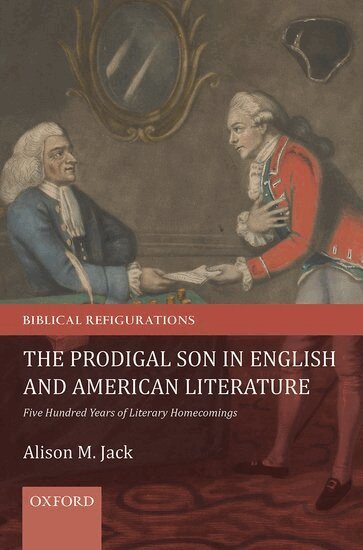
The Prodigal Son in English and American Literature
Five Hundred Years of Literary Homecomings
Inbunden, Engelska, 2018
1 271 kr
Skickas inom 5-8 vardagar
The Parable of the Prodigal Son is one of the best-known stories in the Bible. It has captured the imagination of commentators, preachers and writers. Alison M. Jack explores the reconfiguring of the character of the Prodigal Son and his family in literature in English. She considers diverse literary periods and genres in which the paradigm is particularly prevalent, such as Elizabethan literature, the work of Shakespeare, the novels of female Victorian writers, the American short story tradition, novels focused on the lives of ordained ministers, and the poetry of Elizabeth Bishop and Iain Crichton Smith. Drawing on scholarship from biblical and literary studies, this study demonstrates the remarkable potency of the parable in generating new, and at times contradictory, meanings in different contexts. Historical and literary criticism are brought into dialogue to explore this remarkably resilient and nimble character as he dances through drama, novels and poetry across the centuries.
1 412 kr
Skickas inom 7-10 vardagar
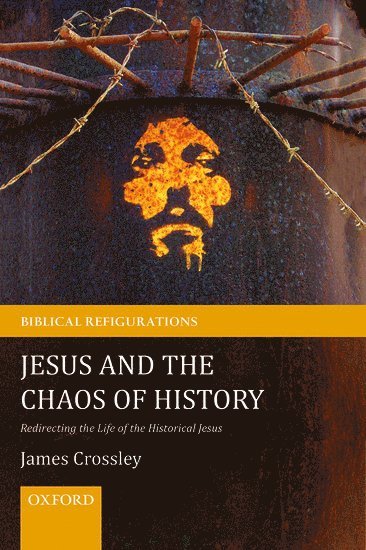
In Jesus and the Chaos of History, James Crossley looks at the way the earliest traditions about Jesus interacted with a context of social upheaval and the ways in which this historical chaos of the early first century led to a range of ideas which were taken up, modified, ignored, and reinterpreted in the movement that followed. Crossley examines how the earliest Palestinian tradition intersected with social upheaval and historical change and how accidental, purposeful, discontinuous, contradictory, and implicit meanings in the developments of ideas appeared in the movement that followed. He considers the ways seemingly egalitarian and countercultural ideas co-exist with ideas of dominance and power and how human reactions to socio-economic inequalities can end up mimicking dominant power. In this case, the book analyses how a Galilean 'protest' movement laid the foundations for its own brand of imperial rule. This evaluation is carried out in detailed studies on the kingdom of God and 'Christology', 'sinners' and purity, and gender and revolution.
458 kr
Skickas inom 7-10 vardagar
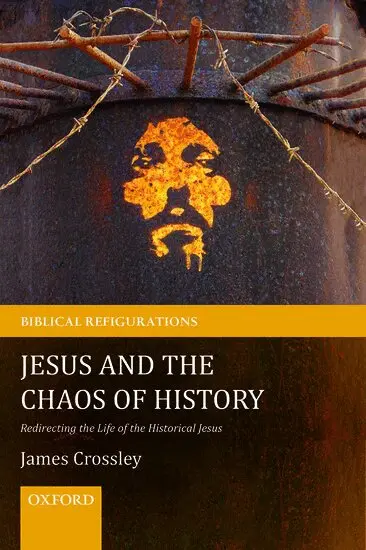
In Jesus and the Chaos of History, James Crossley looks at the way the earliest traditions about Jesus interacted with a context of social upheaval and the ways in which this historical chaos of the early first century led to a range of ideas which were taken up, modified, ignored, and reinterpreted in the movement that followed. Crossley examines how the earliest Palestinian tradition intersected with social upheaval and historical change and how accidental, purposeful, discontinuous, contradictory, and implicit meanings in the developments of ideas appeared in the movement that followed. He considers the ways seemingly egalitarian and countercultural ideas co-exist with ideas of dominance and power and how human reactions to socio-economic inequalities can end up mimicking dominant power. In this case, the book analyses how a Galilean 'protest' movement laid the foundations for its own brand of imperial rule. This evaluation is carried out in detailed studies on the kingdom of God and 'Christology', 'sinners' and purity, and gender and revolution.
1 412 kr
Skickas inom 7-10 vardagar
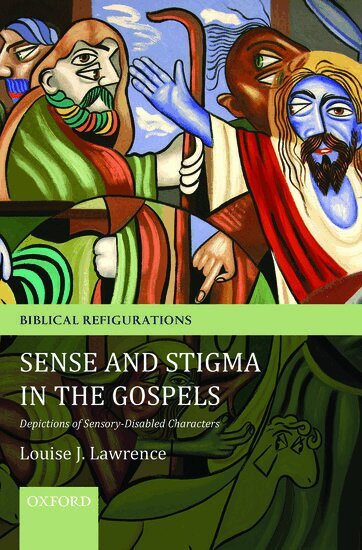
The senses are used within New Testament texts as instruments of knowledge and power and thus constitute important mediators of cultural knowledge and experience. Likewise, those instances where sensory faculty is perceived to be 'disabled' in some way also become key sites for ideological commentary and critique. However, often biblical scholarship, itself 'disabled' by eye-centric and textocentric 'norms', has read sensory-disabled characters as nothing more than inert sites of healing; their agency, including their alternative sensory modes of communication and resistance to oppression, remain largely unaddressed. In response, Louise J. Lawrence seeks to initiate a variety of interdisciplinary dialogues with disability studies and sensory anthropology in a quest to refigure characters with sensory disabilities featured in the gospels and provide alternative interpretations of their conditions and social interactions. In each instance the identity of those stigmatised as 'other' (according to particular physiological, social and cultural 'norms') are recovered by exploring ethnographic accounts which document the stories of those experiencing similar rejection on account of perceived sensory 'difference' in diverse cross-cultural settings. Through this process these 'disabled' characters are recast as individuals capable of employing certain strategies which destabilize the stigma imposed upon them and tactical performers who can subversively achieve their social goals.
363 kr
Skickas inom 5-8 vardagar
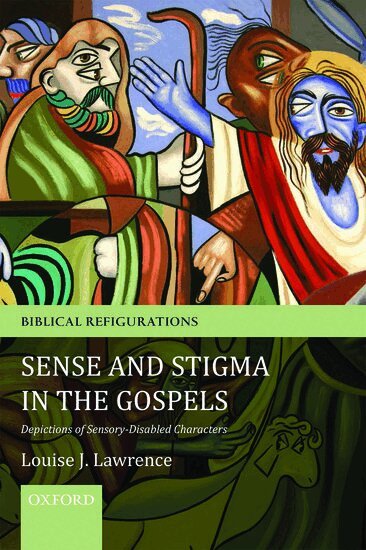
The senses are used within New Testament texts as instruments of knowledge and power and thus constitute important mediators of cultural knowledge and experience. Likewise, those instances where sensory faculty is perceived to be 'disabled' in some way also become key sites for ideological commentary and critique. However, often biblical scholarship, itself 'disabled' by eye-centric and textocentric 'norms', has read sensory-disabled characters as nothing more than inert sites of healing; their agency, including their alternative sensory modes of communication and resistance to oppression, remain largely unaddressed. In response, Louise J. Lawrence seeks to initiate a variety of interdisciplinary dialogues with disability studies and sensory anthropology in a quest to refigure characters with sensory disabilities featured in the gospels and provide alternative interpretations of their conditions and social interactions. In each instance the identity of those stigmatised as 'other' (according to particular physiological, social and cultural 'norms') are recovered by exploring ethnographic accounts which document the stories of those experiencing similar rejection on account of perceived sensory 'difference' in diverse cross-cultural settings. Through this process these 'disabled' characters are recast as individuals capable of employing certain strategies which destabilize the stigma imposed upon them and tactical performers who can subversively achieve their social goals.
1 600 kr
Skickas inom 5-8 vardagar
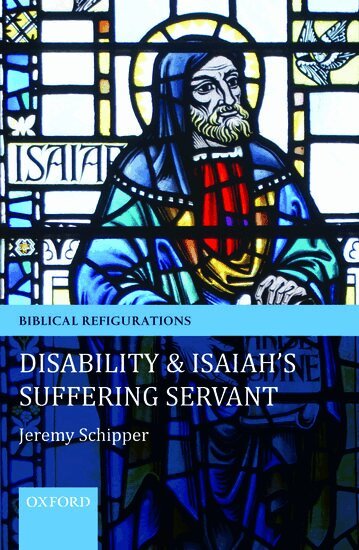
Although disability imagery is ubiquitous in the Hebrew Bible, characters with disabilities are not. The presence of the former does not guarantee the presence of the later. While interpreters explain away disabilities in specific characters, they celebrate the rhetorical contributions that disability imagery makes to the literary artistry of biblical prose and poetry, often as a trope to describe the suffering or struggles of a presumably nondisabled person or community. This situation contributes to the appearance (or illusion) of a Hebrew Bible that uses disability as a rich literary trope while disavowing the presence of figures or characters with disabilities. Isaiah 53 provides a wonderful example of this dynamic at work. The "Suffering Servant" figure in Isaiah 53 has captured the imagination of readers since very early in the history of biblical interpretation. Most interpreters understand the servant as an otherwise able bodied person who suffers. By contrast, Jeremy Schipper's study shows that Isaiah 53 describes the servant with language and imagery typically associated with disability in the Hebrew Bible and other ancient Near Eastern literature. Informed by recent work in disability studies from across the humanities, it traces both the disappearance of the servant's disability from the interpretative history of Isaiah 53 and the scholarly creation of the able bodied suffering servant.
406 kr
Skickas inom 7-10 vardagar
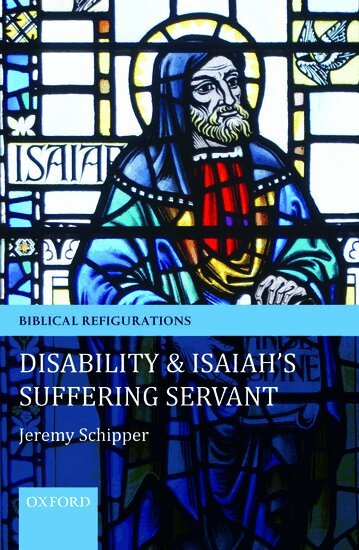
Although disability imagery is ubiquitous in the Hebrew Bible, characters with disabilities are not. The presence of the former does not guarantee the presence of the later. While interpreters explain away disabilities in specific characters, they celebrate the rhetorical contributions that disability imagery makes to the literary artistry of biblical prose and poetry, often as a trope to describe the suffering or struggles of a presumably nondisabled person or community. This situation contributes to the appearance (or illusion) of a Hebrew Bible that uses disability as a rich literary trope while disavowing the presence of figures or characters with disabilities. Isaiah 53 provides a wonderful example of this dynamic at work. The "Suffering Servant" figure in Isaiah 53 has captured the imagination of readers since very early in the history of biblical interpretation. Most interpreters understand the servant as an otherwise able bodied person who suffers. By contrast, Jeremy Schipper's study shows that Isaiah 53 describes the servant with language and imagery typically associated with disability in the Hebrew Bible and other ancient Near Eastern literature. Informed by recent work in disability studies from across the humanities, it traces both the disappearance of the servant's disability from the interpretative history of Isaiah 53 and the scholarly creation of the able bodied suffering servant.
1 451 kr
Skickas inom 7-10 vardagar
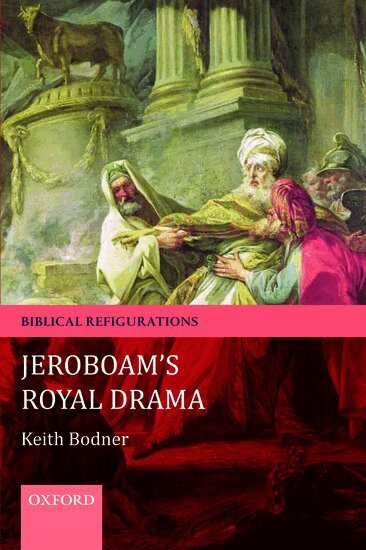
Among the most challenging biblical figures to understand is Jeroboam son of Nebat, the first monarch of northern Israel whose story is told in 1 Kings 11-14. This book explores the characterization of Jeroboam in the Hebrew text, and traces his rags to riches career trajectory. What are the circumstances whereby this widow's son is elevated to the position of king, with a conditional promise for a lasting dynasty? A close reading of the narrative reveals a literary achievement of great subtlety and complexity. Even though he becomes the negative standard for the rest of Israel's royal history, Jeroboam's portrait is far more nuanced than is often realized and yields a host of surprises for the engaged reader. Numerous issues are raised in the 1 Kings 11-14 material, including questions of power, leadership, and the role of the prophetic office in national affairs. Against the grain of conventional interpretation that tends to idealize or vilify biblical characters, Keith Bodner's study locates the arrival of Jeroboam's kingship as a direct response to scandalous activity within the Solomonic empire.
466 kr
Skickas inom 7-10 vardagar
Among the most challenging biblical figures to understand is Jeroboam son of Nebat, the first monarch of northern Israel whose story is told in 1 Kings 11-14. This book explores the characterization of Jeroboam in the Hebrew text, and traces his rags to riches career trajectory. What are the circumstances whereby this widow's son is elevated to the position of king, with a conditional promise for a lasting dynasty? A close reading of the narrative reveals a literary achievement of great subtlety and complexity. Even though he becomes the negative standard for the rest of Israel's royal history, Jeroboam's portrait is far more nuanced than is often realized and yields a host of surprises for the engaged reader. Numerous issues are raised in the 1 Kings 11-14 material, including questions of power, leadership, and the role of the prophetic office in national affairs. Against the grain of conventional interpretation that tends to idealize or vilify biblical characters, Keith Bodner's study locates the arrival of Jeroboam's kingship as a direct response to scandalous activity within the Solomonic empire.
363 kr
Skickas inom 5-8 vardagar
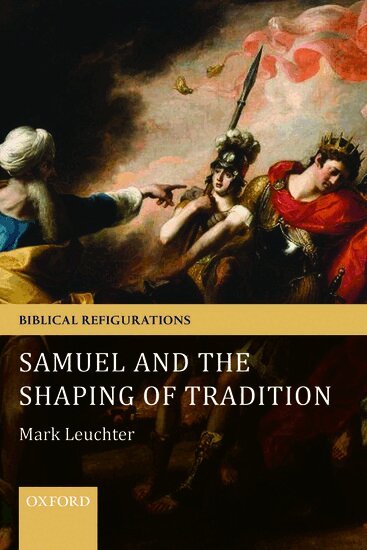
Samuel stands out in many important biblical texts as the figure who facilitated ancient Israel's transition from a tribal league to a monarchic state. On the surface of the text, this transition appears clear and linear, as does Samuel's role in bringing Israel together as a nation and selecting its first kings. Beneath this surface, however, is a far more complicated network of memories, sources and agendas, each presenting a very different picture of Samuel and his social, religious and ideological function. In some sources, Samuel serves as a symbol of Israel's developing priesthood and its system of social ethics, demonstrating the tensions within the priestly ranks. In others, Samuel's prophetic status is utilized to periodize Israel's history into distinct categories, positioning prophets over monarchs as national authorities. Elsewhere, Samuel is recruited to qualify - and disqualify - different forms of political organization in pre-monarchic Israel and systems of social hierarchy. Finally, the Jewish and Christian exegetical traditions return to the figure of Samuel and mine the texts in which he appears to re-structure Israel's national identity and the later communities that claimed descent from it. Mark Leuchter explores how the Samuel of these sources differs from the Samuel of the final form of the text, how the different writers used him to shape their ideas and transmit their messages, and how Samuel functions as a vehicle for the creation of a more elaborate literary superstructure drawn from discreet sources.
1 249 kr
Skickas inom 7-10 vardagar
Samuel stands out in many important biblical texts as the figure who facilitated ancient Israel's transition from a tribal league to a monarchic state. On the surface of the text, this transition appears clear and linear, as does Samuel's role in bringing Israel together as a nation and selecting its first kings. Beneath this surface, however, is a far more complicated network of memories, sources and agendas, each presenting a very different picture of Samuel and his social, religious and ideological function. In some sources, Samuel serves as a symbol of Israel's developing priesthood and its system of social ethics, demonstrating the tensions within the priestly ranks. In others, Samuel's prophetic status is utilized to periodize Israel's history into distinct categories, positioning prophets over monarchs as national authorities. Elsewhere, Samuel is recruited to qualify - and disqualify - different forms of political organization in pre-monarchic Israel and systems of social hierarchy. Finally, the Jewish and Christian exegetical traditions return to the figure of Samuel and mine the texts in which he appears to re-structure Israel's national identity and the later communities that claimed descent from it. Mark Leuchter explores how the Samuel of these sources differs from the Samuel of the final form of the text, how the different writers used him to shape their ideas and transmit their messages, and how Samuel functions as a vehicle for the creation of a more elaborate literary superstructure drawn from discreet sources.
1 496 kr
Skickas inom 7-10 vardagar
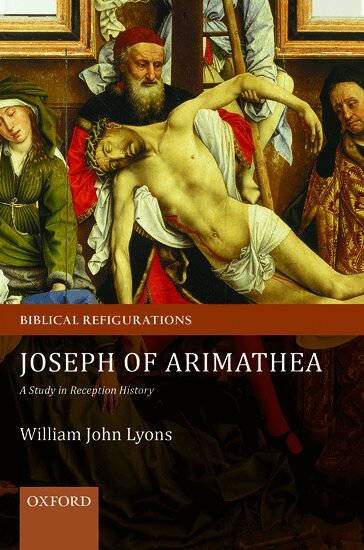
Joseph of Arimathea: A Study in Reception History examines the extensive and convoluted afterlives of a minor biblical character who nevertheless plays a major role in three pivotal scenes in the passion of Jesus Christ as presented by the four canonical Gospels: the request to Pilate for the body, the descent from the cross, and the burial of Jesus' corpse. Characterised in subtly different ways by each Evangelist, these sparse biblical Josephs were expanded, expounded, translated, harmonised, and extended by early literary sources and developed thematically by the artistic traditions of the Renaissance. In the Medieval Period, Joseph arrived, by 'fortuitous' accident, in the British Isles, becoming an iconic figure for English nationalists (through the Glastonbury tradition) and for British Imperialists (through Parry's musical setting of Blake's Jerusalem). Twentieth-century developments in church life, film, literature, spiritualism, and studies of the historical Joseph round out what such a minor character can accomplish, given a sufficient richness in original texts and the right opportunities afforded by later cultural developments. In Joseph of Arimathea's case, certain aspects proved highly adaptable, especially the sharp contrast provided by his portrayal as a bold active figure in the Gospel of Mark and as a fearful passive character in the Gospel of John, the attractiveness of his wealth and nobility to those who considered themselves of similar (or much higher) status, and the opportunities provided by his swift appearance and departure from the most important event in Christianity's foundational documents.
481 kr
Skickas inom 7-10 vardagar
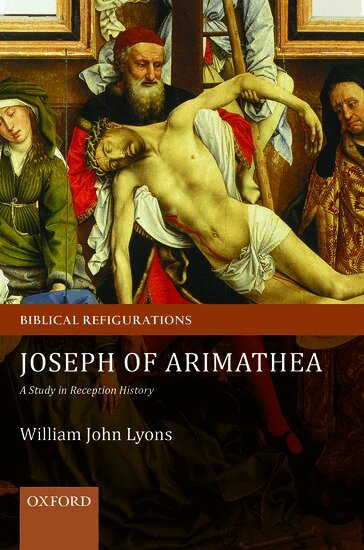
Joseph of Arimathea: A Study in Reception History examines the extensive and convoluted afterlives of a minor biblical character who nevertheless plays a major role in three pivotal scenes in the passion of Jesus Christ as presented by the four canonical Gospels: the request to Pilate for the body, the descent from the cross, and the burial of Jesus' corpse. Characterised in subtly different ways by each Evangelist, these sparse biblical Josephs were expanded, expounded, translated, harmonised, and extended by early literary sources and developed thematically by the artistic traditions of the Renaissance. In the Medieval Period, Joseph arrived, by 'fortuitous' accident, in the British Isles, becoming an iconic figure for English nationalists (through the Glastonbury tradition) and for British Imperialists (through Parry's musical setting of Blake's Jerusalem). Twentieth-century developments in church life, film, literature, spiritualism, and studies of the historical Joseph round out what such a minor character can accomplish, given a sufficient richness in original texts and the right opportunities afforded by later cultural developments. In Joseph of Arimathea's case, certain aspects proved highly adaptable, especially the sharp contrast provided by his portrayal as a bold active figure in the Gospel of Mark and as a fearful passive character in the Gospel of John, the attractiveness of his wealth and nobility to those who considered themselves of similar (or much higher) status, and the opportunities provided by his swift appearance and departure from the most important event in Christianity's foundational documents.