Built Environment - Böcker
Visar alla böcker i serien Built Environment. Handla med fri frakt och snabb leverans.
15 produkter
15 produkter
Measure of People and Space Interactions in the Built Environment
Towards Responsive Development
Häftad, Engelska, 2019
384 kr
Skickas inom 5-8 vardagar
484 kr
Skickas inom 5-8 vardagar
Architectural Documentation
Built Environment, Modernization, and Turkish Nationalism
Häftad, Engelska, 2022
549 kr
Skickas inom 5-8 vardagar
685 kr
Skickas inom 5-8 vardagar
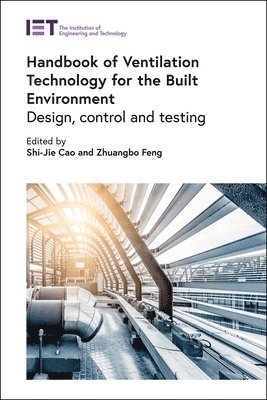
Handbook of Ventilation Technology for the Built Environment
Design, control and testing
Inbunden, Engelska, 2022
1 923 kr
Skickas inom 3-6 vardagar
The general purpose of ventilation in buildings is to provide healthy air for breathing by both diluting the pollutants originating in the building and removing the pollutants from it. Building ventilation plays a strong role for the good health, comfort, security and productivity of inhabitants, workers and visitors. Many new challenges with energy and pollution implications have arisen, including the identification and control of contaminant sources, fast building design requirements, online demand, sustainability and climate change adaptation.This comprehensive research reference covers state of the art research starting with ventilation systems including duct network and fluid machinery, air cleaning technologies, air distribution in mechanical ventilation systems, air distribution in natural ventilation system, and heating and cooling systems. The authors then present innovating methods for the design, control and testing including system design, numerical methods, fast predictions methods, testing methods and maintenance. The book concludes with applications in industrial buildings, high-rise buildings and urban areas.Handbook of Ventilation Technology for the Built Environment is a complete guide to the field, providing invaluable information for scientists, researchers and engineers from academia and industry who are looking to broaden or update their knowledge. It is also a useful resource for policy makers, facility managers, regulators and standards bodies in the field.
494 kr
Skickas inom 5-8 vardagar
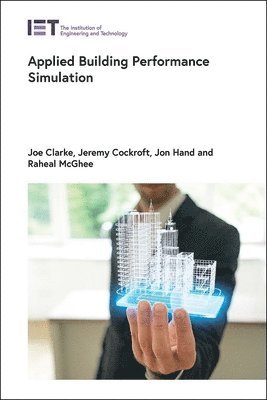
Good building performance is contingent on complex, interacting factors. The application of performance simulation tools allows practitioners to adopt a virtual prototype and test approach in selecting design solutions that balance performance and cost.The aim of this book is to provide guidance on approaches to the modelling and simulation of energy systems in the built environment at various scales and complexities to address the myriad challenges of the clean energy transition. The intention is to equip the reader with the understanding required to compose high integrity models, commission realistic simulations, and interpret predictions to assess life cycle performance and ensure operational resilience.Initial chapters introduce the impressive capabilities of building energy systems simulation and the new features that are likely to be added in future. The authors then describe the sustainable energy challenge and how modelling and simulation can be used to scrutinise proposals in a cost-effectively manner. The remainder of the book then covers different technology options including electrification of heating, net zero energy housing, community energy systems, active demand management, and urban energy action planning. In each case the nature of the problem is described, the construction of a high-fidelity computer model elaborated, and principal simulation outcomes demonstrated.Some of the problem domains addressed in the book are accompanied by a high-fidelity digital model available externally. These models are compatible with the ESP-r performance simulation program, which is freely available under an open-source licence.Applied Building Performance Simulation provides a thorough grounding and practical guidance in the role of software simulation tools for building performance, for an audience of researchers, industry professionals, advanced students, and policy makers, regulators and standards bodies operating in the field.
1 923 kr
Skickas inom 3-6 vardagar
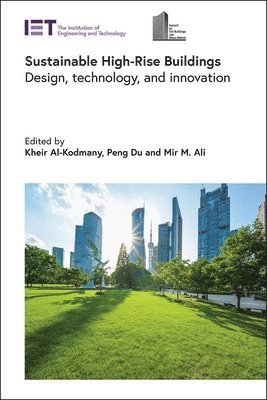
The rapid increase in urban population, land prices and land preservation, urban regeneration, as well as globalization and climate change have been forcing cities to build upward. High-rises can be part of a more sustainable solution if the construction and engineering challenges are addressed before construction starts. Smart technologies are being integrated in the digital environment to allow for better energy efficiency, safety and security, and to maximize the health and well-being of the occupants.Delivered by a team of world leading experts, this comprehensive edited book covers the state-of-the-art of advanced research, innovations, and future perspectives towards sustainable high-rise buildings. The book is structured in three parts from architecture to engineering and city planning including sustainable environmental systems, skybridges, curtain walling resiliency, tall timber buildings, sustainable structural engineering, core design and space efficiency. It also includes seismic design, mass-damping-based approaches, innovative bio-polymeric agro-based materials, high-rises versus sprawl, transit-oriented development, mobility and urban space networks, resilience thinking, and interdependence of tall buildings and the city.Architects, engineers, researchers, energy and facility managers, urban designers, project planners and developers, and smart building solutions experts as well as faculty members, postdocs, advanced students who are working in the fields of the built environment, building construction, system design, civil engineering, architecture, urban planning, smart cities, sustainability and resiliency and environmental engineering, and who are exploring sustainable building practices, will find this new advanced reference most useful and inspiring.
1 667 kr
Kommande
Domestic retrofitting is the process of adding new features, components, or technology to an existing residential building to improve its sustainability - including performance, energy efficiency, safety, functionality, and comfort. This is done by upgrading older structures to meet modern standards, such as improving insulation, replacing windows, installing new heating systems, and reducing energy consumption to lower utility costs and environmental impact. The issue of domestic retrofit has presented itself as a "wicked problem". The complex inter-relationships between policy, skills infrastructure, supply chains, finance, markets and other socio-technical issues, have made the policy difficult to formulate and implement. Expertise needs to stretch across technical subjects such as building physics and data analytics, through delivery issues such as skills and supply chain, to understanding the outcomes for people in their homes.Concepts, Methodologies and Technologies for Domestic Retrofit addresses three main themes: enabling retrofit, delivering retrofit and evaluating retrofit. Enabling retrofit looks at the context for delivering retrofit and understanding the structures that need to be in place to deliver the necessary upscaling. This considers place-based approaches, finance models, target setting and understanding how to develop a pipeline, particularly in harder to reach sectors such as the private rented or owner occupier sectors. Delivering retrofit considers the processes that lead to a high-quality retrofit. Effective assessment, quality systems, technical choices and the development of supply chains, all underpin an effective delivery system. Finally, the authors consider evaluation of retrofit. New methods and access to data have changed the way retrofit is understood in terms of real performance, so the authors discuss the current state of the art and emerging approaches. The outcomes are not purely technical; the impacts for people in their homes and how they have viewed retrofit are also considered, not only in terms of energy saving, but also their comfort and health.The book is targeted not only at an academic audience, but also practitioners and policy makers. It aims to provide clear practical guidance, linkages to the latest thinking and practice and a practical perspective on the problems and opportunities presented by domestic retrofit.
1 664 kr
Skickas inom 3-6 vardagar
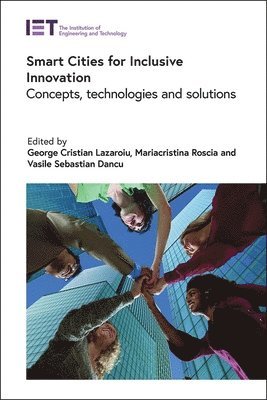
Cities that promote inclusion not only ensure greater opportunities for their citizens but often reap large economic benefits. In recent years, smart cities have exploited and used technologies to guarantee a better quality of services and to predictively analyse and provide responses to urban changes in a proactive way. However, it has become clear that some initiatives have made existing inequalities stronger by failing to address the needs of all citizens. Today, more than ever, it is necessary to address inclusiveness in smart cities from the ground up. Sustainable solutions and energy efficient methods have led to cleaner energy, pollution reduction, improvements in the life of citizens, and transformed environments and regulatory structures to be more inclusive. This is creating smarter cities where citizens, inclusivity and sustainability are at the core.Designing a new smart city is much simpler than incorporating new technologies into an already built urban space. This book covers technology advances, innovative concepts, solutions and applications in smart cities, both from engineering and social perspectives.Smart Cities for Inclusive Innovation: Concepts, technologies and solutions is a useful resource for researchers and engineers in smart cities and their associated technologies as well as specialists such as planners, decision-makers and stakeholders in urban communities and local governments, and administrators involved in current and impending smart cities-related activities.
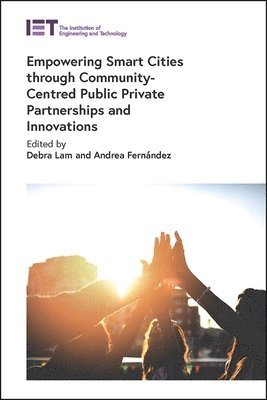
Empowering Smart Cities through Community-Centred Public Private Partnerships and Innovations
Inbunden, Engelska, 2024
1 717 kr
Skickas inom 3-6 vardagar
Cities are at the heart of the biggest challenges facing humanity - from the cost-of-living crisis to the COVID-19 pandemic, to climate change to inequality and social injustice. Local governments around the world are facing increased expectations to support the transition to a more just and sustainable society and are under pressure to do more with fewer resources. Rapid urbanization is creating significant pressure on cities to expand and improve housing and infrastructure, and improve social equity, health and quality of life, all while fostering a robust economy that can provide good jobs for all. Nonetheless, cities are also our best hope for the future and remain at the heart of economic growth, innovation and job creation.Tackling multifaceted issues like climate change, digitalization and innovation, economic revitalization and social inclusion cannot be led by cities acting on their own. Cities must work with different actors in the community - researchers, private sector, community leaders, households and even national governments - to drive and deliver on this agenda. This book explores how cities and local stakeholders can come together to share knowledge and expertise, bring their diverse perspectives and co-create solutions to complex urban challenges.Empowering Smart Cities through Community-Centred Public Private Partnerships and Innovations presents eight case studies from around the world that demonstrate unique forms of collaboration between local governments, businesses, start-ups, academia, and citizens. A Community-Centred Public Private Partnership or CP3 is defined as an alliance of diverse stakeholders that responds to complex urban challenges like digital transformation and climate change, empowers the locality, shares risk and responsibility among partners, and leverages resources to work towards the vision for a public good.The book is intended for local government authorities, researchers, business leaders, policy-makers and urban professionals who are passionate about working locally and collaboratively to shape more sustainable, resilient, innovative and inclusive cities.
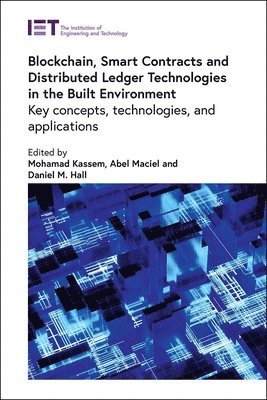
Blockchain, Smart Contracts and Distributed Ledger Technologies in the Built Environment
Key concepts, technologies, and applications
Inbunden, Engelska, 2025
1 683 kr
Skickas inom 3-6 vardagar
The built environment, encompassing the spaces we inhabit, the infrastructure that connects us, and the systems that sustain our societies, is foundational to human progress. It shapes how we live, work and interact, serving as a fundamental for social and economic prosperity. Yet, despite its importance, the sector faces enduring challenges: inefficiencies, insufficient collaboration, significant environmental impact, and a slow pace of transformative innovation, particularly in areas such as value creation, business model evolution, and major sector-wide transformations.Digitalisation and digital transformation, driven by technologies such as building information modelling (BIM), the internet of things (IoT), artificial intelligence, and immersive technologies, have become essential in helping the sector address these issues. More recently, distributed ledger technologies (DLT), such as blockchain and self-executing contracts like smart contracts, have emerged, offering further opportunities for the built environment.Emerging evidence, as explored in this book, highlights DLT's capabilities in transparency and trust (immutable records and enhanced accountability), efficiency and automation (smart contracts and streamlined processes), data security (decentralised integrity), collaborative governance (shared decision-making), tokenisation (democratised ownership), integration (synergy with digital twins, BIM and IoT), and sustainability (circular economies, renewable energy). However, adoption in the built environment faces several challenges, including legal, technical, ethical and stakeholder barriers.Combining theoretical and practical perspectives, this book examines the potential of blockchain and DLT in both the delivery and management of the built environment, addressing their adoption frameworks, applications and associated benefits and challenges.Intended for researchers, practitioners, students, technology developers and policymakers, Blockchain, Smart Contracts and Distributed Ledger Technologies in the Built Environment: Key concepts, technologies, and applications is a comprehensive guide to the adoption and integration of DLT in the built environment.
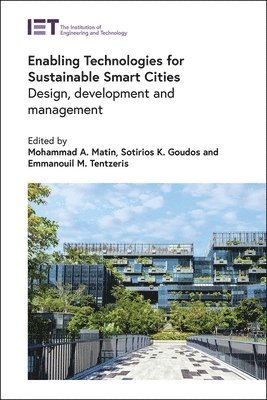
Enabling Technologies for Sustainable Smart Cities
Design, development and management
Inbunden, Engelska, 2025
1 684 kr
Skickas inom 3-6 vardagar
As populations rise and cities draw ever-larger populations, smart cities are emerging around the world to cater for the need for sustainable urban development. The exploration of recent advances in information and communication technology (ICT), sensing and energy engineering offers promising enablers for creating, implementing, and promoting sustainable development strategies to address the challenges of this expanding urbanization.The aim of this book is to equip readers with the conceptual and practical knowledge they need to comprehend and put into practice the technological concepts involved in the design, development, and management of smart cities. The authors explore enabling technologies, capabilities, solutions and strategies to support sustainable smart cities including smart homes, zero energy buildings, smart sensing, Internet of Things (IoT), autonomous IoT, secure IoT, federated learning, data security, network security, privacy-preserving and decentralized intelligence, clean hydrogen and energy harvesting technologies.With contributions from global experts, this reference is a valuable resource for researchers, engineers, technologists and urban planners in the fields of smart city and urban sustainable development. Lecturers and advanced students will find the book useful as a course reference and for wider reading.
1 084 kr
Skickas inom 5-8 vardagar
1 101 kr
Skickas inom 5-8 vardagar
810 kr
Skickas inom 5-8 vardagar