Carolina Lowcountry and Atlantic World – serie
Visar alla böcker i serien Carolina Lowcountry and Atlantic World. Handla med fri frakt och snabb leverans.
3 produkter
3 produkter
Inbunden, Engelska, 2004
558 kr
Skickas inom 11-20 vardagar
Between 1700 and 1775 no colony in British America experienced more impressive growth than North Carolina, and no region within the colony developed as rapidly as the Lower Cape Fear. Totally uninhabited by Europeans in 1700, this isolated corner of North Carolina's southern coast is particularly noteworthy for its relatively late colonization and its rapid rise to economic prominence. First settled in 1725, the region grew to be the most prosperous in North Carolina by 1775. In his study of this eighteenth-century settlement, Bradford J. Wood explores frontier development in a region surrounded by more-established communities. Challenging many commonly held beliefs, he presents the Lower Cape Fear as a prime example for understanding North Carolina - and the entirety of colonial America - as a patchwork of regional cultures. Employing social history tools used in studies of New England and Chesapeake but seldom applied to colonies further south, Wood examines probate, legal, real estate, and tax records to recreate the lives of 5,000 Cape Fear residents during the era 1725 to 1775. Rarely have such methods of intensive archival research, collective biography, and computer-driven s
Inbunden, Engelska, 2018
532 kr
Skickas inom 5-8 vardagar
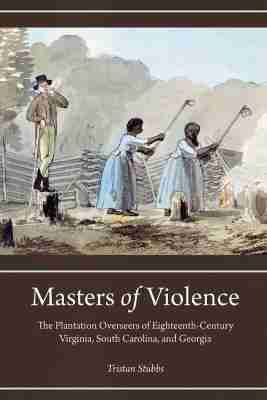
From trusted to tainted, an examination of the shifting perceived reputation of slave overseers. In eighteenth-century North America, major slaveowners typically hired overseers to manage their plantations. In addition to cultivating crops, managing slaves, and dispensing punishment, overseers were expected to maximize profits through increased productivity—often achieved through violence and cruelty. In Masters of Violence, Tristan Stubbs offers the first book-length examination of eighteenth-century overseers—from recruitment and dismissal to their relationships with landowners and enslaved people, as well as their changing reputations, which devolved from reliable to untrustworthy and incompetent.At the beginning of the eighteenth century, slaveowners regarded overseers as reliable enforcers of authority; by the end of the century, particularly after the American Revolution, plantation owners viewed them as incompetent and morally degenerate, as well as a threat to their power. Through a careful reading of plantation records, diaries, contemporary newspaper articles, and many other sources, Stubbs uncovers the ideological shift responsible for tarnishing overseers’ reputations.In Masters of Violence, Stubbs argues that this shift in opinion grew out of far-reaching ideological and structural transformations to slave societies in Virginia, South Carolina, and Georgia throughout the Revolutionary era. Seeking to portray their own actions as positive and yet simultaneously distance themselves from slavery, plantation owners blamed overseers as incompetent managers and vilified them as violent brutalizers of enslaved people.
Inbunden, Engelska, 2018
698 kr
Skickas inom 5-8 vardagar
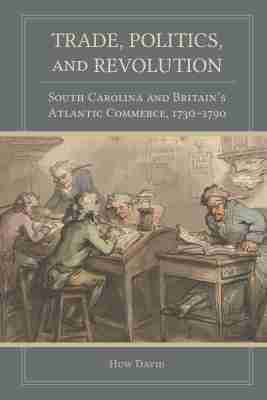
A study of early transatlantic trade in South Carolina that exposes the divisive complexity that led to war.London’s “Carolina traders,” a little-known group of transatlantic merchants, played a pivotal but historically neglected role in the rise of tensions in the South Carolina lowcountry. In Trade, Politics, and Revolution, Huw David delves into the lives of these men and explores their influence on commerce and politics in the years before and after the American Revolution.Beginning in the 1730s, a few select merchants in Charleston fueled South Carolina’s economic rise, used their political connections to prosper in British-Carolinian trade, and then relocated to London, becoming absentee owners of property, plantations, and slaves. Using correspondence, business and slave trade records, newspapers, and a wealth of other sources, David reconstructs the lives of these Carolina traders and demonstrates their shifting but instrumental influence over the course of the eighteenth century. Until the 1760s these transatlantic traders served as a stabilizing force, using their wealth and political connections to lobby for colonial interests. As the British Empire flexed its power and incited rebellion with laws such as the so-called Intolerable Acts, South Carolinians became suspicious of the traders, believing them to be instruments of imperial oppression.Trade, Politics, and Revolution offers a fresh understanding of trade in South Carolina’s early history and the shifting climate that led to the American Revolution, as well as reaching beyond the war to explore the reconstruction of trade routes between the newly founded United States and Great Britain. By focusing on one segment of transatlantic trade, David provides a new interpretive approach to imperialism and exposes the complex, deeply personal rift that divided the Carolina traders from their homeland and broke the colonies from the mother country.