Chapman & Hall Animal Behaviour Series - Böcker
Visar alla böcker i serien Chapman & Hall Animal Behaviour Series. Handla med fri frakt och snabb leverans.
6 produkter
6 produkter
2 117 kr
Skickas inom 10-15 vardagar
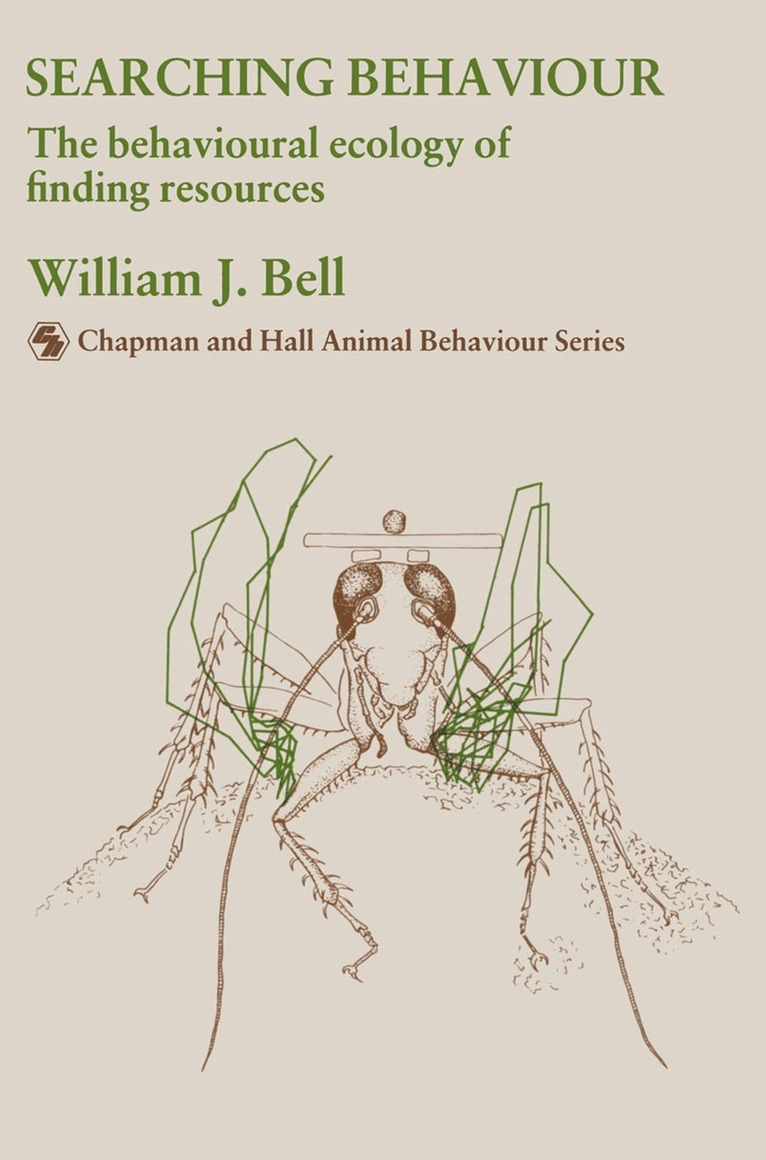
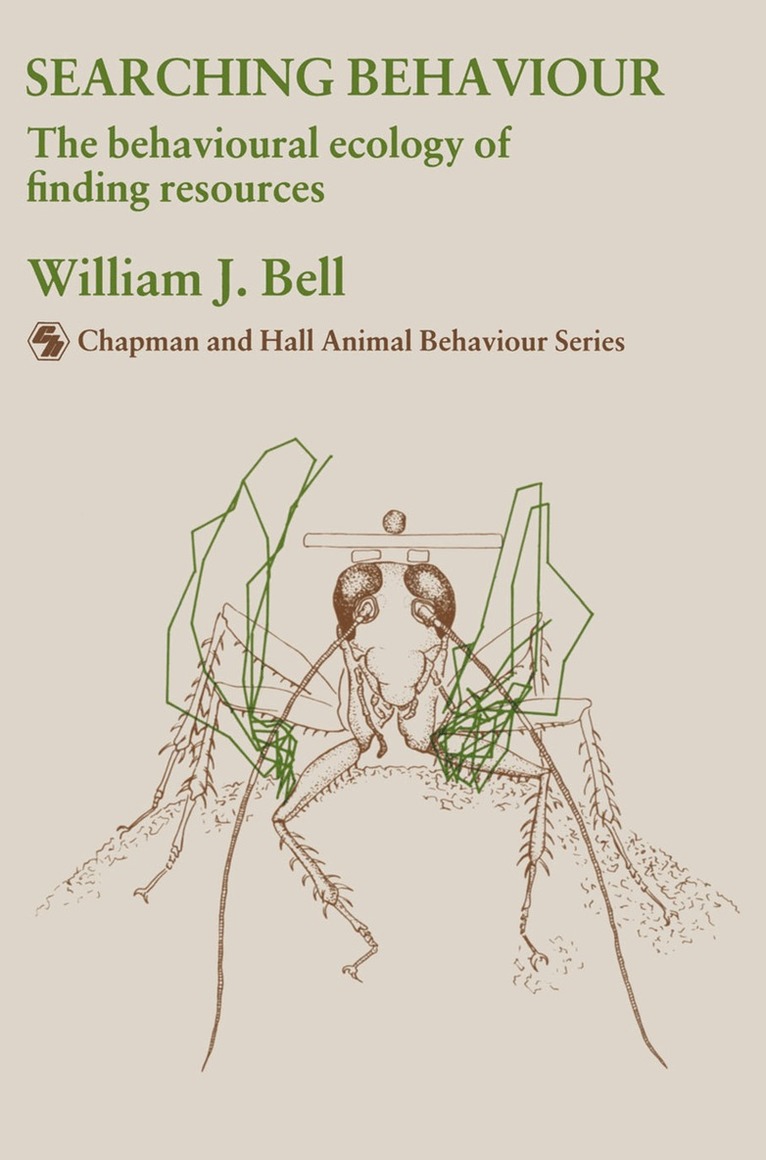
This is a book about proximate mechanisms. Although some theoretical structure is used to introduce the subject, the intent is to offer a view of searching (or foraging) so as to balance the current emphasis of books on mathematical and functional models. The book includes examples which aim to provide a picture of the kind of animals used, the experimental set-up, the kinds of data yielded and how the data were analyzed. The book discusses the different methods animals have for scanning for resources such as vision, chemoreception, mechanoreception and olfaction and also how animals assess the suitability of potential habitats. The text considers both the internal and external factors that must be considered when animals are searching for new habitats, when foraging and when exploring. The final section of the book includes an explanation of how to analyze search tracks, including analysis of data and comparison of data sets and how to use and manipulate computers in the simulation of locomotory patterns in searching.
2 117 kr
Skickas inom 10-15 vardagar
This book is a timely summary of current research on distance orientation in animals, including such phenomena as spatial activity inside familiar areas and long distance migration. This is an area of scientific research fraught with difficult methodological problems to the seemingly unanswerable but fascinating questions about how animals manage to find home and other goals. This volume has collected together the work of leading research figures who have overcome many of these difficulties by innovative research techniques illuminating the how and why animals reach distant goals. It covers a wide range of invertebrates, giving an overview of homing performance in natural and experimental conditions, as well as the state of knowledge about the proximate mechanisms involved, the underlying neurophysiological machinery where known and the wider phylogenetic and evolutionary implications. It will be of interest to a wide range of behavioural scientists and naturalists.
2 116 kr
Skickas inom 10-15 vardagar
Homing phenomena must be considered an important aspect of animal behaviour on account of their frequent occurrence, their survival value, and the variety of the mechanisms involved. Many species regularly rely on their ability to home or reach other familiar sites, but how they manage to do this is often uncertain. In many cases the goal is attained in the absence of any sensory contact, by mechanisms of indirect orientation whose complexity and sophistication have for a long time challenged the skill and patience of many researchers. A series of problems of increasing difficulty have to be overcome; researchers have to discover the nature of orienting cues, the sensory windows involved, the role of inherited and acquired information, and, eventually, how the central mechanisms process information and control motory responses. Naturally, this book emphasizes targets achieved rather than areas unexplored and mysteries unsolved. Even so, the reader will quickly realize that our knowledge of phenomena and mechanisms has progressed to different degrees in different animal groups, ranging from the mere description of homing behaviour to a satisfactory insight into some underlying mechanisms. In the last few dacades there have been promising developments in the study of animal homing, since new approaches have been tried out, and new species and groups have been investigated. Despite this, homing phenomena have not recently been the object of exhaustive reviews and there is a tendency for them to be neglected in general treatises on animal behaviour.
2 116 kr
Skickas inom 10-15 vardagar
This is a book about proximate mechanisms. Although some theoreti cal structure is used to introduce the subject, the intent is to offer a comprehensive view of the mechanistic side of searching (or foraging) so as to balance the current emphasis of books on mathematical and functional models. It seems to me that the pendulum needs to swing back to studies of how animals behave, and that maybe in so doing models will become valuable again in driving experimentation. I have probably included too many examples in this book, and some are even presented in great detail. Hopefully, they provide a complete picture of the kind of animals used, the experimental setup, the kinds of data yielded, and how the data were analysed. I have done this in response to frustrating experiences of reading chapters in behavioural ecobgy books that provide insufficient information with which to evaluate an author's conclusion.
534 kr
Skickas inom 10-15 vardagar
The topic of animal motivation deals with how and why animals engage in particular activities: what mechanisms inside the animal generate behaviour, how stimuli from the external environment in fluence these mechanisms, and how this behaviour is beneficial to the animal. The topic is thus central both to academic studies in psychology and zoology and to applied matters in domestic species. Motivation has not been an area of great emphasis in the past 10-15 years but there is now a growing realization that it should receive greater attention. Drawing on concepts and observations from a number of areas, this book provides an overview of the motiva tional processes which determine the choices, timing, and sequencing which are characteristic of animal behaviour. Data and theory from ethology, psychology, and evolutionary biology are synthesized into a contemporary framework for analysing such central features of behaviour as persistence in activities and goal orientation. Principles of motivational analysis are discussed and illustrated with specific case studies. The successive chapters deal with ethological, phy siological, and ecological approaches involving experimental work on a diversity of vertebrate and invertebrate species. Ethological topics include the interaction of external stimuli and internal states, mechanisms of choice, quantitative models of motivation, conflict between tendencies for different activities, and behavioural homeos tasis. The review of physiological research focuses on hunger, the activating roles of nerves and hormones, and the examination of animals with small nervous systems.
534 kr
Skickas inom 10-15 vardagar
In the past twenty years there have been many new developments in the study of animal behaviour: for example, more sophisticated methods of neurophysiology; more precise techniques for assessing hormonal levels; more accurate methods for studying animals in the wild; and, on the functional side, the growth of behavioural ecology with its use of optimality theory and game theory. In addition, there has been a burgeoning number of studies on a wide range of species. The study of aggression has benefited greatly from these develop ments; this is reflected in the appearance of a number of specialized texts, both on behavioural ecology and on physiology and genetics. However, these books have often been collections of papers by spe cialists for specialists. No one book brings together for the non specialist all the diverse aspects of aggression, including behavioural ecology, genetics, development, evolution and neurophysiology. Neither has there been a comparative survey dealing with all these aspects. Therefore one of our aims in writing this book was to fill in these gaps. Another of our aims was to put aggression into context with respect to other aspects of an animal's lifestyle and in particular to other ways in which animals deal with conflicts of interest. Aggressive behaviour does not occur in a biological vacuum. It both influences and is influenced by the animal's ecological and social environment, so we consider both the complex antecedent conditions in which aggressive behaviour occurs, and its ramifying consequences in the ecosystem.