Child Development in Cultural Context – serie
Visar alla böcker i serien Child Development in Cultural Context. Handla med fri frakt och snabb leverans.
4 produkter
4 produkter
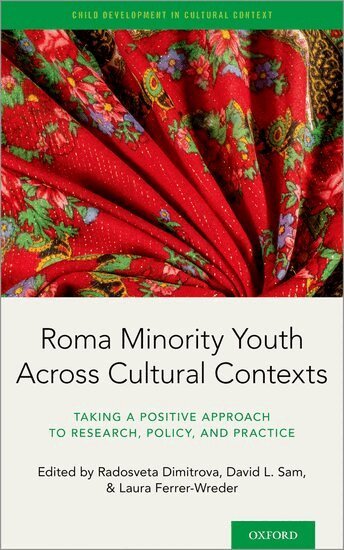
Roma Minority Youth Across Cultural Contexts
Taking a Positive Approach to Research, Policy, and Practice
Inbunden, Engelska, 2021
758 kr
Skickas inom 5-8 vardagar
This book explores Positive Youth Development (PYD) in Roma ethnic minority youth. Standing apart from current volumes, this book focuses on the Roma ethnic minority -- one of the most marginalized and oppressed minority groups in Europe -- and on strengths and resources for optimal well-being in the community. The international and multidisciplinary contributors to this book address the complexities of Roma life in a variety of cultural settings, exploring how key developmental processes and person-context interactions can contribute to optimal and successful adaptation. The conclusions clarify how the PYD of ethnic minority children and youth may be fostered based on the empirical findings reported in the volume. The book draws on core theoretical models of PYD and theories of normative development from the perspective of developmental science to highlight the applicability of these frameworks to Roma groups. With a special focus on cultural, contextual, and socio-economic characteristics of Roma, this project also aims to provide a better understanding of what does and what does not contribute to the success of youth in oppressed minority groups.
607 kr
Skickas inom 5-8 vardagar
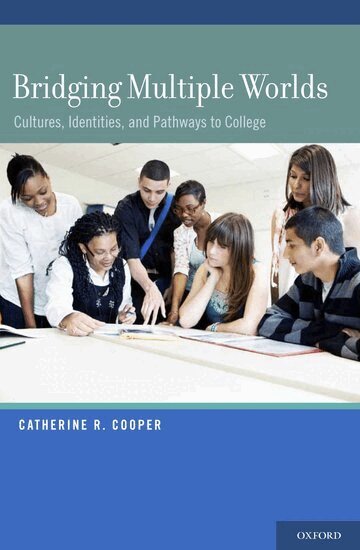
In every cultural group and in regions worldwide, education is strongly linked to children and adolescents' life opportunities and choices. Many societies embrace the ideals that their children will have equal access to education, and can advance through their merit. However, in many nations, as children move through primary and secondary school towards higher education, the number of immigrant, minority, and low-income youth who finish secondary school and attend college shrinks, signifying a global dilemma.Drawing on theories and research from across the social sciences, Bridging Multiple Worlds invites readers to compare core viewpoints and ask their own questions about the roots of and remedies for this academic pipeline problem. Considering research, practice, and policies on opening pathways and pipelines, this book provides new quantitative and qualitative evidence to introduce a theory on how youth draw on their cultural worlds to navigate their pathways to college. Chapters address cultural and developmental issues involving academic and cultural identities, and how communities define success for youth. Tools for advancing research with culturally diverse students are also provided. The result is a must-have volume for researchers, educators, policymakers, and students, brimming with fresh and creative syntheses of theory, research, and policy."A theoretically rich examination of the development of identity and educational pathways for ethnically diverse youth in American society. This is a book to be savored for its unique perspective on one of the great challenges of our times-finding ways to successfully integrate diverse youth into an increasingly unforgiving educational and social structure."--Patricia Gándara, Ph.D., Professor of Education, UCLA"Bridging Multiple Worlds is a magnificent book! Its conceptual location on the nexus of research, practice, and policy makes the volume extremely important. Cooper deftly embraces all perspectives, speaks effectively to all, and uses the synergies to great effect. She demonstrates that approaching the work with an expectation for success is both highly engaging for all involved, and increases the likelihood that solutions will be found for inevitable challenges - through effective design and implementation. Cooper has much to teach us, and has provided a clear and comprehensive guide for pursuing effective work to help all students obtain high achievement and college degrees."--Anne C. Petersen, Ph.D., Research Professor, University of Michigan, CHGD Founder and President, Global Philanthropy Alliance "This volume represents a significant advance to our understanding of the deep socialization and cross-institutional processes that underlie higher education access among members of communities underserved by formal education systems. Its most important contribution is its theory-based overview of concrete collaborative programs and strategies attuned to the unique cultural, linguistic, and social values of participants from diverse backgrounds and life circumstances."--Richard Durán, Ph.D., Gevirtz Graduate School of Education, University of California, Santa Barbara"As the world becomes global and borders easier to cross, issues of migration, minorities and cultural diversity become more relevant. Catherine Cooper and her colleagues developed a dialogue across theory, research, and community action and constructed tools for helping minority adolescents take their place on the academic pathway. Of value to psychologists, educationalists, community workers, policy makers, or anyone concerned with the future of education, this book offers strategies for building bridges of understanding across cultures to provide equal educational opportunities for all."--Rachel Seginer, Ph.D., Emeritus Professor of Human Development and Education, University of Haifa, Israel"This is a superb book. Cooper deconstructs the concept of 'disadvantage' - the emphasis falls on culture and identities instead of deficits and poor academic skills alone. Yielded is a rich review of studies - and refreshing alternatives to many standard assumptions. These approaches and concepts are relevant to other social groups and other 'pipeline' progressions, making the book a richly rewarding source for several audiences."--Professor Jacqueline Goodnow, Ph.D., Emeritus Professor, Macquarie University
666 kr
Skickas inom 5-8 vardagar
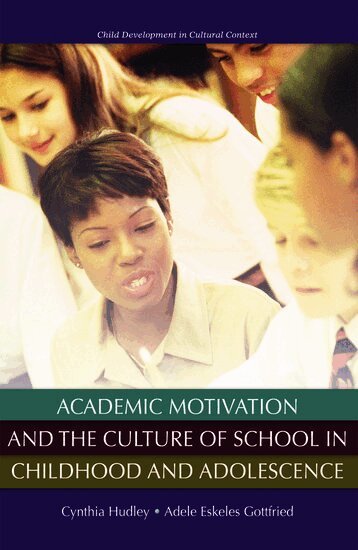
Decades of reserach indicate the important connections among academic motivation and achievement, social relationships, and school culture. However, much of this research has been conducted in homogenous American schools serving middle class, average achieving, Anglo-student populations. This edited volume will argue that school culture is a reflection of the society in which the school is embedded and comprises various aspects, including induvidualism, competition, cultural stereotypes, and extrinsically guided values and rewards. They address three specific conceptual questions: How do differences in academic motivation for diverse groups of students change over time? How do students' social cognitions influence their motivational processes and outcomes in school? And what has been done to enhance academic motivation? To answer this last question, the contributers describe empirically validated intervention programs for improving academic motivation in students from elementary school through college.
560 kr
Skickas inom 5-8 vardagar
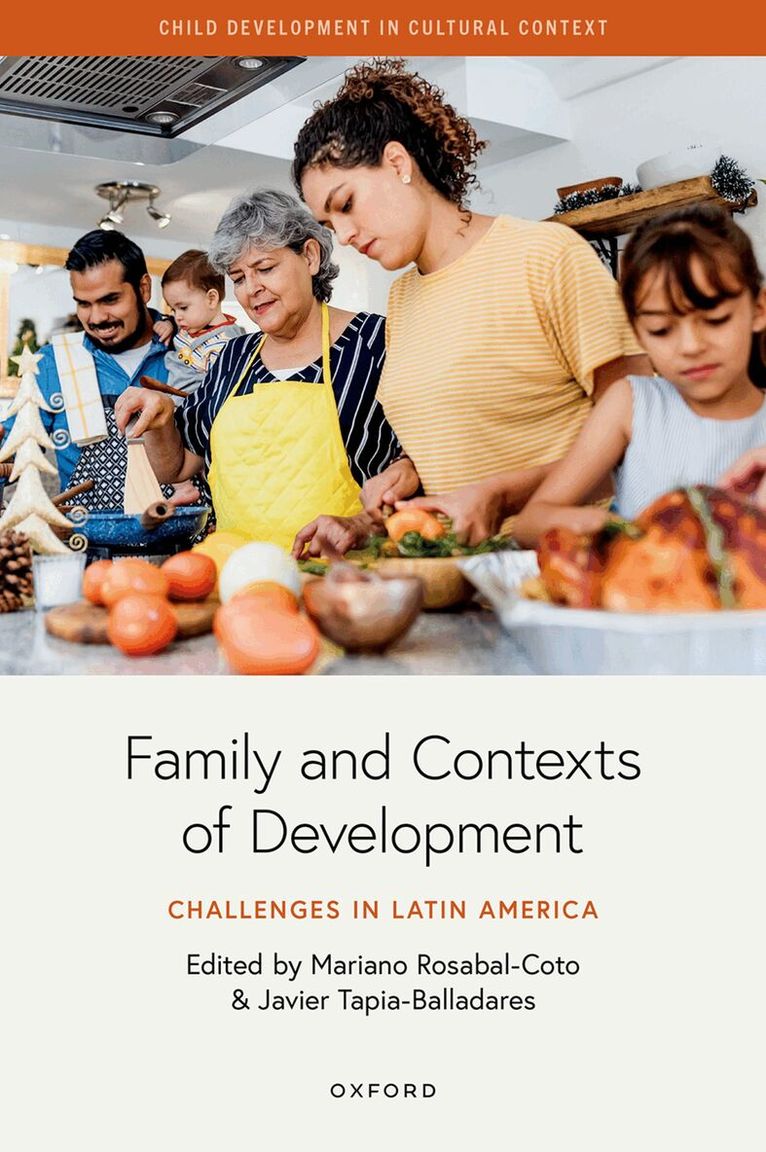
Within developmental psychology, it has been proven that families are a significant context for development. It is also well known that in Latin America, families represent a deeply rooted societal value, yet the continent has often been overlooked within the research base. Family and Contexts of Development offers an eco-cultural and contextualized contribution focusing on how the family functions as a context for development in Latin American throughout the life span. Editors Mariano Rosabal-Coto and Javier Tapia-Balladares bring together leading researchers in the field to present evidence of how both family and culture are prominent dimensions that help us understand development across different life stages. The family unit concentrates dynamics and roles as a core structure, shaped by culture and transmitting culture, through everyday occurrences and specific events. The volume features quantitative, qualitative, and experimental methodologies and draws on cases from Mexico, Colombia, Costa Rica, Argentina, and Brazil. Each chapter illustrates that families can play a double role, either as a risk, or a protective factor in development. With the rapid changes to society that are unique to Latin America, new forms and types of families are constantly constructed and challenged. Regardless, this book will highlight that these types of families, in their continuity and in their disruptions, remain as a distinct platform for human development.