Civil War Soldiers and Strategies – serie
Visar alla böcker i serien Civil War Soldiers and Strategies. Handla med fri frakt och snabb leverans.
9 produkter
9 produkter
Inbunden, Engelska, 2018
560 kr
Skickas inom 5-8 vardagar
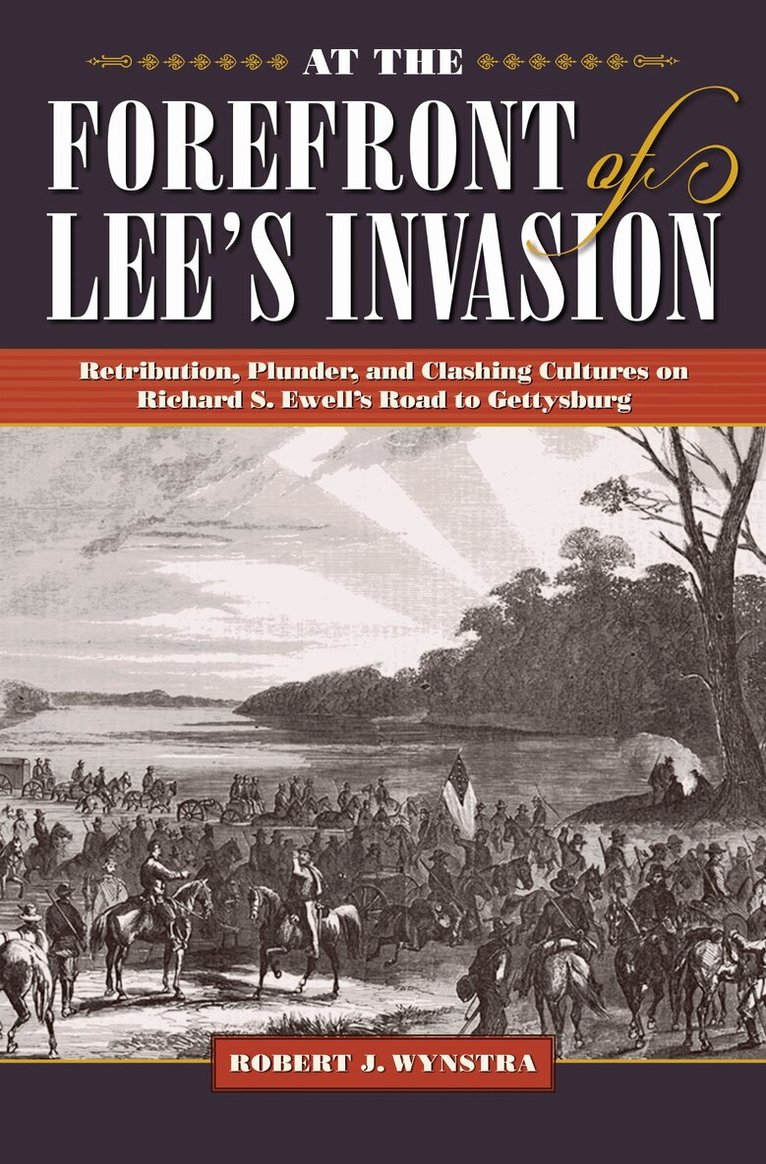
After clearing Virginia’s Shenandoah Valley of Federal troops, Gen. Robert E. Lee’s bold invasion into the North reached the Maryland shore of the Potomac River on June 15, 1863. A week later, the Confederate infantry crossed into lower Pennsylvania, where they had their first sustained interactions with the civilian population in a solidly pro-Union state. Most of the initial encounters with the people in the lush Cumberland Valley and the neighboring parts of the state involved the men from the Army of Northern Virginia’s famed Second Corps, commanded by Lt. Gen. Richard S. Ewell, who led the way as Lee’s veteran soldiers advanced north toward their eventual showdown with the Union army at the crossroads town ofGettysburg.The move to the North lasted for nearly a month and encompassed the major battle at Winchester, Virginia, with more than 5,000 casualties; five skirmishes with more than 100 men killed, wounded, and captured in each; and several other minor actions. Civilian property losses in the Northamounted to several million dollars. The interactions along the way further laid bare the enormous cultural gulf that separated the two sides in the war. As Robert Wynstra explains, Ewell and his top commanders constantly struggled to control the desire among the troops to seek retribution for what they perceived as Federal outrages in the South and to stop the plundering, working to maintain strict discipline in the army and uphold Southern honor.Despite the yearly flood of books on Gettysburg, the Confederate advance has been largely ignored. Most books devote only a few pages or a single short chapter to that aspect of the campaign. In this new study, Wynstra draws on an array of primary sources, including rare soldiers’ letters and eyewitness accounts published in local newspapers, manuscripts and diaries in small historical societies, and a trove of postwar damage claims from the invasion to fill in this vital gap in the historiography of the campaign.
Blue-Blooded Cavalryman
Captain William Brooke Rawle in the Army of the Potomac, May 1863–August 1865
Inbunden, Engelska, 2019
577 kr
Skickas inom 5-8 vardagar
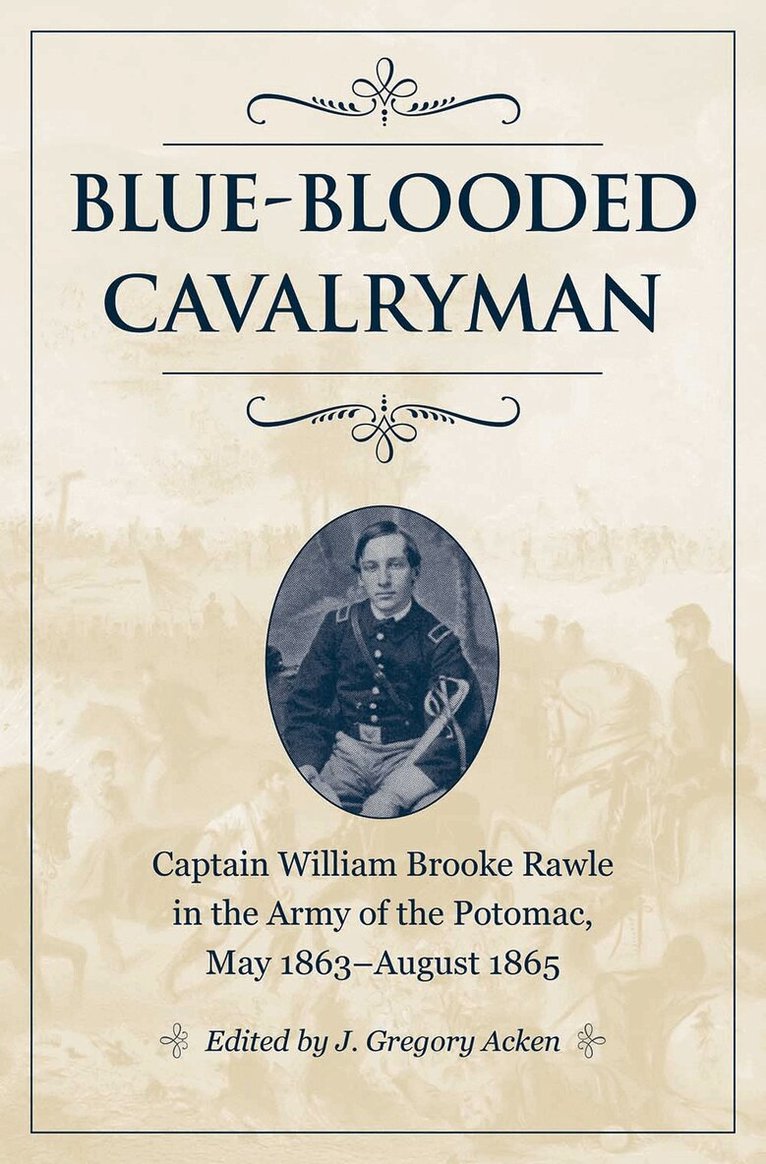
In May 1863, eighteen-year-old William Brooke Rawle graduated from the University of Pennsylvania and traded a genteel, cultured life of privilege for service as a cavalry officer. Travelling from his home in Philadelphia to Virginia, he joined the Third Pennsylvania Cavalry and soon found himself in command of a company of veterans of two years’ service, some of whom were more than twice his age. Within eight weeks, he had participated in two of the largest cavalry battles of the war at Brandy Station and Gettysburg. Brooke Rawle and the Third Pennsylvania Cavalry would serve with the Cavalry Corps of the Army of the Potomac through April 1864, fighting partisans and guerillas in Northern Virginia and also seeing action during the Bristoe Station and Mine Run battles of late 1863. A meticulous diarist and letter writer, Brooke Rawle documented nearly everything that came under his observant eye in 150 well-written letters home to his family. These letters, supplemented by his diary entries, provide a fascinating, richly detailed look into the life of a regimental cavalry officer during the last two years of the Civil War in the East.
Inbunden, Engelska, 2021
615 kr
Skickas inom 5-8 vardagar
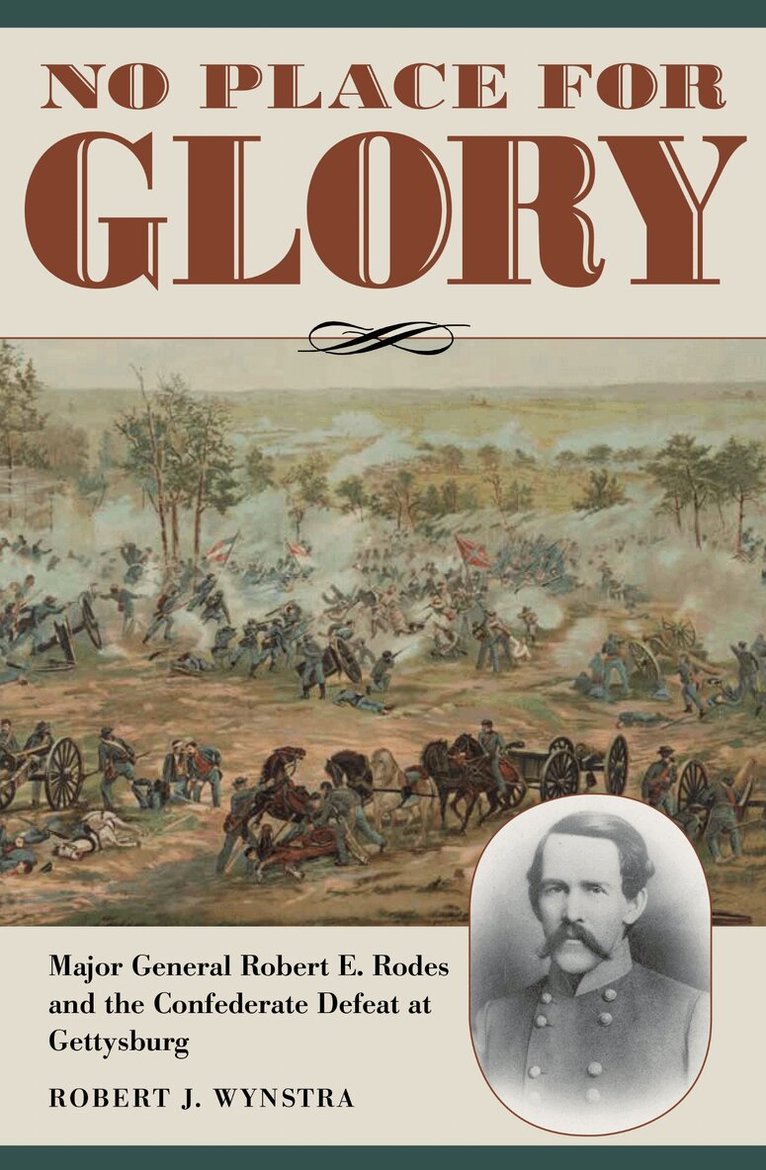
A scrupulous analysis of Rodes's conduct during the Battle of Gettysburg Over the years, many top historians have cited Major General Robert E. Rodes as the best division commander in Robert E. Lee's vaunted army. Despite those accolades, Rodes faltered badly at Gettysburg, which stands as the only major blemish on his otherwise sterling record. Although his subordinates were guilty of significant blunders, Rodes shared the blame for the disjointed attack that led to the destruction of Alfred Iverson's brigade on the first day of the battle. His lack of initiative on the following day was regarded by some in the army as much worse. Whether justified or not, they directly faulted him for not supporting Jubal Early's division in a night attack on Cemetery Hill that nearly succeeded in decisively turning the enemy's flank.The reasons behind Rodes's flawed performance at Gettysburg have long proven difficult to decipher with any certainty. Because his personal papers were destroyed, primary sources on his role in battle remain sparse. Other than the official reports on the battle, the record of what occurred there is mostly limited to the letters and diaries of his subordinates. In this new study, however, Robert J. Wynstra draws on sources heretofore unexamined, including rare soldiers' letters published in local newspapers and other firsthand accounts located in small historical societies, to shed light on the reasons behind Rodes's missteps.As a result of this new research and analysis, we are finally able to come to a more detailed understanding of Rodes's division's activities at Gettysburg, an enduring subject of study and interest.
Häftad, Engelska, 2023
250 kr
Skickas inom 5-8 vardagar
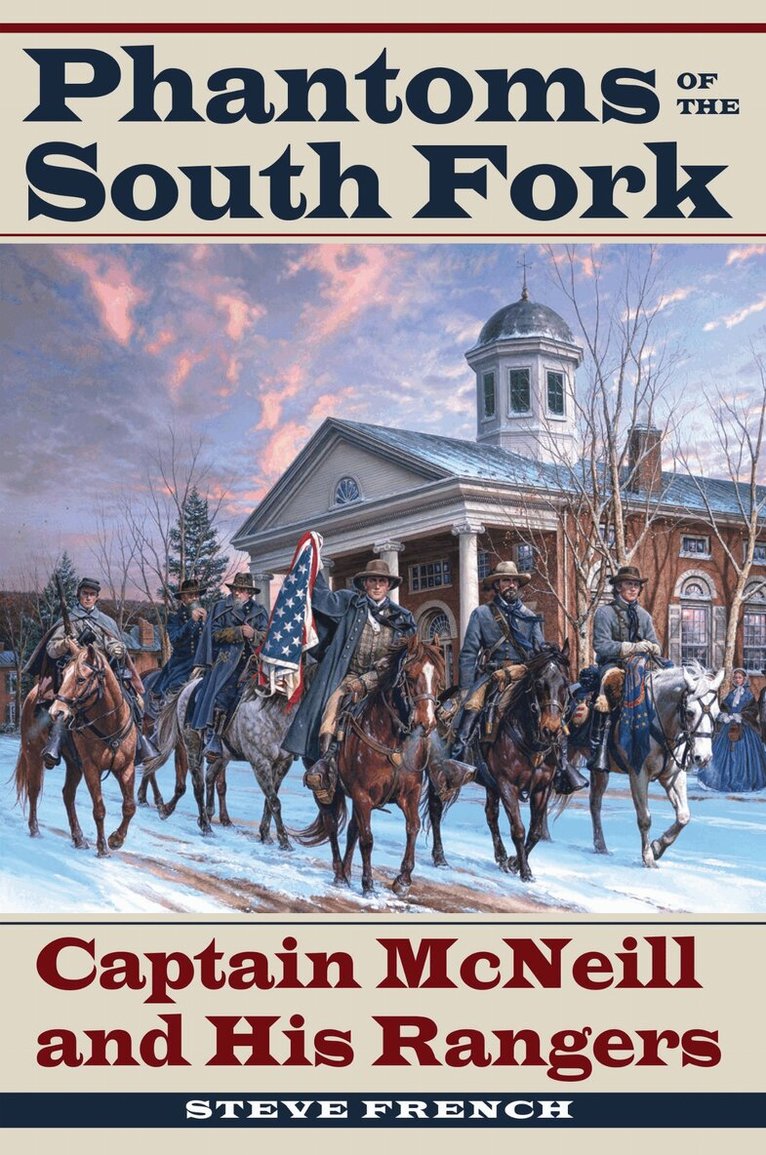
At 3 a.m. on February 21, 1865, a band of 65 Confederate horsemen slowly made its way down Greene Street in Cumberland, Maryland. Thinking the riders were disguised Union scouts, the few Union soldiers out that bitterly cold morning paid little attention to them. In the meantime, over 3,500 Yankee soldiers peacefully slept.Within thirty minutes McNeill's Rangers had kidnapped Union generals George Crook and Benjamin Kelley from their hotels and spirited them out of town. Despite a determined effort by Union pursuers to intercept the kidnappers, the Rangers reached safety deep in the South Fork River Valley, over fifty miles away. Not long afterward, the generals were shipped to Richmond's Libby Prison. Southern general John B. Gordon later called the mission "one of the most thrilling incidents of the war."In September 1862, John Hanson McNeill recruited a company of troopers for Col. John D. Imboden's 1st Virginia Partisan Rangers. In early 1863, Imboden took most of his men into the regular army, but McNeill and his son Jesse offered their men an opportunity to continue in independent service; seventeen soldiers joined them. In the coming months, other young hotspurs enlisted in McNeill's Rangers. Operating mostly in the Potomac Highlands of what is now eastern West Virginia, the Rangers bedeviled the Union troops guarding the B&O Railroad line. Favoring American Indian battle tactics, they ambushed patrols, attacked wagon trains, and heavily damaged railroad property and rolling stock.Phantoms of the South Fork is the thrilling result of Steve French's carefully researched study of primary source material, including diaries, memoirs, letters, and period newspaper articles. Additionally, he traveled throughout West Virginia, western Maryland, southern Pennsylvania, and the Shenandoah Valley following the trail of Captain McNeill and his "Phantoms of the South Fork.
Häftad, Engelska, 2023
436 kr
Skickas inom 5-8 vardagar
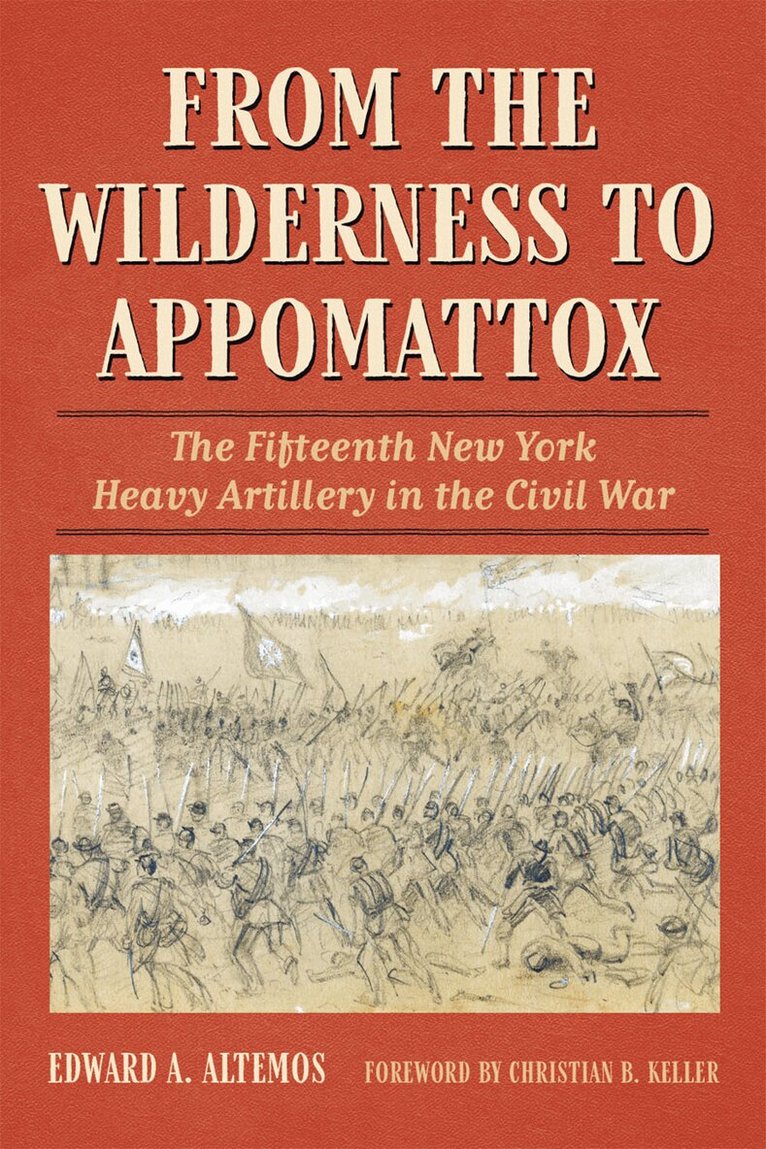
An in-depth look at of a vitally important but little-known heavy artillery regiment of the Civil WarIn early 1864, many heavy artillery regiments in the Civil War were garrisoning the Washington defenses, including the Fifteenth New York. At the same time, newly minted Union general in chief Ulysses S. Grant sought to replenish the ranks of the Army of the Potomac, and the Fifteenth became one of the first outfits dispatched to Major General George Meade at Brandy Station.Composed of predominantly German immigrants, members of the Fifteenth not only endured the nativist sentiments held by many in the army, but as "heavies" normally stationed to the rear, they were also derided as "band box soldiers." The men were still struggling to adjust to their new roles as infantrymen when they experienced combat for the first time at the Wilderness. Despite lacking infantry training and adequate equipment, they persisted. From the Wilderness to Appomattox describes how the Fifteenth continued to hone their skills and distinguish themselves throughout the Overland, Petersburg, and Appomattox Campaigns, eventually witnessing the surrender of Robert E. Lee's vaunted Army of Northern Virginia.Drawing on a wealth of previously unmined primary sources, Edward A. Altemos pays tribute to the Fifteenth, other heavy artillery regiments, and the thousands of immigrants who contributed to the Union army's victory.
Häftad, Engelska, 2024
422 kr
Skickas inom 3-6 vardagar
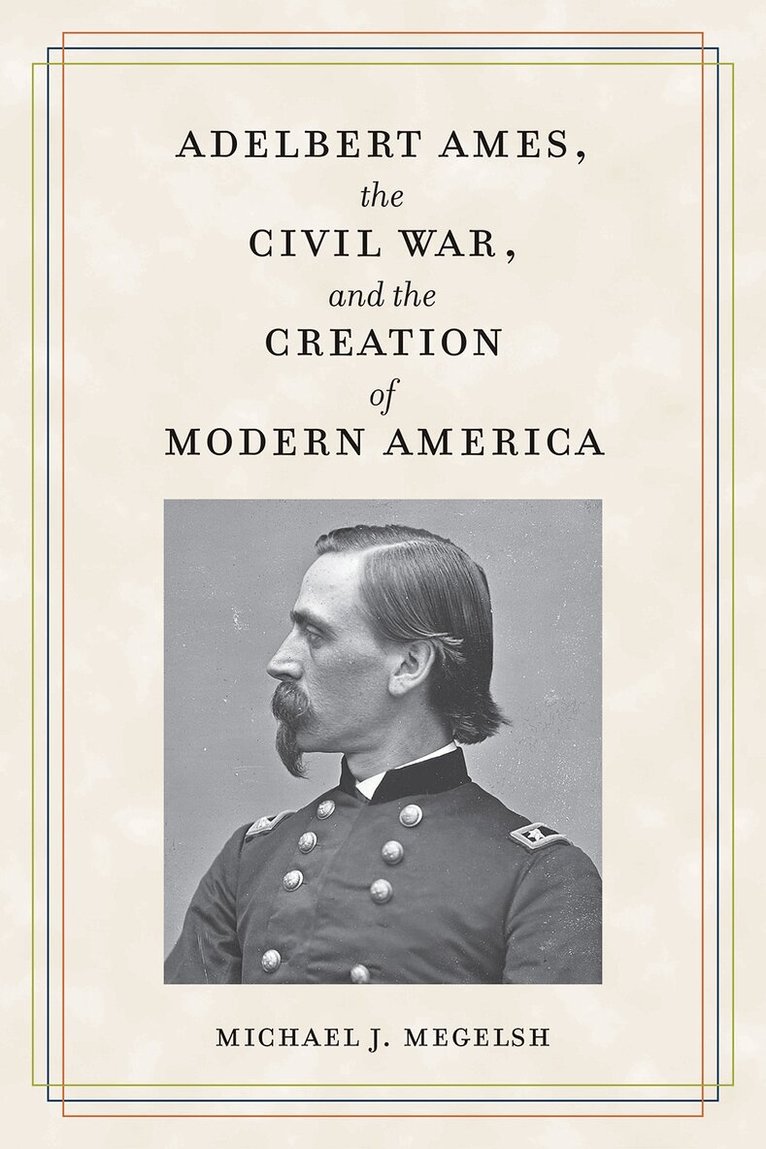
The remarkable life of a noteworthy—yet overlooked—Union general turned Reconstruction-era politician A central figure in Reconstruction-era politics, Adelbert Ames and his contributions during a significant and uncertain time in American history are the focus of Michael J. Megelsh's fascinating study. As Megelsh discusses, Ames's life took many compelling turns. Born on Maine's rocky shore in 1835, he served as a Union general during the American Civil War and was heralded as one of the young stars whose leadership was integral in helping the Union to victory. He briefly remained in the army after the conflict, stationed in Mississippi, where he entered the political arena. During his four-year tenure as a Republican US senator representing Mississippi, Ames exhibited a growing commitment to civil rights and battled for the protection of freedmen in the halls of Congress, even when it drew ire and damnation from his colleagues. In 1874, Ames was elected governor of Mississippi and tried to create a free and prosperous state rooted in protecting civil rights and promoting economic liberty. This meant challenging the growing brutality and unruliness of the white populace and a burgeoning Democratic Party. For the first time, Ames's confidence faded as his struggles intensified and political enemies sought to impeach him, culminating in a trial that captivated local and national media. This contentious battle led to Ames's resignation from office and the end of Reconstruction in Mississippi. Ames's once-promising political career, too, was over. But Ames's later years remained thrilling. He helped the townspeople of Northfield, Minnesota, defeat Jesse James and the James-Younger Gang in a gunfight during an attempted bank robbery in 1876. When the Spanish-American War began in 1898, Ames, though now in his sixties, volunteered to join the fight and served in Cuba. While Adelbert Ames has appeared in many texts as a secondary character, Megelsh's work unearths Ames's important and underappreciated contributions to a transitional time in American history and politics.
Häftad, Engelska, 2024
325 kr
Skickas inom 5-8 vardagar
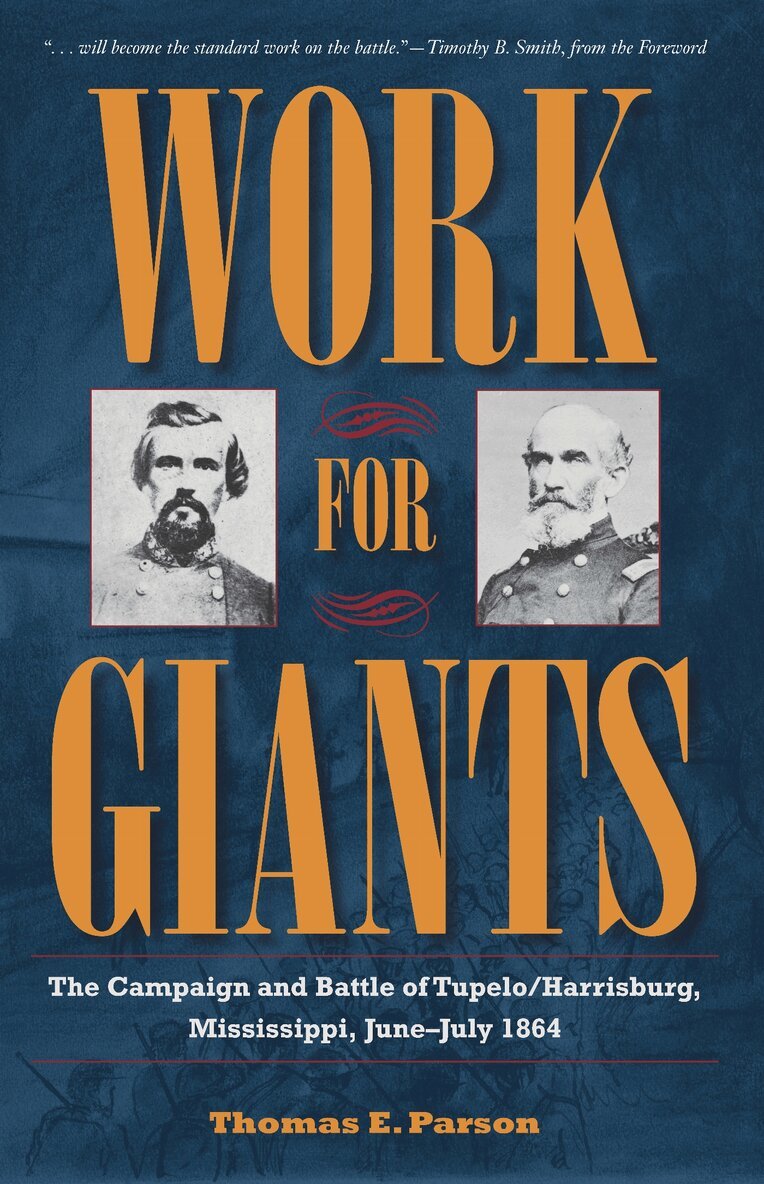
Fighting Nathan Bedford Forrest in North Mississippi During the summer of 1864, a Union column commanded by Maj. Gen. Andrew Jackson Smith set out from Tennessee with a goal that had proven impossible in all prior attempts—to find and defeat the cavalry under the command of Confederate major general Nathan Bedford Forrest. Forrest's cavalry was the greatest threat to the long supply line feeding Sherman's Union armies as they advanced on Atlanta.Joined by reinforcements led by Lt. Gen. Stephen Dill Lee, Forrest and his men were confident, and their morale had never been higher. However, for two weeks, Smith outmarched, outfought, and outmaneuvered the team of Lee and Forrest. In three days of bitter fighting, culminating in the battle at Harrisburg, the Confederates suffered a staggering defeat. Work for Giants focuses on the details of this overlooked campaign and the efforts, postbattle and postwar, to minimize the outcome and consequences of this important Union victory.
Häftad, Engelska, 2024
422 kr
Skickas inom 3-6 vardagar
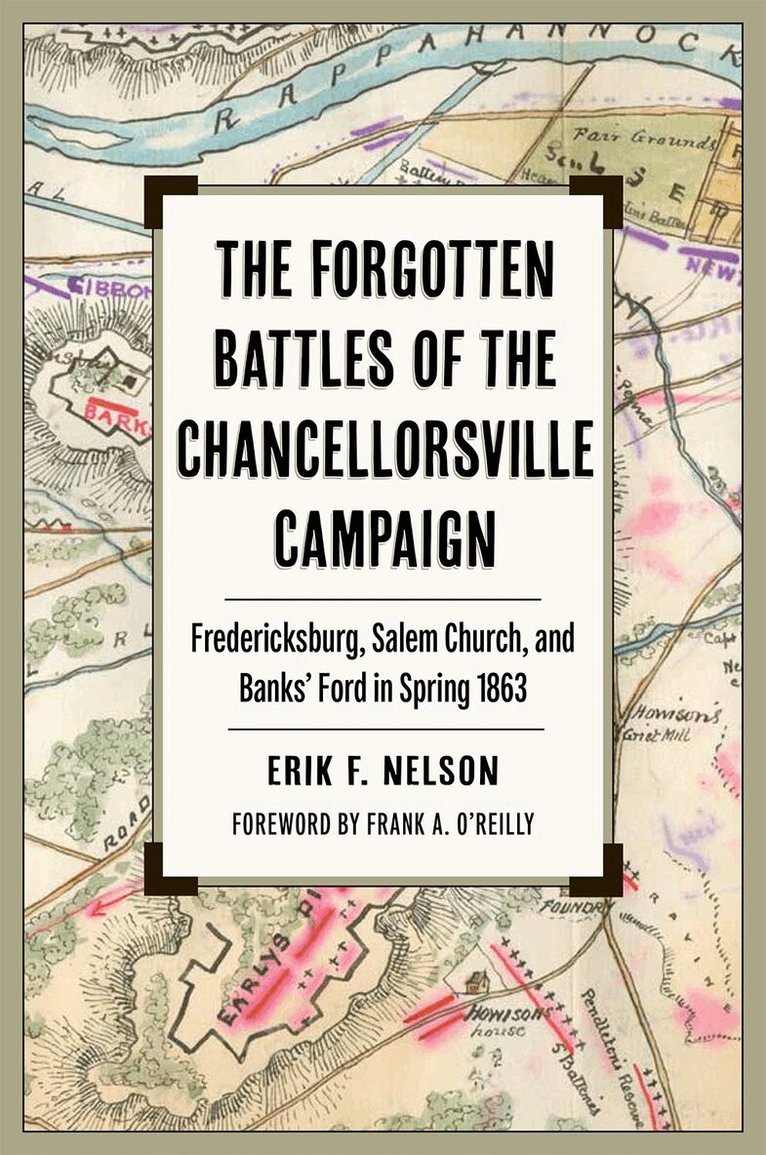
Military operations in Fredericksburg, Virginia, were a significant part of the Chancellorsville Campaign, but they are overshadowed by what occurred in the wilderness of Spotsylvania County, where Robert E. Lee and Stonewall Jackson’s forces overwhelmed a hapless Union army. To demonstrate how a Union force overpowered Confederate troops in and around Fredericksburg, Erik F. Nelson emphasises the role of terrain and re-examines contemporary documentation.
Häftad, Engelska, 2025
397 kr
Skickas inom 3-6 vardagar
A study of Grant's and Lee's battles in the weeks before the 1864 election In the fall of 1864, the Civil War's outcome rested largely on Abraham Lincoln's success in the upcoming presidential election. As the contest approached, cautious optimism buoyed the President's supporters in the wake of Union victories at Atlanta and in the Shenandoah Valley. With all eyes on the upcoming election, Robert E. Lee and Ulysses S. Grant conducted a series of large-scale military operations outside Richmond and Petersburg, which have, until now, received little attention.In Richmond Must Fall, Hampton Newsome examines these October battles in unprecedented scope and detail. The narrative begins with one of Lee's last offensive operations of the war at the Darbytown Road on October 7, 1864, and ends with Grant's major offensive on October 27 to seize the South Side Railroad, the last open rail line into the Confederate stronghold at Petersburg. The offensive would spark sharp fighting at Burgess Mill south of Petersburg and on the Williamsburg Road east of Richmond.The October 1864 operations offer important insights into the personalities and command styles of Lee and Grant, including Lee's penchant for audacity and overwhelming thirst to strike a blow against his opponent even against bitter odds and Grant's willingness to shoulder heavy responsibility in the face of great risk. The narrative explores the relationships within the high command of both armies, including Grant's sometimes strained partnership with the cautious George Meade. It also illustrates Grant's efforts to guide the strong-willed political general Ben- jamin F. Butler, whose steadfast support for African American troops would spark a prisoner controversy that would bring the war's underlying issues of slavery and race into bold relief. For the Confederates, the month's operations illustrate Lee's necessary reliance on his key combat commanders at Petersburg, including the formidable William Mahone.Drawing on an array of original sources, Newsome focuses on the October battles themselves, examining the plans for the operations, the decisions made by commanders on the battlefield, and the soldiers' view from the ground. At the same time, he places these military actions in the larger political context of the fall of 1864. With the election looming, neither side could afford a defeat at Richmond or Petersburg. Nevertheless, Grant and Lee were will- ing to take significant risks to seek great advantage. These military events set the groundwork for operations that would close the war in Virginia several months later.