Hampton Newsome - Böcker
Visar alla böcker från författaren Hampton Newsome. Handla med fri frakt och snabb leverans.
4 produkter
4 produkter
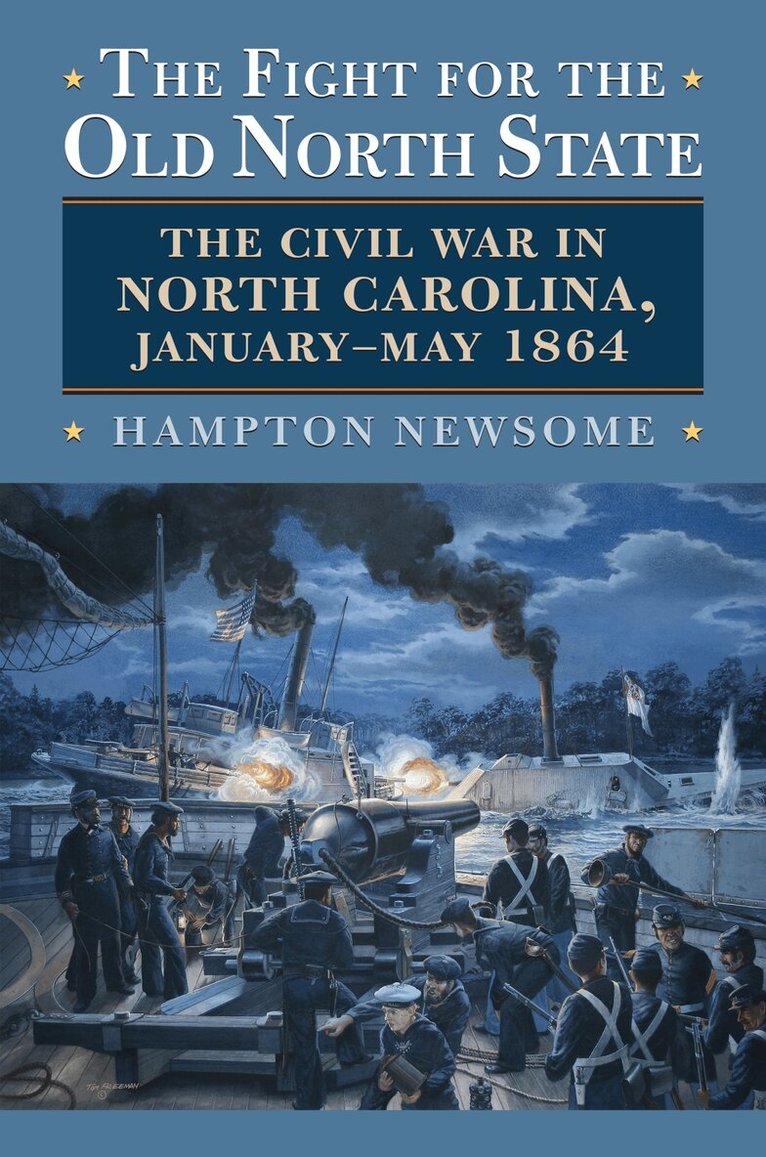
Fight for the Old North State
The Civil War in North Carolina, January-May 1864
Häftad, Engelska, 2020
464 kr
Skickas inom 5-8 vardagar
Winner: Richard Barksdale Harwell AwardOn a cold day in early January 1864, Robert E. Lee wrote to Confederate president Jefferson Davis “The time is at hand when, if an attempt can be made to capture the enemy’s forces at New Berne, it should be done.” Over the next few months, Lee’s dispatch would precipitate a momentous series of events as the Confederates, threatened by a supply crisis and an emerging peace movement, sought to seize Federal bases in eastern North Carolina. This book tells the story of these operations—the late war Confederate resurgence in the Old North State.Using rail lines to rapidly consolidate their forces, the Confederates would attack the main Federal position at New Bern in February, raid the northeastern counties in March, hit the Union garrisons at Plymouth and Washington in late April, and conclude with another attempt at New Bern in early May. The expeditions would involve joint-service operations, as the Confederates looked to support their attacks with powerful, homegrown ironclad gunboats. These offensives in early 1864 would witness the failures and successes of southern commanders including George Pickett, James Cooke, and a young, aggressive North Carolinian named Robert Hoke. Likewise they would challenge the leadership of Union army and naval officers such as Benjamin Butler, John Peck, and Charles Flusser. Newsome does not neglect the broader context, revealing how these military events related to a contested gubernatorial election; the social transformations in the state brought on by the war; the execution of Union prisoners at Kinston; and the activities of North Carolina Unionists.Lee’s January proposal triggered one of the last successful Confederate offensives. The Fight for the Old North State captures the full scope, as well as the dramatic details of this struggle for North Carolina.
510 kr
Skickas inom 11-20 vardagar
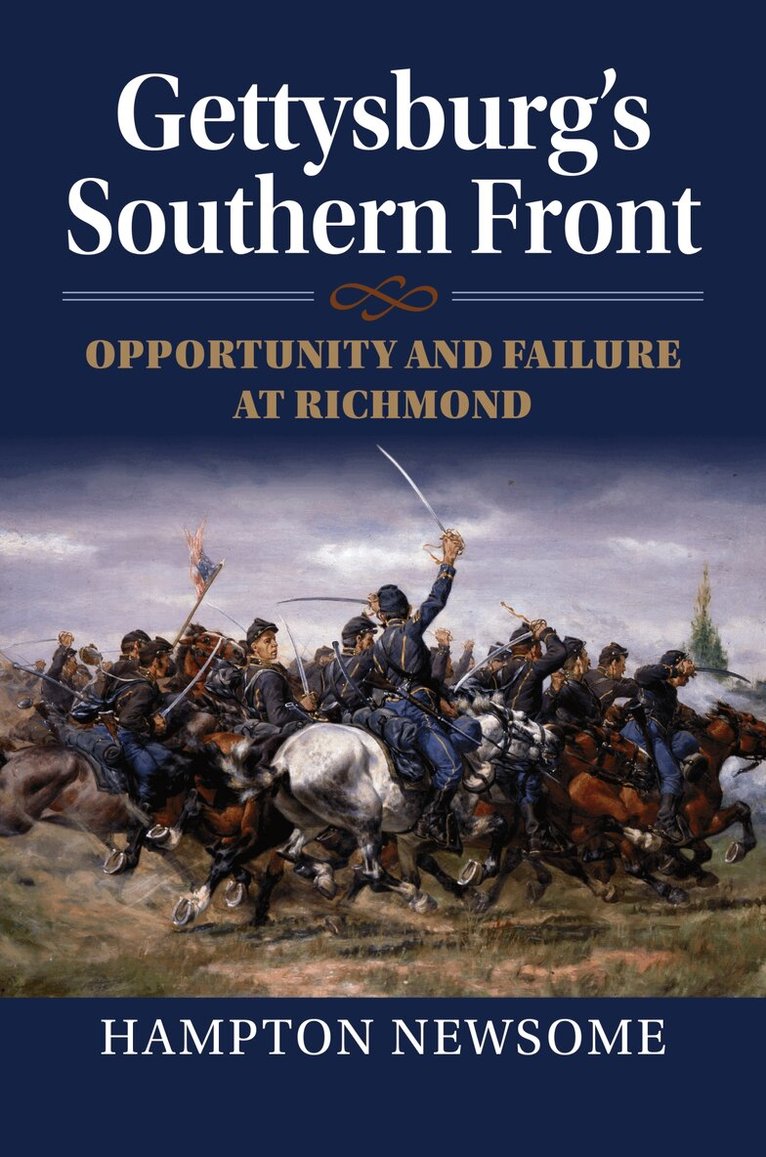
On June 14, 1863, US Major General John Adams Dix received the following directive from General-in-Chief Henry Halleck: “All your available force should be concentrated to threaten Richmond, by seizing and destroying their railroad bridges over the South and North Anna Rivers, and do them all the damage possible.” With General Robert E. Lee and the Army of Northern Virginia marching toward Gettysburg and only a limited Confederate force guarding Richmond, Halleck sensed a rare opportunity for the Union cause.In response, Dix, who had lived a life of considerable public service but possessed limited military experience, gathered his men and began a slow advance. During the ensuing operation, 20,000 US troops would threaten the Confederate capital and seek to cut the railroads supplying Lee’s army in Pennsylvania. To some, Dix’s campaign presented a tremendous chance for US forces to strike hard at Richmond while Lee was off in Pennsylvania. To others, it was an unnecessary lark that tied up units deployed more effectively in protecting Washington and confronting Lee's men on Northern soil.In this study, Newsome offers an in-depth look into this little-known Federal advance against Richmond during the Gettysburg Campaign. The first full-length examination of Dix’s venture, this volume not only delves into the military operations at the time, but also addresses concurrent issues related to diplomacy, US war policy, and the involvement of enslaved people in the Federal offensive.Gettysburg’s Southern Front also points to the often-unrecognized value in examining events of the US Civil War beyond the larger famous battles and campaigns. At the time, political and military leaders on both sides carefully weighed Dix’s efforts at Richmond and understood that the offensive had the potential to generate dramatic results. In fact, this piece of the Gettysburg Campaign may rank as one of the Union war effort’s more compelling lost opportunities in the East, one that could have changed the course of the conflict.
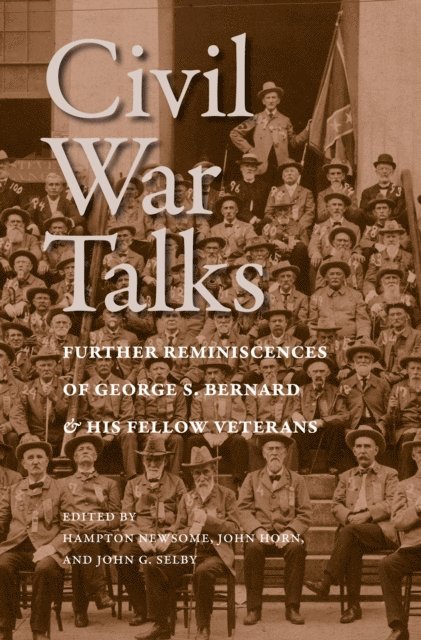
Civil War Talks
Further Reminiscences of George S. Bernard and His Fellow Veterans
Häftad, Engelska, 2024
309 kr
Skickas inom 10-15 vardagar
George S. Bernard was a Petersburg lawyer and member of the 12th Virginia Infantry Regiment during the Civil War. Over the course of his life, Bernard wrote extensively about his wartime experiences and collected accounts from other veterans. In 1892, he published War Talks of Confederate Veterans, a collection of firsthand accounts focusing on the battles and campaigns of the 12th Virginia that is widely read to this day. Bernard prepared a second volume but was never able to publish it. After his death in 1912, his papers became scattered or simply lost. But a series of finds, culminating with the discovery of a cache of papers in Roanoke in 2004, have made it possible to reconstruct a complete manuscript of the unpublished second volume. The resulting book, Civil War Talks, contains speeches, letters, Bernard’s wartime diary, and other firsthand accounts of the war not only by veterans of the Confederacy, such as General William Mahone, but by Union veterans as well. Their personal stories cover the major military campaigns in Virginia, Maryland, and Pennsylvania--Seven Pines, Malvern Hill, Gettysburg, Wilderness, Spotsylvania, Petersburg, and Appomattox. For the general reader, this volume offers evocative testimonies focusing on the experiences of individual soldiers. For scholars, it provides convenient access to many accounts that, until now, have not been widely available or have been simply unknown.
392 kr
Skickas inom 10-15 vardagar
A study of Grant's and Lee's battles in the weeks before the 1864 election In the fall of 1864, the Civil War's outcome rested largely on Abraham Lincoln's success in the upcoming presidential election. As the contest approached, cautious optimism buoyed the President's supporters in the wake of Union victories at Atlanta and in the Shenandoah Valley. With all eyes on the upcoming election, Robert E. Lee and Ulysses S. Grant conducted a series of large-scale military operations outside Richmond and Petersburg, which have, until now, received little attention.In Richmond Must Fall, Hampton Newsome examines these October battles in unprecedented scope and detail. The narrative begins with one of Lee's last offensive operations of the war at the Darbytown Road on October 7, 1864, and ends with Grant's major offensive on October 27 to seize the South Side Railroad, the last open rail line into the Confederate stronghold at Petersburg. The offensive would spark sharp fighting at Burgess Mill south of Petersburg and on the Williamsburg Road east of Richmond.The October 1864 operations offer important insights into the personalities and command styles of Lee and Grant, including Lee's penchant for audacity and overwhelming thirst to strike a blow against his opponent even against bitter odds and Grant's willingness to shoulder heavy responsibility in the face of great risk. The narrative explores the relationships within the high command of both armies, including Grant's sometimes strained partnership with the cautious George Meade. It also illustrates Grant's efforts to guide the strong-willed political general Ben- jamin F. Butler, whose steadfast support for African American troops would spark a prisoner controversy that would bring the war's underlying issues of slavery and race into bold relief. For the Confederates, the month's operations illustrate Lee's necessary reliance on his key combat commanders at Petersburg, including the formidable William Mahone.Drawing on an array of original sources, Newsome focuses on the October battles themselves, examining the plans for the operations, the decisions made by commanders on the battlefield, and the soldiers' view from the ground. At the same time, he places these military actions in the larger political context of the fall of 1864. With the election looming, neither side could afford a defeat at Richmond or Petersburg. Nevertheless, Grant and Lee were will- ing to take significant risks to seek great advantage. These military events set the groundwork for operations that would close the war in Virginia several months later.