Comparative Legislative Studies - Böcker
Visar alla böcker i serien Comparative Legislative Studies. Handla med fri frakt och snabb leverans.
3 produkter
3 produkter
567 kr
Skickas inom 3-6 vardagar
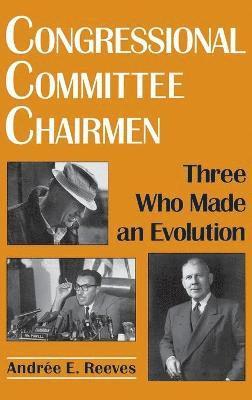
Congress does most of its work in committee, and no understanding of that body can be complete without an analysis of its committees and those who shape them. Andrée Reeves now offers a rare glimpse into the workings of committee chairmanship over a span of thirty-three years-how three chairmen operated and how they influenced their committee and its impact.As Reeves demonstrates, the chair is the most important player in a congressional committee-the one who holds more cards than his colleagues and can deal a winning hand or call a bluff. His use of institutional and personal resources affects the committee, the chamber, and public policy.As a case study, Reeves compares the leadership of three disparate and strong House Education and Labor Committee chairmen who served from 1950 to 1984: Graham A. Barden (D-NC), Adam Clayton Powell (D-NY), and Carl D. Perkins (D-KY). She delves into each chairman's background, orientation, and use of resources. Each had his own brand of leadership, she finds, and a pronounced but different impact on Education and Labor. The committee blocked "progressive" legislation under Barden, facilitated Johnson's Great Society under Powell, and fought tooth and nail to maintain its accomplishments under Perkins.Reeves emphasizes also committee development, including the effects of reforms, the relationship between committee composition and policy output, and committee voting patterns. Rather than advancing smoothly and incrementally, Education and Labor developed in stages that coincided with each chairmanship. And over the years covered, it evolved into a more complex, decentralized, and democratic organization.This is an illuminating study of three men who made a difference in our nation's governance. They left a legacy for succeeding chairmen and indeed for the House, and their chairmanships have had a lasting impact on our society.
636 kr
Skickas inom 3-6 vardagar
The British House of Commons has entered a period of substantial change, moving from a state of party cohesion and party leadership toward a more individualistic and active policy-making role. In the dynamic look at the British Parliament and its members, Philip Norton and David M. Wood highlight that change to more intensive constituency response and service on the part of individual members.Like members of the U.S. Congress, British Members of Parliament (MPs) are elected to represent geographical districts. The relationship between the MP and the constituency in Britain has become more important in recent years, but the major changes that have occurred in the relationship since the late 1960s have not been matched by extensive scholarly study. Some pathbreaking work has been done on the subject, but it remains overshadowed by the wealth of material focusing on MPs' activities within the legislative chambers at Westminster. This volume seeks to fill the gap by sketching and assessing the electoral significance of the MPs' constituency work and the broader political ramifications for the workings of the British Parliament. Its findings allow the MP to be seen in full.Norton and Wood argue that the constituency role has gained in importance in recent decades as MPs have become more career-oriented than their forerunners in mid-century. But a by-product of greater professionalism and careerism has been an expanded job description that may take MPs' time and energies away from playing a more effective role in helping to shape the broader policy alternatives for the United Kingdom.
358 kr
Skickas inom 3-6 vardagar
In a time of increasing campaign costs and decreasing state political party activity, legislative party campaign committees have grown to play a major role in the politics of elections in a large number of American states. Anthony Gierzynski's book focuses on these committees.In this first multi-state analysis, Gierzynski explores the nature and practices of the committees through interviews with legislative leaders and staff and through statistical analyses of campaign finance data from ten representative states.In addition to direct cash contributions, legislative caucus campaign committees provide candidates with a multitude of support and services and usually target their resources on close races where they will have the greatest impact. Leadership PACs, the campaign committees of individual legislators, also allocate their resources strategically.The existence of such committees and the fact that the caucus campaign committees resemble political parties in both structure and behavior leads Gierzynski to pose interesting normative and practical questions. The answers to such questions have major implications for political parties and legislative politics.