Conference on Editorial Problems – serie
Visar alla böcker i serien Conference on Editorial Problems. Handla med fri frakt och snabb leverans.
6 produkter
6 produkter
Häftad, Engelska, 1999
345 kr
Skickas inom 5-8 vardagar
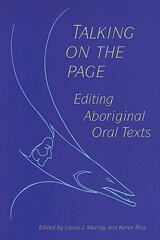
The worlds of readers and writers on the one hand and listeners and speakers on the other differ in many ways. What happens when the stories, beliefs, or histories of North American Native people, many traditionally communicated orally, are transferred to paper or other media? Why do tellers, teachers, editors, filmmakers, and translators undertake this work? What do the words mean for different audiences? How can they be most effectively and responsibly presented and interpreted? This collection of essays confronts these and other issues that arise in attempting to record oral cultures for a visual society. The book contains an introduction by the editors, and papers by Nora Marks Dauenhauer and Richard Dauenhauer, Kimberly M. Blaeser, J. Edward Chamberlain, Victor Masayesva Jr., and Julie Cruikshank.
Inbunden, Engelska, 2011
888 kr
Skickas inom 5-8 vardagar
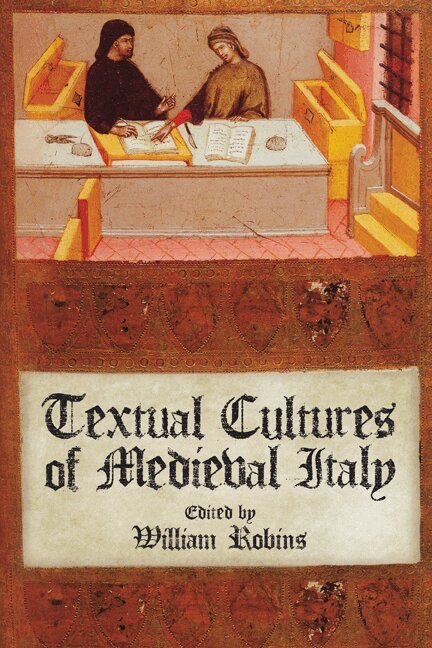
Medieval Italy presented a rich array of discrete textual cultures, many of them specific to particular regions, professions, or groups of writers and readers. The essays in this collection consider how distinct habits of writing took root among specific communities in Italy between the early Middle Ages and the eve of the Renaissance.In examining how ideological concerns helped give shape to strategies of writing and how forms of communication influenced cultural developments, these case studies assess a wide range of texts, including legal treatises, saintly biographies, rhetorical handbooks, and vernacular poetry. As a whole, the collection makes the case for combining abstract analyses such as textual theory and intellectual history with more technical specialties such as editing and codicology. Rather than approaching pre-modern Italian textuality as something uniform, Textual Cultures of Medieval Italy engages with its fascinating plurality.
E-bok
PDF, Engelska, 2003878 kr
Läs direkt efter köp
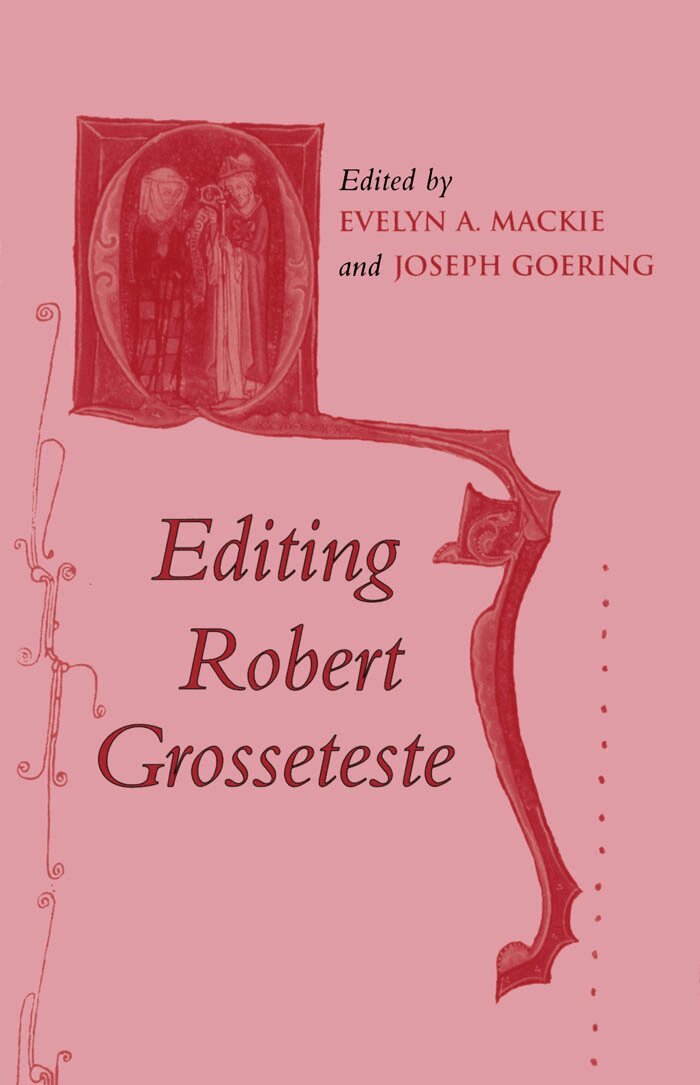
Thirteenth-century theologian, philosopher, and church leader, Robert Grosseteste was one of the most learned men and respected scholars of his time. Elected as the Bishop of Lincoln in 1235, a post he held until his death in 1253, Grosseteste was something of a polymath, exploring subjects ranging from the natural sciences (physics, cosmography, etc.) to pastoral care and speculative theology. More than 1000 medieval manuscripts of his works are scattered in libraries throughout Europe, and as a result there are immense challenges faced by editors who wish to provide modern critical editions of his works.This collection of essays, in the series on Editorial Problems, offers historical and contextual discussions of several of Grosseteste's works, including the Super Psalterium, Le Chateau d'amour, and Grosseteste's translation of the pseudo-Dionysian Ecclesiastical Hierarchy, among others. In addressing specific aspects of the editorial process - questions of authenticity, chronology, textual transmission, editorial practice, and contemporary sources and influences - the contributors provide new insight into Grosseteste's work through the use of both traditional and cross-disciplinary approaches.
E-bok
PDF, Engelska, 1996773 kr
Läs direkt efter köp
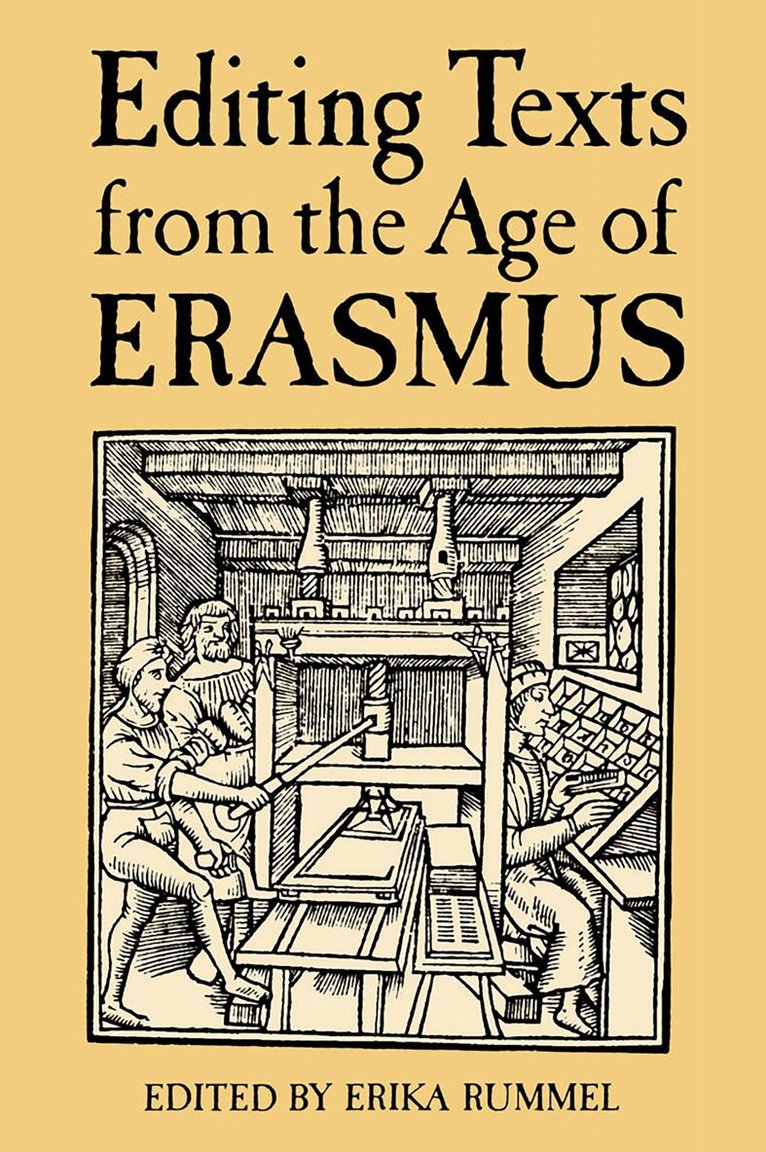
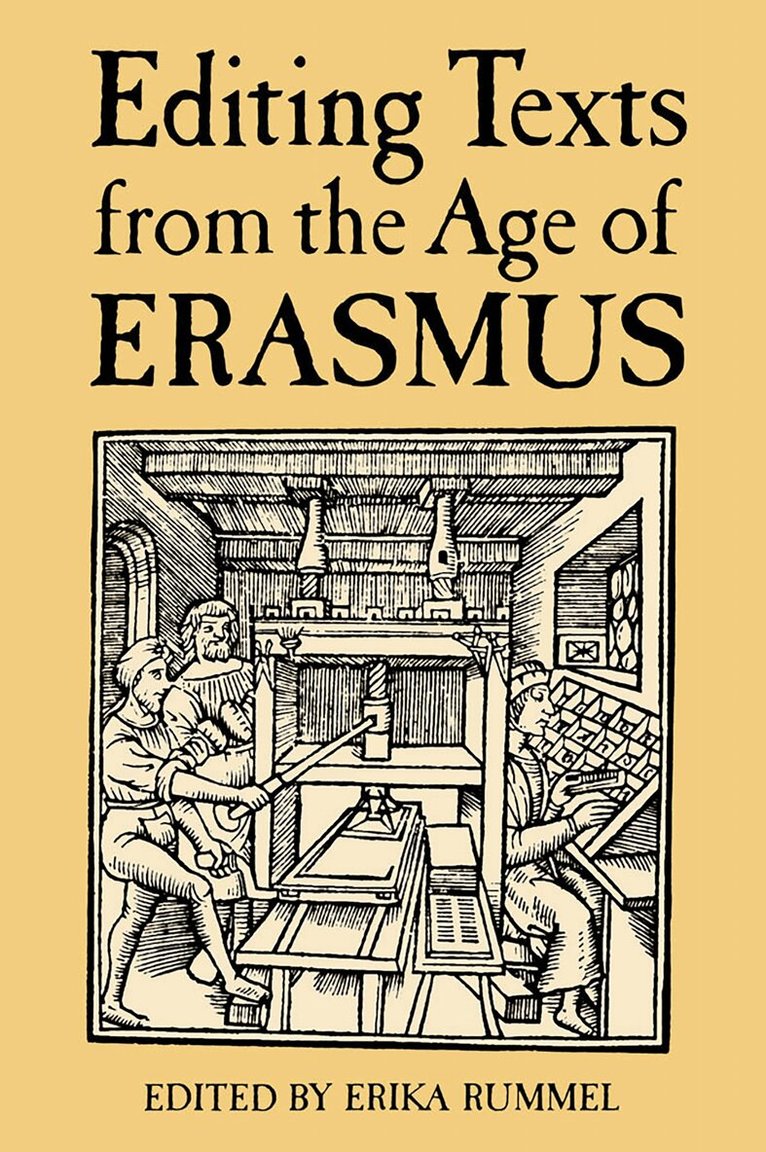
The editing of texts remains an important professional task for both the historian and the literary scholar. Originally presented at the Thirtieth Annual Conference on Editorial Problems held at the University of Toronto in November 1994 the six essays in this collection reflect on three successfully completed editing projects - the editions of the registers of the Faculty of Theology at the University of Paris, the registers of the Company of Pastors of Geneva in the time of Calvin, and The Complete Works of Thomas More. They also explore new initiatives, namely, the Independent Works of Tyndale, the records of the Consistory of Geneva, and the Peter Martyr Library; and provide an opportunity for stock-taking in two ongoing projects, the Opera Omnia Des. Erasmi published at Amsterdam and The Collected Works of Erasmus published at Toronto.While focusing mainly on these particular editions and translations, the contributors also address such common issues as the problem of authorship, the difficulty of deciphering manuscript sources, the identification of minor historical figures, tracing quotations, and the need to produce idiomatically correct modern translations without diverging from the wording of the original source. In addition, the contributors offer valuable insights into the nature and process of scholarly collaboration and informed comment on the circumstances that allow such endeavours to flourish.
E-bok
PDF, Engelska, 1997771 kr
Läs direkt efter köp
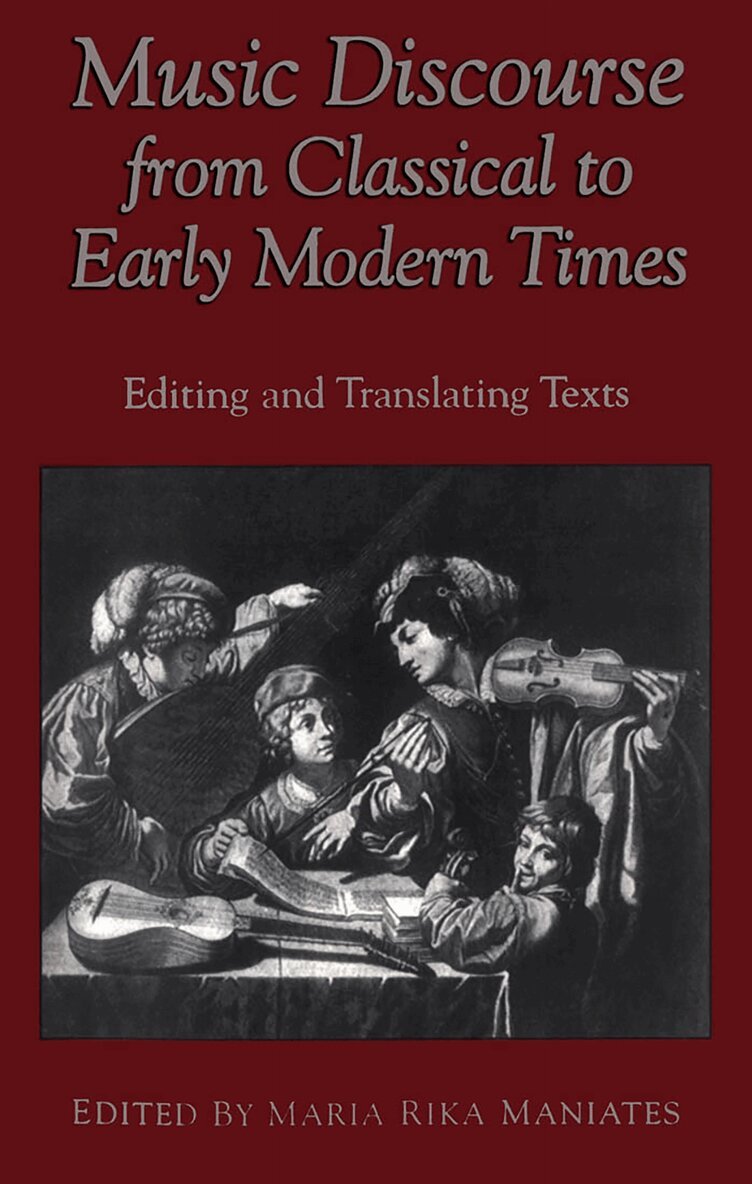
The study of medieval and Renaissance music relies heavily on scholarly editions and translations of theoretical and liturgical sources to provide means of interpreting notation, style, and compositional processes. The editing of these texts and sources remains challenging for professional musicologists and social historians, as all musicologists must either translate or use translations of texts for their own research. The five essays in this collection deal with the problems inherent in editing and translating writings on such diverse subjects as music theory, harmonic science, composition, sociology, liturgy, and performance practice. They represent a variety of disciplines, not only in respect to their individual fields of inquiry, but with respect to the study of music itself, embracing musicology and ethnomusicology, historical and systematic research, philology and hermeneutics. The general and particular legacy of the ancient classics as a stable element in music discourse is a common thread that binds the essays together.
E-bok
PDF, Engelska, 1999390 kr
Läs direkt efter köp
The worlds of readers and writers on the one hand and listeners and speakers on the other differ in many ways. What happens when the stories, beliefs, or histories of North American Native people, many traditionally communicated orally, are transferred to paper or other media? Why do tellers, teachers, editors, filmmakers, and translators undertake this work? What do the words mean for different audiences? How can they be most effectively and responsibly presented and interpreted? This collection of essays confronts these and other issues that arise in attempting to record oral cultures for a visual society. The book contains an introduction by the editors, and papers by Nora Marks Dauenhauer and Richard Dauenhauer, Kimberly M. Blaeser, J. Edward Chamberlain, Victor Masayesva Jr., and Julie Cruikshank.