Contemporary Perspectives on Multicultural Gifted Education – serie
Visar alla böcker i serien Contemporary Perspectives on Multicultural Gifted Education. Handla med fri frakt och snabb leverans.
12 produkter
12 produkter
Häftad, Engelska, 2019
415 kr
Skickas inom 5-8 vardagar
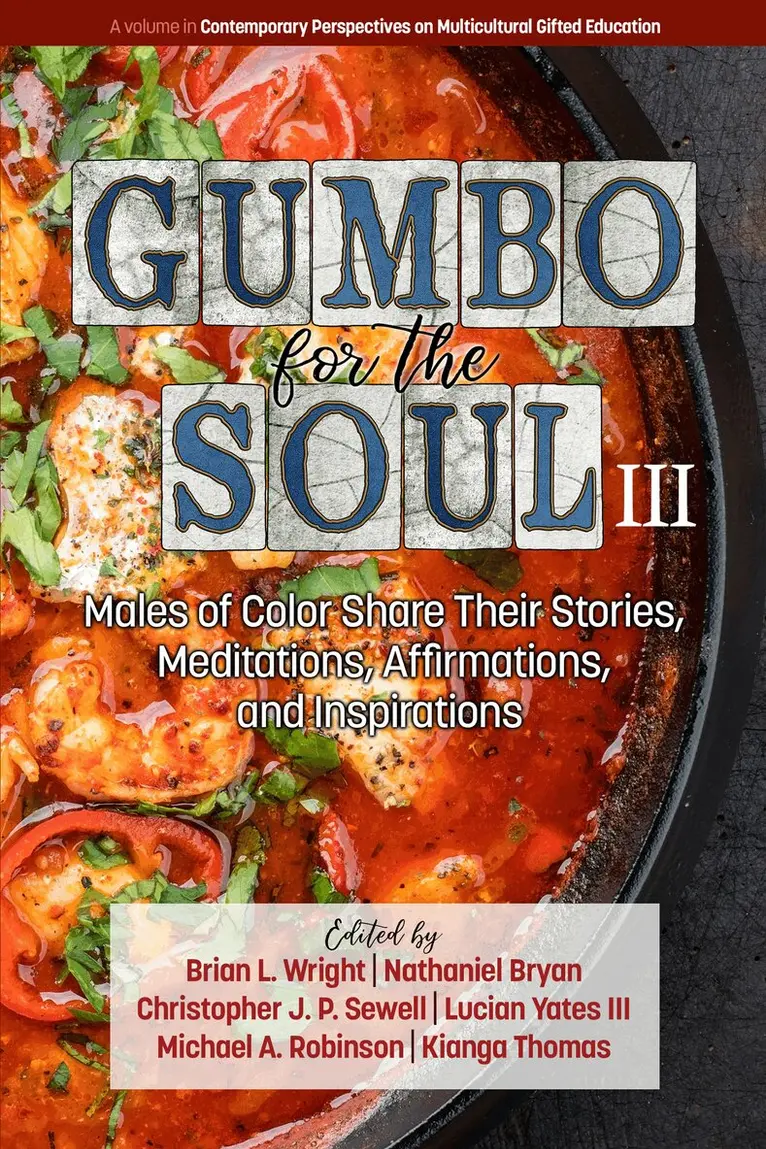
This book for, about, and by Males of Color, amplifies triumphs and successes while documenting trials and tribulations that are instructive, inspiring, and praiseworthy. This book will be a must-read for every Male of Color.
Inbunden, Engelska, 2019
687 kr
Skickas inom 5-8 vardagar
This book for, about, and by Males of Color, amplifies triumphs and successes while documenting trials and tribulations that are instructive, inspiring, and praiseworthy. This book will be a must-read for every Male of Color.
Second Helping of Gumbo for the Soul
More Liberating Stories and Memories to Inspire Females of Color
Häftad, Engelska, 2020
415 kr
Skickas inom 5-8 vardagar
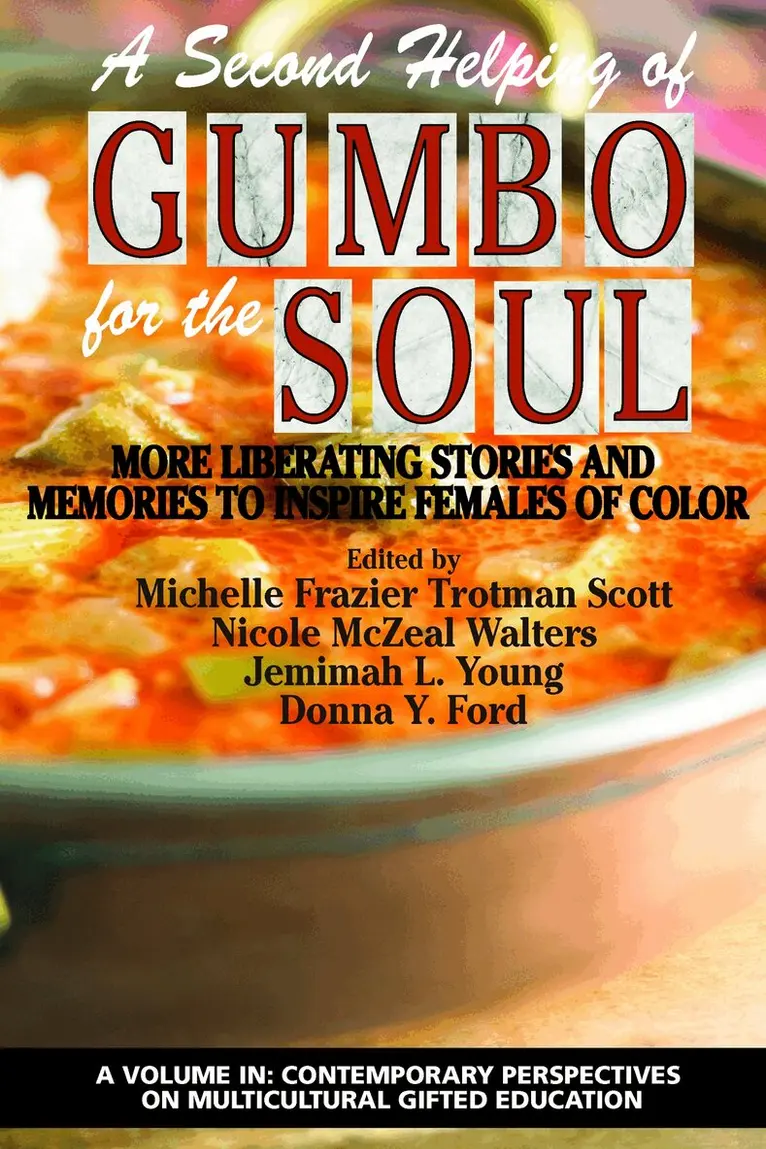
A Second Helping of Gumbo for the Soul is a collection of essays, stories, and narratives designed to inspire and empower women of color through the use of storytelling and narratives. This second edition is a sequel to the first Gumbo for the Soul.
Second Helping of Gumbo for the Soul
More Liberating Stories and Memories to Inspire Females of Color
Inbunden, Engelska, 2020
687 kr
Skickas inom 5-8 vardagar
A Second Helping of Gumbo for the Soul is a collection of essays, stories, and narratives designed to inspire and empower women of color through the use of storytelling and narratives. This second edition is a sequel to the first Gumbo for the Soul.
Häftad, Engelska, 2020
535 kr
Skickas inom 5-8 vardagar
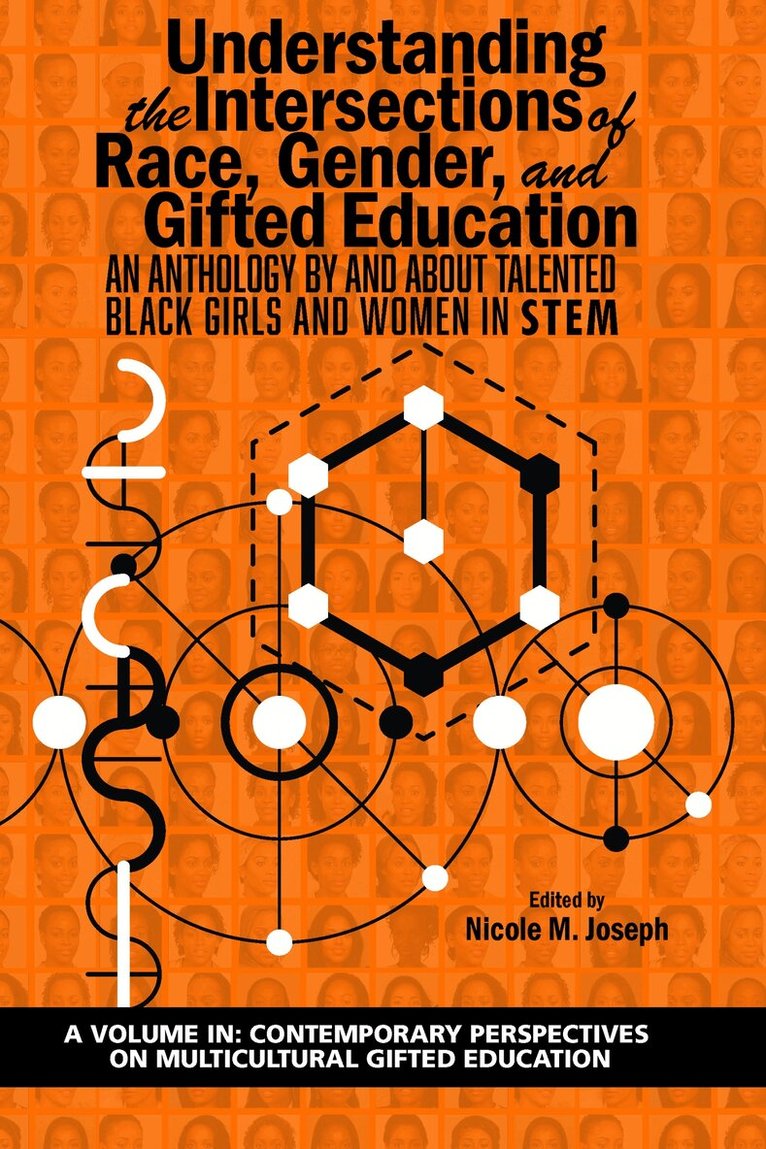
This book seeks to understand the complexities of talented and high-performing Black girls and women in STEM across the P-20 trajectory. Analogously, this volume aims to understand the intersections between giftedness, its identification, and racial, gender, and academic discipline identities. The dearth of literature on this subject suggests that Black girls and women have unique experiences in gifted programming, in large part because of factors associated with gifted programs in general. Key factors affecting Black students, and Black girls in particular, are identification and underrepresentation. These factors can be shaped by interlocking systems of racism, classism, gender bias, and other forms of oppression.Teachers in the P-12 educational system are the first identifiers for gifted programming and look for student characteristics, such as natural leadership, inquisitiveness, and students’ desire to be in gifted programs. Because many Black girls are stereotyped and teachers rarely have deep understanding of cultural differences, Black girls are less likely to be identified for gifted programming. More specifically, Black girls’ lack of representation in gifted mathematics or STEM programs contradicts research that finds that girls reach several developmental advantages ahead of boys. For example, research has shown that girls talk and read earlier, receive higher grades in elementary school, and drop-out less often than boys. Other studies have also shown that Black girls have higher mathematics career aspirations than their White and Latina female peers; yet, they are rarely represented in gifted math and Advanced Placement (AP) math programs. Furthermore, the underrepresentation of urban, low-income African-American students in gifted education is related to low test scores, student and family choice, a lack of teacher referral, and a mismatch between home and school cultures.Some high-performing Black girls and women are participating in programs that nurture and support their racial and gender identities and contribute to them developing into strong and efficacious girls and women who have agency in their lives. This anthology includes studies that illustrate the complexities of intersectionality in various STEM programs, while also demonstrating that increasing access to STEM for Black girls and women is doable.
Inbunden, Engelska, 2020
998 kr
Skickas inom 5-8 vardagar
This book seeks to understand the complexities of talented and high-performing Black girls and women in STEM across the P-20 trajectory. Analogously, this volume aims to understand the intersections between giftedness, its identification, and racial, gender, and academic discipline identities. The dearth of literature on this subject suggests that Black girls and women have unique experiences in gifted programming, in large part because of factors associated with gifted programs in general. Key factors affecting Black students, and Black girls in particular, are identification and underrepresentation. These factors can be shaped by interlocking systems of racism, classism, gender bias, and other forms of oppression.Teachers in the P-12 educational system are the first identifiers for gifted programming and look for student characteristics, such as natural leadership, inquisitiveness, and students’ desire to be in gifted programs. Because many Black girls are stereotyped and teachers rarely have deep understanding of cultural differences, Black girls are less likely to be identified for gifted programming. More specifically, Black girls’ lack of representation in gifted mathematics or STEM programs contradicts research that finds that girls reach several developmental advantages ahead of boys. For example, research has shown that girls talk and read earlier, receive higher grades in elementary school, and drop-out less often than boys. Other studies have also shown that Black girls have higher mathematics career aspirations than their White and Latina female peers; yet, they are rarely represented in gifted math and Advanced Placement (AP) math programs. Furthermore, the underrepresentation of urban, low-income African-American students in gifted education is related to low test scores, student and family choice, a lack of teacher referral, and a mismatch between home and school cultures.Some high-performing Black girls and women are participating in programs that nurture and support their racial and gender identities and contribute to them developing into strong and efficacious girls and women who have agency in their lives. This anthology includes studies that illustrate the complexities of intersectionality in various STEM programs, while also demonstrating that increasing access to STEM for Black girls and women is doable.
Häftad, Engelska, 2021
469 kr
Skickas inom 5-8 vardagar
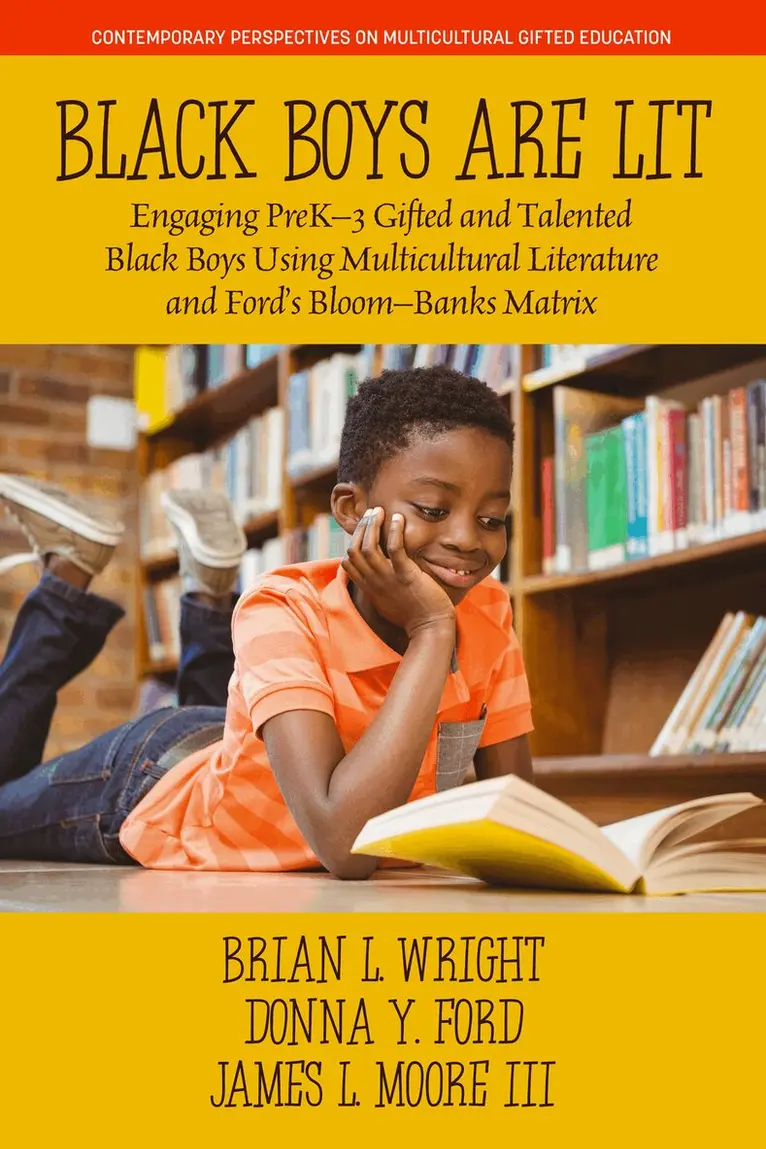
This book of matrices with Black boys as the main character is designed to help gifted and talented education teachers leverage Black boys’ identities to inform and shape how they plan and deliver curriculum and instruction and manage the multicultural, democratic, and culturally responsive classroom. Ford and colleagues (2005) spoke to the notion of and need for ‘self-reflective instruction.’ We argue that all teachers must want to and learn how to legitimize the “everyday” experiences that are learned and cultivated in the homes and communities of Black boys, and how these experiences shape their self-identities and contribute to agency (Wright, Counsell, & Tate 2015). We, therefore, advocate for the rethinking of literacies by repositioning White-centered texts that often reflect and represent power and privilege toward centering the brilliance of Black identities of Black children in general, Black boys in particular.Black boys (of all ages) want to and need to physically see positive images of themselves in books reflected at them. This representation, we argue, has the potential to become an example of a compelling counter-narrative to the history of the “all-White world” (Larrick, 1965) of children’s books that only presented Black characters as “objects of ridicule and generally inferior beings” (Sims Bishop 2012, p. 6). When Black boys see themselves portrayed visually, textually, and realistically in children’s books, vital messages of recognition, value, affirmation, and validation are conveyed. Recognition of the sociocultural contexts in which they live is celebrated.Books for and about Black boys must be rigorous, authentic, multicultural, and developmentally appropriate to allow them to synthesize what they have read, heard, and seen during literacy instruction in authentic and meaningful ways. Multicultural books must introduce children to information about the values of justice, fairness, and equity. Developmentally appropriate books should vary with and adapt to the age, experience, and interests of gifted and talented Black boys to allow them the opportunity to demonstrate critical thinking, textual analysis skills and convey conceptual knowledge. These stories must expose Black boys to culturally relevant counter stories -- stories that counteract the dominant discourse that has primarily depicted Black boys as “at risk” versus placed at risk; “without hope” versus hopeful; or “out of control and dangerous” (Tatum, 2005, p. 28) versus developing self-control like all other children (Wright et al., 2018).
Inbunden, Engelska, 2021
865 kr
Skickas inom 5-8 vardagar
This book of matrices with Black boys as the main character is designed to help gifted and talented education teachers leverage Black boys’ identities to inform and shape how they plan and deliver curriculum and instruction and manage the multicultural, democratic, and culturally responsive classroom. Ford and colleagues (2005) spoke to the notion of and need for ‘self-reflective instruction.’ We argue that all teachers must want to and learn how to legitimize the “everyday” experiences that are learned and cultivated in the homes and communities of Black boys, and how these experiences shape their self-identities and contribute to agency (Wright, Counsell, & Tate 2015). We, therefore, advocate for the rethinking of literacies by repositioning White-centered texts that often reflect and represent power and privilege toward centering the brilliance of Black identities of Black children in general, Black boys in particular.Black boys (of all ages) want to and need to physically see positive images of themselves in books reflected at them. This representation, we argue, has the potential to become an example of a compelling counter-narrative to the history of the “all-White world” (Larrick, 1965) of children’s books that only presented Black characters as “objects of ridicule and generally inferior beings” (Sims Bishop 2012, p. 6). When Black boys see themselves portrayed visually, textually, and realistically in children’s books, vital messages of recognition, value, affirmation, and validation are conveyed. Recognition of the sociocultural contexts in which they live is celebrated.Books for and about Black boys must be rigorous, authentic, multicultural, and developmentally appropriate to allow them to synthesize what they have read, heard, and seen during literacy instruction in authentic and meaningful ways. Multicultural books must introduce children to information about the values of justice, fairness, and equity. Developmentally appropriate books should vary with and adapt to the age, experience, and interests of gifted and talented Black boys to allow them the opportunity to demonstrate critical thinking, textual analysis skills and convey conceptual knowledge. These stories must expose Black boys to culturally relevant counter stories -- stories that counteract the dominant discourse that has primarily depicted Black boys as “at risk” versus placed at risk; “without hope” versus hopeful; or “out of control and dangerous” (Tatum, 2005, p. 28) versus developing self-control like all other children (Wright et al., 2018).
Häftad, Engelska, 2022
535 kr
Skickas inom 5-8 vardagar
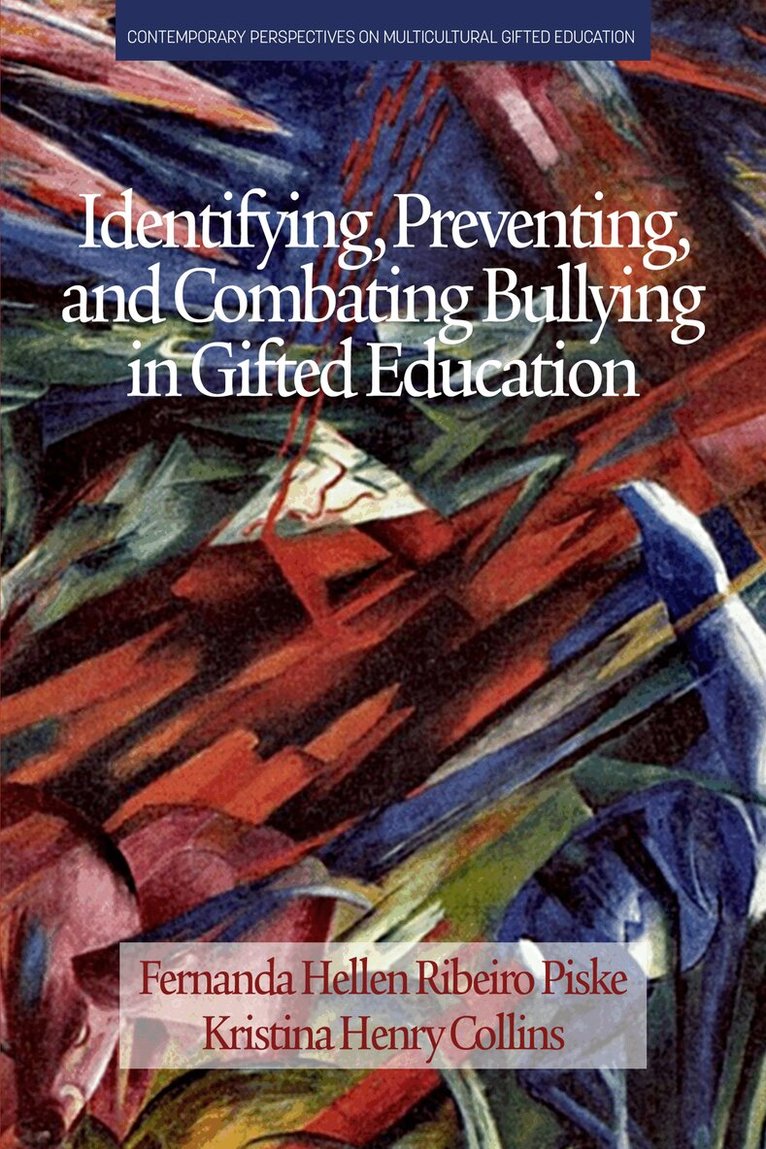
Acts of bullying and victimization experienced by gifted individuals is a seriously neglected problem, leaving many of these students emotionally shaken and subject to extreme anxiety and depression. Even more, based on certain common characteristics of giftedness in particularly, some gifted individuals can find themselves very vulnerable to bullying, which can cause even more difficulties in their interpersonal relationships and development. Despite its importance in the social-emotional wellness and mental health of gifted children, many related books do not discuss bullying as a primary or exclusive topic for students with high abilities.Identifying, Preventing, and Combating Bullying in Gifted Education provides a critical review and expanded context within gifted education to include social, emotional, and cultural (SEC) components of the bullying phenomenon. It offers a global, multidisciplinary perspective and has the differential of helping all stakeholders of gifted education and programming identify, prevent and combat different forms of bullying and other aggressive behaviors that negatively impact the quality of education for all gifted students. It presents a balance between theoretical, methodological and empirical chapters with research, testimonies and experiences of the authors, clients, and students shared. Structured and integrated around a coherent central theme, an additional introduction stages the three sections of the book with each of the chapters strategically crafted to better equip readers with ways to identify, prevent and intervene in actions of bullying in gifted education. Specifically, it serves as a fundamental resource for educators, teacher-trainers, mental health professionals, and families of gifted students at all grade levels.As a call to action, this book aims to better equip readers as advocates in their service to all students, and gifted students in particular. Research-based content and topics include identifying the aggressors, the victims, and the bystanders of bullying; peer-to-peer bullying; in-depth, personal, and global look at the relationship between giftedness, vulnerable populations, and bullying; gifted and talented education policy and practices that foster a micro-aggressive environment; and issues of equity for special populations, such as underrepresented student in gifted education. Culminating a unique and more comprehensive perspective, the contributors are internationally recognized and award winning experts who have committed their professional life to work that positively impact the emotional well-being of students as a critical element to their cognitive and talent development. Leading authors and specialists from around the world, and from different academic disciplines and backgrounds to include education, engineering, physics, counseling, and psychiatry are featured.
Inbunden, Engelska, 2022
998 kr
Skickas inom 5-8 vardagar
Acts of bullying and victimization experienced by gifted individuals is a seriously neglected problem, leaving many of these students emotionally shaken and subject to extreme anxiety and depression. Even more, based on certain common characteristics of giftedness in particularly, some gifted individuals can find themselves very vulnerable to bullying, which can cause even more difficulties in their interpersonal relationships and development. Despite its importance in the social-emotional wellness and mental health of gifted children, many related books do not discuss bullying as a primary or exclusive topic for students with high abilities.Identifying, Preventing, and Combating Bullying in Gifted Education provides a critical review and expanded context within gifted education to include social, emotional, and cultural (SEC) components of the bullying phenomenon. It offers a global, multidisciplinary perspective and has the differential of helping all stakeholders of gifted education and programming identify, prevent and combat different forms of bullying and other aggressive behaviors that negatively impact the quality of education for all gifted students. It presents a balance between theoretical, methodological and empirical chapters with research, testimonies and experiences of the authors, clients, and students shared. Structured and integrated around a coherent central theme, an additional introduction stages the three sections of the book with each of the chapters strategically crafted to better equip readers with ways to identify, prevent and intervene in actions of bullying in gifted education. Specifically, it serves as a fundamental resource for educators, teacher-trainers, mental health professionals, and families of gifted students at all grade levels.As a call to action, this book aims to better equip readers as advocates in their service to all students, and gifted students in particular. Research-based content and topics include identifying the aggressors, the victims, and the bystanders of bullying; peer-to-peer bullying; in-depth, personal, and global look at the relationship between giftedness, vulnerable populations, and bullying; gifted and talented education policy and practices that foster a micro-aggressive environment; and issues of equity for special populations, such as underrepresented student in gifted education. Culminating a unique and more comprehensive perspective, the contributors are internationally recognized and award winning experts who have committed their professional life to work that positively impact the emotional well-being of students as a critical element to their cognitive and talent development. Leading authors and specialists from around the world, and from different academic disciplines and backgrounds to include education, engineering, physics, counseling, and psychiatry are featured.
Häftad, Engelska, 2016
440 kr
Skickas inom 5-8 vardagar
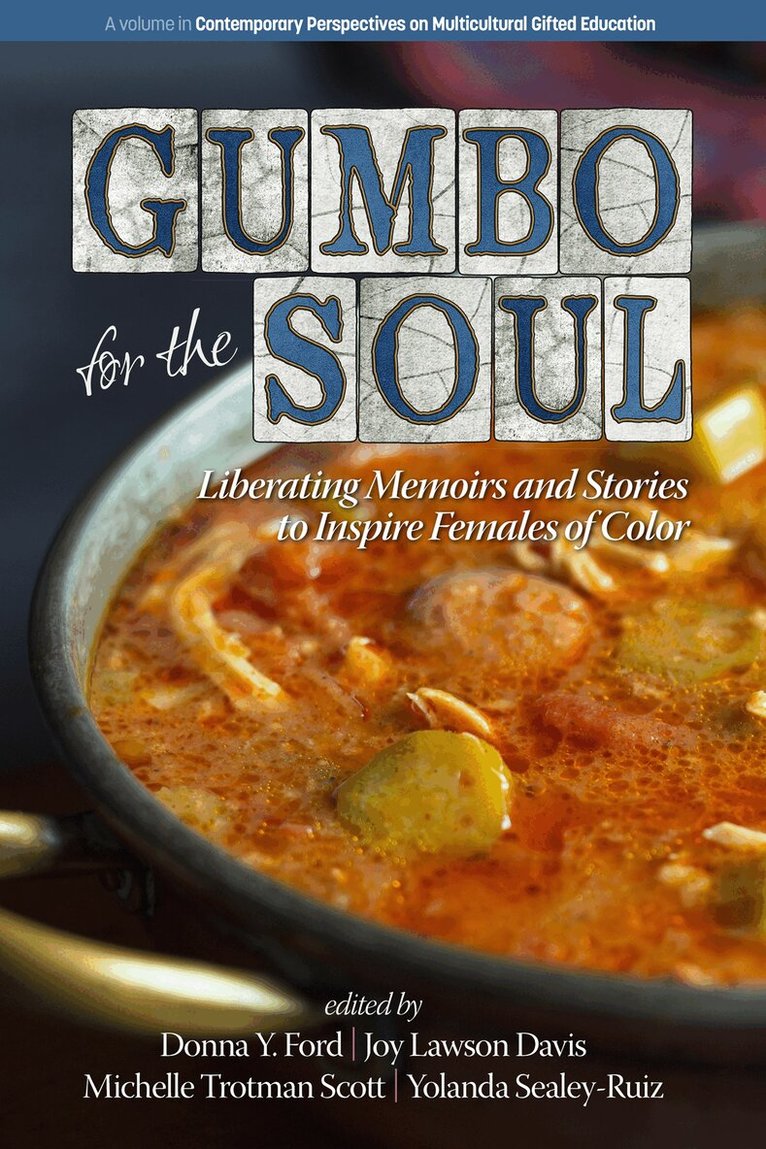
Rejection. Loss. Confusion. Pain. Our past and our future are intertwined. Each distinct memory becomes one life. What once hurt, eventually heals, and the lesson (or lessons) to be learned becomes one with our soul and our spirit. Our experiences provide strength instead of destruction. Our great-grandmothers, grandmothers, mothers -- all women of power who came before us -- were great descendants of the coastal lands of West Africa. They arrived in strange lands with their Gumbo - -their memories, rhythms, ingenuity, creativity, strength, and compassion. Their lived stories and conversation were recipes mixed with unique combinations of ingredients, dropped into the cast iron pot -- stirred, dropped in, seasoned, dropped in, stirred again, and again, and again, until done. This Gumbo is savory like the soul, carefully prepared, recipes rich with what our foremothers brought with them from their homeland. They brought the best of what they had to offer.Gumbo or Gombo is a Bantu word meaning ‘okra’. Okra is a rich vegetable that serves as the base (or gravy) for a delicately prepared stew. (Today’s Gumbo cooks use a ‘roux’ as the base- see the recipe on page 3). Gumbo’s West African origins have been modified over the past two centuries by people of varied ancestry: Native American, German, Spanish, and French (Moss, 2014). It is essential to understand the manner in which Gumbo is prepared: each ingredient must be placed into the stew at its specified time so that it can cook in and savor its own flavor. When completed, Gumbo is usually served over grits or rice.Gumbo has become a cornerstone of life in African-descended communities across the south and southwest spanning from South Carolina to Louisiana and Texas. Gumbo is a treasure… a reminder of the greatness that lived in the village in a time of strength and abundance…a reminder of the resilience and richness of our people over generations.This book -- a collection of memoirs written by Women of Color is shared to inspire and motivate readers. The authors of these precious, soulful stories are from across the globe and represent various backgrounds and professions. What these women have in common, though, is their drive to tell their story. Stories of pain, discovery, strength, and stories of beginnings. Many of the experiences, as difficult as they may have been, made the women who they are today. Telling these stories to a new generation will empower and encourage them in their experiences no matter how troubling or challenging (Harris, 2015). These stories, like our foremothers offering their Gumbo, present the best these women have to offer. These authors want the world to know that deep inside of each of us is a rich, vibrant, purposeful beginning. As our lives develop and we are “stirred and stirred again”, like Gumbo, our experiences begin to shape who we are and who we become. When the stirring is complete, a comforting meal -- one that says no matter what has gone into the dish, it’s going to be amazingly magnificent!!The authors hope these stories will inspire and motivate girls and Women of Color to trust their experiences -- whether good or bad -- to help them become. Our becoming means that after all that life has thrown our way, we are strong, purposeful, and powerful people who are a great treasure to a world that sometimes rejects and ignores our existence. Embedded in this book are stories of abuse and triumph, sadness and victory, disappointment and resilience, discovery and victory.We are very proud to be the keepers of these rich recipes. They represent the first in what we hope will become a collection or series of inspirational memoirs that will be shared to help others live out their destiny and become the women they were born to be.
Inbunden, Engelska, 2016
729 kr
Skickas inom 5-8 vardagar
Rejection. Loss. Confusion. Pain. Our past and our future are intertwined. Each distinct memory becomes one life. What once hurt, eventually heals, and the lesson (or lessons) to be learned becomes one with our soul and our spirit. Our experiences provide strength instead of destruction. Our great-grandmothers, grandmothers, mothers -- all women of power who came before us -- were great descendants of the coastal lands of West Africa. They arrived in strange lands with their Gumbo - -their memories, rhythms, ingenuity, creativity, strength, and compassion. Their lived stories and conversation were recipes mixed with unique combinations of ingredients, dropped into the cast iron pot -- stirred, dropped in, seasoned, dropped in, stirred again, and again, and again, until done. This Gumbo is savory like the soul, carefully prepared, recipes rich with what our foremothers brought with them from their homeland. They brought the best of what they had to offer.Gumbo or Gombo is a Bantu word meaning ‘okra’. Okra is a rich vegetable that serves as the base (or gravy) for a delicately prepared stew. (Today’s Gumbo cooks use a ‘roux’ as the base- see the recipe on page 3). Gumbo’s West African origins have been modified over the past two centuries by people of varied ancestry: Native American, German, Spanish, and French (Moss, 2014). It is essential to understand the manner in which Gumbo is prepared: each ingredient must be placed into the stew at its specified time so that it can cook in and savor its own flavor. When completed, Gumbo is usually served over grits or rice.Gumbo has become a cornerstone of life in African-descended communities across the south and southwest spanning from South Carolina to Louisiana and Texas. Gumbo is a treasure… a reminder of the greatness that lived in the village in a time of strength and abundance…a reminder of the resilience and richness of our people over generations.This book -- a collection of memoirs written by Women of Color is shared to inspire and motivate readers. The authors of these precious, soulful stories are from across the globe and represent various backgrounds and professions. What these women have in common, though, is their drive to tell their story. Stories of pain, discovery, strength, and stories of beginnings. Many of the experiences, as difficult as they may have been, made the women who they are today. Telling these stories to a new generation will empower and encourage them in their experiences no matter how troubling or challenging (Harris, 2015). These stories, like our foremothers offering their Gumbo, present the best these women have to offer. These authors want the world to know that deep inside of each of us is a rich, vibrant, purposeful beginning. As our lives develop and we are “stirred and stirred again”, like Gumbo, our experiences begin to shape who we are and who we become. When the stirring is complete, a comforting meal -- one that says no matter what has gone into the dish, it’s going to be amazingly magnificent!!The authors hope these stories will inspire and motivate girls and Women of Color to trust their experiences -- whether good or bad -- to help them become. Our becoming means that after all that life has thrown our way, we are strong, purposeful, and powerful people who are a great treasure to a world that sometimes rejects and ignores our existence. Embedded in this book are stories of abuse and triumph, sadness and victory, disappointment and resilience, discovery and victory.We are very proud to be the keepers of these rich recipes. They represent the first in what we hope will become a collection or series of inspirational memoirs that will be shared to help others live out their destiny and become the women they were born to be.