Brian L. Wright - Böcker
Visar alla böcker från författaren Brian L. Wright. Handla med fri frakt och snabb leverans.
8 produkter
8 produkter
523 kr
Skickas inom 3-6 vardagar
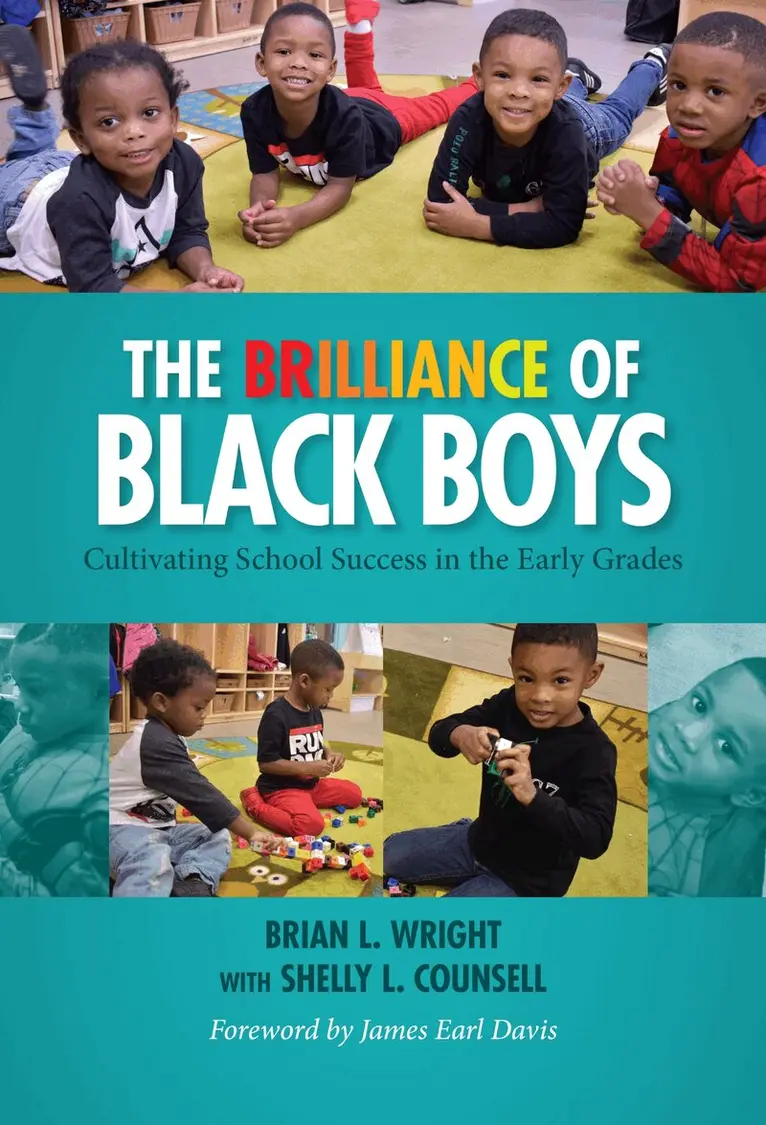
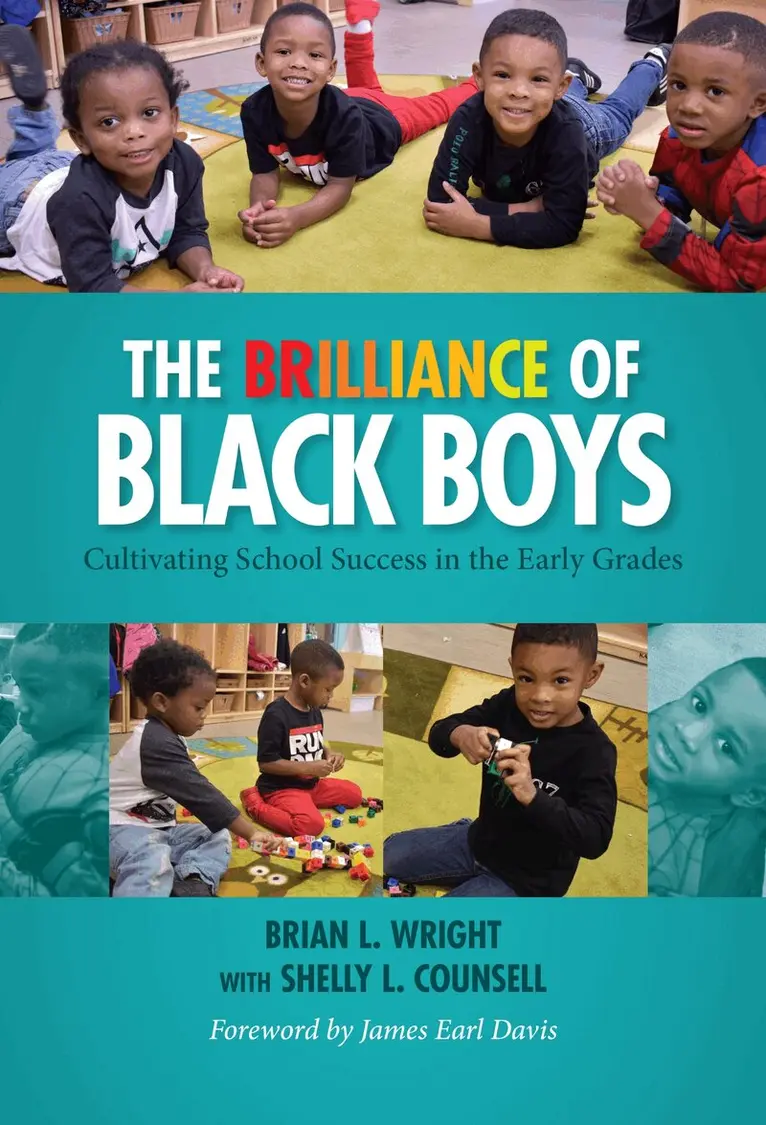
This much-needed book will help schools, and by extension society, better understand and identify the promise, potential, and possibilities of Black boys. Drawing from their wealth of experience in early childhood education, the authors present an assets- and strength-based view of educating young African American males. This positive approach enables practitioners and school leaders to recognize, understand, and cultivate the diversity of social skills of African American boys in the early grades (pre-K–3rd grade). Each chapter begins with a vignette to illustrate what is lost when African American boys are prevented from participating freely in boyhood, having to instead attend to adult and peer interactions and attitudes that view them as “bad boys” and “troublemakers.” This accessible book provides teachers with classroom strategies to help young African American boys achieve their highest potential, along with other resources for supporting their social-emotional development, such as a reading list of authentic multicultural children’s books with Black boys as protagonist.
1 084 kr
Skickas inom 11-20 vardagar
2018 NAME Philip C. Chinn Book Award Winner!This much-needed book will help schools and, by extension, society to better understand and identify the promise, potential, and possibilities of Black boys. Drawing from their wealth of experience in early childhood education, the authors present an asset- and strengths-based view of educating Black boys. This positive approach enables practitioners and school leaders to recognize, understand, and cultivate the diversity of social skills of Black boys in the early grades (pre-K–3rd grade). Each chapter begins with a vignette to illustrate what is lost when Black boys are prevented from participating freely in boyhood, having to instead attend to adult and peer interactions and attitudes that view them as "bad boys" and "troublemakers." This accessible book provides teachers with classroom strategies to help young Black boys achieve their highest potential, along with other resources for supporting their social-emotional development, such as a reading list of authentic multicultural children's books with Black boys as protagonists.Book Features:Challenges deficit views of Black boys in order to transform the way schools and society think, talk, and write about them.Provides culturally responsive strategies for engaging Black boys and fostering healthy self-identity and agency.Discusses the importance of critical self-reflection to examine attitudes and practices that inform how teachers engage with children and families.Examines how school officials, beginning in early childhood, can stop the adultification and criminalization of Black boys.
2 086 kr
Kommande
The Handbook of Critical Perspectives in Early Childhood offers an overview of critical perspectives on the theories and methodologies, identities (cultural and personal), and social contexts of young children, their families, communities, teachers, and caregivers. This handbook addresses equity, power, and justice issues in social contexts and confronts the practice of shying away from naming and condemning white supremacy, racism, anti-blackness, xenophobia, ableism, and gender discrimination. The chapters challenge the colonization of educational research toward decolonization, demarginalization and humanizing that reframes and redirects the longstanding zealousness of blaming problems on children, families, and communities, leaving exculpatory policies and corporate interests which drive dispossession. The handbook includes a glossary of terms and serves as a foundational text and reference to teacher educators, researchers, scholars, students, and stakeholders working with young children, their families, communities, teachers, and caregivers.
Gumbo for the Soul III
Males of Color Share Their Stories, Meditations, Affirmations, and Inspirations
Häftad, Engelska, 2019
404 kr
Skickas inom 7-10 vardagar
This book for, about, and by Males of Color, amplifies triumphs and successes while documenting trials and tribulations that are instructive, inspiring, and praiseworthy. This book will be a must-read for every Male of Color.
Gumbo for the Soul III
Males of Color Share Their Stories, Meditations, Affirmations, and Inspirations
Inbunden, Engelska, 2019
669 kr
Skickas inom 7-10 vardagar
This book for, about, and by Males of Color, amplifies triumphs and successes while documenting trials and tribulations that are instructive, inspiring, and praiseworthy. This book will be a must-read for every Male of Color.
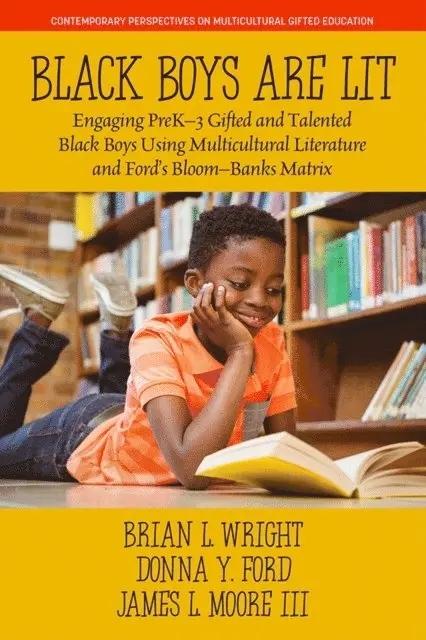
Black Boys are Lit
Engaging PreK-3 Gifted and Talented Black Boys Using Multicultural Literature and Ford's Bloom-Banks Matrix
Häftad, Engelska, 2021
457 kr
Skickas inom 7-10 vardagar
This book of matrices with Black boys as the main character is designed to help gifted and talented education teachers leverage Black boys’ identities to inform and shape how they plan and deliver curriculum and instruction and manage the multicultural, democratic, and culturally responsive classroom. Ford and colleagues (2005) spoke to the notion of and need for ‘self-reflective instruction.’ We argue that all teachers must want to and learn how to legitimize the “everyday” experiences that are learned and cultivated in the homes and communities of Black boys, and how these experiences shape their self-identities and contribute to agency (Wright, Counsell, & Tate 2015). We, therefore, advocate for the rethinking of literacies by repositioning White-centered texts that often reflect and represent power and privilege toward centering the brilliance of Black identities of Black children in general, Black boys in particular.Black boys (of all ages) want to and need to physically see positive images of themselves in books reflected at them. This representation, we argue, has the potential to become an example of a compelling counter-narrative to the history of the “all-White world” (Larrick, 1965) of children’s books that only presented Black characters as “objects of ridicule and generally inferior beings” (Sims Bishop 2012, p. 6). When Black boys see themselves portrayed visually, textually, and realistically in children’s books, vital messages of recognition, value, affirmation, and validation are conveyed. Recognition of the sociocultural contexts in which they live is celebrated.Books for and about Black boys must be rigorous, authentic, multicultural, and developmentally appropriate to allow them to synthesize what they have read, heard, and seen during literacy instruction in authentic and meaningful ways. Multicultural books must introduce children to information about the values of justice, fairness, and equity. Developmentally appropriate books should vary with and adapt to the age, experience, and interests of gifted and talented Black boys to allow them the opportunity to demonstrate critical thinking, textual analysis skills and convey conceptual knowledge. These stories must expose Black boys to culturally relevant counter stories -- stories that counteract the dominant discourse that has primarily depicted Black boys as “at risk” versus placed at risk; “without hope” versus hopeful; or “out of control and dangerous” (Tatum, 2005, p. 28) versus developing self-control like all other children (Wright et al., 2018).
Black Boys are Lit
Engaging PreK-3 Gifted and Talented Black Boys Using Multicultural Literature and Ford's Bloom-Banks Matrix
Inbunden, Engelska, 2021
843 kr
Skickas inom 7-10 vardagar
This book of matrices with Black boys as the main character is designed to help gifted and talented education teachers leverage Black boys’ identities to inform and shape how they plan and deliver curriculum and instruction and manage the multicultural, democratic, and culturally responsive classroom. Ford and colleagues (2005) spoke to the notion of and need for ‘self-reflective instruction.’ We argue that all teachers must want to and learn how to legitimize the “everyday” experiences that are learned and cultivated in the homes and communities of Black boys, and how these experiences shape their self-identities and contribute to agency (Wright, Counsell, & Tate 2015). We, therefore, advocate for the rethinking of literacies by repositioning White-centered texts that often reflect and represent power and privilege toward centering the brilliance of Black identities of Black children in general, Black boys in particular.Black boys (of all ages) want to and need to physically see positive images of themselves in books reflected at them. This representation, we argue, has the potential to become an example of a compelling counter-narrative to the history of the “all-White world” (Larrick, 1965) of children’s books that only presented Black characters as “objects of ridicule and generally inferior beings” (Sims Bishop 2012, p. 6). When Black boys see themselves portrayed visually, textually, and realistically in children’s books, vital messages of recognition, value, affirmation, and validation are conveyed. Recognition of the sociocultural contexts in which they live is celebrated.Books for and about Black boys must be rigorous, authentic, multicultural, and developmentally appropriate to allow them to synthesize what they have read, heard, and seen during literacy instruction in authentic and meaningful ways. Multicultural books must introduce children to information about the values of justice, fairness, and equity. Developmentally appropriate books should vary with and adapt to the age, experience, and interests of gifted and talented Black boys to allow them the opportunity to demonstrate critical thinking, textual analysis skills and convey conceptual knowledge. These stories must expose Black boys to culturally relevant counter stories -- stories that counteract the dominant discourse that has primarily depicted Black boys as “at risk” versus placed at risk; “without hope” versus hopeful; or “out of control and dangerous” (Tatum, 2005, p. 28) versus developing self-control like all other children (Wright et al., 2018).
Developmentally Appropriate Practice in Early Childhood Programs Serving Children from Birth Through Age 8, Fourth Edition (Fully Revised and Updated)
Häftad, Engelska, 2022
924 kr
Skickas inom 3-6 vardagar
The long-awaited new edition of NAEYC’s Developmentally Appropriate Practice in Early Childhood Programs is here, fully revised and updated! Since the first edition in 1987,this book has been an essential resource for the early childhood education field. Early childhood educators have a professional responsibility to plan and implement intentional, developmentally appropriate learning experiences that promote the social and emotional development, physical development and health, cognitive development, and general learning competencies of each child served. But what is developmentally appropriate practice (DAP)? DAP is a framework designed to promote young children’s optimal learning and development through a strengths-based approach to joyful, engaged learning. As educators make decisions to support each child’s learning and development, they consider what they know about (1) commonality in children’s development and learning, (2) each child as an individual (within the context of their family and community), and (3) everything discernible about the social and cultural contexts for each child, each educator, and the program as a whole. This latest edition of the book is fully revised to underscore the critical role social and cultural contexts play in child development and learning, including new research about implicit bias and teachers’ own context and consideration of advances in neuroscience. Educators implement developmentally appropriate practice by recognizing the many assets all young children bring to the early learning program as individuals and as members of families and communities. They also develop an awareness of their own context. Building on each child’s strengths, educators design and implement learning settings to help each child achieve their full potential across all domains of development and across all content areas.