Contributions to the Study of Religion: Christianity and the Holocaust—Core Issues – serie
Visar alla böcker i serien Contributions to the Study of Religion: Christianity and the Holocaust—Core Issues. Handla med fri frakt och snabb leverans.
7 produkter
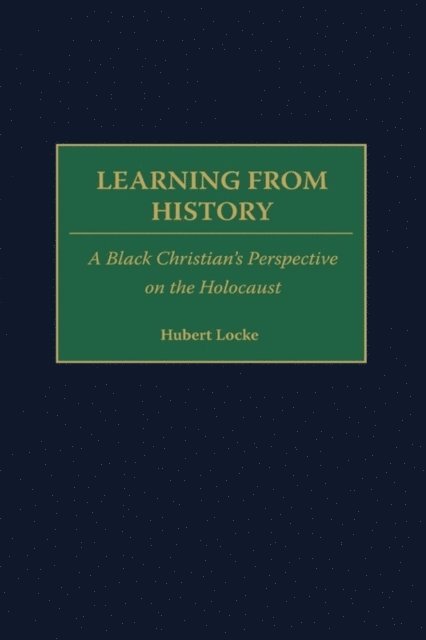
Learning from History
A Black Christian's Perspective on the Holocaust
Av Hubert Locke
E-bok, 2000
935 kr
Lägg i varukorg
Because the Holocaust, at its core, was an extreme expression of a devastating racism, the author contends it has special significance for African Americans. Locke, a university professor, clergyman, and African American, reflects on the common experiences of African American and Jewish people as …
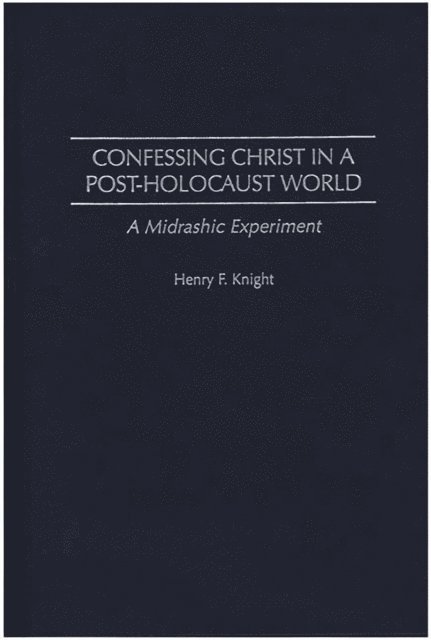
Confessing Christ in a Post-Holocaust World
A Midrashic Experiment
E-bok, 2000
1144 kr
Lägg i varukorg
The questions posed by the Holocaust force faithful Christians to reexamine their own identities and loyalties in fundamental ways and to recognize the necessity of excising the Church's historic anti-Jewish rhetoric from its confessional core. This volume proposes a new framework of meaning for …
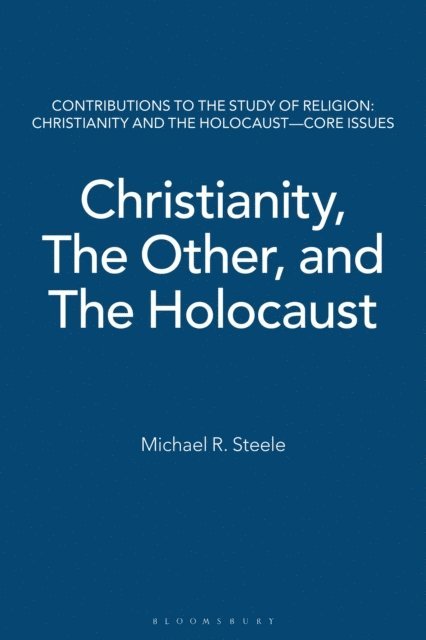
Christianity, The Other, and The Holocaust
E-bok, 2003
780 kr
Lägg i varukorg
According to the author, Christianity offers a powerful system of rewards and incentives to create cultural uniformity. Those who do not join in this cultural uniformity become anathematized, oppressed, marginalized, and ultimately removed from the Christian circle of moral obligation. Using …
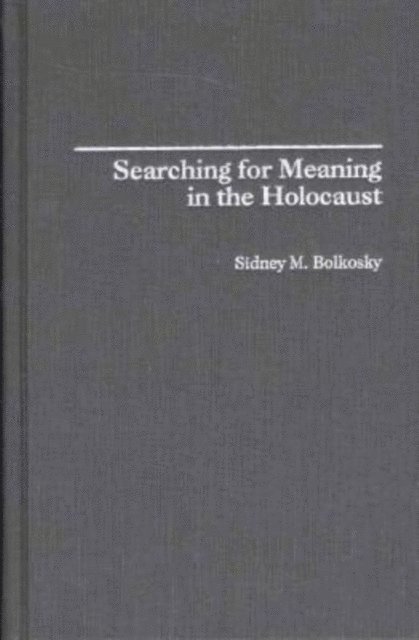
Searching for Meaning in the Holocaust
E-bok, 2002
963 kr
Lägg i varukorg
Scholars, survivors, and other interested parties have offered, over the years, their own interpretations of the meaning of the Holocaust and the lessons we can learn from it. However, the quest to find a rational explanation for this seemingly irrational course of events has led to both …
Christianity, Tragedy, and Holocaust Literature
Inbunden, 1995
1063 kr
Lägg i varukorg
Identifying elements of the Christian worldview that have influenced our theories of tragedy, Steele demonstrates how these theories fail when applied to Holocaust literature. The challenge of interpreting Holocaust literature is highlighted by a close investigation of the extent to which Christian …
Death of God Movement and the Holocaust
Radical Theology Encounters the Shoah
Av Stephen R. Haynes, John K. Roth
Inbunden, 1999
1415 kr
Lägg i varukorg
The Death of God theologians represented one of the most influential religious movements that emerged of the 1960s, a decade in which the discipline of theology underwent revolutionary change. Although they were from different traditions, utilized varied methods of analysis, and focused on culture …
Christianity, The Other, and The Holocaust
Inbunden, 2003
711 kr
Lägg i varukorg
According to the author, Christianity offers a powerful system of rewards and incentives to create cultural uniformity. Those who do not join in this cultural uniformity become anathematized, oppressed, marginalized, and ultimately removed from the Christian circle of moral obligation. Using …