Convening Science: Discovery at the Marine Biological Laboratory - Böcker
Visar alla böcker i serien . Handla med fri frakt och snabb leverans.
10 produkter
10 produkter
387 kr
Skickas inom 7-10 vardagar
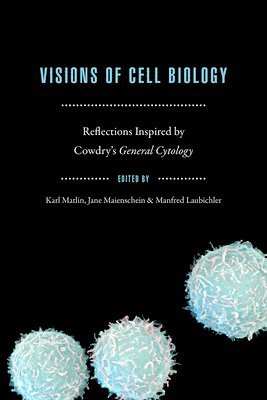
Although modern cell biology is often considered to have arisen following World War II in tandem with certain technological and methodological advances in particular, the electron microscope and cell fractionation its origins actually date to the 1830s and the development of cytology, the scientific study of cells. By 1924, with the publication of Edmund Vincent Cowdry's General Cytology, the discipline had stretched beyond the bounds of purely microscopic observation to include the chemical, physical, and genetic analysis of cells. Inspired by Cowdry's classic, watershed work, this book collects contributions from cell biologists, historians, and philosophers of science to explore the history and current status of cell biology. Despite extraordinary advances in describing both the structure and function of cells, cell biology tends to be overshadowed by molecular biology, a field that developed contemporaneously. This book remedies that unjust disparity through an investigation of cell biology's evolution and its role in pushing forward the boundaries of biological understanding.Contributors show that modern concepts of cell organization, mechanistic explanations, epigenetics, molecular thinking, and even computational approaches all can be placed on the continuum of cell studies from cytology to cell biology and beyond. The first book in the series Convening Science: Discovery at the Marine Biological Laboratory, Visions of Cell Biology sheds new light on a century of cellular discovery.
1 162 kr
Skickas inom 7-10 vardagar
“Engineering” has firmly taken root in the entangled bank of biology even as proposals to remake the living world have sent tendrils in every direction, and at every scale. Nature Remade explores these complex prospects from a resolutely historical approach, tracing cases across the decades of the long twentieth century. These essays span the many levels at which life has been engineered: molecule, cell, organism, population, ecosystem, and planet. From the cloning of agricultural crops and the artificial feeding of silkworms to biomimicry, genetic engineering, and terraforming, Nature Remade affirms the centrality of engineering in its various forms for understanding and imagining modern life. Organized around three themes—control and reproduction, knowing as making, and envisioning—the chapters in Nature Remade chart different means, scales, and consequences of intervening and reimagining nature.
395 kr
Skickas inom 7-10 vardagar
“Engineering” has firmly taken root in the entangled bank of biology even as proposals to remake the living world have sent tendrils in every direction, and at every scale. Nature Remade explores these complex prospects from a resolutely historical approach, tracing cases across the decades of the long twentieth century. These essays span the many levels at which life has been engineered: molecule, cell, organism, population, ecosystem, and planet. From the cloning of agricultural crops and the artificial feeding of silkworms to biomimicry, genetic engineering, and terraforming, Nature Remade affirms the centrality of engineering in its various forms for understanding and imagining modern life. Organized around three themes—control and reproduction, knowing as making, and envisioning—the chapters in Nature Remade chart different means, scales, and consequences of intervening and reimagining nature.
165 kr
Skickas inom 7-10 vardagar
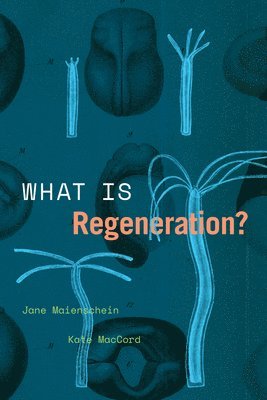
Two historians and philosophers of science offer an essential primer on the meaning and limits of regeneration. In punishment for his stealing fire, the Greek gods chained Prometheus to a rock, where every day an eagle plucked out his liver, and every night the liver regenerated. While Prometheus may be a figure of myth, scholars today ask whether ancient Greeks knew that the human liver does, in fact, have a special capacity to regenerate. Some organs and tissues can regenerate, while others cannot, and some organisms can regenerate more fully and more easily than others. Cut an earthworm in half, and two wiggly worms may confront you. Cut off the head of a hydra, and it may grow a new head. Cut off a human arm, and the human will be missing an arm. Why the differences? What are the limits of regeneration, and how, when, and why does it occur? In this book, historians and philosophers of science Jane Maienschein and Kate MacCord explore biological regeneration, delving into a topic of increasing interest in light of regenerative medicine, new tools in developmental and neurobiology, and the urgent need to understand and repair damage to ecosystems brought on by climate change. Looking across scales, from germ, nerve, and stem cells to individual organisms and complex systems, this short and accessible introduction poses a range of deep and provocative questions: What conditions allow some damaged microbiomes to regenerate where others do not? Why are forests following a fire said to regenerate sometimes but not always? And in the face of climate change in the era called the Anthropocene, can the planet regenerate to become healthy again, or will the global ecosystem collapse?
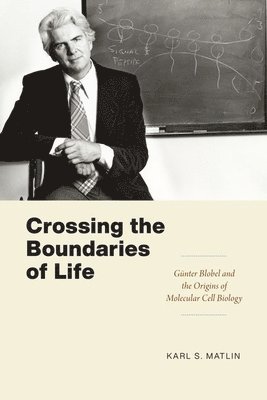
Crossing the Boundaries of Life
Günter Blobel and the Origins of Molecular Cell Biology
Inbunden, Engelska, 2022
996 kr
Skickas inom 7-10 vardagar
A close look at Günter Blobel’s transformative contributions to molecular cell biology.The difficulty of reconciling chemical mechanisms with the functions of whole living systems has plagued biologists since the development of cell theory in the nineteenth century. As Karl S. Matlin argues in Crossing the Boundaries of Life, it is no coincidence that this longstanding knot of scientific inquiry was loosened most meaningfully by the work of a cell biologist, the Nobel laureate Günter Blobel. In 1975, using an experimental setup that did not contain any cells at all, Blobel was able to target newly made proteins to cell membrane vesicles, enabling him to theorize how proteins in the cell distribute spatially, an idea he called the signal hypothesis. Over the next twenty years, Blobel and other scientists were able to dissect this mechanism into its precise molecular details. For elaborating his signal concept into a process he termed membrane topogenesis—the idea that each protein in the cell is synthesized with an "address" that directs the protein to its correct destination within the cell—Blobel was awarded the Nobel Prize in Physiology or Medicine in 1999.Matlin argues that Blobel’s investigative strategy and its subsequent application addressed a fundamental unresolved dilemma that had bedeviled biology from its very beginning—the relationship between structure and function—allowing biology to achieve mechanistic molecular explanations of biological phenomena. Crossing the Boundaries of Life thus uses Blobel’s research and life story to shed light on the importance of cell biology for twentieth-century science, illustrating how it propelled the development of adjacent disciplines like biochemistry and molecular biology.
Crossing the Boundaries of Life
Günter Blobel and the Origins of Molecular Cell Biology
Häftad, Engelska, 2022
284 kr
Skickas inom 7-10 vardagar
A close look at Günter Blobel’s transformative contributions to molecular cell biology.The difficulty of reconciling chemical mechanisms with the functions of whole living systems has plagued biologists since the development of cell theory in the nineteenth century. As Karl S. Matlin argues in Crossing the Boundaries of Life, it is no coincidence that this longstanding knot of scientific inquiry was loosened most meaningfully by the work of a cell biologist, the Nobel laureate Günter Blobel. In 1975, using an experimental setup that did not contain any cells at all, Blobel was able to target newly made proteins to cell membrane vesicles, enabling him to theorize how proteins in the cell distribute spatially, an idea he called the signal hypothesis. Over the next twenty years, Blobel and other scientists were able to dissect this mechanism into its precise molecular details. For elaborating his signal concept into a process he termed membrane topogenesis—the idea that each protein in the cell is synthesized with an "address" that directs the protein to its correct destination within the cell—Blobel was awarded the Nobel Prize in Physiology or Medicine in 1999.Matlin argues that Blobel’s investigative strategy and its subsequent application addressed a fundamental unresolved dilemma that had bedeviled biology from its very beginning—the relationship between structure and function—allowing biology to achieve mechanistic molecular explanations of biological phenomena. Crossing the Boundaries of Life thus uses Blobel’s research and life story to shed light on the importance of cell biology for twentieth-century science, illustrating how it propelled the development of adjacent disciplines like biochemistry and molecular biology.
165 kr
Skickas inom 7-10 vardagar
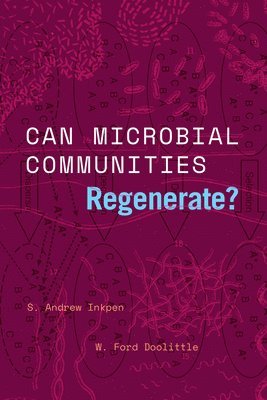
By investigating a simple question, a philosopher of science and a molecular biologist offer an accessible understanding of microbial communities and a motivating theory for future research in community ecology. Microorganisms, such as bacteria, are important determinants of health at the individual, ecosystem, and global levels. And yet many aspects of modern life, from the overuse of antibiotics to chemical spills and climate change, can have devastating, lasting impacts on the communities formed by microorganisms. Drawing on the latest scientific research and real-life examples such as attempts to reengineer these communities through microbial transplantation, the construction of synthetic communities of microorganisms, and the use of probiotics, this book explores how and why communities of microorganisms respond to disturbance, and what might lead to failure. It also unpacks related and interwoven philosophical questions: What is an organism? Can a community evolve by natural selection? How can we make sense of function and purpose in the natural world? How should we think about regeneration as a phenomenon that occurs at multiple biological scales? Provocative and nuanced, this primer offers an accessible conceptual and theoretical understanding of regeneration and evolution at the community level that will be essential across disciplines including philosophy of biology, conservation biology, microbiomics, medicine, evolutionary biology, and ecology.
Can Microbial Communities Regenerate?
Uniting Ecology and Evolutionary Biology
Inbunden, Engelska, 2022
758 kr
Skickas inom 7-10 vardagar
By investigating a simple question, a philosopher of science and a molecular biologist offer an accessible understanding of microbial communities and a motivating theory for future research in community ecology. Microorganisms, such as bacteria, are important determinants of health at the individual, ecosystem, and global levels. And yet many aspects of modern life, from the overuse of antibiotics to chemical spills and climate change, can have devastating, lasting impacts on the communities formed by microorganisms. Drawing on the latest scientific research and real-life examples such as attempts to reengineer these communities through microbial transplantation, the construction of synthetic communities of microorganisms, and the use of probiotics, this book explores how and why communities of microorganisms respond to disturbance, and what might lead to failure. It also unpacks related and interwoven philosophical questions: What is an organism? Can a community evolve by natural selection? How can we make sense of function and purpose in the natural world? How should we think about regeneration as a phenomenon that occurs at multiple biological scales? Provocative and nuanced, this primer offers an accessible conceptual and theoretical understanding of regeneration and evolution at the community level that will be essential across disciplines including philosophy of biology, conservation biology, microbiomics, medicine, evolutionary biology, and ecology.
790 kr
Skickas inom 7-10 vardagar
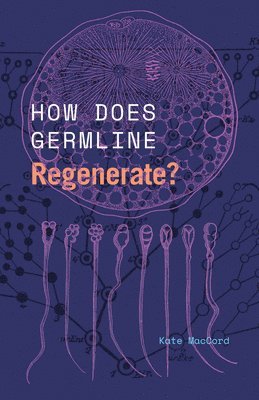
A concise primer that complicates a convenient truth in biology—the divide between germ and somatic cells—with far-reaching ethical and public policy ramifications. Scientists have long held that we have two kinds of cells—germ and soma. Make a change to germ cells—say using genome editing—and that change will appear in the cells of future generations. Somatic cells are “safe” after such tampering; modify your skin cells, and your future children’s skin cells will never know. And, while germ cells can give rise to new generations (including all of the somatic cells in a body), somatic cells can never become germ cells. How did scientists discover this relationship and distinction between somatic and germ cells—the so-called Weismann Barrier—and does it actually exist? Can somatic cells become germ cells in the way germ cells become somatic cells? That is, can germ cells regenerate from somatic cells even though conventional wisdom denies this possibility? Covering research from the late nineteenth century to the 2020s, historian and philosopher of science Kate MacCord explores how scientists came to understand and accept the dubious concept of the Weismann Barrier and what profound implications this convenient assumption has for research and policy, from genome editing to stem cell research, and much more.
213 kr
Skickas inom 7-10 vardagar
A concise primer that complicates a convenient truth in biology—the divide between germ and somatic cells—with far-reaching ethical and public policy ramifications. Scientists have long held that we have two kinds of cells—germ and soma. Make a change to germ cells—say using genome editing—and that change will appear in the cells of future generations. Somatic cells are “safe” after such tampering; modify your skin cells, and your future children’s skin cells will never know. And, while germ cells can give rise to new generations (including all of the somatic cells in a body), somatic cells can never become germ cells. How did scientists discover this relationship and distinction between somatic and germ cells—the so-called Weismann Barrier—and does it actually exist? Can somatic cells become germ cells in the way germ cells become somatic cells? That is, can germ cells regenerate from somatic cells even though conventional wisdom denies this possibility? Covering research from the late nineteenth century to the 2020s, historian and philosopher of science Kate MacCord explores how scientists came to understand and accept the dubious concept of the Weismann Barrier and what profound implications this convenient assumption has for research and policy, from genome editing to stem cell research, and much more.