Law, Crime and Culture – serie
Visar alla böcker i serien Law, Crime and Culture. Handla med fri frakt och snabb leverans.
6 produkter
6 produkter
Honour-Based Violence and Forced Marriages
Community and Restorative Practices in Europe
Inbunden, Engelska, 2022
1 944 kr
Skickas inom 10-15 vardagar
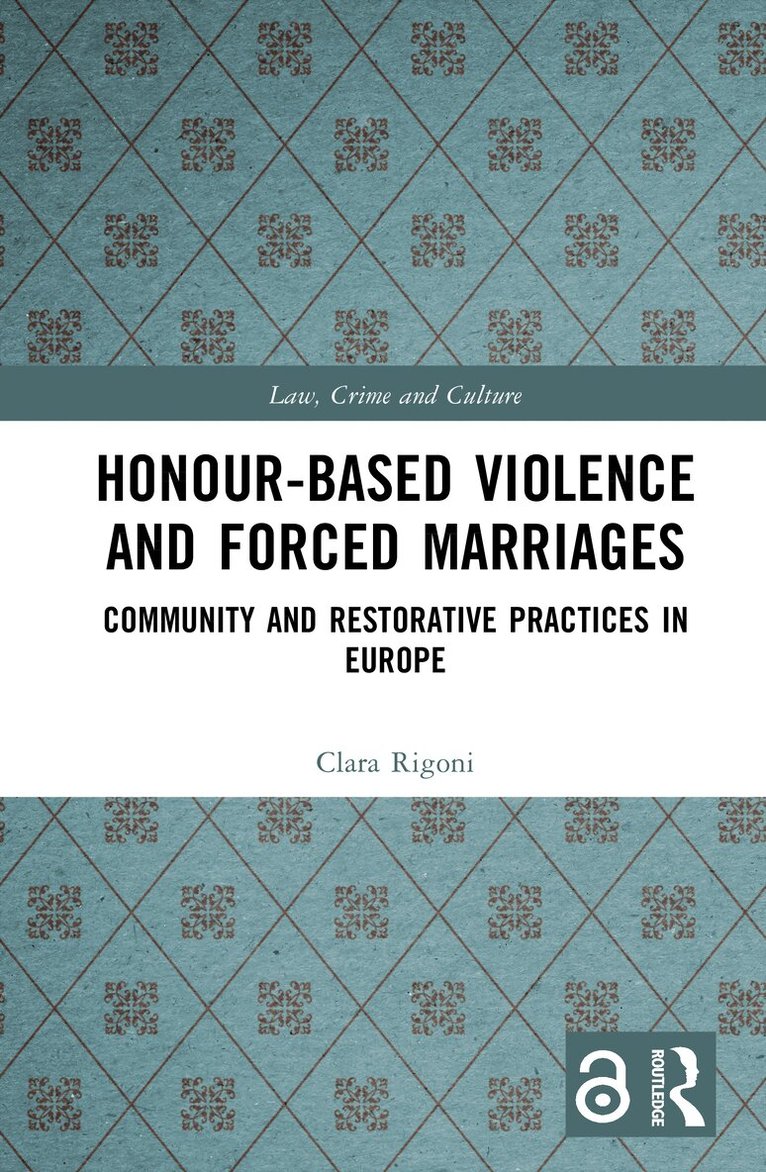
In the last 20 years, the related phenomena of honour-based violence and forced marriages have received increasing attention at the international and European level. Punitive responses towards this type of violence have been adopted, including ad hoc criminalisation and legislation containing direct references to the concepts of honour, culture, and tradition. However, criminal law-based responses present several shortcomings and have often disregarded the specific needs that victims of such crimes might encounter. This book examines the possibility of using alternative programmes to address cases of honour-based violence and forced marriages. After reviewing previous existing literature, it presents new empirical data. Introducing a case study from the United Kingdom, the book recalls the debate on Sharia Councils and the Muslim Arbitration Tribunal, but examines instead other community-based secular programmes. By comparison, a study from Norway on the work of the National Mediation Agency and the so-called Cross-Cultural Transformative Mediation model is investigated as part of a larger multi-agency approach. Ultimately, in an attempt to reconcile pluralism and the rule of law, the book proposes effective ways to tackle honour crimes based on cooperation and individualisation of the proceedings, and capable of improving women’s access to justice and reducing secondary victimisation. The book will be essential reading for researchers and academics in Law, Criminology, Sociology, and Anthropology and for policy-makers and practitioners working with honour-based violence cases.
Honour-Based Violence and Forced Marriages
Community and Restorative Practices in Europe
Häftad, Engelska, 2024
531 kr
Skickas inom 10-15 vardagar
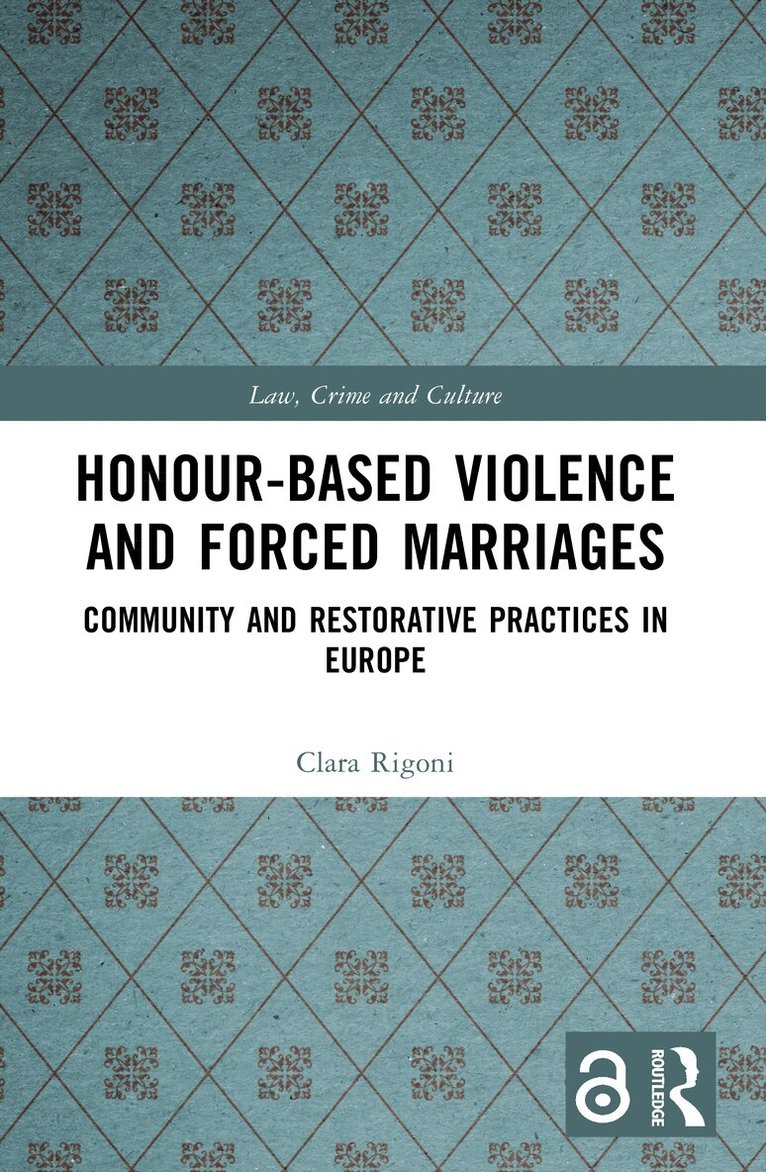
In the last 20 years, the related phenomena of honour-based violence and forced marriages have received increasing attention at the international and European level. Punitive responses towards this type of violence have been adopted, including ad hoc criminalisation and legislation containing direct references to the concepts of honour, culture, and tradition. However, criminal law-based responses present several shortcomings and have often disregarded the specific needs that victims of such crimes might encounter. This book examines the possibility of using alternative programmes to address cases of honour-based violence and forced marriages. After reviewing previous existing literature, it presents new empirical data. Introducing a case study from the United Kingdom, the book recalls the debate on Sharia Councils and the Muslim Arbitration Tribunal, but examines instead other community-based secular programmes. By comparison, a study from Norway on the work of the National Mediation Agency and the so-called Cross-Cultural Transformative Mediation model is investigated as part of a larger multi-agency approach. Ultimately, in an attempt to reconcile pluralism and the rule of law, the book proposes effective ways to tackle honour crimes based on cooperation and individualisation of the proceedings, and capable of improving women’s access to justice and reducing secondary victimisation. The book will be essential reading for researchers and academics in Law, Criminology, Sociology, and Anthropology and for policy-makers and practitioners working with honour-based violence cases.
569 kr
Skickas inom 10-15 vardagar
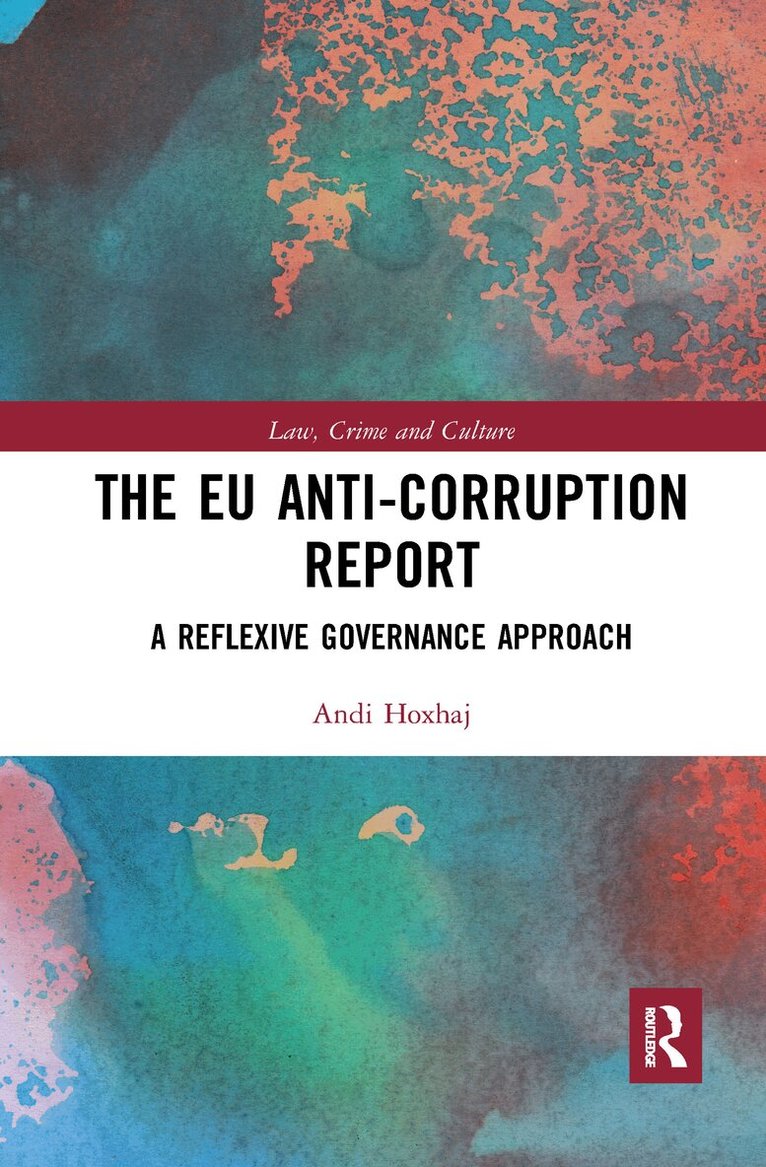
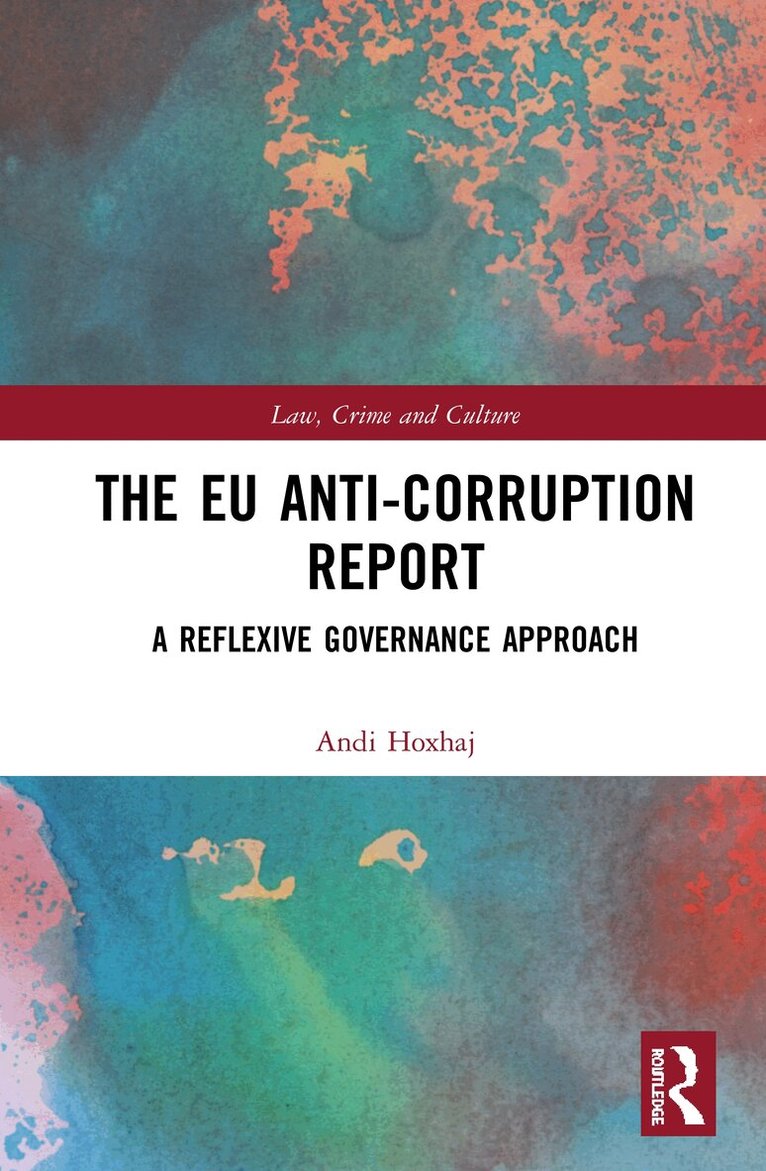
This book analyses the development of anti-corruption as a policy field in the European Union with a particular focus on the EU Anti-Corruption Report. It reconstructs the origins of anti-corruption policy in the 1990s when the EU started to recognise corruption as a serious crime with a cross-border dimension. It also analyses the processes surrounding the downfall of the Santer Commission on charges of corruption in 1999 and the enlargement of the EU. This incorporation of transitional new Member States was accompanied by a number of specific measures, instruments and monitoring mechanisms to combat corruption at the supranational level, finally leading to the introduction of the EU-wide Anti-Corruption Report in 2014. The book presents an in-depth analysis of its implementation, abandonment and the way forward under the European Semester as the new instrument for achieving EU anti-corruption reforms. It offers a new interpretation of the Report as a form of reflexive governance that operates at multiple levels and involves not only the European institutions and national governments, but also the role of civil society actors in the process of developing anti-corruption policy. It applies the theory of reflexive governance in analysing the impact of the Report in the UK, Romania and Albania, including the involvement of non-state actors in anti-corruption policy making in these countries. The book concludes with a discussion on how future EU Anti-Corruption policy can make use of reflexive governance and offers recommendations to enhance anti-corruption policies of the EU, the Member States and Candidate States.
619 kr
Skickas inom 10-15 vardagar
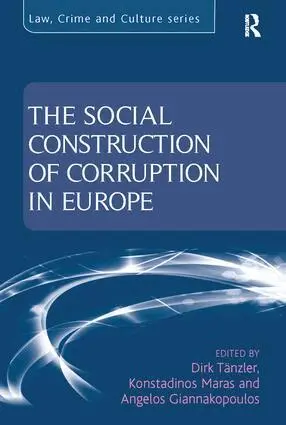
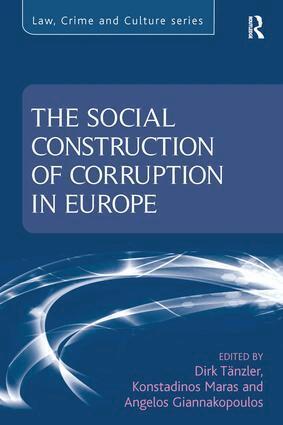
The volume demonstrates the suitability of the theory of social constructivism in portraying and analyzing the diversity of the phenomenon of corruption. The approach of social constructivism taken in this volume is able to reconstruct the 'construction of corruption' both from a societal perspective, by assessing it as generally accepted or tolerated behaviour in more or less standardized rule-governed social situations, and from the perspective of actors who perceive corrupt behaviour as problem solving in everyday life. The volume proves the usefulness of a social construction perspective for empirical research. It contains case studies of social definitions of corruption in eleven European countries that contribute in different ways to establishing a grounded theory of the phenomenon of corruption.
1 944 kr
Skickas inom 10-15 vardagar
This book analyses the development of anti-corruption as a policy field in the European Union with a particular focus on the EU Anti-Corruption Report. It reconstructs the origins of anti-corruption policy in the 1990s when the EU started to recognise corruption as a serious crime with a cross-border dimension. It also analyses the processes surrounding the downfall of the Santer Commission on charges of corruption in 1999 and the enlargement of the EU. This incorporation of transitional new Member States was accompanied by a number of specific measures, instruments and monitoring mechanisms to combat corruption at the supranational level, finally leading to the introduction of the EU-wide Anti-Corruption Report in 2014. The book presents an in-depth analysis of its implementation, abandonment and the way forward under the European Semester as the new instrument for achieving EU anti-corruption reforms. It offers a new interpretation of the Report as a form of reflexive governance that operates at multiple levels and involves not only the European institutions and national governments, but also the role of civil society actors in the process of developing anti-corruption policy. It applies the theory of reflexive governance in analysing the impact of the Report in the UK, Romania and Albania, including the involvement of non-state actors in anti-corruption policy making in these countries. The book concludes with a discussion on how future EU Anti-Corruption policy can make use of reflexive governance and offers recommendations to enhance anti-corruption policies of the EU, the Member States and Candidate States.
2 006 kr
Skickas inom 10-15 vardagar
The volume demonstrates the suitability of the theory of social constructivism in portraying and analyzing the diversity of the phenomenon of corruption. The approach of social constructivism taken in this volume is able to reconstruct the 'construction of corruption' both from a societal perspective, by assessing it as generally accepted or tolerated behaviour in more or less standardized rule-governed social situations, and from the perspective of actors who perceive corrupt behaviour as problem solving in everyday life. The volume proves the usefulness of a social construction perspective for empirical research. It contains case studies of social definitions of corruption in eleven European countries that contribute in different ways to establishing a grounded theory of the phenomenon of corruption.