Debates in Psychology - Böcker
Visar alla böcker i serien Debates in Psychology. Handla med fri frakt och snabb leverans.
5 produkter
5 produkter
1 570 kr
Skickas inom 3-6 vardagar
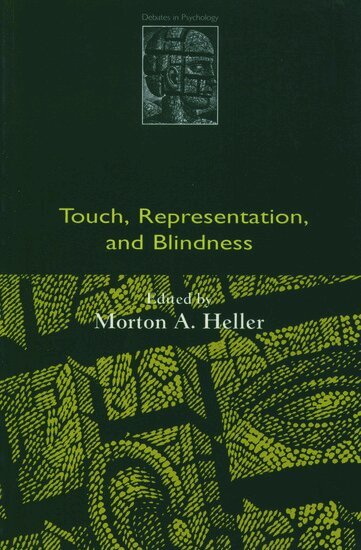
Psychological studies of touch and blindness have been fraught with controversy. Within this field there remains an important theoretical divide. Many researchers have taken a cognitive approach to the study of touch and blindness, relating these to higher order processes, such as memory and concept formation. Others adopt a theoretical perspective, arguing that it not necessary to consider the 'internal representation' of the stimuli, when investigating touch - thus people make use of information from the physical biomechanical properties of their limbs as they assess the physical properties of objects. In addition, psychologists differ in the relative importance they place on the modality of sensory stimulation for subsequent perceptual experiences. Some psychologists argue that touch can do many of the things that are accomplished by vision, and claim that the mode of sensory stimulation is not critically important for perception, arguing that much information can be obtained through non-visual modalities. Others suggest that there are important consequences of a lack of visual experience, arguing for the importance of multiple forms of sensory input for conceptual development. New to the Debates in Psychology series, Touch, Representation, and Blindness brings together the leading investigators in these areas, each presenting the evidence for their side of the debate. An introductory chapter sets the theoretical and historical stage for the debate, and a concluding chapter draws together the different views and ideas set forth by the contributors, summarizing and resolving the discussion.
1 625 kr
Skickas inom 7-10 vardagar
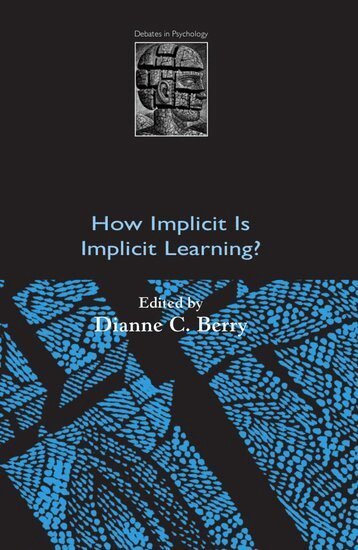
Implicit learning is said to occur when a person learns about a complex stimulus without necessarily intending to do so, and in such a way that the resulting knowledge is difficult to express. Over the last 30 years, a number of studies have claimed to show evidence of implicit learning. In more recent years, however, considerable debate has arisen over the extent to which cognitive tasks can in fact be learned implicitly. Much of the debate has centred on the questions of how unconscious, and how abstract, is implicitly acquired knowledge? The aim of this book is to provide students and researchers with a self-contained and balanced summary of the various theoretical and empirical positions that are currently shaping this exciting area of research.
1 842 kr
Skickas inom 7-10 vardagar
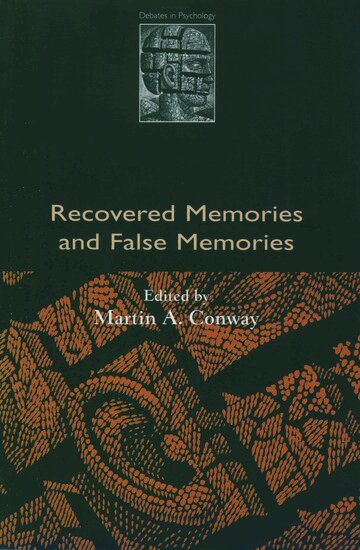
The question of whether memories can be lost, particularly as a result of trauma, and then "recovered" through psychotherapy has polarised the field of memory research. This is the first volume to bring together leading memory researchers and clinicians with the aiming of facilitating a resolution to this question. The volume offers a unique and timely summary of the theories of memory recovery, and how false memories may be created. Some of the first research relating to the phenomenal characteristics of memory recovered is reported in detail, suggesting important avenues for new research. Theories of autobiographical memory, implicit memory, reminiscence, and the effects of repeated recall on memory are included. Recovered memories and false memories provides the most current and authoritative thinking in this area, and will be an essential sourcebook for memory researchers and psychotherapists.
1 471 kr
Skickas inom 5-8 vardagar
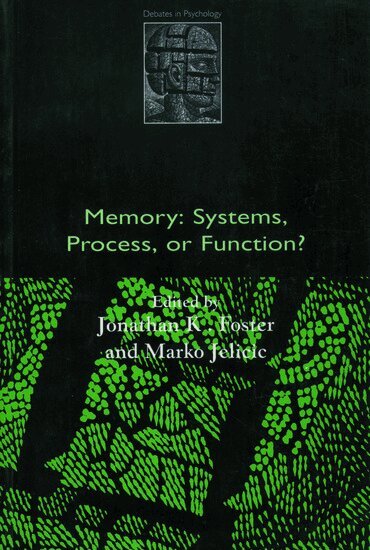
Memory represents a key psychological process. It allows us to recall things from the past which may have taken place hours, days, months, or even many years ago. Our memories are intrinsically personal, subjective, and internal, yet without the primary capacity of memory, other important activities such as speech, perception, concept formation, and reasoning would be impossible. The range of different aspects of memory is huge, from our vocabulary and knowledge about language and the world to our personal histories, skills such as walking and talking, and the more simple memory capacities found in lower animals. Amongst the diversity of memory processes, the principal focus in this volume is the long-term representation of complex associative human memory. This refers to the permanently stored representation of individual items and events. The books in the Oxford Debates in Psychology series aim to provide students and researchers with a stimulating, self-contained, and balanced summary of the various theoretical and empirical positions that shape the most controversial and contested areas of research. Memory: Systems, Process, or Function? presents a a debate about the cognitive architecture of the human long-term memory system. The individual chapter authors represent some of the leading researchers and theorists in the field. Each chapter concentates upon the central theoretical question of how long-term memory can best be conceptualized. In particular, is long-term memory best regarded as comprising multiple independent systems (each with distict properties and attributes), as a processing framework which can be tapped via different levels of processing, or as a complex fnction which can be used in a flexible and task-appropriate manner? The authors of each chapter present their own answers to this and related research questions. The book concludes with an integrated synopsis and appraisal of the different facets of this fascinating debate.
1 156 kr
Skickas inom 3-6 vardagar
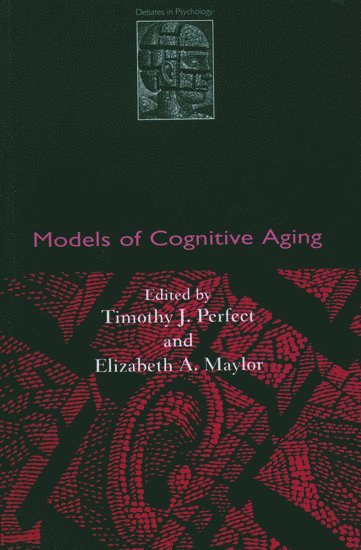
We live in an ageing society, where people are living longer, and where decreases in the birth rate mean that the proportion of the population above retirement age is steadily increasing. An ageing population has considerable implications for health services and care provision. Consequently there is a growing interest among researchers, medical practitioners, and policy makers in older adults, their capabilities, and the changes in their cognitive functioning. This book offers an up-to-the-minute account of the latest methodological and theoretical issues in cognitive ageing. Part of the Debates in Psychology series, it sets out the arguments surrounding the currently controversial questions in cognitive ageing. What is the appropriate methodology for understanding cognitive change? How many factors are necessary to understand the patterns of age-related change? What might these factors be? The topics and arguments are explored in a series of chapters by the leading researchers in the field. Each contributor offers their view of how cognitive ageing can be best understood, and together they cover a broad range of cognitive functions including language use, cognitive slowing, and memory loss.