Deltas of the World – serie
Visar alla böcker i serien Deltas of the World. Handla med fri frakt och snabb leverans.
17 produkter
17 produkter
Inbunden, Engelska, 2023
2 716 kr
Skickas inom 10-15 vardagar
This book provides accurate and integrated information about land resources especially with the accelerated progress of information technology to help Egypt and similar countries to achieve the country sustainable development goals in the field of agriculture and natural resources. The Egyptian National sustainable development plans mainly aim to conserve the arable lands in the Nile Delta and the Nile Valley, in addition to the oases and desert fringes. Moreover, increasing land productivity is a vital national goal for filling the food gap. Consequently, providing accurate and integrated information about land natural resources using the recent technologies such as satellite data/images and geoinformatics techniques. Such information would be a base for planning, decision making and research needs all over the world due to the importance of Egypt as the biggest and leading country in the MENA regions.The book provides land natural resources database as a platform, upon which additional thematic information can be added in the future to serve multi approached sustainable development. The book highlights the usage of digital information in monitoring urban planning and encroachment, in addition to soil and land capability classification. Moreover, networks of irrigation/drainages, railways, and utilities are added for a wide management range. Various available information systems were employed to initiate the targeted land resources database (e.g., ArcGIS, ERDAS IMAGINE and ENVI). Data of previous soil survey projects were the basis for the created digital database including High Dam Soil Survey, Soil map of Egypt and Land Master Plane.The Digital Elevation Model (DEM) was elaborated using SRTM space images, in addition to spot heights and contour lines derived from the topographic maps (scale 1:50,000) produced by the Egyptian Survey Authority (ESA). The resulted thematic layers were incorporated in the created GIS land resources database. The book is a unique and a great source of information and knowledge for all researchers around the globe particularly for MENA regions. Researchers, graduate students, the policy planners and decision making will find this book very useful for them. are most people who could benefit from the book. We believe the book will be an added value to the existing information and knowledge.
Häftad, Engelska, 2024
1 958 kr
Skickas inom 10-15 vardagar
This book provides accurate and integrated information about land resources especially with the accelerated progress of information technology to help Egypt and similar countries to achieve the country sustainable development goals in the field of agriculture and natural resources. The Egyptian National sustainable development plans mainly aim to conserve the arable lands in the Nile Delta and the Nile Valley, in addition to the oases and desert fringes. Moreover, increasing land productivity is a vital national goal for filling the food gap. Consequently, providing accurate and integrated information about land natural resources using the recent technologies such as satellite data/images and geoinformatics techniques. Such information would be a base for planning, decision making and research needs all over the world due to the importance of Egypt as the biggest and leading country in the MENA regions.The book provides land natural resources database as a platform, upon which additional thematic information can be added in the future to serve multi approached sustainable development. The book highlights the usage of digital information in monitoring urban planning and encroachment, in addition to soil and land capability classification. Moreover, networks of irrigation/drainages, railways, and utilities are added for a wide management range. Various available information systems were employed to initiate the targeted land resources database (e.g., ArcGIS, ERDAS IMAGINE and ENVI). Data of previous soil survey projects were the basis for the created digital database including High Dam Soil Survey, Soil map of Egypt and Land Master Plane.The Digital Elevation Model (DEM) was elaborated using SRTM space images, in addition to spot heights and contour lines derived from the topographic maps (scale 1:50,000) produced by the Egyptian Survey Authority (ESA). The resulted thematic layers were incorporated in the created GIS land resources database. The book is a unique and a great source of information and knowledge for all researchers around the globe particularly for MENA regions. Researchers, graduate students, the policy planners and decision making will find this book very useful for them. are most people who could benefit from the book. We believe the book will be an added value to the existing information and knowledge.
Inbunden, Engelska, 2024
1 525 kr
Skickas inom 10-15 vardagar
“This book offers a comprehensive exploration of sustainable solid waste management practices in delta regions worldwide. With attention to detail, this work presents a systematic review, illuminating case studies, original research, and insightful meta-analyses tailored to address the unique challenges faced by delta environments. Home to over half a billion people, or approximately 7% of the global population, delta regions are dynamic ecological and social landscapes, despite accounting for only 1% of the world's land area. Yet, they play a pivotal role in national economies. Given the significant size and density of populations in these regions, understanding solid waste generation patterns, trends, and impacts is essential for global sustainability efforts. By focusing on deltaic regions, we aim to provide essential insights into effective policy planning and advancements in social and ecological sustainability. Explore a diverse array of topics, including the bioconversion of food waste into environmentally friendly compounds, sustainable production and disposal practices to address water quality concerns, and innovative waste management applications to combat channel clogging and flooding in delta districts. Delve into best practices for managing climate-related flood risks, addressing urban responses, and tackling environmental pollution associated with unmanaged waste disposal in delta catchments. Additionally, gain valuable insights into the regulatory framework guiding waste management practices, particularly in delta regions facing significant plastic pollution challenges. This book navigates the complexities of solid waste management in delta regions, paving the way for a more sustainable future.”
Häftad, Engelska, 2025
1 525 kr
Skickas inom 10-15 vardagar
“This book offers a comprehensive exploration of sustainable solid waste management practices in delta regions worldwide. With attention to detail, this work presents a systematic review, illuminating case studies, original research, and insightful meta-analyses tailored to address the unique challenges faced by delta environments. Home to over half a billion people, or approximately 7% of the global population, delta regions are dynamic ecological and social landscapes, despite accounting for only 1% of the world's land area. Yet, they play a pivotal role in national economies. Given the significant size and density of populations in these regions, understanding solid waste generation patterns, trends, and impacts is essential for global sustainability efforts. By focusing on deltaic regions, we aim to provide essential insights into effective policy planning and advancements in social and ecological sustainability. Explore a diverse array of topics, including the bioconversion of food waste into environmentally friendly compounds, sustainable production and disposal practices to address water quality concerns, and innovative waste management applications to combat channel clogging and flooding in delta districts. Delve into best practices for managing climate-related flood risks, addressing urban responses, and tackling environmental pollution associated with unmanaged waste disposal in delta catchments. Additionally, gain valuable insights into the regulatory framework guiding waste management practices, particularly in delta regions facing significant plastic pollution challenges. This book navigates the complexities of solid waste management in delta regions, paving the way for a more sustainable future.”
Inbunden, Engelska, 2025
1 742 kr
Skickas inom 10-15 vardagar
This book is essential for understanding the Nile Delta, recognized as one of the world's most vulnerable deltas due to population growth and the impacts of sea level rise (SLR). Spanning approximately 38,000 square kilometers, the Nile Delta is the largest delta globally, warranting an in-depth exploration of its geology, hydrocarbon potential, and water resources. This comprehensive volume provides detailed geological insights into both the Recent Nile Delta and the ancient deposits of the El-Fayoum Nile Delta. It highlights the subsurface lithostratigraphic rock units, elucidating possible depositional environments and the distribution and extent of water and hydrocarbon reservoirs. Additionally, the book examines the structural elements that influenced sedimentary rock deposition, supported by well logs and seismic data. For the first time, the book presents critical geological information on both onshore and offshore gas reservoirs, assessing the Nile Delta's hydrocarbon production capacity, organic petrography, and the geochemical characterization of its resources. Employing a multidisciplinary approach that integrates geological, hydrogeological, numerical, and machine learning modeling with geophysical data, this book assesses and monitors the quality and quantity of natural resources for sustainable management in the Nile Delta, Egypt. This book crucially addresses the natural resource challenges posed by climatic changes and anthropogenic stressors, while recommending sustainable practices for development. It aligns with several Sustainable Development Goals (SDGs), including SDG 6: Clean Water and Sanitation, SDG 7: Affordable and Clean Energy, SDG 11: Sustainable Cities and Communities, SDG 13: Climate Action, and SDG 15: Life on Land. This guide is invaluable for a diverse audience, including geologists, hydrologists, researchers, graduate students, stakeholders, policy planners, and decision-makers interested in the Nile Delta's natural resources. It fosters a deeper understanding of the connections between geological processes and resource availability, aiming to support the growing population through the Food-Energy-Water nexus while contributing to global sustainable development goals in arid and semi-arid regions.
Inbunden, Engelska, 2026
1 925 kr
Kommande
This book provides in-depth technical insights into water resources management, quality assessment, and modeling in India’s Delta region, offering strategies to minimize losses, maximize benefits, and protect the environment. It emphasizes the critical roles of science, technology, and innovation in achieving sustainable water resource management. The book addresses key challenges in adopting sustainable practices and infrastructure regulations, with a particular focus on wastewater quality assessment and modeling. It introduces innovative programs designed to enhance wastewater treatment efficiency and reclaim treated water for irrigation, considering climate change impacts. By engaging scientific, industrial, and community stakeholders, the book fosters collaboration across disciplines, uniting researchers and professionals to develop practical solutions that benefit all stakeholders. Applications span facility management, pandemic response, urban wastewater treatment and reuse, and agricultural practices, providing a multidisciplinary perspective. Written by experts, the book serves as an essential resource for researchers, industrialists, policy makers, water engineers, and others interested in sustainable water resource management and reuse. This comprehensive resource offers valuable knowledge for academic and professional audiences, promoting innovation and actionable solutions for water challenges in the Delta region.
Inbunden, Engelska, 2026
1 734 kr
Skickas inom 5-8 vardagar
This book offers a comprehensive examination of nature-based solutions (NbS) as sustainable, cost-effective, and community-centered approaches to tackling environmental and socio-economic challenges in India’s vulnerable delta regions. Focusing on key ecosystems such as the Ganga-Brahmaputra, Mahanadi, Krishna-Godavari, and Cauvery deltas, it highlights how integrating natural processes into planning and policy can enhance climate resilience, restore ecological integrity, and support local livelihoods. India’s deltaic zones are ecological hotspots and home to millions, yet they are increasingly threatened by climate change, sea-level rise, urban expansion, and unsustainable land use. Through applied research, case studies, and policy analysis, this book illustrates how nature-based strategies - such as mangrove restoration, wetland conservation, river rehabilitation, and sustainable agriculture - can reduce disaster risk, improve water security, and protect biodiversity. Key themes include the science and implementation of NbS, delta-specific climate vulnerabilities, ecosystem services, participatory planning, climate finance, and governance mechanisms. The book also addresses the role of indigenous and local knowledge, urban delta challenges, and pathways for mainstreaming NbS into national and sub-national policy frameworks. With contributions from experts across academia, government, and international development, it combines theoretical insight with practical guidance. By weaving interdisciplinary perspectives with grounded examples from Indian deltas, this book not only informs but also encourages action toward adaptive, inclusive, and ecologically sound development. This book is essential reading for students, researchers, policymakers, practitioners, and NGOs working in climate adaptation, disaster risk reduction, environmental planning, and sustainable development.
Inbunden, Engelska, 2026
1 925 kr
Kommande
This book offers technical insights into the application of remote sensing and GIS in water resources management, simulation, and modeling in India’s Delta region. It outlines strategies to minimize losses, maximize benefits, and protect the environment. The critical roles of science, technology, and innovation in achieving sustainable water resource management are also discussed.Key challenges in implementing sustainable practices and infrastructure regulations are addressed, with a focus on remote sensing and GIS applications. The book presents innovative programs to advance sustainable water management and proposes practical solutions through collaboration with scientific, industrial, and community stakeholders, especially in the context of climate change impacts.Applications include facility management, pandemic response, urban wastewater treatment and reuse, and agriculture. Authored by experts, this book offers diverse perspectives, supporting readers in exploring the multidisciplinary connections between these fields. It is an invaluable resource for researchers, professionals, policy makers, and engineers involved in water resources assessment, simulation, and management.This comprehensive guide aims to foster innovation and actionable solutions for water management challenges, appealing to a wide range of academic and professional audiences.
Inbunden, Engelska, 2026
1 925 kr
Skickas inom 11-20 vardagar
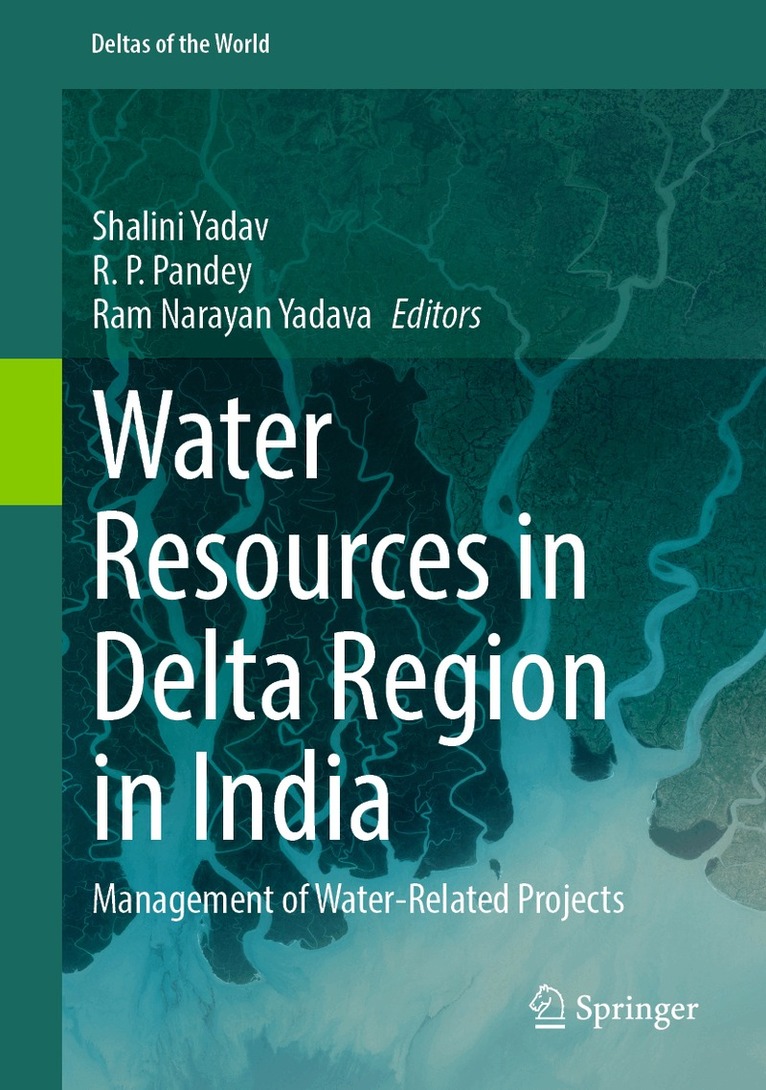
This book provides technical information on management of water resources project in delta region in India, including strategies to be adopted to minimize the losses and maximize the benefits, as well as protecting the environment. In addition, it discusses the crucial parts that science, technology, and innovation play in the formulation, implementation, and administration of sustainable water resources management in delta region in India.The book highlights the challenges that must be overcome to adopt sustainable water resources management and infrastructure regulations in the delta region. Also, it delves into the core concepts of wastewater quality assessment and modeling.This book contains a program that has been created to enable sustainable water management innovation and contributes significantly to the implementation of practical solutions and innovative tools by interacting with a multitude of scientific, industrial, and associative stakeholders to enhance the efficiency of wastewater treatment facilities to reclaim treated water for irrigation in light of the effects of climate change. By effectively amalgamating individuals from various sectors, encompassing specialized research in distinct domains and urban services that frequently need more cohesion within establishments, this initiative accomplishes the unification of researchers and professionals, fostering interaction and fortifying the synergies derived from their diverse trades and expertise. It aims to assist the stakeholders of sustainable water resources management, quality assessment, and modeling. It explores how these concepts can be modified to fit a variety of contexts and uses. Therefore, the book is written by the experts who deal with the water resources management, quality assessment, treatment, and modeling. It presents a plethora of information and perspectives that can aid individuals aiming to delve deeper into the complex interconnections among these multidisciplinary fields, rendering it an indispensable resource for those participating in corresponding academic endeavors and research initiatives.
Inbunden, Engelska, 2026
1 851 kr
Skickas inom 10-15 vardagar
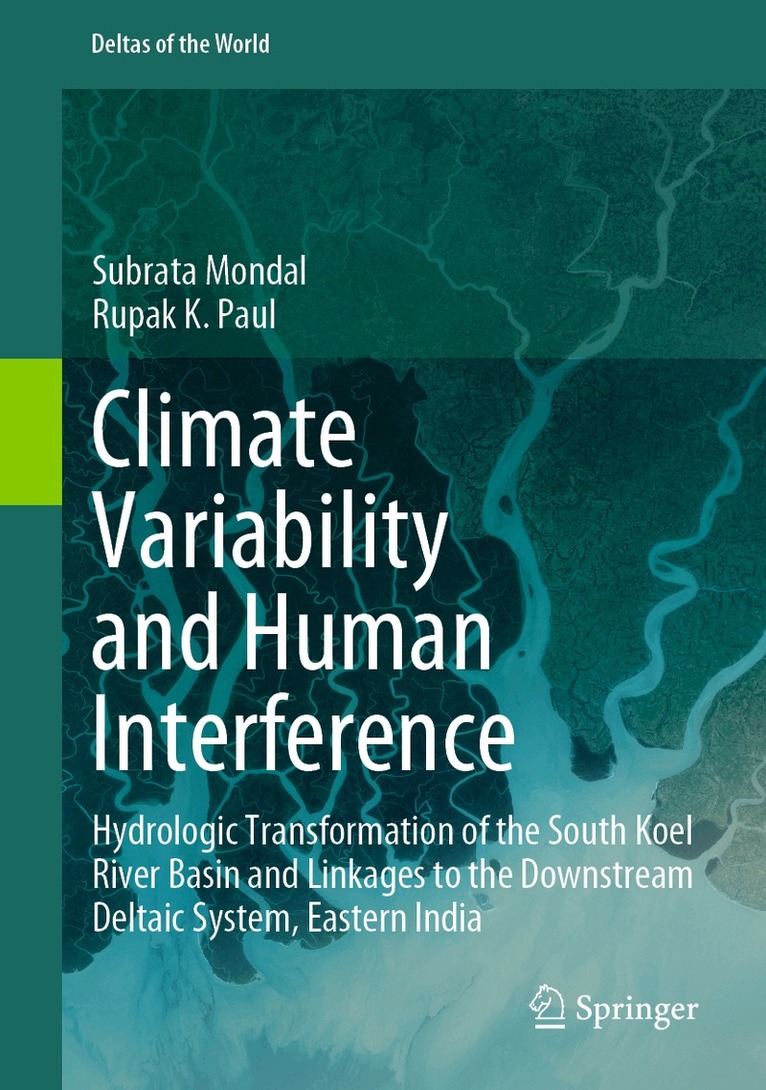
This book presents a focused analysis of how climate variability and human interference reshape runoff behavior in the monsoon-influenced South Koel River Basin of Eastern India. Employing geospatial techniques, SWAT-based hydrological simulation, and statistical analyses, it provides an empirical understanding of how rainfall and land use and land cover dynamics influence hydrologic processes and runoff alteration in the basin.The study analyzes temporal variations in rainfall and runoff using methods such as the Buishand U and Range tests, Standard Normal Homogeneity, Pettitt, Mann-Kendall, Modified Mann-Kendall, and Sequential Mann-Kendall tests. It distinguishes the impacts of climate variability and land use/land cover (LULC) change through simulation-based attribution. Additionally, it evaluates the sensitivity of LULC components - forest, agriculture, and built-up areas - on runoff using one-way ANCOVA, while assessing upstream–downstream hydrologic connectivity and its implications for the Brahmani–Baitarani deltaic system through changes in flow, sediment, and nutrient fluxes.Concluding with key scientific insights and management recommendations, the volume highlights basin-specific vulnerabilities and offers a decision-support framework for sustainable water governance. It serves as a valuable reference for geographers, hydrologists, environmental scientists, policy planners, and postgraduate researchers engaged in studies of climate, land use and land cover, and runoff interactions.
Inbunden, Engelska, 2026
1 925 kr
Kommande
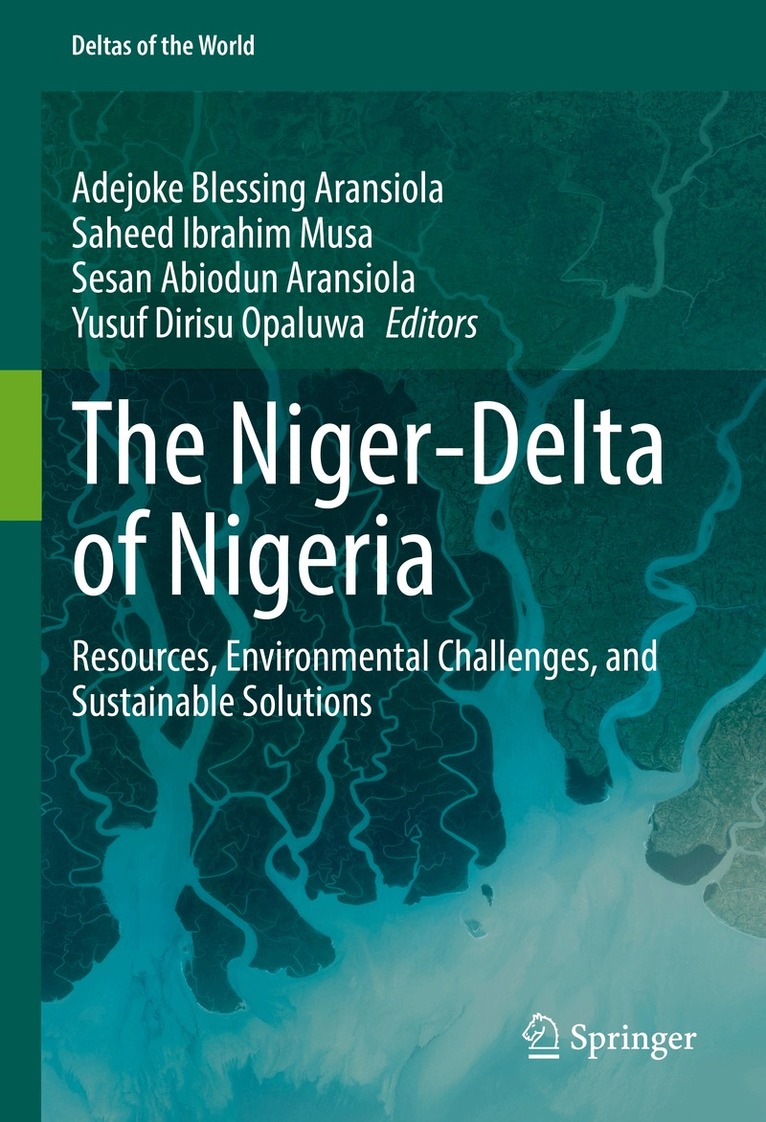
This book provides a comprehensive and forward-looking analysis of the Niger Delta - its geography, natural wealth, environmental challenges, and sustainable future. It traces the region’s geography, climate, and indigenous history, highlighting the lasting impacts of colonialism and intensive resource extraction. The Delta’s rich reserves of oil, gas, fisheries, and forests are examined alongside critical issues of pollution, deforestation, and climate change, as well as governance, resource control, and conservation efforts. Further chapters explore pollution and remediation - addressing oil spills, soil and water contamination, and the role of nanotechnology, biotechnology, and community-driven restoration. The final section looks ahead, presenting innovative strategies for sustainable management, including smart delta technologies, AI, GIS, and microbial remediation. Balancing scientific insight with policy relevance, this book is essential reading for researchers, policymakers, and anyone concerned with the Niger Delta’s environmental and economic resilience.
Inbunden, Engelska, 2026
1 851 kr
Skickas inom 10-15 vardagar
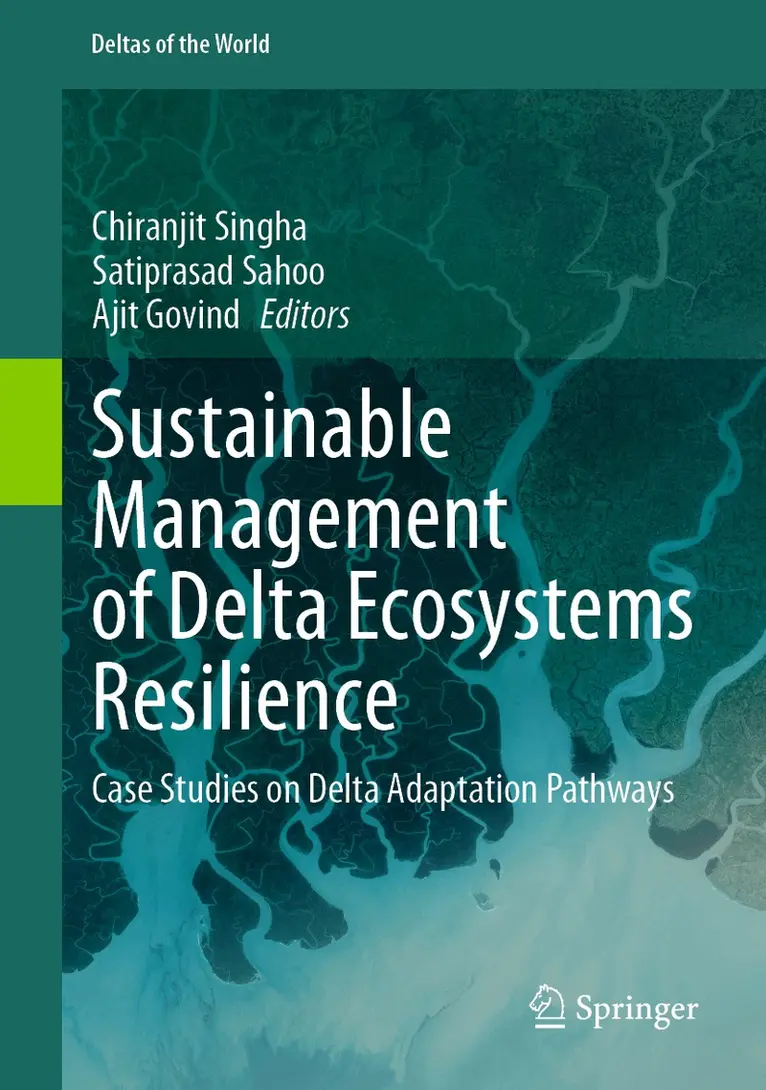
This book bridges the gap between research, practice, and policy by offering practical insights and evidence-based solutions. It provides a comprehensive guide to addressing the pressing challenges posed by climate change and extensive anthropogenic activities on the health of global delta ecosystems. Through in-depth analysis, the book examines delta ecosystem resiliency, sustainable practices, and strategies for restoring and safeguarding natural resources. The book underscores the critical importance of studying rivers for their resilience, emphasizing the biophysical aspects of riverine landscapes and their interactions with ecosystems. It highlights how urbanization, groundwater extraction, agricultural intensification, channel regulation, and upstream activities like water withdrawals, diversion, and sediment trapping combine with coastal hazards - such as sea level rise, salinity intrusion, and hurricanes - to jeopardize delta social-ecological systems. Modern geospatial technologies play a prominent role, with discussions on data mining, analysis, modeling, assessment, and visualization techniques. The book explores appropriate management strategies and cutting-edge approaches to delta health management, leveraging open-source software, statistical programming, modeling platforms, and artificial intelligence. These strategies aim to address the multifaceted challenges of delta management while contributing to multiple Sustainable Development Goals (SDGs), including SDG2, SDG6, SDG13, SDG14, SDG15, and SDG17. Organized into thematic chapters, the book combines theoretical frameworks, empirical research, and actionable recommendations. It integrates data from diverse delta regions to provide a holistic perspective, enhanced by diagrams, charts, maps, and case studies for improved understanding and practical application. This approach ensures the book serves as both a foundational reference and an inspirational guide for fostering resilient and sustainable delta ecosystems capable of withstanding climate uncertainties and human-induced pressures. The book is a valuable resource for researchers, policymakers, administrators, educators, local communities, farmers, and practitioners. It offers innovative practices and adaptive strategies to promote sustainable delta ecosystem resilience in the face of climate challenges and extensive anthropogenic activities.
Inbunden, Engelska, 2026
1 851 kr
Skickas inom 10-15 vardagar
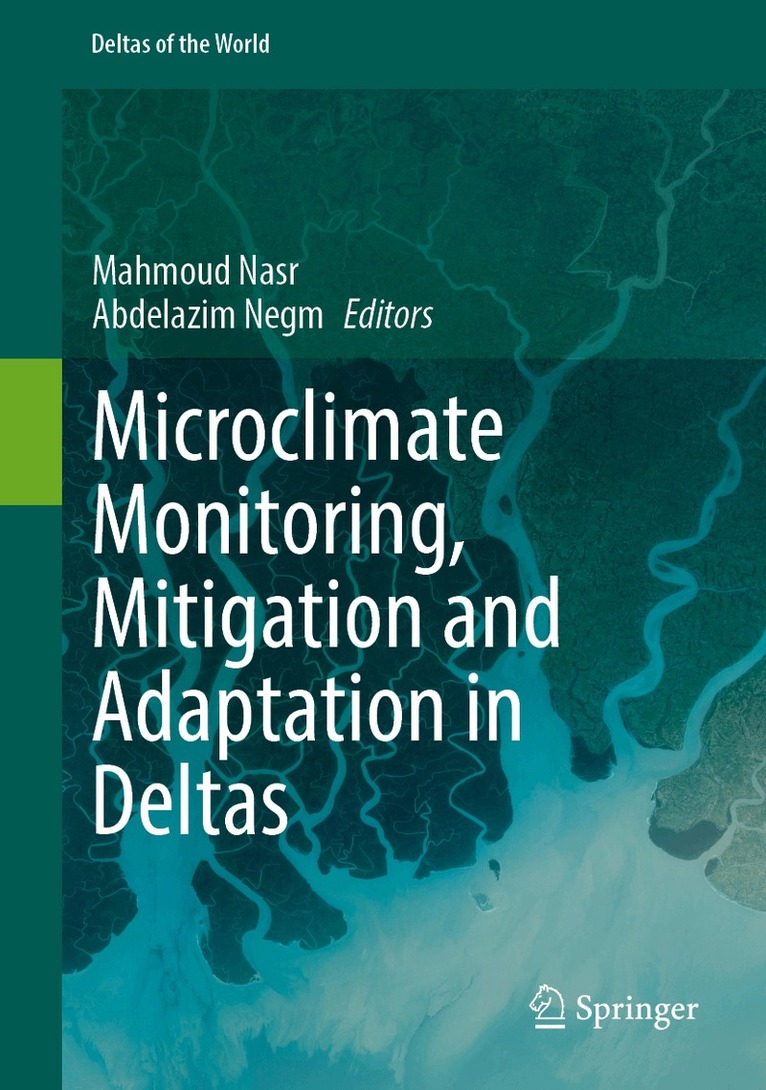
This book explores microclimate assessment and monitoring in Delta regions, offering new methods and techniques to enhance quality of life, biodiversity, and climate resilience. It covers in situ and mobile measurements for small territories, as well as the development of sensor networks and Internet of Things (IoT) systems to help adapt urban areas in Deltas to climate change.Key topics include the impact of microclimate on plant processes - such as photosynthesis, respiration, transpiration, and translocation - and applications in citizen science, early warning systems, and public datasets that inform urban planning, traffic management, and public health.The book also demonstrates microclimate modeling for energy-efficient urban design, accounting for temperature, humidity, solar radiation, and wind speed, making it a practical guide for researchers, policymakers, and engineers working to build sustainable and resilient Delta cities.
Inbunden, Engelska, 2026
1 925 kr
Kommande
This book provides a comprehensive exploration of how rapid urbanisation is reshaping waterscapes in the world’s urban deltas and what strategies are needed to ensure resilience and sustainability in these fragile environments. By combining conceptual insights, global case studies, and practical approaches, it examines the dynamic relationship between cities, water bodies, and deltaic ecosystems under the pressures of climate change, sea-level rise, and socio-economic transformation.The book highlights the urgent challenges that urban deltas face today—flooding, water pollution, ecosystem degradation, and social inequalities in water access—while showcasing adaptive pathways that can secure sustainable futures. It brings together interdisciplinary perspectives from urban planning, environmental science, water governance, engineering, and social studies to offer a holistic understanding of urban waterscapes. Particular emphasis is placed on the interconnectedness of ecological health, infrastructure, and human well-being, positioning deltas as critical laboratories for sustainable urbanisation.Key themes addressed include the historical evolution of deltaic cities, the governance of water bodies, the socio-ecological impacts of urban expansion, and the disproportionate vulnerabilities experienced by marginalised communities. The book also explores forward-looking strategies such as nature-based solutions, smart water technologies, climate-sensitive planning, and community-driven resilience frameworks. Drawing on case studies from diverse regions—including the Ganges-Brahmaputra, Mekong, Nile, Mississippi, and European deltas—it demonstrates both the risks of unchecked growth and the opportunities for innovative water-sensitive urban development.In tackling these issues, the book seeks to answer a pressing global question: how can cities thrive while living with water, rather than against it? The synthesis of theory, evidence, and practice presented here makes it not only an academic contribution but also a policy-relevant resource.This book will appeal to researchers, scholars, and graduate students in the fields of urban studies, environmental science, sustainability, geography, water management, and climate change adaptation. It will also be of great value to urban planners, policymakers, development practitioners, and NGOs working on sustainable urbanisation and delta resilience.
Inbunden, Engelska, 2026
2 383 kr
Kommande
This book offers a new lens, combining nature-based solutions (NBS) and social engineering (SE) to address the environmental and social dimensions of hazard resilience. Natural hazards increasingly disrupt livelihoods, particularly in vulnerable and ecologically sensitive areas like deltas. Climate change and human interventions have intensified these events, turning floods, cyclones, and erosion into recurring, quasi-natural disasters. In delta regions, where dense populations rely heavily on natural resources, the loss of land, water access, and productive ecosystems severely undermines livelihood security.Resilience depends not only on infrastructure or aid, but also on the diversity of livelihood strategies, social and economic adaptability, and equitable access to resources. While past research often focuses on risk models and mitigation measures, it frequently neglects the lived experience of crisis - how opportunities are lost, pathways to recovery are blocked, and which sections of society are repeatedly left behind.NBS, such as mangrove restoration, wetland conservation, or green buffer zones, are particularly relevant for delta systems, offering low-cost, sustainable protection. SE complements this by fostering community-led adaptation and transforming social behaviors harmoniously with natural systems.Focusing on delta regions and beyond, this book fills a critical gap by integrating hazard science, livelihood analysis, and community-centered approaches. It aims to support more inclusive, sustainable, and resilient futures, especially for those on the frontline of climate and environmental crises.
Inbunden, Engelska, 2026
2 639 kr
Kommande
This book offers a comprehensive and forward‑looking examination of how global warming is reshaping the world’s river deltas, among the most vulnerable yet vital landscapes on Earth. It provides critical insights into the environmental, social, and political challenges faced by deltaic regions as intensifying climate pressures converge on low‑lying coastal areas.The volume emphasizes the central importance of delta resilience for global climate adaptation and human security, particularly in the context of rising sea levels, extreme weather events, altered hydrological cycles, accelerated land loss, saltwater intrusion, biodiversity decline, and disruptions to food systems.It covers key thematic areas including deltaic geomorphology, sea‑level rise, salinization, land subsidence, food security, climate‑induced migration, urban infrastructure risk, and the role of traditional knowledge in adaptation. In‑depth case studies from major delta systems, such as the Mekong, Nile, Ganges‑Brahmaputra, and Mississippi, highlight both shared vulnerabilities and region‑specific dynamics. It also examines governance challenges, financing mechanisms, and international cooperation in managing transboundary river systems, while assessing nature‑based solutions, managed retreat, and emerging adaptation technologies. By bringing together expert perspectives and evidence‑based research, it fills critical knowledge gaps and offers a clear roadmap for policy and future action.The volume serves both as a scholarly contribution and a practical guide for policymakers, planners, environmental NGOs, climate professionals, and graduate students concerned with the future of deltaic environments under climate change.
Inbunden, Engelska, 2027
3 287 kr
Kommande
This book provides a comprehensive exploration of wildlife and biodiversity in river deltas, highlighting their role as natural laboratories for sustainable solutions. It examines the pressures facing these fragile ecosystems, from human activities to environmental change, and considers their resilience in the face of growing challenges.Integrating perspectives from science, policy, and community action, the volume proposes innovative frameworks for governance and conservation, emphasizing collaboration between governments, NGOs, and local communities. It introduces cutting-edge approaches such as restoration ecology, nature-based solutions, and blue carbon initiatives, while also addressing pressing issues like human–wildlife conflict and incentive-based regulation.By connecting ecological insights with practical strategies, this book offers a roadmap for protecting and restoring biodiversity in delta regions. It is an essential resource for government officials, NGOs, researchers, students, and community leaders committed to advancing environmental conservation and sustainable development in one of the world’s most critical habitats.