Developments in Connectionist Theory Series - Böcker
Visar alla böcker i serien Developments in Connectionist Theory Series. Handla med fri frakt och snabb leverans.
8 produkter
8 produkter
2 160 kr
Skickas inom 10-15 vardagar
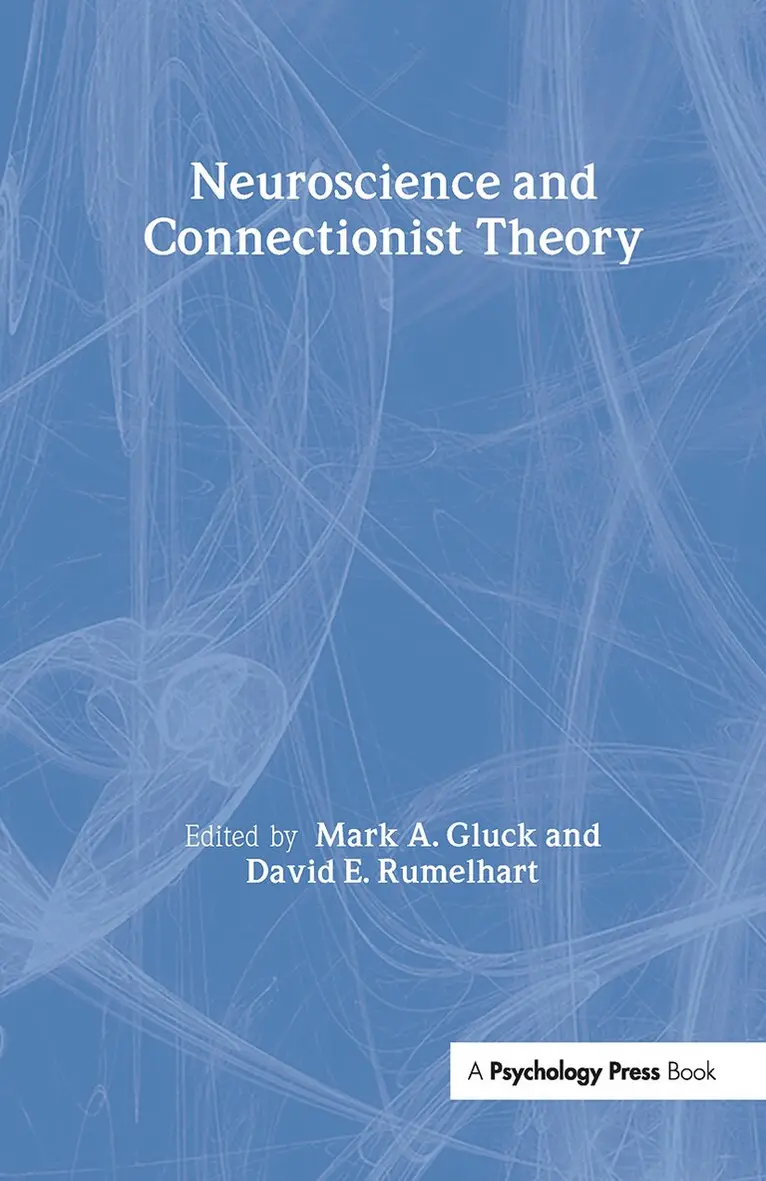
Written for cognitive scientists, psychologists, computer scientists, engineers, and neuroscientists, this book provides an accessible overview of how computational network models are being used to model neurobiological phenomena. Each chapter presents a representative example of how biological data and network models interact with the authors' research. The biological phenomena cover network- or circuit-level phenomena in humans and other higher-order vertebrates.
2 098 kr
Skickas inom 10-15 vardagar
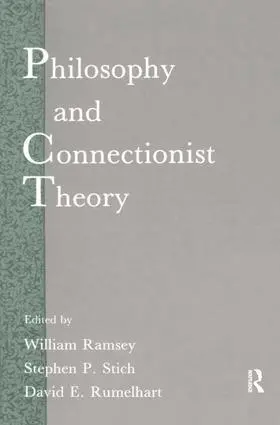
The philosophy of cognitive science has recently become one of the most exciting and fastest growing domains of philosophical inquiry and analysis. Until the early 1980s, nearly all of the models developed treated cognitive processes -- like problem solving, language comprehension, memory, and higher visual processing -- as rule-governed symbol manipulation. However, this situation has changed dramatically over the last half dozen years. In that period there has been an enormous shift of attention toward connectionist models of cognition that are inspired by the network-like architecture of the brain. Because of their unique architecture and style of processing, connectionist systems are generally regarded as radically different from the more traditional symbol manipulation models. This collection was designed to provide philosophers who have been working in the area of cognitive science with a forum for expressing their views on these recent developments. Because the symbol-manipulating paradigm has been so important to the work of contemporary philosophers, many have watched the emergence of connectionism with considerable interest. The contributors take very different stands toward connectionism, but all agree that the potential exists for a radical shift in the way many philosophers think of various aspects of cognition. Exploring this potential and other philosophical dimensions of connectionist research is the aim of this volume.
1 115 kr
Skickas inom 10-15 vardagar
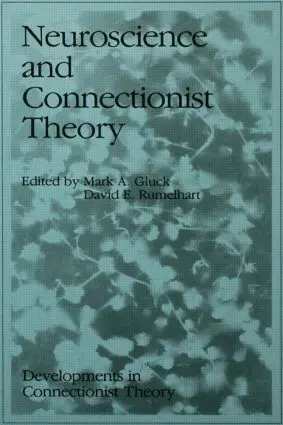
Written for cognitive scientists, psychologists, computer scientists, engineers, and neuroscientists, this book provides an accessible overview of how computational network models are being used to model neurobiological phenomena. Each chapter presents a representative example of how biological data and network models interact with the authors' research. The biological phenomena cover network- or circuit-level phenomena in humans and other higher-order vertebrates.
3 280 kr
Skickas inom 10-15 vardagar
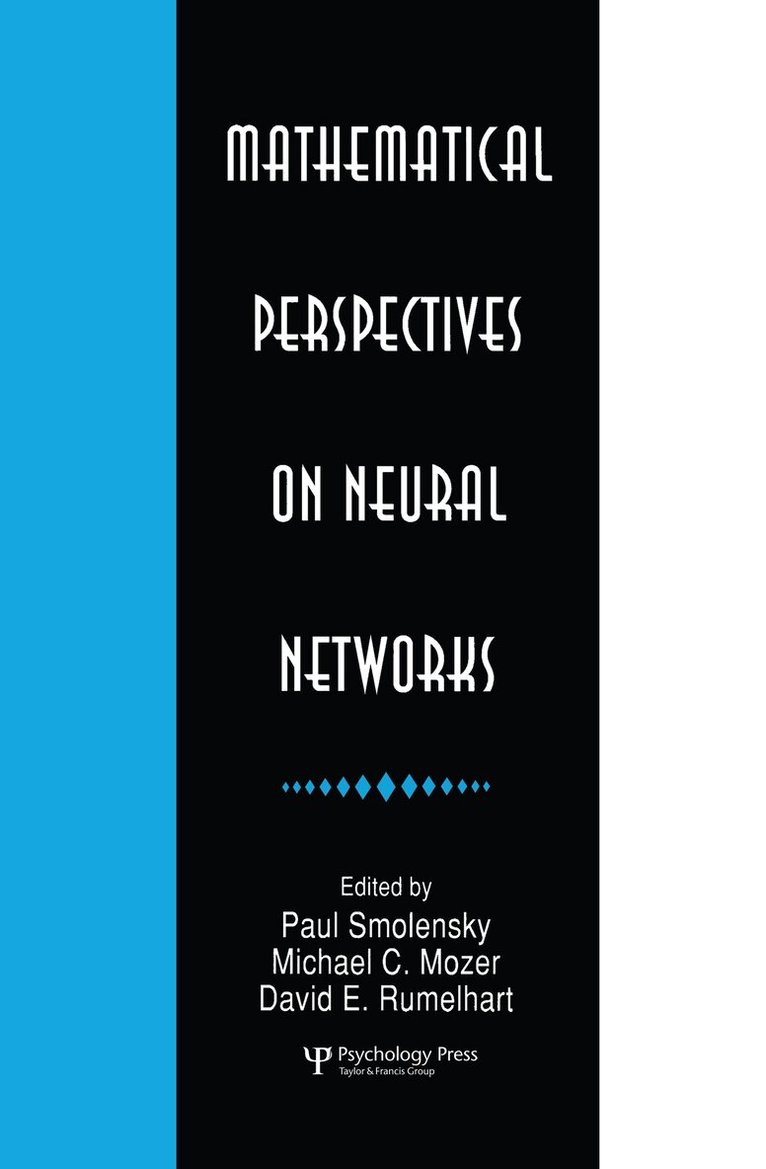
Recent years have seen an explosion of new mathematical results on learning and processing in neural networks. This body of results rests on a breadth of mathematical background which even few specialists possess. In a format intermediate between a textbook and a collection of research articles, this book has been assembled to present a sample of these results, and to fill in the necessary background, in such areas as computability theory, computational complexity theory, the theory of analog computation, stochastic processes, dynamical systems, control theory, time-series analysis, Bayesian analysis, regularization theory, information theory, computational learning theory, and mathematical statistics. Mathematical models of neural networks display an amazing richness and diversity. Neural networks can be formally modeled as computational systems, as physical or dynamical systems, and as statistical analyzers. Within each of these three broad perspectives, there are a number of particular approaches. For each of 16 particular mathematical perspectives on neural networks, the contributing authors provide introductions to the background mathematics, and address questions such as:* Exactly what mathematical systems are used to model neural networks from the given perspective?* What formal questions about neural networks can then be addressed?* What are typical results that can be obtained? and* What are the outstanding open problems?A distinctive feature of this volume is that for each perspective presented in one of the contributed chapters, the first editor has provided a moderately detailed summary of the formal results and the requisite mathematical concepts. These summaries are presented in four chapters that tie together the 16 contributed chapters: three develop a coherent view of the three general perspectives -- computational, dynamical, and statistical; the other assembles these three perspectives into a unified overview of the neural networks field.
2 230 kr
Skickas inom 10-15 vardagar
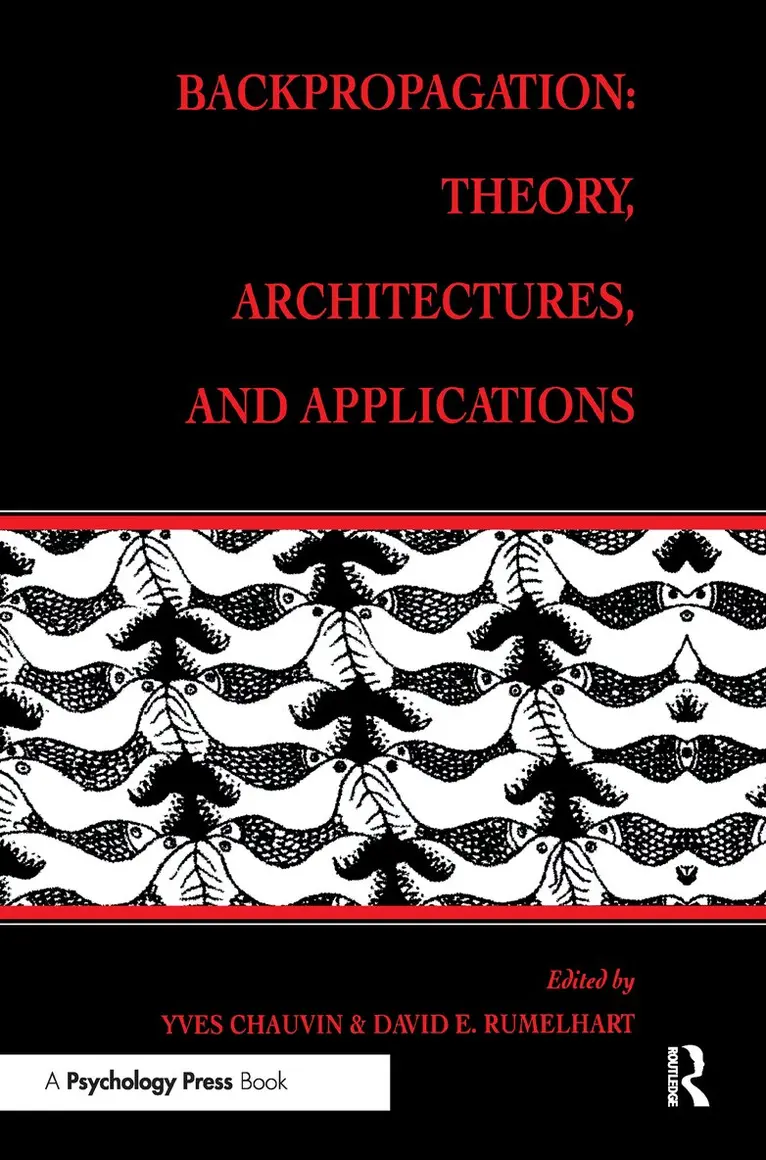
Composed of three sections, this book presents the most popular training algorithm for neural networks: backpropagation. The first section presents the theory and principles behind backpropagation as seen from different perspectives such as statistics, machine learning, and dynamical systems. The second presents a number of network architectures that may be designed to match the general concepts of Parallel Distributed Processing with backpropagation learning. Finally, the third section shows how these principles can be applied to a number of different fields related to the cognitive sciences, including control, speech recognition, robotics, image processing, and cognitive psychology. The volume is designed to provide both a solid theoretical foundation and a set of examples that show the versatility of the concepts. Useful to experts in the field, it should also be most helpful to students seeking to understand the basic principles of connectionist learning and to engineers wanting to add neural networks in general -- and backpropagation in particular -- to their set of problem-solving methods.
1 480 kr
Skickas inom 10-15 vardagar
Composed of three sections, this book presents the most popular training algorithm for neural networks: backpropagation. The first section presents the theory and principles behind backpropagation as seen from different perspectives such as statistics, machine learning, and dynamical systems. The second presents a number of network architectures that may be designed to match the general concepts of Parallel Distributed Processing with backpropagation learning. Finally, the third section shows how these principles can be applied to a number of different fields related to the cognitive sciences, including control, speech recognition, robotics, image processing, and cognitive psychology. The volume is designed to provide both a solid theoretical foundation and a set of examples that show the versatility of the concepts. Useful to experts in the field, it should also be most helpful to students seeking to understand the basic principles of connectionist learning and to engineers wanting to add neural networks in general -- and backpropagation in particular -- to their set of problem-solving methods.
824 kr
Skickas inom 10-15 vardagar
The philosophy of cognitive science has recently become one of the most exciting and fastest growing domains of philosophical inquiry and analysis. Until the early 1980s, nearly all of the models developed treated cognitive processes -- like problem solving, language comprehension, memory, and higher visual processing -- as rule-governed symbol manipulation. However, this situation has changed dramatically over the last half dozen years. In that period there has been an enormous shift of attention toward connectionist models of cognition that are inspired by the network-like architecture of the brain. Because of their unique architecture and style of processing, connectionist systems are generally regarded as radically different from the more traditional symbol manipulation models. This collection was designed to provide philosophers who have been working in the area of cognitive science with a forum for expressing their views on these recent developments. Because the symbol-manipulating paradigm has been so important to the work of contemporary philosophers, many have watched the emergence of connectionism with considerable interest. The contributors take very different stands toward connectionism, but all agree that the potential exists for a radical shift in the way many philosophers think of various aspects of cognition. Exploring this potential and other philosophical dimensions of connectionist research is the aim of this volume.
801 kr
Skickas inom 10-15 vardagar
Recent years have seen an explosion of new mathematical results on learning and processing in neural networks. This body of results rests on a breadth of mathematical background which even few specialists possess. In a format intermediate between a textbook and a collection of research articles, this book has been assembled to present a sample of these results, and to fill in the necessary background, in such areas as computability theory, computational complexity theory, the theory of analog computation, stochastic processes, dynamical systems, control theory, time-series analysis, Bayesian analysis, regularization theory, information theory, computational learning theory, and mathematical statistics. Mathematical models of neural networks display an amazing richness and diversity. Neural networks can be formally modeled as computational systems, as physical or dynamical systems, and as statistical analyzers. Within each of these three broad perspectives, there are a number of particular approaches. For each of 16 particular mathematical perspectives on neural networks, the contributing authors provide introductions to the background mathematics, and address questions such as:* Exactly what mathematical systems are used to model neural networks from the given perspective?* What formal questions about neural networks can then be addressed?* What are typical results that can be obtained? and* What are the outstanding open problems?A distinctive feature of this volume is that for each perspective presented in one of the contributed chapters, the first editor has provided a moderately detailed summary of the formal results and the requisite mathematical concepts. These summaries are presented in four chapters that tie together the 16 contributed chapters: three develop a coherent view of the three general perspectives -- computational, dynamical, and statistical; the other assembles these three perspectives into a unified overview of the neural networks field.