Directions in Development - Finance – Serie
Visar alla böcker i serien Directions in Development - Finance. Handla med fri frakt och snabb leverans.
3 produkter
3 produkter
462 kr
Skickas inom 10-15 vardagar
Increasing longevity, globalized competition, and market fluidity have created a new landscape for the development of retirement products. Complete reliance on traditional social security systems and defined benefit pensions is no longer an alternative in emerging economies. The development of defined contribution pension systems during both the accumulation and the payout phases has been attracting attention from policy makers, who realize that valuable lessons can be gleaned from the experiences of countries that are ahead in the reform process.Many countries that have implemented systemic pension reforms and introduced private pension systems are now facing the challenge of organizing the payout phase for retiring workers. This effort entails introducing a well-regulated and well- supervised market for retirement products, including marketing activities, providers, and intermediaries. However, in-depth analysis of the related policy issues, constraints, and options is rare. The literature on the payout phase is narrowly focused on a few countries, mainly the United Kingdom and the United States, and it does not address in sufficient detail the institutional and regulatory issues faced by policy makers in reforming countries.Annuities and Other Retirement Products: Designing the Payout Phase aims to fill the gap in the literature. The book initially focuses on the policy issues and constraints confronting the design of the payout phase and examines risk factors for both pensioners and providers. It then scrutinizes the pension systems of five representative countries - Australia, Chile, Denmark, Sweden, and Switzerland - which provide a rich variety of experiences and policy lessons applicable to other reforming countries. The five study countries have large mandatory or quasi-mandatory private pension systems operating primarily on a defined contribution basis, and they have already entered the payout phase. A comparative analysis of the similarities and differences between the systems in these countries rounds out the investigation.
227 kr
Skickas inom 10-15 vardagar
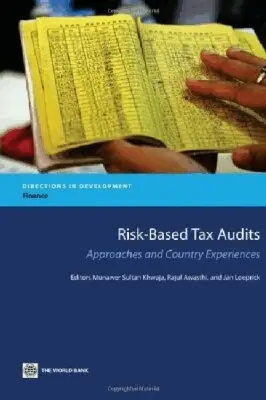
This book serves as a toolkit on risk-based audits and brings together country experiences for implementing risk-based audit systems. Risk management is an important element of effective and efficient compliance management in revenue administration. It is impossible for any revenue administration to control and check every single taxpayer, and an unnecessary waste of scarce enforcement resources on routinely examining low-risk, compliant taxpayers. The opportunity costs for such roving examinations are high. Just as a private business allocates its resources to areas they feel have the most potential for generating revenues and profits, a modern revenue administration selects cases for audits using methods focused on high-risk taxpayers. This targeted focus is likely to raise higher revenue and, arguably, provide a stronger deterrence for non-compliance. Risk management techniques should not be considered to be confined to the selection of tax audit cases. It is part of a holistic and cooperative approach to enhance compliance. This is dramatically changing the way revenue administrations and taxpayers interact with each other.The effectiveness of a risk-based compliance management has been enabled by, and depends fundamentally on, the use of automated systems to: (1) gather third-party information and match with taxpayer reporting using reliable databases and a unique taxpayer identification number; (2) undertake selective checks based on risk analysis; (3) standardize payment processes (e.g., payments through banks) and accounting requirements; (4) provide assurance that the legislation and procedures are being applied uniformly; and (5) provide adequate, timely information to support management decision making and tax policy formulation.
435 kr
Skickas inom 10-15 vardagar
Universal access to financial services is within reach, thanks to new technologies, transformative business models, and ambitious reforms. However, technology is not a silver bullet and these case studies explore what other strategic elements need to be in place for a country to increase financial access.