Echoes and Reflections - Böcker
Visar alla böcker i serien Echoes and Reflections. Handla med fri frakt och snabb leverans.
7 produkter
7 produkter
676 kr
Tillfälligt slut
Since the earliest days of human history, and in all cultures, religion and art have always complemented one another. But the intellectual and spiritual dimension of this interaction has all too often been taken for granted and is never properly explored. Rarely has the dialogue between religion and art been better examined than in this book. In their profound and moving conversations, philosopher of aesthetics Rene Huyghe and Buddhist leader Daisaki Ikeda compare modes of thought from the opposite ends of the earth: from traditions, cultures and religions as different from each other as can be. Their guiding theme is the rediscovery of a common humanity through the artistic intuition and religious impulse shared by all peoples. The Dialogue ranges widely, analysing the contemporary predicament from twin perspectives of beauty and the divine. Huyghe and Ikeda look to active solutions to this predicament - at the key to harmony in life, and at the means of reforming our inner lives. Discussing artistic creativity, its spiritual value, and the differing arts of East and West, the interlocutors conclude by evaluating the crucial role played by religion in helping humanity come to terms with the mysteries and challenges of the unknown.
729 kr
Skickas inom 7-10 vardagar
In a spontaneously wide-ranging conversation one winter evening in Japan, sociologist of religion Bryan Wilson and Buddhist philosopher Daisaku Ikeda recognized the importance of explaining and learning about their respective worldviews. "Human Values in a Changing World" is the record of their further exchanges on how they see the religious response to the human condition. Their contrasting approaches - one, as an academic, and the other, as a lay Buddhist - allow for a constructive critique of preconceptions otherwise unexamined in their own cultural contexts."There is an intimate connection between faith and the fruits of commitment," Wilson says at one point. To which Ikeda responds that while the benefits of faith to momentary happiness are perhaps not the core value of a religion, they can inspire and lead people to become aware of that core value or fundamental truth. The two men's observations on the origins of religious sensibilities move from the spiritual and the moral to the politics of private and public life.Although published some years ago, "Human Values in a Changing World" addresses topics and issues which are of perennial importance to human flourishing, including: sexual morality, the limits of tolerance and religious freedom, the future of the family, the belief in an afterlife, and the idea of sin.
622 kr
Skickas inom 10-15 vardagar
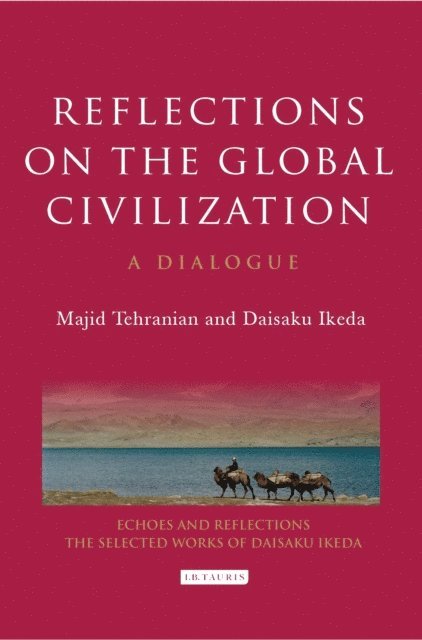
Globalization has brought different civilizations and peoples into new and closer contact. But this novel intimacy has not always led to greater understanding. There is an urgent need to work towards a global civilization based on principles of peace, mutual respect and tolerance. It is precisely that goal which the participants attempt in this classic dialogue. Inspired by the encounters between Buddhism and Islam as they exchanged ideas and goods along the Silk Road, it brings together a Sufi Muslim from Iran and one of the world's most influential lay Buddhist leaders to explore the vibrant areas of common ground between the Islamic and Buddhist traditions. Coloured by Sufi philosophy and by Buddhist thought and practice, and drawing on a diverse selection of thinkers - including Rumi and Hafez, Rabindranath Tagore, Jurgen Habermas and Antonio Gramsci - Reflections on the Global Civilization offers a profound meditation on conflict, loss and injustice, as well as the vitality of interfaith discussion. It shows that Islam and Buddhism have much to offer, not only to each other, but also to the world as a whole.
742 kr
Skickas inom 10-15 vardagar
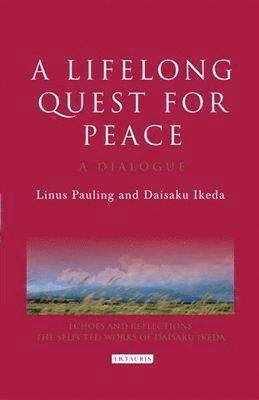
Linus Pauling is celebrated as one of the greatest scientific minds of the last century, whose decisive contributions to an astonishing diversity of fields - including organic and inorganic chemistry, quantum mechanics, molecular biology and medicine - still remain in many respects definitive. Pauling was additionally a tireless campaigner against the perils of nuclear conflict, and his contributions to both science and peace were recognized by the award to him of two separate Nobel Prizes. In this philosophically broad and sinewy book, he engages in complementary discussion with Daisaku Ikeda, President of Soka Gakkai - and another tireless champion for peace and dialogue.Showcasing the central ideas and fundamental values of two of the leading pacifist minds of recent times, "A Lifelong Quest for Peace" ranges over such perennially critical themes as ethics and technology, the appropriate use to which science should be put, the nature of morality and the human quest for progress, justice and equality. Both richly anecdotal and warmly engaging, the discussions offer fascinating insights into and recollections from the interlocutors' early lives and subsequent careers.Pauling and Ikeda thereby demonstrate through warm personal example the essential and lasting value of constructive conversation between people of different backgrounds and contrasting cultures.
742 kr
Skickas inom 10-15 vardagar
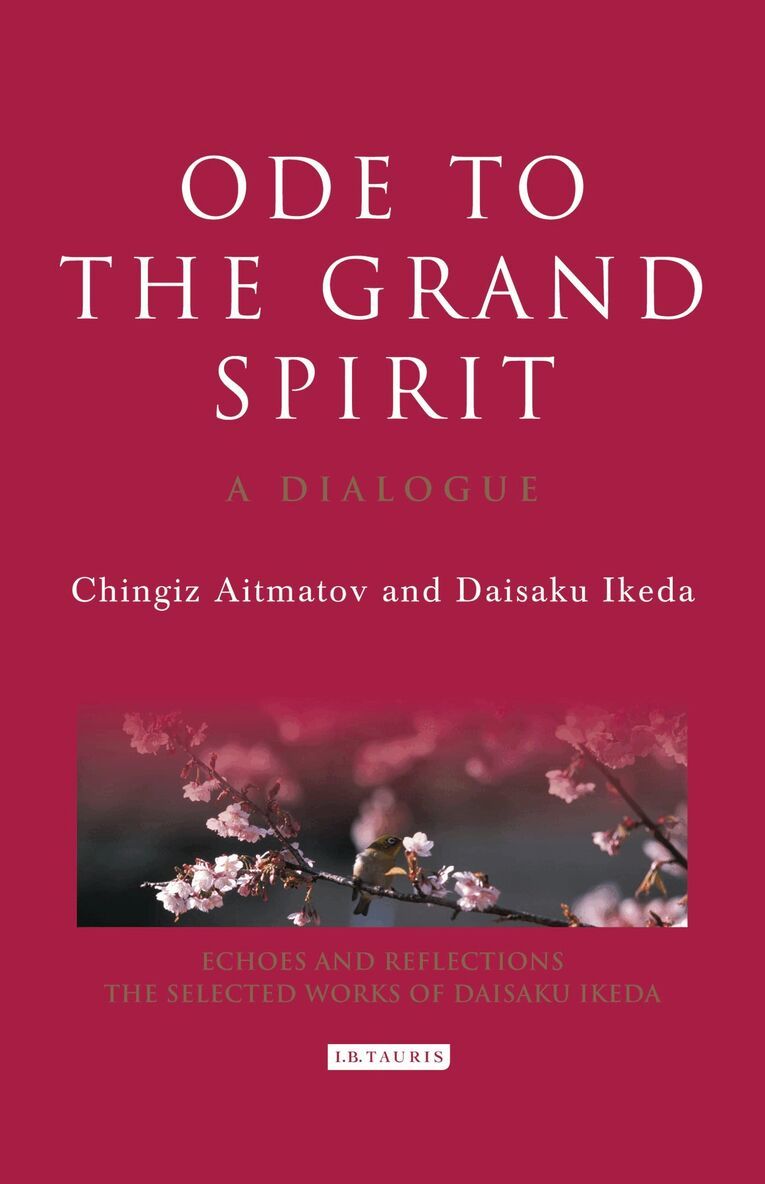
'There is life hidden within stones. Only we human beings can give meaning to all things in the cosmos through thought and words'. With these haunting and resonant words did Kyrgyz writer and novelist Chingiz Aitmatov, who died in June 2008, summarise the dialogue that he undertook with leading Buddhist leader Daisaku Ikeda. Aitmatov is best known for his novella "Jamila", on the publication of which he achieved great fame in the Soviet Union in 1958. But after the Soviet Union's collapse, this writer, who is often lauded as one of the great Soviet authors, felt that his work had been passed over. "Ode to the Grand Spirit" is both an enduring tribute to the thought of a powerful writer and a fascinating individual as well as a profound reflection on such themes of the process of literary creation, spiritual growth and the essence of humanity.
729 kr
Skickas inom 7-10 vardagar
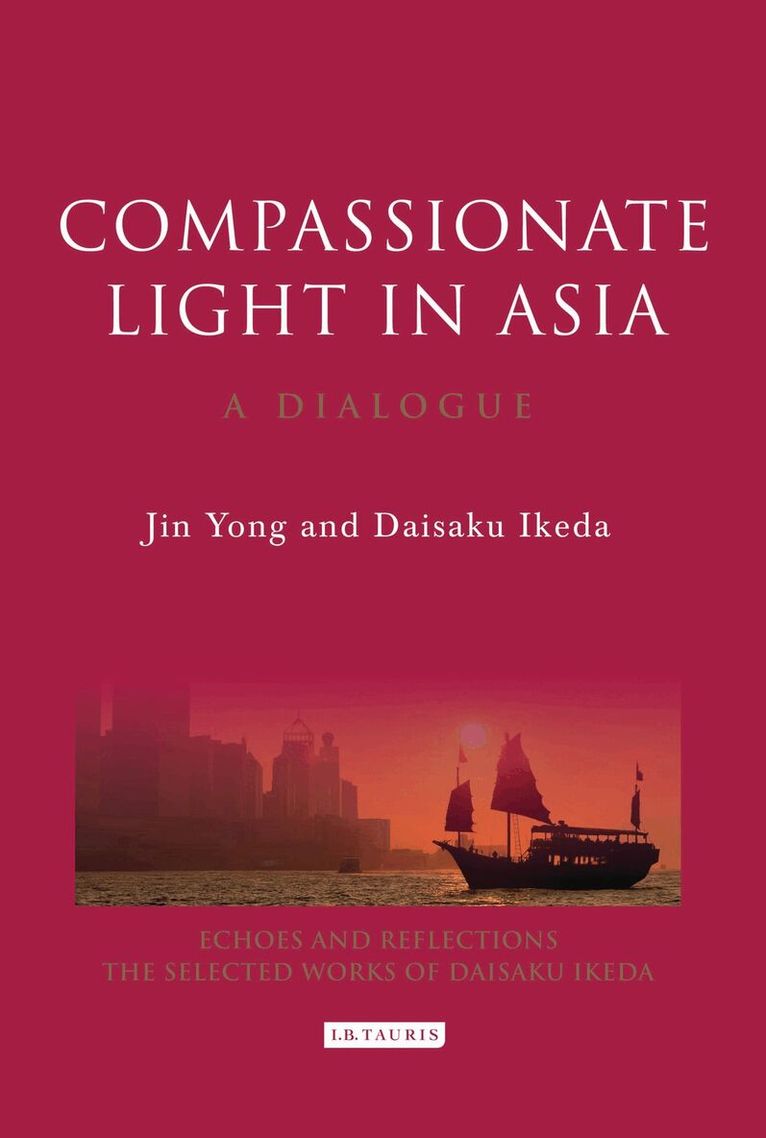
'Life is a drama of encounters', writes Daisaku Ikeda at the beginning of this dialogue: 'Beautiful encounters. Momentary encounters. Each person's drama is unique.' This particular encounter, between a celebrated Chinese novelist and prominent Japanese religious leader, illustrates the truth of that reflection. For in the discussion that stemmed from their meetings, Jin Yong (who is sometimes called 'the Asian Dumas') and Daisaku Ikeda were able to find remarkable common ground - what they refer to as a 'karmic bond' - resulting from the particularity of their experiences in wartime and mutual resistance to adversity. Ranging across a variety of engaging themes, the interlocutors explore such topics as the nature of friendship; theories of civilization; world literatures that have inspired them; the importance of free speech; Buddhist perspectives on life and death; and the spiritual search for truth.There is sustained reflection on the horrors of war, and a plea for the importance of memory: Daisaku Ikeda emphasises that 'peace is a battle against forgetfulness', while Jin Yong echoes this in his observation that 'most important is to strive to avoid war, whether it is between countries and whether it be domestic, and thus to enable people to build and improve their lives in a peaceful environment.' Cultural differences between the peoples of China and Japan are explored, sometimes amusingly, with the Japanese propensity for discipline and rules contrasted with the Chinese spirit of creative individualism. But the authors are focused above all on serious issues of meaning and identity, and they reveal the mutual solace both have found - in the face of personal loss and bereavement - in the Buddhist scriptures, especially the Lotus Sutra. Demonstrating a remarkable capacity for empathy throughout, they incarnate in their lives and work an intelligent and sympathetic compassion that represents a beacon of hope to the future direction of Sino-Japanese relations.
787 kr
Skickas inom 10-15 vardagar
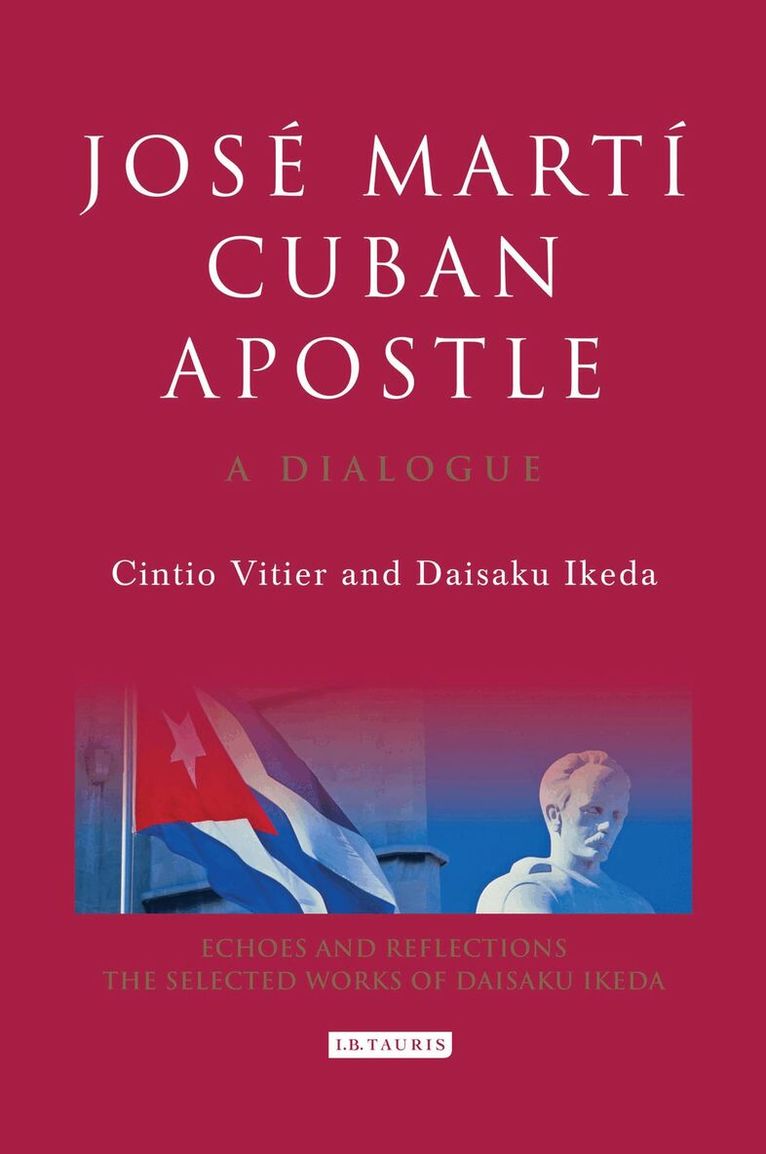
Once called 'the wellspring of the revolution' by Fidel Castro, Jose Marti (1853-1895) is revered as one of the greatest figures in the history of Cuba. Not only was he instrumental in the late nineteenth-century cause of securing Cuban independence from Spain. He is also considered one of Cuba's most brilliant writers, orators and formative intellectuals, who provided inspiration to the young Fidel, Che and their fellow revolutionaries by dedicating his whole life to the goal of national political emancipation. Jose Marti suffered persecution and early imprisonment for his convictions, and in consequence is often referred to as the 'Cuban Apostle'. In this wide-ranging discussion of Marti's life, work and influence, distinguished Cuban poet Cintio Vitier and prominent Buddhist leader Daisaku Ikeda explore their subject's understanding of non-violence; his nationalism that was also a profound openness to difference and dialogue; his spirituality; his poetical writings; and most of all his fundamental dignity, humanity and self-mastery. The book explores above all the nature of sacrifice, and the cost of relinquishing personal happiness for the sake of a great cause.The discussants examine Marti's family life, including his difficult relationships with his wife - Carmen Zayas Bazan - and his parents, who distanced themselves from his revolutionary fervour. Comparisons are drawn between Marti's ideals and Nichiren Buddhism as a source of unfailing hope and courage. As Daisaku Ikeda, follower of Nichiren, says at one point in the dialogue: 'Self-mastery is the hardest thing of all. But to have a spiritual nature worthy of the name, a person must overcome himself, a task that only a true optimist can accomplish. Marti's perspicacity is revealed in his conviction that final victory in life is assured by such optimists.' Marti, like Nichiren, had the unerring ability to turn enemies into friends. And as Cintio Vitier and Daisaku Ikeda reveal, what set Marti apart was not his thought or ideas alone but what emanated from his words and found embodiment in his actions. It was thus that a follower at the time could say of him: we don't understand him, but we are ready to die for him.