Emory Studies in Early Christianity – serie
Visar alla böcker i serien Emory Studies in Early Christianity. Handla med fri frakt och snabb leverans.
11 produkter
11 produkter
Häftad, Engelska, 2004
1 665 kr
Skickas inom 10-15 vardagar
Wilhelm Wuellner is the father of rhetorical criticism of the New Testament. Wuellner has contributed to the field in four key ways. First, he has emphasized that at no time in the history of rhetoric was rhetoric a unified or monolithic field. Second, he attributes the demise of rhetoric in the nineteenth century to the rise of Romanticism and its connection with irrationalism, as well as the profound technological shift in the media of communication with the advent of the print culture and the loss of the living word. Third, he emphasizes the counter-cultural nature of Jewish and Christian rhetoric. Finally, he has focused on the ever-present relationship between hermeneutics and rhetorics. The contributors to this collection of essays-first presented at a Claremont conference honoring Wuellner's work-discuss the ways that Wuellner has influenced the field and their own work. The list of contributors is a who's who of rhetorical scholars ranging from Vernon Robbins and Tom Olbricht to Whitney Shiner and Greg Carey. Wuellner himself contributes a new essay on the rhetoric of religion and the rhetoric of power.Together the essays provide not only a fitting tribute to the continuing influence of Wuellner and his work but also original studies of various New Testament texts read through the eyes of rhetorical criticism. Since Wuellner is well-known outside of New Testament circles, this collection will also appeal to classical rhetoricians.
Häftad, Engelska, 2004
1 527 kr
Skickas inom 10-15 vardagar
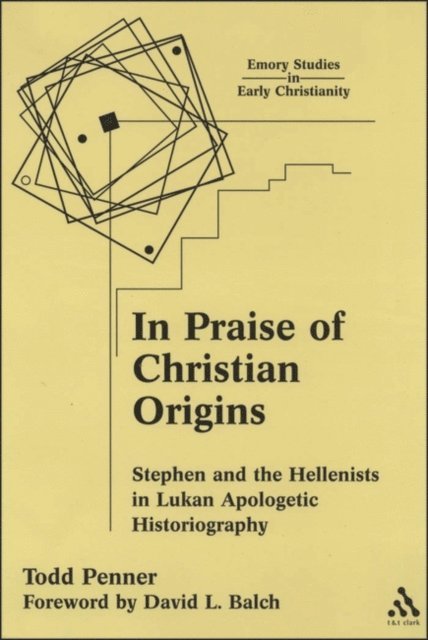
Almost all scholars look to Acts 6:1-8:3 as providing the bedrock of early Christian tradition. The incident between the Hebrews and the Hellenists are understood to reflect real historical and theological problems in the early Jerusalem community, demonstrating the Hellenist role as a historical bridge between Jesus and Paul. Penner's study challenges the fundamental assumptions of this approach. Penner emphasizes the rhetorical and moral dimensions of ancient historiographical theory, especially the centrality of narrative and plot, the use of vivid description, the application of comparison using various type-scenes, and the role of speeches in terms of characterization and the presentation of narrative style.Todd Penner is the Assistant Professor of Religion at Austin College and the co-editor with Caroline Vander Stichele of Contextualizing Acts: Lukan Narrative and Greco-Roman Discourse.
Häftad, Engelska, 2007
1 665 kr
Skickas inom 10-15 vardagar
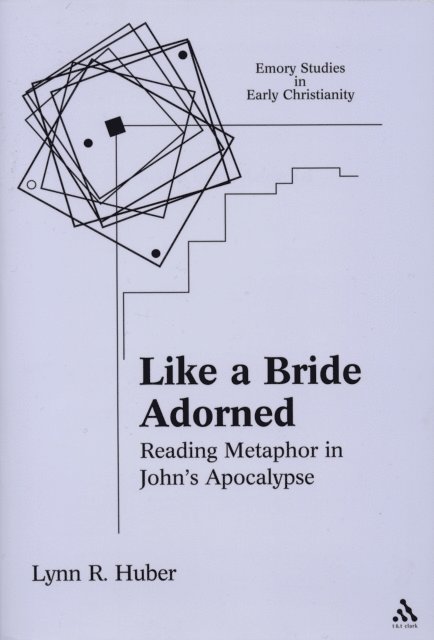
The phrase "like a bride adorned" is one of the ways Revelation describes the new Jerusalem which descends from heaven. This phrase can also be read as describing one of the ways interpreters historically have understood the relationship between Revelation and its metaphorical language. In contrast to views that suggest Revelation's metaphorical language is simple adornment, Huber argues that Revelation's persuasive power resides within the text's metaphorical nature and she articulates a method for exploring how Revelation employs metaphor to shape an audience's thought. In order to gain a sense of how metaphorical language works in Revelation's highly metaphorical text,"Like a Bride Adorned:" Reading Metaphor in John's Apocalypse engages one set of conceptual metaphors in relation to Revelation's literary and social-historical milieu. Specifically, Huber explores the conceptual metaphors undergirding Revelation's nuptial or bridal imagery. Positioned at the culmination of the text's, nuptial imagery serves as one the text's final and arguably one of its most important characterizations of the Christian community.Examining the function of Revelation's nuptial imagery involves investigating how the text redeploys conventional metaphorical constructions used in the writings of the Hebrew prophets and how its imagery engages Greco-Roman depictions of women, weddings, and brides. Discourse about marriage and family was such an important part of Revelation's historical context, especially as it was shaped by the Roman Empire, that any discussion of the text's nuptial imagery must examine how it reflects and responds to this discourse. By addressing these questions, we see that Revelation's nuptial imagery serves to further the text's goal of shaping Christian identity in opposition to the social demands of the Roman Empire. Moreover, exploration of the conceptual metaphors undergirding Revelation's "bride adorned" reveals how John seeks to shape Christian identity as a transitional identity. Through metaphor, Revelation encourages its audience to envision the Christian community as a bride who constructs "her" own identity as she transitions into a new role in relation to God and the Lamb. Through the process of exploring Revelation's nuptial imagery with insights gained from conceptual metaphor theory, we uncover the ways that John employs metaphorical language to persuade his audience's thought about themselves and about others. Consequently, this work contributes both to our understanding of the text's nuptial imagery and to our knowledge of how Revelation employs metaphor as tool for persuasion.
Häftad, Engelska, 2006
1 941 kr
Skickas inom 10-15 vardagar
All the essays in the collection focus on ethos and rhetoric. Biblical criticism as traditionally carried out seeks rigorous scrutiny of texts and backgrounds but fails to reflect upon the sociopolitical frameworks, cultural-religious implications, and symbolic universes of biblical texts and their interpretations. These essays argue that biblical critics need a more profound sense of critical rhetoric and ethic of inquiry to bring about a change in the ethos and ethics of biblical studies. Topics range from "the ethical appeal of the Chronicler" and "gendering moral discourse in Paul" to the "undercover ethos of Paul, God's double agent." Contributors include Elisabeth Schüssler Fiorenza, Rodney K. Duke, Anders Eriksson, Manfred Kraus, John W. Marshall, J. David Hester-Amador, Carol Poster, Thomas H. Olbricht, Roy Jeal, Frederick J. Long, Mark D. Given, Todd Penner, Russell B. Sisson, Troy Martin, Johan S. Vos, Rollin Ramsaran, Jerry L. Sumney, Walter Übelacker, Vernon K. Robbins
E-bok
PDF, Engelska, 20041 606 kr
Läs direkt efter köp
Almost all scholars look to Acts 6:1-8:3 as providing the bedrock of early Christian tradition. The incident between the Hebrews and the Hellenists are understood to reflect real historical and theological problems in the early Jerusalem community, demonstrating the Hellenist role as a historical bridge between Jesus and Paul. Penner''s study challenges the fundamental assumptions of this approach. Penner emphasizes the rhetorical and moral dimensions of ancient historiographical theory, especially the centrality of narrative and plot, the use of vivid description, the application of comparison using various type-scenes, and the role of speeches in terms of characterization and the presentation of narrative style.Todd Penner is the Assistant Professor of Religion at Austin College and the co-editor with Caroline Vander Stichele of Contextualizing Acts: Lukan Narrative and Greco-Roman Discourse.
E-bok
PDF, Engelska, 20071 816 kr
Läs direkt efter köp
The phrase "like a bride adorned" is one of the ways Revelation describes the new Jerusalem which descends from heaven. This phrase can also be read as describing one of the ways interpreters historically have understood the relationship between Revelation and its metaphorical language. In contrast to views that suggest Revelation''s metaphorical language is simple adornment, Huber argues that Revelation''s persuasive power resides within the text''s metaphorical nature and she articulates a method for exploring how Revelation employs metaphor to shape an audience''s thought. In order to gain a sense of how metaphorical language works in Revelation''s highly metaphorical text,"Like a Bride Adorned:" Reading Metaphor in John''s Apocalypse engages one set of conceptual metaphors in relation to Revelation''s literary and social-historical milieu. Specifically, Huber explores the conceptual metaphors undergirding Revelation''s nuptial or bridal imagery. Positioned at the culmination of the text''s, nuptial imagery serves as one the text''s final and arguably one of its most important characterizations of the Christian community.Examining the function of Revelation''s nuptial imagery involves investigating how the text redeploys conventional metaphorical constructions used in the writings of the Hebrew prophets and how its imagery engages Greco-Roman depictions of women, weddings, and brides. Discourse about marriage and family was such an important part of Revelation''s historical context, especially as it was shaped by the Roman Empire, that any discussion of the text''s nuptial imagery must examine how it reflects and responds to this discourse. By addressing these questions, we see that Revelation''s nuptial imagery serves to further the text''s goal of shaping Christian identity in opposition to the social demands of the Roman Empire. Moreover, exploration of the conceptual metaphors undergirding Revelation''s "bride adorned" reveals how John seeks to shape Christian identity as a transitional identity. Through metaphor, Revelation encourages its audience to envision the Christian community as a bride who constructs "her" own identity as she transitions into a new role in relation to God and the Lamb. Through the process of exploring Revelation''s nuptial imagery with insights gained from conceptual metaphor theory, we uncover the ways that John employs metaphorical language to persuade his audience''s thought about themselves and about others. Consequently, this work contributes both to our understanding of the text''s nuptial imagery and to our knowledge of how Revelation employs metaphor as tool for persuasion.
E-bok
PDF, Engelska, 20021 460 kr
Läs direkt efter köp
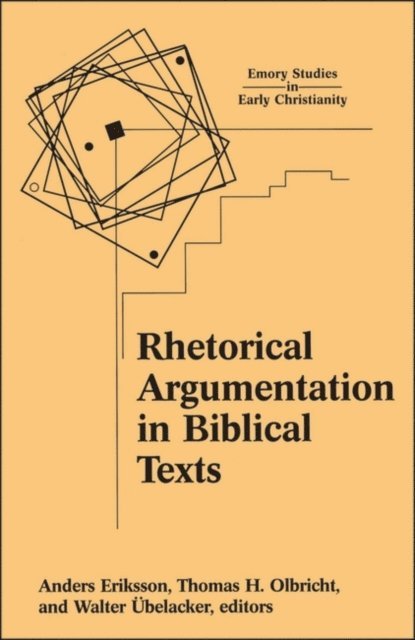
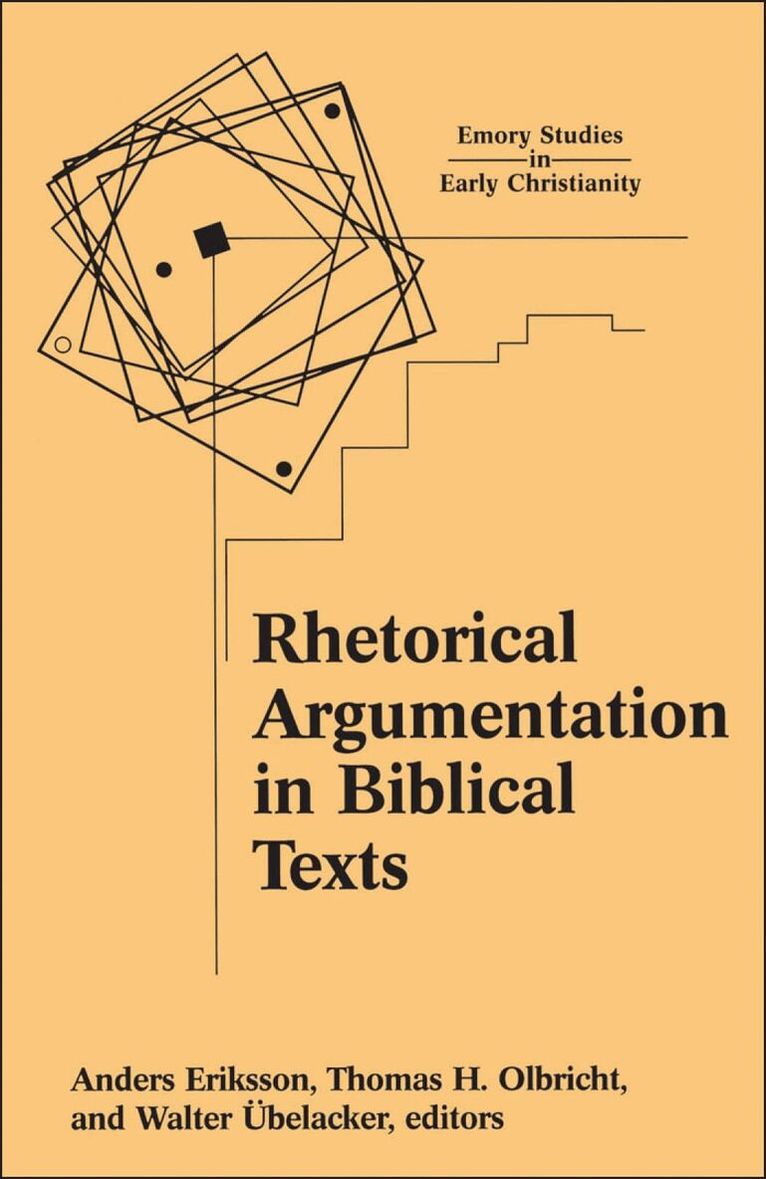
In the latest volume in the Emory Studies in Early Christianity series, the contributors seek a better understanding of how various biblical authors present their arguments, support their claims, and attempt to persuade their readers.A century ago the rhetorical analysis of texts focused on the study of rhetorical figures in texts (elocutio). In the mid-twentieth century, scholars such as James Muilenburg, Hans Dieter Betz, and Wilhelm Wuellner introduced biblical scholars to the illustrious tradition of rhetorical study. These scholars tended to focus on the arrangement of the texts themselves (dispositio).During the last ten years, however, interpreters have increasingly studied the rhetorical argumentation in texts. The authors in this volume examine rhetorical argumentation in the Hebrew Bible, the Gospels, the Pauline letters, and the Book of Revelation, offering striking new readings of these materials.Contributors include: J. David Hester (Amador), Center for Rhetoric and Hermeneutics; R. Dean Anderson, Valkenburg, The Netherlands; Harold W. Attridge, Yale Divinity School; L. Gregory Bloomquist, St. Paul University, Ottawa; Michael R. Cosby, Messiah College; Rodney K. Duke, Appalachian State University; Frans H. van Eemeren, University of Amsterdam; Anders Eriksson, Lund University; Alan J. Hauser, Appalachian State University; Roy R. Jeal, William and Catherine Booth College; Manfred Kraus, Eberhard-Karls-Universität, Tübingen; John W. Marshall, University of Toronto; Roland Meynet, Pontificia Università Gregoriana; Thomas H. Olbricht, Emeritus, Pepperdine University; Carol Poster, Florida State University; Rollin A. Ramsaran, Emmanuel School of Religion; Vernon K. Robbins, Emory University and University of Stellenbosch; Russell B. Sisson, Union College; Jerry L. Sumney, Lexington Theological Seminary; C. Jan Swearingen, Texas A & M; Lauri Thurén, Univeristy of Joensuu; Johan S. Vos, Vrije Universiteit; and Duane F. Watson, Malone College.
Häftad, Engelska, 2001
477 kr
Skickas inom 10-15 vardagar
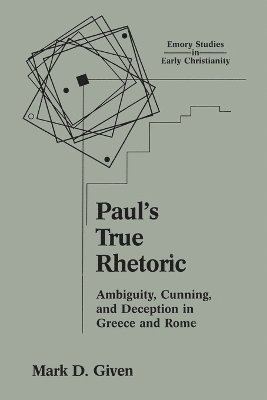
Häftad, Engelska, 2002
1 389 kr
Skickas inom 10-15 vardagar
Del 17 - Emory Studies in Early Christianity
"Nocturnal Side of Science" in David Friedrich Strauss's Life of Jesus Critically Examined
Häftad, Engelska, 2015
375 kr
Skickas inom 5-8 vardagar
Del 17 - Emory Studies in Early Christianity
"Nocturnal Side of Science" in David Friedrich Strauss's Life of Jesus Critically Examined
Inbunden, Engelska, 2015
509 kr
Skickas inom 5-8 vardagar